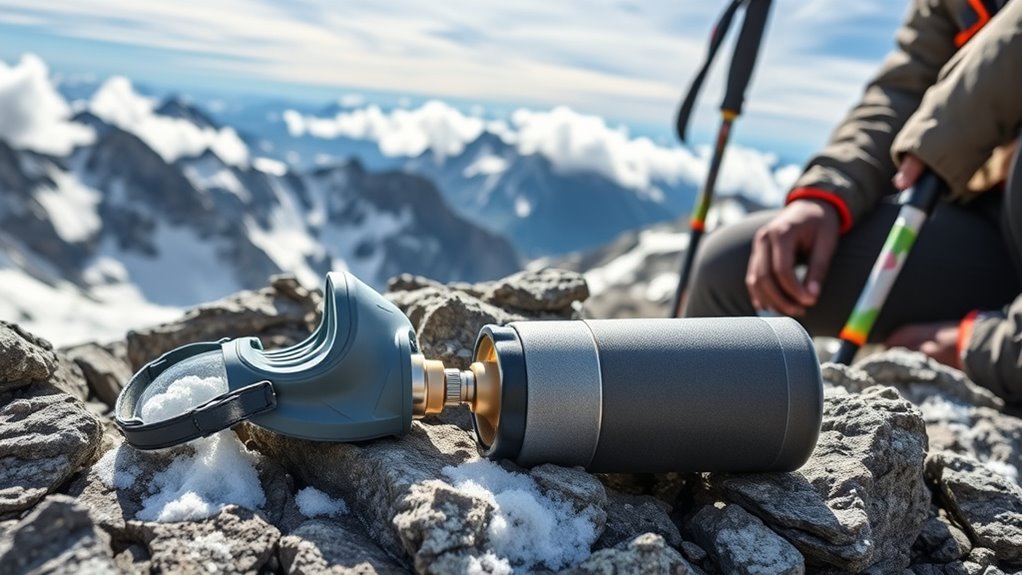

To ease mountain sickness, equip yourself with gear like portable oxygen cans or masks, which provide immediate relief and support your body’s higher oxygen needs. Using supplemental oxygen during strenuous activities or at night can make a big difference, especially if you ascend quickly or feel symptoms. Combining this with gradual ascent and proper hydration helps your body adapt smoothly. Keep exploring to discover more essential tips for a safe and comfortable high-altitude experience.
Key Takeaways
- Use portable oxygen cans or masks to provide immediate relief during sudden altitude gains or symptoms.
- Carry lightweight, easy-to-use oxygen systems for use at base camps or intermediate stops.
- Incorporate supplemental oxygen during strenuous activities or overnight to enhance acclimatization.
- Combine oxygen supplementation with a gradual ascent plan, including rest days at intermediate altitudes.
- Recognize early signs of altitude sickness and promptly use oxygen gear alongside controlled ascent strategies.

When you ascend to high altitudes, your body must quickly adjust to lower oxygen levels. This natural process can be challenging, and if you’re not prepared, altitude sickness might set in. To ease this *progression*, oxygen supplementation can be a *crucial* tool. Portable oxygen cans or masks provide immediate relief if you start feeling symptoms like dizziness, headaches, or shortness of breath. These devices are especially useful during sudden altitude gains or when symptoms escalate. However, relying solely on oxygen supplementation isn’t enough. It’s equally important to practice a gradual ascent, allowing your body time to adapt naturally to the decreasing oxygen levels. By ascending slowly, you give your body a chance to produce more red blood cells and improve oxygen efficiency, reducing the risk of severe altitude sickness.
Gradual ascent and oxygen help your body adapt safely to high altitudes.
A gradual ascent involves planning your trip with plenty of rest days between higher elevations. Typically, experts recommend not increasing your sleeping altitude by more than 1,000 feet (300 meters) per day once above 8,000 feet (2,400 meters). This slow progression helps your body acclimate without overwhelming your system. During this period, you should stay well-hydrated and avoid alcohol or heavy exertion that can exacerbate symptoms. If you’re climbing a mountain or trekking to higher elevations, consider breaking the journey into smaller stages, spending extra time at intermediate altitudes. This approach allows your body to develop the necessary physiological adaptations, such as increased lung capacity and improved oxygen transport. Additionally, understanding the importance of high-quality projectors can help in other aspects of planning high-altitude adventures, like ensuring clear visuals during nighttime navigation or presentations at base camps.
Using supplemental oxygen during the ascent is particularly beneficial if you experience early signs of altitude sickness or if you’re approaching very high elevations above 12,000 feet (3,700 meters). Carrying lightweight oxygen systems can make a significant difference, especially during strenuous activities or at night when symptoms often worsen. Many climbers and hikers also use portable oxygen during acclimatization days at base camps or intermediate stops. Remember, oxygen supplementation should complement, not replace, a cautious, gradual ascent. It’s a safety measure that helps you manage symptoms but won’t prevent altitude sickness if you ascend too quickly or ignore your body’s signals.
Ultimately, combining oxygen supplementation with a well-planned, gradual ascent provides the best defense against mountain sickness. Respect your body’s limits, listen to its signals, and give yourself time to adapt. Proper preparation and patience are key to enjoying high-altitude adventures safely and comfortably.
Frequently Asked Questions
Can Altitude Sickness Occur Gradually or Only Suddenly?
Altitude sickness can occur both gradually and suddenly. You might experience a gradual onset with mild symptoms developing over days, or encounter sudden symptoms that appear quickly after reaching higher elevations. It’s important to listen to your body and recognize signs early, regardless of how fast symptoms develop. Proper acclimatization and gear can help prevent or ease these symptoms, ensuring you stay safe and enjoy your mountain adventures.
How Long Does It Typically Take to Acclimate?
You typically need about 24 to 72 hours for your body to start the acclimation timeline and altitude adaptation. During this period, your body races against the mountains, adjusting to lower oxygen levels as if it’s trying to outrun a ticking clock. Be patient, because full altitude adaptation can take a week or more. Pushing too fast can cause sickness, so give yourself time to let your body naturally adapt.
Are There Specific Dietary Adjustments to Prevent Altitude Sickness?
You can reduce altitude sickness risk by focusing on nutrition strategies and hydration practices. Eat high-carbohydrate meals to boost energy and help your body adapt. Keep hydrated by drinking plenty of water, avoiding alcohol and caffeine that can dehydrate you. Small, frequent meals prevent digestive issues. Prioritize foods rich in iron and antioxidants to support oxygen transport. Staying well-nourished and hydrated helps your body acclimate more smoothly at high elevations.
What Are the Early Signs of Severe Altitude Sickness?
Did you know that about 1 in 10 people develop severe altitude sickness? Early signs include severe headaches, nausea, dizziness, and shortness of breath that doesn’t improve. High risk factors like rapid ascent and previous episodes increase your chances. Preventive measures, such as gradual acclimatization and staying hydrated, help. Recognizing these signs early allows you to seek prompt help and avoid life-threatening complications.
Is It Safe to Descend Immediately After Symptoms Appear?
Yes, it’s safest to perform an emergency descent immediately if you experience severe symptoms of altitude sickness. You should prioritize rapid descent over gradual adjustment to reduce risks like swelling or organ failure. Don’t delay; descending quickly can save your life. Once symptoms improve, plan a gradual adjustment to altitude in future trips, but immediate descent is critical when danger arises. Always seek medical help if symptoms worsen.
Conclusion
As you prepare for high elevations, remember that adapting to altitude is like climbing a gentle hill—you take it one step at a time. With the right gear and mindset, you’ll ease into the thinner air and enjoy the breathtaking views without worry. Keep your body hydrated, listen to its signals, and don’t rush. Soon, you’ll feel comfortable in the mountains, as natural as breathing in fresh, crisp air.