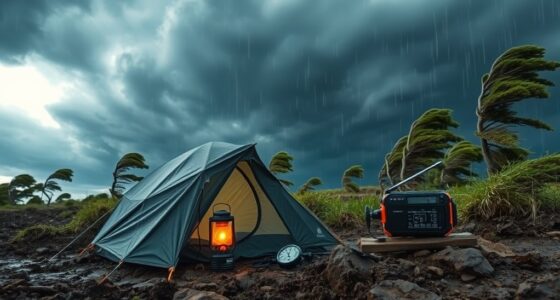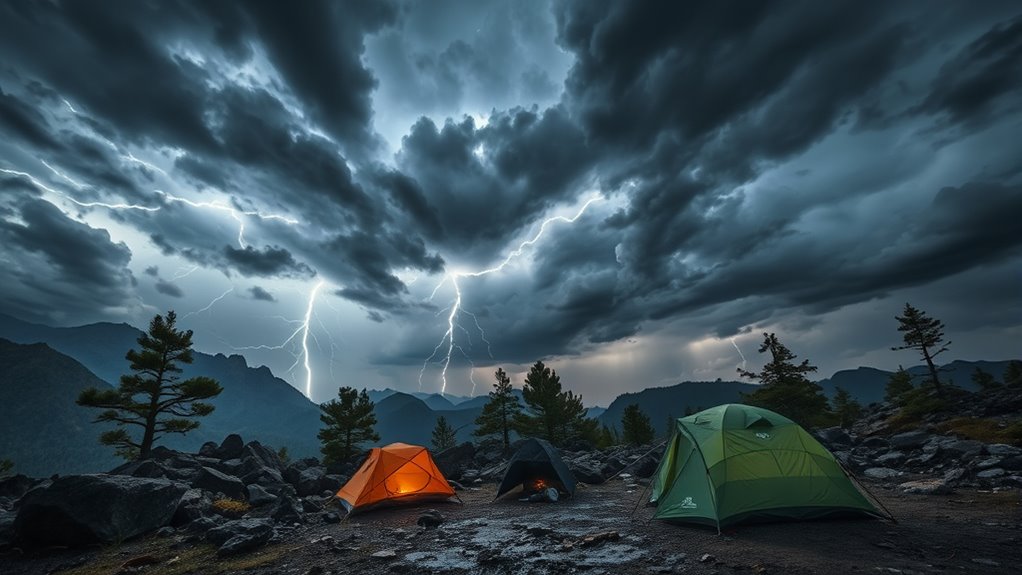

If you’re camping in lightning-prone areas, it’s essential to stay informed and prepared. Check weather forecasts regularly and use reliable lightning alert apps to get real-time updates. Seek sturdy shelters like buildings or vehicles during storms and avoid open fields or tall objects. Keep your electronic devices charged for quick access to weather alerts. Staying vigilant and smart in your planning helps you enjoy your trip safely—discover more tips to protect yourself in stormy weather.
Listen free for 30 days with Audible
Thousands of audiobooks and originals — cancel anytime.
As an affiliate, we earn on qualifying purchases.
Key Takeaways
- Check weather forecasts and lightning alerts before camping in or near high-risk areas.
- Identify if your camping location is in a lightning-prone region with specific weather patterns or terrain features.
- Use real-time weather technology like lightning detectors and weather apps to stay informed during outdoor activities.
- Always seek sturdy shelter, such as a building or vehicle, during thunderstorms, avoiding open spaces and tall objects.
- Have a clear storm safety plan and keep electronic devices charged to receive timely weather updates and warnings.
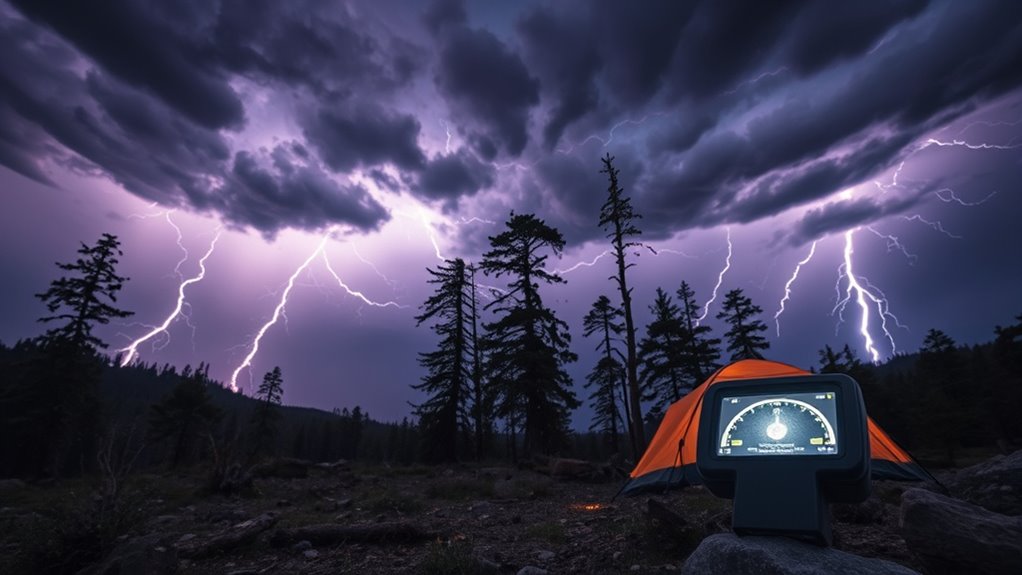
Have you ever wondered why some areas seem to attract more lightning than others? It’s a question that often comes up when planning outdoor activities or camping trips. Lightning-prone regions tend to have specific weather patterns and geographical features that make them more vulnerable during storms. If you’re heading into these areas, understanding why certain locations are more dangerous can help you stay safe. Storm safety isn’t just about knowing what to do when lightning strikes; it’s also about being prepared before you even set foot outside. That’s where outdoor preparedness plays a vital role. Before your trip, check the weather forecast carefully and identify if you’re heading into a lightning-prone zone. Many regions, especially those with high elevations, open plains, or dense storm activity, require extra caution. Being aware of these factors allows you to plan your activities around the weather, avoiding dangerous times and places. Using weather technology like real-time lightning alerts can give you a considerable advantage. These tools can notify you instantly if lightning is detected nearby, so you can seek shelter immediately. It’s essential to have a plan in place for storm safety, including knowing where to go for shelter and how quickly you can reach it. When you’re outdoors, avoid open fields, hilltops, or any isolated tall objects because these are prime targets for lightning strikes. Instead, look for sturdy shelter, such as a building or a vehicle, and stay inside until the storm passes. If you’re camping, set up your tent away from trees, because lightning can jump from a struck tree to you. Keep electronic devices charged and close, so you can receive weather updates or emergency alerts. It’s also wise to bring a portable weather radio or download a reliable weather app that provides lightning warnings and storm forecasts. Being proactive about outdoor preparedness means you’re less likely to be caught off guard. Remember, lightning can strike miles away from a storm, so even if the sky looks clear, stay alert if you’re in a high-risk area. Always follow storm safety guidelines, such as waiting at least 30 minutes after the last thunderclap before resuming outdoor activities. By understanding why certain areas attract more lightning and leveraging weather technology, you can greatly reduce your risk. Additionally, knowing the characteristics of lightning-prone regions can help you better assess danger levels and prepare accordingly. Your safety depends on your awareness and preparation, especially in lightning-prone zones. With proper planning and the right tools, you can enjoy your outdoor adventures without compromising your safety.
As an affiliate, we earn on qualifying purchases.
Frequently Asked Questions
How Can I Tell if Thunderstorms Are Approaching?
You can tell thunderstorms are approaching by paying attention to lightning detection alerts and storm warning apps on your phone. These tools give real-time updates, so you’ll know when lightning is nearby or a storm is imminent. Watch for darkening skies, increasing wind, and distant thunder. Combining these signs with technology guarantees you stay ahead of the storm and can seek shelter safely before it hits.
What Should I Do if Caught Outdoors During a Lightning Storm?
If you’re caught outdoors during a lightning storm, take immediate action for lightning safety. Seek shelter in a sturdy building or a car, avoiding open fields, tall trees, and water. Sit low, away from metal objects, and avoid using electronic devices. Stay calm, stay put, and wait at least 30 minutes after the last thunder. Prioritize outdoor preparedness to stay safe when lightning strikes unexpectedly.
Are Certain Types of Tents Safer in Lightning-Prone Areas?
Certain tent materials and locations can enhance your safety during lightning storms. Opt for tents made of non-conductive materials like nylon or polyester, which reduce the risk of electrical conduction. Set up your tent away from tall trees, metal objects, and open fields, ideally in a low-lying area or sheltered spot. This minimizes lightning strike risk and offers better protection during thunderstorms. Always stay alert and follow weather updates for added safety.
How Does Weather Technology Predict Lightning Activity?
Like a modern oracle, weather technology predicts lightning activity through lightning detection and advanced weather forecasting. You get real-time alerts that warn you of approaching storms, much like a lighthouse guiding ships safely through treacherous waters. These tools analyze atmospheric conditions, such as cloud buildup and electrical charges, to forecast potential lightning strikes. By trusting this technology, you can make quick decisions, keeping yourself and your loved ones safe during outdoor adventures.
Can Lightning Strike the Same Area Twice?
Yes, lightning can strike the same area twice. That’s why lightning safety experts recommend ongoing risk assessment during storms. Even if an area has been hit once, it remains vulnerable. Always stay alert and avoid sheltering under tall objects or open spaces, as lightning can strike repeatedly. Using weather technology helps you monitor storm activity, so you can make informed decisions and stay safe in lightning-prone areas.
As an affiliate, we earn on qualifying purchases.
Conclusion
By staying informed, by respecting warnings, and by choosing safe shelter, you protect yourself from lightning’s danger. By paying attention to weather updates, by avoiding open fields, and by seeking sturdy structures, you minimize risk. With Weather Tech on your side, you can enjoy the outdoors confidently, knowing you’re prepared. Remember, awareness keeps you safe, vigilance keeps you protected, and smart choices keep you alive. Stay safe, stay smart, and enjoy your adventures responsibly.
As an affiliate, we earn on qualifying purchases.
As an affiliate, we earn on qualifying purchases.
Flea & tick season Picks
flea and tick prevention
As an affiliate, we earn on qualifying purchases.