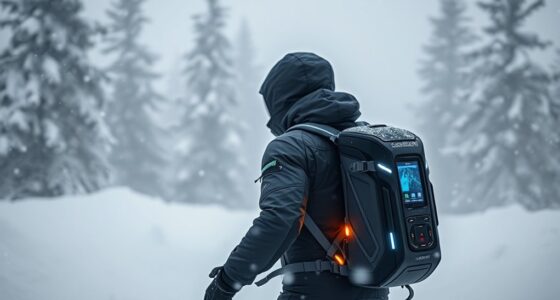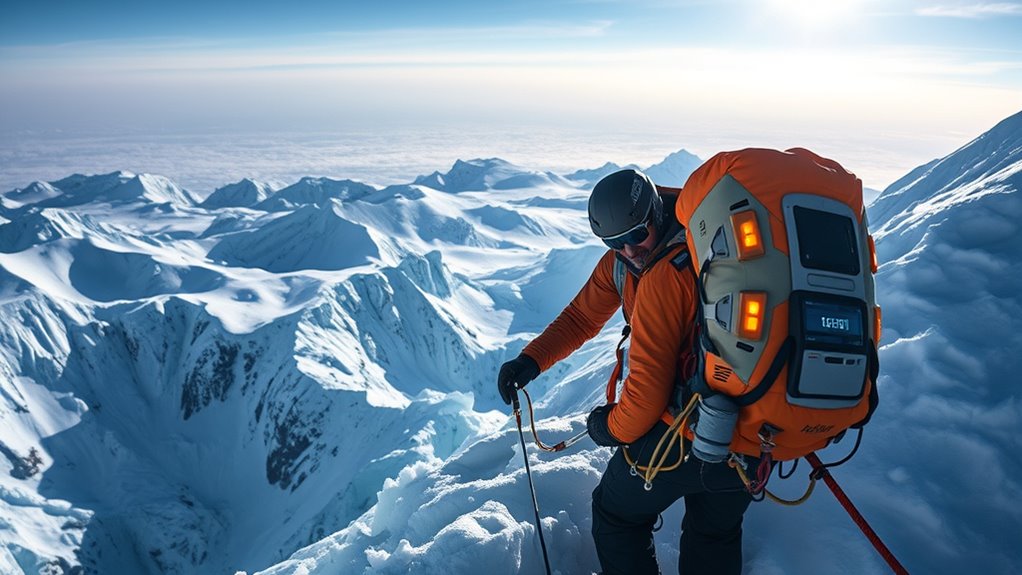

During Everest expeditions, advanced cold-weather gear keeps you safe and warm through innovative insulation, moisture-wicking fabrics, and durable, lightweight designs. Modern clothing traps heat with down and synthetic fibers, while moisture management fabrics wick sweat to prevent chills. Layering allows you to adjust to changing conditions, and windproof, waterproof shells protect you from snow and storms. These technological improvements enhance your safety and comfort. If you keep going, you’ll discover how these innovations can help you face extreme cold challenges yourself.
Listen free for 30 days with Audible
Thousands of audiobooks and originals — cancel anytime.
As an affiliate, we earn on qualifying purchases.
Key Takeaways
- Advanced insulated clothing and down suits provide maximum warmth while remaining lightweight for high-altitude climbs.
- Modern oxygen systems and masks ensure safe breathing in low-pressure Everest environments.
- Innovative moisture-wicking fabrics and waterproof shells keep climbers dry and prevent heat loss.
- Layered gear systems allow adaptation to changing weather, wind, and snow conditions on the mountain.
- Eco-friendly, durable materials enhance safety, comfort, and sustainability for extreme cold expeditions.

Extreme cold expeditions push human limits as explorers venture into some of the harshest environments on Earth. When you’re in these extreme conditions, every piece of gear becomes critical, especially high altitude gear designed specifically for such environments. This specialized equipment isn’t just about comfort; it’s about survival. High altitude gear includes insulated clothing, oxygen systems, and durable boots, all engineered to withstand the low pressure and frigid temperatures. The gear must be lightweight enough to carry but robust enough to protect you from wind, snow, and the biting cold.
Thermal insulation is at the heart of these advancements. It’s what keeps your body heat from escaping into the freezing air. Modern thermal insulation materials are carefully selected to maximize warmth while minimizing weight. Think about layers of down, synthetic fibers, and innovative fabrics that trap heat in tiny air pockets. These layers work together to create a barrier against the cold. When you’re climbing at high altitude, your body generates heat, but the thin air and extreme cold can rapidly sap it away. That’s why clothing with excellent thermal insulation is essential. It prevents hypothermia and frostbite, keeping your core temperature stable despite the freezing surroundings.
Modern thermal insulation traps heat with lightweight materials, essential for survival in extreme cold and high-altitude environments.
The design of high altitude gear also considers moisture management. As you exert yourself, sweat can become a problem, especially when it cools and causes chills. Advanced fabrics wick moisture away from your skin, maintaining dryness and warmth. You’ll find that thermal insulation isn’t just about trapping heat; it’s also about managing humidity and preventing heat loss through convective and conductive means. This is especially important during sudden weather changes or high winds, which can strip away heat rapidly.
You’ll need gear that adapts to different conditions—ranging from the bright glare of snowfields to the fierce cold of nighttime. Proper layering with thermal insulation allows you to add or remove clothing depending on activity level and weather. For extreme expeditions, gear manufacturers develop high-altitude clothing with integrated thermal layers, windproof shells, and waterproof membranes. This combination ensures you stay warm and dry, even when facing blizzards or prolonged exposure to the cold. Additionally, advancements in thermal insulation have led to more sustainable and environmentally friendly materials, making these innovations not only effective but also eco-conscious.
In short, the technology behind high altitude gear and thermal insulation has evolved from necessity into innovation. It’s designed to keep you alive, comfortable, and focused on your journey. Whether for Everest climbers or outdoor enthusiasts, these advancements mean you’re better equipped to face the cold, push your limits, and reach new heights safely.
extreme cold weather insulated jacket
As an affiliate, we earn on qualifying purchases.
As an affiliate, we earn on qualifying purchases.
Frequently Asked Questions
How Does Cold Weather Affect Human Physiology?
Cold weather impacts your physiology by challenging your thermal regulation, making it harder to maintain your core temperature. Your circulatory system adapts by constricting blood vessels to preserve heat, which can reduce blood flow to extremities. This process helps you stay warm but may lead to frostbite or hypothermia if you don’t take proper precautions. Your body continually works to balance heat production and loss in extreme cold conditions.
What Are the Most Innovative Materials Used in Cold Gear?
Did you know modern cold gear can keep you warm in temperatures as low as -50°C? You’ll find innovative materials like advanced insulation techniques and moisture-wicking fabrics that work together to protect you. These materials trap heat, prevent moisture buildup, and keep you dry and warm. By integrating these cutting-edge fabrics, your cold-weather gear offers better insulation and comfort, making extreme conditions more manageable and safer for you.
Can Cold Weather Technology Be Adapted for Everyday Use?
Yes, cold weather technology can definitely be adapted for everyday use. You’ll benefit from gear that uses advanced thermal insulation to keep you warm and moisture management to stay dry and comfortable. This means your jackets, gloves, and even shoes can help regulate temperature and wick away sweat in daily activities. As these innovations become more common, they’ll make cold climates more manageable, improving your comfort and safety year-round.
How Do Extreme Conditions Impact Electronic Device Performance?
Extreme conditions can profoundly impact your electronic device performance. Cold temperatures reduce battery efficiency, causing devices to drain faster or turn off unexpectedly. You might also experience screen malfunctions, like flickering or delayed response, because cold affects the liquid crystals or touch sensors. To prevent this, keep your devices insulated, avoid exposing them to extreme cold for prolonged periods, and use protective cases to maintain ideal operation in harsh environments.
What Safety Measures Are Crucial During Cold Expeditions?
If you’re braving the cold, don’t forget vital safety measures. You must wear clothing insulation that can withstand the harshest chills and keep your body heat locked in. Carry emergency signaling devices to alert rescuers if things go wrong—because in such freezing conditions, help might seem miles away. Always check your gear, stay aware of weather changes, and keep communication lines open to guarantee your safety on these extreme adventures.
high altitude thermal base layers
As an affiliate, we earn on qualifying purchases.
As an affiliate, we earn on qualifying purchases.
Conclusion
Just like the icy peaks challenge climbers, these cold-weather tech pushes your limits. They’re the silent guardians, whispering promises of safety in the freezing wind. As you face life’s storms, remember that innovation and resilience are your summit. With every breakthrough, you climb higher, turning frost into fuel. Embrace the chill—because in the heart of cold, you find your fire, shining brightest when everything around you is frozen solid.
waterproof windproof mountain shell
As an affiliate, we earn on qualifying purchases.
As an affiliate, we earn on qualifying purchases.
As an affiliate, we earn on qualifying purchases.
Flea & tick season Picks
flea and tick prevention
As an affiliate, we earn on qualifying purchases.