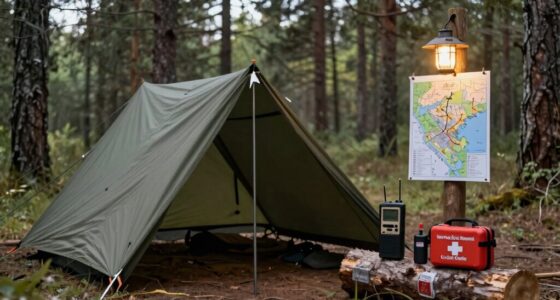
To improve heating in cold camps, you should focus on insulating your shelter with foam boards, blankets, or reflective barriers to trap heat. Use layered clothing and add localized heat sources like chemical packs or small stoves, but guarantee safety and ventilation. Seal drafts and create thermal mass to absorb warmth. Combining these strategies helps you stay warmer longer. Keep exploring to discover even more effective ways to stay cozy in harsh conditions.

Get emergency and outdoor gear delivered free with Prime
- Fast, free delivery on millions of items
- Prime Video, Amazon Music and more included
- Member-only deals all year
Key Takeaways
- Use insulated sleeping mats and thermal blankets to maximize heat retention and prevent cold ground contact.
- Incorporate reflective barriers and thermal barriers inside shelters to reflect and trap body heat.
- Employ strategic layering of moisture-wicking, insulating, and windproof clothing for effective body heat conservation.
- Utilize portable heat sources safely, such as stoves or chemical packs, with proper ventilation and localized placement.
- Seal drafts and insulate shelter gaps to minimize heat loss through conduction, drafts, and radiation.

When you’re in a cold camp, staying warm isn’t just about comfort—it’s fundamental for safety and survival. To achieve this, you need to focus on effective heating strategies that maximize heat retention and minimize heat loss. One of the most essential aspects is employing proper insulation techniques. Insulation isn’t just about adding layers; it’s about creating barriers that trap body heat and prevent the cold from seeping in. You can start by choosing insulated sleeping mats, which serve as a barrier between you and the cold ground, greatly reducing heat conduction away from your body. Combining this with a well-insulated sleeping bag ensures that your body heat stays contained overnight, which is critical in extreme temperatures.
Besides your sleeping setup, the way you insulate your shelter plays an important role. Using reflective barriers or thermal blankets on the interior walls can reflect your body heat back into the space, increasing heat retention. You might also consider insulating your tent or shelter with materials like foam boards or thick blankets, especially around gaps and vents, to cut down on drafts. Remember, air leaks are major culprits in heat loss, so sealing all possible drafts helps keep warmth inside where it belongs. Proper sealing and insulation help create a more effective barrier against the cold. Incorporating thermal mass into your shelter, such as storing warm items inside, can also help stabilize indoor temperatures by absorbing and slowly releasing heat.
Your clothing choices also contribute to heat retention. Layering is key; start with moisture-wicking base layers to keep sweat away from your skin, then add insulating layers like wool or fleece, and finish with an outer shell that blocks wind and moisture. Properly layered clothing traps heat close to your body, which is essential for maintaining your core temperature. Don’t forget to cover extremities—wear warm hats, gloves, and thermal socks—since you lose a considerable amount of heat through your head, hands, and feet.
Finally, consider the strategic use of heat sources. Portable stoves or chemical heat packs can supplement your body heat during the coldest parts of the night. But always be cautious; make sure proper ventilation to avoid dangerous fumes or carbon monoxide buildup. Regularly monitoring your environment for adequate ventilation and safe heat source use is indispensable. Understanding and managing heat loss mechanisms is crucial for staying warm. Being aware of additional heat retention techniques, such as creating localized heat pockets, can also significantly improve your warmth.
In essence, better heating strategies in cold camps revolve around effective insulation techniques and maximizing heat retention. Every layer, barrier, and method you employ should work together to keep warmth in and cold out. When you prioritize these elements, you’re not just enhancing comfort—you’re actively increasing your chances of staying safe and healthy in extreme conditions.
Popular right now

Roborock Q7 M5+ Robot Vacuum and Mop with Self-Emptying Dock

De'Longhi La Specialista Touch Espresso Machine with Coffee Grinder

Ninja DZ801 DualZone 6-in-1 Air Fryer, 8 Qt, Grey
As an affiliate, we earn on qualifying purchases.
Frequently Asked Questions
How Do I Prevent Carbon Monoxide Poisoning in Cold Camps?
To prevent carbon monoxide poisoning in cold camps, guarantee proper ventilation safety by keeping vents open and avoiding blocked exhaust pipes. Always install and regularly check monoxide detectors to alert you of dangerous levels. Never run fuel-burning appliances or generators inside enclosed spaces, and keep them outside and away from windows. Staying vigilant about ventilation safety and monitoring with detectors helps you stay safe in cold camping conditions.
What Are the Safest Ways to Use Space Heaters Outdoors?
Using portable heaters outdoors is like walking a tightrope—you need balance and caution. To stay safe, only operate outdoor-specific models, keep them on stable surfaces, and never leave them unattended. Make certain proper ventilation to prevent carbon monoxide buildup, and keep flammable materials away. Always follow manufacturer instructions for outdoor safety, and consider battery-operated or propane heaters designed for outdoor use. With these precautions, you keep warmth in and hazards out.
How Can I Insulate My Tent Effectively for Heat Retention?
To insulate your tent effectively, start with tent insulation by adding thick sleeping pads and insulating mats. Use reflective barriers, like emergency blankets or reflective foil, on the tent walls or ceiling to reflect body heat back inside. Seal any gaps with weatherproof tape or extra fabric to prevent drafts. These steps help retain heat, making your tent warmer and more comfortable during cold nights.
What Emergency Heating Options Are Available if My Primary System Fails?
If your primary heating system fails, you can rely on portable heaters fueled by alternative fuels like propane or kerosene. Always guarantee proper ventilation to prevent carbon monoxide buildup. Keep a supply of these fuels on hand, and use heaters designed for safety in enclosed spaces. These options provide quick warmth, but never leave them unattended, and follow all safety instructions to avoid hazards.
How Do I Maintain Consistent Heat Throughout the Night?
To maintain consistent heat throughout the night, focus on improving heating efficiency and temperature regulation. Use insulated sleeping areas and draft stoppers to trap warmth. Consider layering sleeping bags and using a reliable, adjustable heater that distributes heat evenly. Keep your body insulated with appropriate clothing, and monitor the temperature regularly. These steps help guarantee a stable, comfortable environment, even in the coldest conditions.
Conclusion
In cold camps, adopting effective heating strategies keeps you safe and comfortable. Remember, even in the harshest conditions, a well-placed fire, proper insulation, and smart clothing make all the difference. Don’t forget, sometimes the simplest tricks—like layering or sealing drafts—are your best allies. As the old saying goes, “A stitch in time saves nine,” so plan ahead and stay warm. After all, in the end, it’s your warmth that keeps you going.