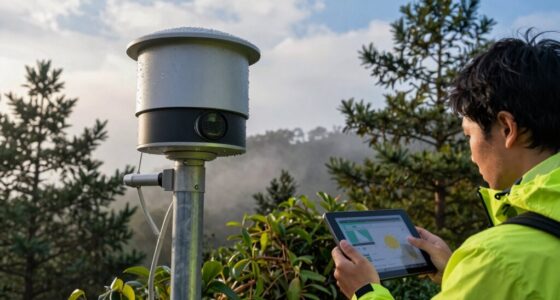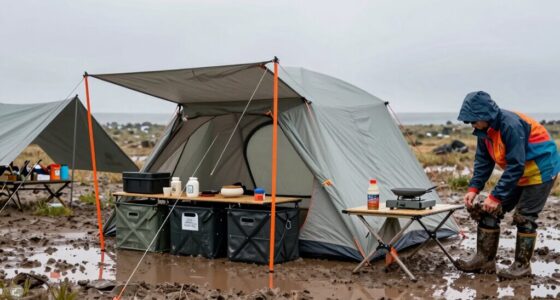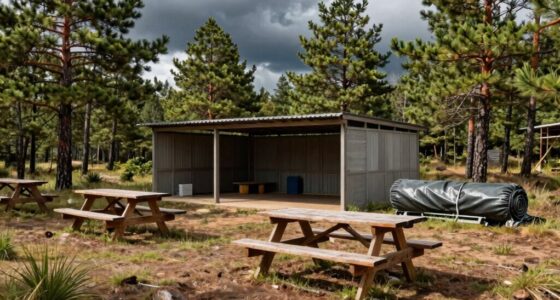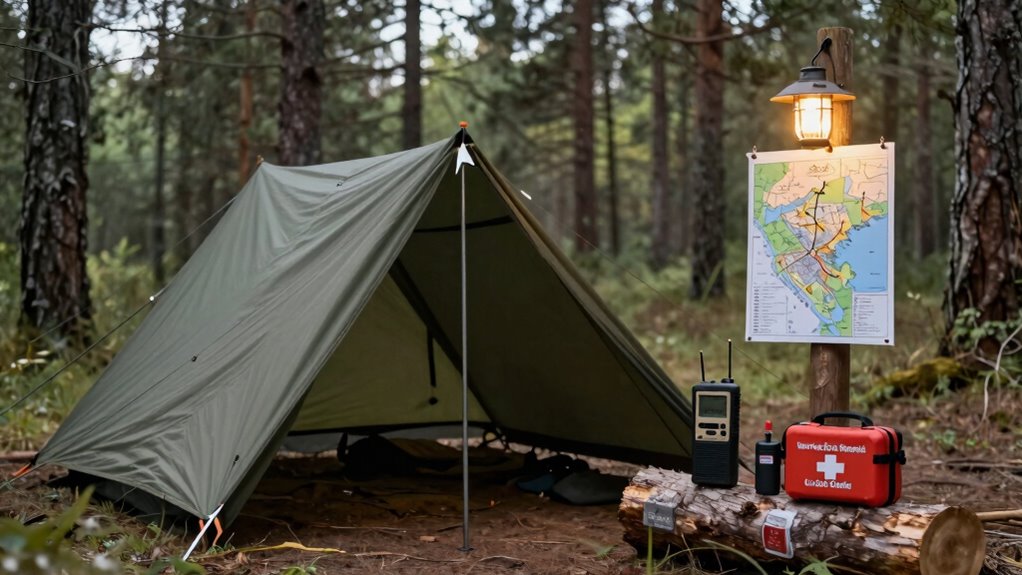

To create a smarter storm plan, start by checking weather forecasts and setting up alerts before your trip. Identify a safe shelter spot away from trees and water, and have portable storm shelters or sturdy tents ready. Establish clear communication and evacuation routes, assigning roles to quicken responses. Keep your emergency kit accessible, updated, and include storm-specific items. Combining weather awareness, shelter planning, and quick response strategies guarantees you’re prepared—stay tuned for more tips to enhance your safety.

Get emergency and outdoor gear delivered free — and shop member deals
- Fast, free delivery on millions of items
- Access to Prime Big Deal Days deals on October 6–7
- Prime Video, Amazon Music and more included
Key Takeaways
- Monitor weather forecasts regularly and set up alerts for real-time updates before and during camping.
- Prepare a comprehensive emergency kit with storm-specific items and ensure quick access at all times.
- Identify and designate a safe shelter location away from hazards like water, trees, and open fields.
- Establish clear communication and evacuation plans, including roles and alternative routes for all group members.
- Practice safety protocols and ensure everyone knows the quickest exit strategies and emergency procedures.
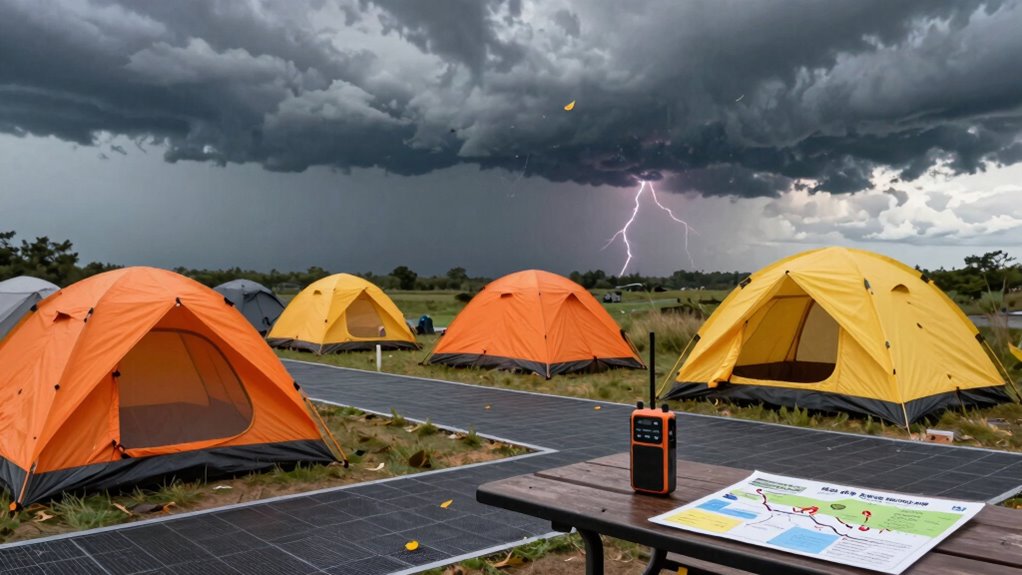
When storms roll in unexpectedly at the campsite, having a well-thought-out plan can make all the difference in keeping everyone safe. The key to this is staying alert to weather awareness. Before you even set up camp, check the forecast and keep an eye on real-time weather updates. Knowing the expected conditions allows you to prepare in advance, giving you time to secure loose gear and decide on safe shelter options. As storms approach, listen to weather alerts through your phone or a weather radio, so you’re never caught off guard. This proactive approach helps you recognize signs of worsening weather early, like darkening skies or sudden wind shifts, so you can act swiftly. Staying weather aware and prepared ensures you can respond effectively to changing conditions. Equipping yourself with a thorough emergency kit is equally crucial. Your emergency kit should include essentials like a flashlight, batteries, a first-aid kit, water, non-perishable snacks, and warm clothing. Make sure it’s easily accessible, so you’re not scrambling when the weather turns dangerous. Additionally, include items specific to storm safety, such as a weather radio for continuous updates and a whistle to signal for help if needed. An emergency kit isn’t just about having supplies—it’s about being prepared to sustain everyone until the storm passes or help arrives. Review your kit regularly to verify nothing is expired or missing, especially before entering areas prone to sudden storms. It’s also helpful to understand the importance of storm-resistant equipment and shelter options for added safety. Planning your shelter options is another critical step. Identify the safest place at your campsite, ideally a sturdy structure away from trees, water, or open fields. If no shelter is available, consider bringing a portable storm shelter or a high-quality tent designed to withstand strong winds. During the storm, avoid tents altogether if the weather worsens; instead, move to your predetermined safe spot. Keep everyone informed about the plan, so they know what to do without panic. Assign roles, like who will grab the emergency kit or lead others to safety, to streamline the response. It’s also wise to have a communication plan in place, ensuring everyone can stay connected even if cell signals are weak or disrupted. Incorporating knowledge about indoor air quality and safe ventilation can also be beneficial if you need to stay indoors for extended periods during a storm. Finally, always have an exit strategy. Know the quickest route out of the campsite and plan for alternative options if roads become impassable. Share this plan with everyone in your group. The combination of weather awareness, a well-stocked emergency kit, secure shelter, and a clear evacuation route creates a thorough storm plan. When you’re prepared, you can face unexpected storms with confidence, ensuring safety and peace of mind for everyone around you.
portable storm shelter for camping
As an affiliate, we earn on qualifying purchases.
As an affiliate, we earn on qualifying purchases.
Frequently Asked Questions
What Weather Apps Are Most Accurate for Storm Tracking?
For the most accurate storm tracking, you should rely on weather apps like The Weather Channel, AccuWeather, and Dark Sky. These apps excel in providing real-time updates, detailed radar images, and precise weather accuracy. You can easily monitor changing conditions, receive alerts, and plan your campsite activities accordingly. Using these apps will help you stay informed and prepared, ensuring your storm plan is effective and your safety is prioritized.
How Can I Protect Sensitive Electronics During a Storm?
Think of your electronics as fragile treasures, easily shattered by storm’s fury. You protect them with electronic shielding and storm resistant gear, wrapping devices in waterproof cases or using Faraday bags to block electromagnetic interference. Keep electronics off or unplugged during intense storms, storing them in a secure, dry spot. With these precautions, you turn vulnerability into resilience, safeguarding your gadgets against nature’s unpredictable power.
What Should I Include in an Emergency Kit for Storms?
You should include essential items like a first aid kit, bottled water, non-perishable food, and a flashlight. Also, pack storm shelter options such as a sturdy tent or underground shelter. Don’t forget batteries, a weather alert system like a weather radio or app, and extra clothing. These supplies guarantee safety and preparedness during storms, helping you respond quickly to changing conditions and stay protected in an emergency.
How Do I Communicate With Others During a Storm Emergency?
They say “a chain is only as strong as its weakest link,” so stay connected during storms. Use clear emergency signals, like whistles or flashlights, to alert others. Keep communication devices, such as a charged cell phone or a weather radio, handy. Make certain everyone knows your plan, and establish a designated meeting point. This way, you’ll guarantee everyone stays informed and safe, even when the storm hits.
Are There Specific Campsite Locations Safer During Storms?
You should look for campsites on higher ground away from water bodies, as flood-prone areas are riskier during storms. Opt for terrain that’s flat, well-drained, and free of tall, unstable trees that could fall. When selecting shelter, choose sturdy structures or create a solid shelter with tarps and natural materials, avoiding tents in low-lying or sheltered areas prone to strong winds or flooding for better safety during storms.
camping emergency kit storm safety
As an affiliate, we earn on qualifying purchases.
As an affiliate, we earn on qualifying purchases.
Conclusion
By thoughtfully weaving safety into your outdoor adventures, you gently steer clear of nature’s more unruly moments. With a well-crafted storm plan, you’re not just prepared—you’re gracefully embracing the wild with confidence and calm. Remember, it’s all about respecting the sky’s unpredictable poetry while safeguarding your cherished memories. So, keep these strategies close, and let your campsite experience remain a harmonious dance with the elements, no matter what the weather may whisper your way.
As an affiliate, we earn on qualifying purchases.
high wind resistant camping tent
As an affiliate, we earn on qualifying purchases.
As an affiliate, we earn on qualifying purchases.
Evergreen bestsellers Picks
bestsellers
As an affiliate, we earn on qualifying purchases.