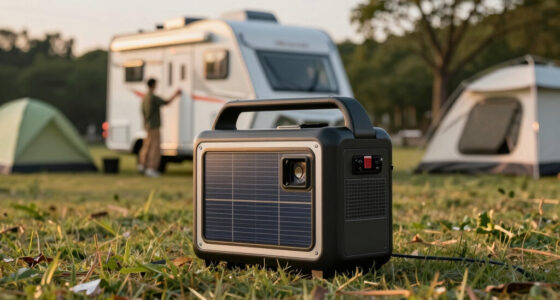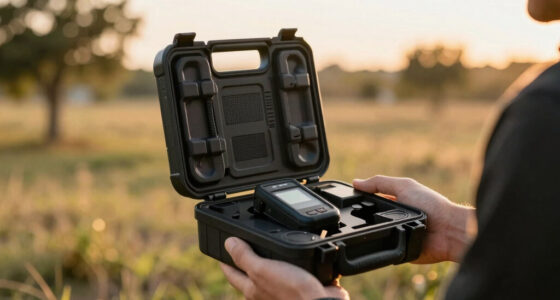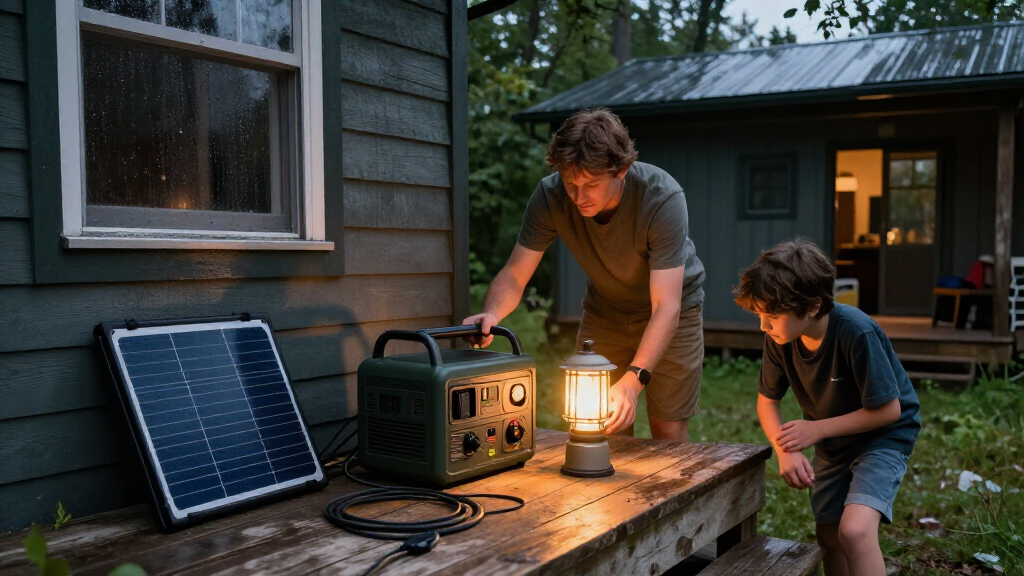
For most households, I’d start with the Jackery Explorer 2000 v2: its larger capacity and paired solar panels make it a strong balance for keeping several essentials running through an outage. The Jackery HomePower 3600 Plus is a better fit for longer backup needs, while compact picks such as the Jackery Explorer 300 suit phones, lights, and other small loads. The main tradeoff is between portability and runtime: small units are easier to move but cannot power as much, while larger stations weigh more and need more solar input to recharge. Solar output also depends on daylight, panel placement, and weather, so a panel’s rated wattage is not a promise of constant charging. Read on for how the 15 options compare and which one fits your emergency plan.

Get emergency and outdoor gear delivered free — and shop member deals
- Fast, free delivery on millions of items
- Access to Prime Big Deal Days deals on October 6–7
- Prime Video, Amazon Music and more included
Complete the kit


Key Takeaways
- The Jackery Explorer 2000 v2 is my best overall pick because its capacity and two included 200W panels make it more suitable for multi-device outage backup than the compact 300Wh-class kits.
- The HomePower 3600 Plus and HomePower 3000 target heavier household needs; their larger capacity can support more demanding plans, but size and charging demands make them less convenient to move than smaller stations.
- Small kits solve a narrower emergency problem. The MARBERO 88Wh and Apowking 100W are better suited to phones and lights than refrigerators or extended household backup.
- Included solar panels change the practical value of a bundle. Several Jackery and entry-level models include panels, while the Anker SOLIX C1000 Gen 2 listing is a power station alone, so buyers need to account for their own charging setup.
- Product labels do not tell the whole story. The roundup includes two Explorer 300 listings and multiple MARBERO units; compare stated capacity, output, and panel inclusion rather than relying on model family names.
| ZeroKor 300W Portable Power Station with 60W Solar Panel | 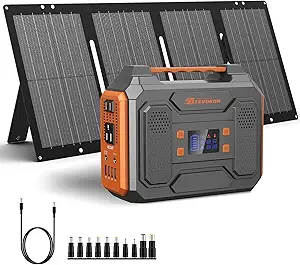 | Best Budget Starter Kit | Power station output: 300W maximum | Solar panel: 60W monocrystalline, 20.5% conversion efficiency | AC outlets: 2 (300W maximum) | VIEW LATEST PRICE | See Our Full Breakdown |
| Jackery Explorer 2000 v2 Portable Power Station with 2x200W Solar Panels |  | Best Overall | Capacity: 2042Wh | AC output: 2200W | Ports: 3 AC outlets, 1 USB-C PD 100W | VIEW LATEST PRICE | See Our Full Breakdown |
| Jackery Explorer 300 Portable Power Station with 40W Solar Panel |  | Best for Emergency Go-Bags | Capacity: 292Wh | Battery chemistry: LiFePO4, 4,000+ cycles to 70% | Weight: 7.5 lbs | VIEW LATEST PRICE | See Our Full Breakdown |
| Jackery HomePower 3600 Plus Portable Power Station with Two 200W Solar Panels |  | Best Premium Home Backup | Battery capacity: 3584Wh (expandable to 43kWh) | AC output: 3600W (7200W parallel) | Solar panels included: 2 × 200W | VIEW LATEST PRICE | See Our Full Breakdown |
| MARBERO 88Wh Portable Power Station with 21W Solar Panel |  | Best Ultra-Light Emergency Kit | Capacity: 88Wh | Solar panel output: 21W | Surge output: 120W | VIEW LATEST PRICE | See Our Full Breakdown |
| MARBERO M823 237Wh Portable Power Station with 60W Solar Panel |  | Best Compact Solar Kit | Battery capacity: 237Wh / 64,000mAh | AC output: 300W rated, 375W peak | AC outlets: 2 pure sine wave outlets | VIEW LATEST PRICE | See Our Full Breakdown |
| EnginStar 300W Portable Power Station with 60W Foldable Solar Panel |  | Best Value Solar Bundle | Battery capacity: 296Wh (80,000mAh) | AC output: 300W, 110V pure sine wave | AC outlets: 2 | VIEW LATEST PRICE | See Our Full Breakdown |
| Jackery HomePower 3000 Portable Power Station with Two 200W Solar Panels |  | Best for Whole-Home Essentials | Battery capacity: 3,072Wh | AC output: 3,600W | AC surge output: 7,200W | VIEW LATEST PRICE | See Our Full Breakdown |
| Anker SOLIX C1000 Gen 2 Portable Power Station |  | Best for Fast-Refill Backup | Battery capacity: 1,024Wh | Output: 2,000W, 3,000W peak | AC recharge time: 49 minutes at 1,600W | VIEW LATEST PRICE | See Our Full Breakdown |
| BROWEY 1600W Portable Power Station with Built-In Solar Panel |  | Best for Integrated Solar Convenience | Battery capacity: 1,024Wh | Output power: 1,600W, 3,200W peak | Battery type: LiFePO4 | VIEW LATEST PRICE | See Our Full Breakdown |
| GRECELL 500W Portable Power Station, 519Wh |  | Best Port Variety for Small-Apartment Backup | Battery capacity: 519Wh (140400mAh) | AC output: 2 pure sine wave outlets, 110V, 500W | USB-C: 1 PD output, up to 60W | VIEW LATEST PRICE | See Our Full Breakdown |
| Jackery Explorer 300 Portable Power Station, 292Wh |  | Best Grab-and-Go Emergency Kit Member | Capacity: 292Wh | Ports: 2 AC, 100W USB-C PD, 2 USB-A, 120W car port | Weight: Approximately 7.5 lbs | VIEW LATEST PRICE | See Our Full Breakdown |
| MARBERO M82 Portable Power Station, 88Wh |  | Best Pocket-Size Blackout Light and Charger | Capacity: 88Wh (24,000mAh) | Output wattage: 80W (120W surge) | Output ports: 8 | VIEW LATEST PRICE | See Our Full Breakdown |
| Jackery Solar Generator 1000 v2 with 200W Solar Panel |  | Best Complete Solar Kit for Home Backup | Battery capacity: 1,070Wh LFP | AC output: 1,500W (3,000W surge), 3 pure sine wave outlets | Solar panel: 200W included | VIEW LATEST PRICE | See Our Full Breakdown |
| Apowking 100W Portable Power Station with 40W Solar Panel |  | Best Budget Bundled Starter Kit | Capacity: 146Wh / 39,600mAh | Running wattage: 100W (200W peak) | Solar panel: 40W monocrystalline, 20.5% efficiency | VIEW LATEST PRICE | See Our Full Breakdown |
| solar generators for emergency power | Weight | Battery capacity |
|---|---|---|
| ZeroKor 300W Portable Power St | — | — |
| Jackery Explorer 2000 v2 Porta | — | — |
| Jackery Explorer 300 Portable | 7.5 lbs | — |
| Jackery HomePower 3600 Plus Po | — | 3584Wh (expandable to 43kWh) |
| MARBERO 88Wh Portable Power St | — | — |
| MARBERO M823 237Wh Portable Po | — | 237Wh / 64,000mAh |
| EnginStar 300W Portable Power | 6.5 lbs | 296Wh (80,000mAh) |
| Jackery HomePower 3000 Portabl | — | 3,072Wh |
| Anker SOLIX C1000 Gen 2 Portab | 11.3kg | 1,024Wh |
| BROWEY 1600W Portable Power St | 26.5 lbs | 1,024Wh |
| GRECELL 500W Portable Power St | — | 519Wh (140400mAh) |
| Jackery Explorer 300 Portable | Approximately 7.5 lbs | — |
| MARBERO M82 Portable Power Sta | 3.2 lbs (1.04 kg) | — |
| Jackery Solar Generator 1000 v | 23.8 lbs | 1,070Wh LFP |
| Apowking 100W Portable Power S | 3.3 lbs | — |
More Details on Our Top Picks
ZeroKor 300W Portable Power Station with 60W Solar Panel
For buyers who want a complete solar generator kit without a big spend, this ZeroKor bundle covers the basics: a 300W station paired with a 60W monocrystalline panel at 20.5% conversion efficiency. Compared with the MARBERO 88Wh kit, you get triple the solar input and far more port variety, including three USB-A ports and a quick-charge port. The tradeoff is that the unstated battery capacity makes it hard to estimate real runtime — a meaningful gap when planning for an outage. Anything drawing over 300W is off the table, so forget refrigerators or space heaters. It shares the same lightweight mission as the Jackery Explorer 300, but without that unit’s published capacity and cycle-life ratings, it demands more trust from the buyer.
Pros:- Includes a 60W monocrystalline panel with solid 20.5% conversion efficiency
- Three recharge methods: AC outlet, solar, or 12V car outlet
- Broad port selection including USB-C and quick-charge USB
- Built-in short circuit, over-current, and overheating protection plus an SOS flashlight
Cons:- Battery capacity is never specified, so runtime planning is guesswork
- 300W output ceiling rules out most kitchen appliances and heaters
- Solar panel junction box must stay dry, limiting placement flexibility
Best for: Budget-conscious buyers who need a first solar kit for phones, lights, radios, and small devices during short outages
Not ideal for: Anyone preparing for multi-day outages or powering appliances — the 300W ceiling and unspecified capacity make real emergency planning a guessing game
- Power station output:300W maximum
- Solar panel:60W monocrystalline, 20.5% conversion efficiency
- AC outlets:2 (300W maximum)
- USB ports:3 USB-A (5V/3A) + quick-charge port
- Solar panel DC output:18V/3.3A, 60W maximum
- Recharge methods:AC outlet, 13V–23V solar panel, or 12V car outlet
- Protection features:Short circuit, over-current, over-voltage, overload, overheating
Our verdict“A reasonable entry point for light emergency loads, but the missing capacity spec means serious preppers should spend more for certainty.”
Jackery Explorer 2000 v2 Portable Power Station with 2x200W Solar Panels
This is the pick I’d point most households toward, because it nails the balance emergency buyers actually need: 2kWh of capacity, 2200W of output, and a genuinely portable frame. At 39.5 lbs, the station is 41% lighter and 34% smaller than typical 2kWh units, and the LiFePO4 chemistry is rated for up to a decade of use — a real advantage over older NMC-based rivals like the GRECELL 500W. The standout emergency feature is 20ms UPS-style switching: plug your fridge or router into it full-time and it takes over automatically when the grid drops. Compared with the larger HomePower 3600 Plus, you sacrifice expandability and raw wattage, but you gain a unit one person can carry to a car or campsite. Note that solar recharge takes a full 6 hours even with both panels, and the DC8020 plug requirement on the panels trips up buyers expecting the older L-shaped connector.
Pros:- 41% lighter and 34% smaller than typical 2kWh stations at 39.5 lbs
- 20ms UPS-style seamless switching for automatic outage takeover
- Fast AC recharge to 80% in 66 minutes between outages
- LiFePO4 battery rated for up to 10 years with UL1778 certification
Cons:- Solar recharge takes about 6 hours even with the full 400W of included panels
- Panels require the straight DC8020 plug rather than the familiar L-shaped DC7909, which confuses owners of older Jackery gear
- Station and panels may ship separately, complicating delivery for gift-givers
Best for: Households that want whole-fridge, router, and device coverage during multi-hour outages without hiring help to move the unit
Not ideal for: Buyers planning to run well pumps, electric dryers, or whole-home circuits — 2200W and 2042Wh won’t stretch that far
- Capacity:2042Wh
- AC output:2200W
- Ports:3 AC outlets, 1 USB-C PD 100W
- Battery type:LiFePO4
- Weight (station only):39.5 lbs
- AC charge time (0-80%):66 minutes
- Solar charge time:6 hours with 400W of panels
- UPS switching:20ms
- Certification:UL1778
Our verdict“The best blend of capacity, portability, and true backup functionality for a typical family’s emergency needs.”
Jackery Explorer 300 Portable Power Station with 40W Solar Panel
Not every emergency plan involves staying home. The Explorer 300’s 7.5 lb weight and integrated handle make it the one unit here that belongs in a car trunk or evacuation kit rather than a closet shelf. The LiFePO4 battery is rated for over 4,000 cycles — a chemistry advantage the budget ZeroKor 300W kit can’t match on paper — and six simultaneous ports keep phones, radios, and a laptop alive during an extended outage away from home. The honest tradeoff is recharge speed: the included 40W panel needs roughly 7.5 hours of good sun just to reach 80%, so this is a ration-and-stretch solution, not a power-your-fridge solution. Compared with the MARBERO M823 237Wh, the Jackery’s published cycle life and port spread justify its spot, but capacity hunters should look at the Explorer 2000 v2 instead.
Pros:- Genuinely portable at 7.5 lbs with an integrated carry handle
- Charges up to six devices simultaneously across AC, USB-C, USB-A, and car ports
- LiFePO4 chemistry rated for over 4,000 cycles to 70% capacity
- Bundles a 40W solar panel for off-grid recharging
Cons:- Included panel takes roughly 7.5 hours of sunlight to reach 80% charge
- 292Wh capacity limits runtime to small devices only
- Station and solar panel may ship separately
Best for: Renters, road-trippers, and evacuees who need grab-and-go power for communication devices during short displacements
Not ideal for: Home-backup planners — 292Wh won’t run a refrigerator even briefly, and the small panel can’t keep pace with sustained use
- Capacity:292Wh
- Battery chemistry:LiFePO4, 4,000+ cycles to 70%
- Weight:7.5 lbs
- Ports:2 AC, 1 USB-C PD 100W, 2 USB-A, 1 car port (120W)
- Included solar panel:40W
- Solar charging time:Approximately 7.5 hours to 80%
Our verdict“The right size for people whose emergency plan involves leaving, not sheltering in place.”
Jackery HomePower 3600 Plus Portable Power Station with Two 200W Solar Panels
When the outage stretches past a day, capacity stops being a luxury and becomes the whole point. The HomePower 3600 Plus delivers 3584Wh of storage and 3600W of output — enough for a refrigerator, freezer, medical device, and lighting at once — and expands to 43kWh when paired with additional units. Its charging flexibility is unmatched here: the 2-hour hybrid AC+DC recharge beats the Explorer 2000 v2’s 66-minute AC figure on paper only when solar or generator input is added, but it also accepts a gas generator as a source, which no other pick in this lineup offers. The wheels and telescopic handle acknowledge that this is a 100-lb-class machine pretending to be luggage. The catch: the full home-backup setup described by the manufacturer requires an MTS (manual transfer switch), which means an electrician and extra cost. For most buyers, the 2000 v2 covers the same job for less; this one is for people who’ve done the load math and need more.
Pros:- 3584Wh capacity expandable up to 43kWh with multiple units
- Charges via hybrid AC+DC, AC, solar, or even a gas generator
- 4-hour solar recharge is fast for this capacity class
- 6,000-cycle battery rated for 10 years, operating down to -4°F
Cons:- Full home-backup installation requires an MTS transfer switch and professional help
- Station and solar panels ship separately and may arrive days apart
- Wheeled design still means a very heavy, bulky unit to store and maneuver
Best for: Homeowners in outage-prone regions willing to install a transfer switch and run essential circuits for days
Not ideal for: Apartment dwellers and casual users — the size, MTS requirement, and expandability are wasted money if you’re only keeping phones charged
- Battery capacity:3584Wh (expandable to 43kWh)
- AC output:3600W (7200W parallel)
- Solar panels included:2 × 200W
- Charging options:Hybrid AC+DC, AC, solar, gas generator
- Recharge time:2 hours hybrid; 2.5 hours AC or gas; 4 hours solar
- Battery cycle life:6,000 cycles, ~10-year lifespan
- Operating temperature:Down to -4°F
- Design:Wheels and telescopic handle
Our verdict“Serious home-backup hardware for buyers who’ve outgrown 2kWh units and are ready to wire it in properly.”
MARBERO 88Wh Portable Power Station with 21W Solar Panel
Sometimes emergency power just means keeping a phone and a headlamp alive, and that’s exactly the job this MARBERO kit is built for. The 88Wh station plus folding 21W panel is the smallest complete solar setup in this roundup — noticeably lighter than the Jackery Explorer 300 bundle and closer in spirit to the MARBERO M82, but with the panel included so you’re not buying pieces separately. The realistic use case is narrow: one or two phone recharges per day, a flashlight, maybe a small fan. The 120W surge rating means nothing with a heating element will run, and the 21W panel charges slowly even in ideal sun — but it does let the kit sustain itself indefinitely for tiny loads, which a plain power bank can’t do. For weight-obsessed hikers and car-kit builders, that self-sufficiency is the entire value proposition.
Pros:- Smallest and lightest complete solar kit in the roundup
- 21W panel enables indefinite off-grid recharging for small devices
- Stores solar energy for use at night or in cloudy weather
- Simple enough for anyone to use without setup or manuals
Cons:- 88Wh capacity caps realistic output to a few phone charges
- 21W panel charges slowly even in direct sunlight
- 120W surge ceiling rules out nearly all appliances
Best for: Hikers, car-kit builders, and minimalists who need indefinite phone and light charging during extended grid-down situations
Not ideal for: Anyone who needs to run a CPAP, laptop for work, or any appliance — 88Wh is roughly six phone charges and nothing more
- Capacity:88Wh
- Solar panel output:21W
- Surge output:120W
- Included:Power station and 21W solar panel
- Primary use case:Phones, lights, and small USB devices
Our verdict“A survival-kit component rather than a home backup tool — perfect for a go-bag, pointless for a fridge.”
MARBERO M823 237Wh Portable Power Station with 60W Solar Panel
The MARBERO M823 pairs a modest 237Wh battery with an included 60W foldable solar panel, making it a ready-to-pack choice for keeping phones, lights, and other small essentials powered. Its two pure sine wave AC outlets and mix of USB and DC connections give it more flexibility than the smaller MARBERO 88Wh model in this roundup, though neither is suited to running demanding household appliances. The M823’s 300W output limit rules out many heaters, kettles, and similar loads, and its battery holds less energy than the EnginStar 300W’s 296Wh capacity. The built-in flashlight with SOS mode adds a practical emergency feature, but solar recharging depends on direct sunlight. I’d choose this kit for short outages and light loads where compactness matters more than runtime.
Pros:- Includes a foldable 60W solar panel for off-grid recharging
- Pure sine wave AC output supports compatible sensitive electronics
- AC, USB-A, USB-C, and DC connections cover several small-device needs
- Built-in flashlight includes strobe and SOS modes
Cons:- 237Wh capacity limits how long it can run even modest loads
- 300W rated output excludes many common high-power appliances
- Solar charging depends on direct sunlight
Best for: Solo campers or apartment dwellers who want a small, bundled solar kit for phones, lights, and other low-power essentials
Not ideal for: Households needing overnight backup for several appliances or enough output for high-wattage equipment
- Battery capacity:237Wh / 64,000mAh
- AC output:300W rated, 375W peak
- AC outlets:2 pure sine wave outlets
- USB-C:1 port, up to 18W PD
- DC output:12–16.8V/10A, 14A maximum
- Included solar panel:60W foldable
- Flashlight modes:Flashlight, strobe, SOS
Our verdict“Choose the M823 for a compact, panel-included kit for small emergency loads; pick a higher-capacity unit if you need longer runtime.”
EnginStar 300W Portable Power Station with 60W Foldable Solar Panel
With 296Wh of capacity and a 60W panel in the package, the EnginStar offers a little more stored energy than the MARBERO M823 while keeping the same 300W AC ceiling. That extra capacity can stretch small-device charging and lighting, but it does not make this a backup source for high-draw appliances. Its eight ports and three recharge routes—wall, car, or solar—give it useful flexibility for a compact emergency kit, and the stated full recharge time is about three hours at up to 65W. The included panel weighs four pounds, so the bundle is portable but still adds gear to carry. Compared with the Anker SOLIX C1000 Gen 2, the EnginStar is far lighter-duty; it makes sense when affordability of space and portability matter more than powering larger loads.
Pros:- 296Wh capacity is higher than the MARBERO M823’s 237Wh
- Includes a 60W monocrystalline foldable solar panel
- Eight output ports support several device types at once
- Can recharge from solar, a wall outlet, or a car socket
Cons:- 300W AC output excludes high-power appliances
- Solar recharge speed varies with sunlight conditions
- Battery requires maintenance recharging every two to three months
Best for: Campers and drivers assembling a portable kit for phones, cameras, small lights, and other modest loads
Not ideal for: People who need to run appliances above 300W or keep household essentials powered through a long outage
- Battery capacity:296Wh (80,000mAh)
- AC output:300W, 110V pure sine wave
- AC outlets:2
- Total output ports:8
- Solar panel:60W monocrystalline, 23% conversion efficiency
- Weight:6.5 lbs
- Recharge time:About 3 hours at 65W maximum
Our verdict“Pick the EnginStar when you want a portable, panel-included kit with more capacity than the M823 for low-power emergency needs.”
Jackery HomePower 3000 Portable Power Station with Two 200W Solar Panels
The Jackery HomePower 3000 is the clear choice in this group for buyers who need meaningful outage coverage: its 3,072Wh battery and 3,600W AC output can support a much broader set of household essentials than the Anker SOLIX C1000 Gen 2’s 1,024Wh capacity. The UPS switching time of 20ms or less is designed to keep connected equipment running through a grid interruption, while the TT-30 RV port adds a useful option for compatible setups. Its LiFePO4 battery is rated for 4,000 cycles to 70% capacity. The tradeoff is bulk associated with this much storage, and the included solar panels may arrive separately from the station. Solar charging can reach 80% in nine hours under the stated conditions, so it is not a quick replenishment plan in poor weather.
Pros:- 3,072Wh capacity and 3,600W output cover more substantial loads than the Anker SOLIX C1000 Gen 2
- UPS switches in 20ms or less for connected essentials
- LiFePO4 battery is rated for 4,000 cycles to 70% capacity
- Includes two 200W solar panels and a TT-30 RV port
Cons:- Solar panels and power station may arrive in separate packages
- Solar charging takes up to nine hours to reach 80% under stated conditions
- High capacity makes it less suited to buyers seeking a small, lightweight kit
Best for: Households or RV owners who need high-capacity backup for multiple essential devices and compatible equipment
Not ideal for: Buyers prioritizing an easy-to-carry station or a compact kit for charging only phones and small electronics
- Battery capacity:3,072Wh
- AC output:3,600W
- AC surge output:7,200W
- UPS switching time:20ms or less
- Battery chemistry:LiFePO4
- Battery cycle life:4,000 cycles to 70% capacity
- Included solar panels:2 × 200W
- Ports:AC, USB-C, USB-A, DC, TT-30 RV
Our verdict“Choose the HomePower 3000 when household-scale capacity and UPS support matter more than portability.”
Anker SOLIX C1000 Gen 2 Portable Power Station
The Anker SOLIX C1000 Gen 2 balances a 1,024Wh battery with 2,000W output, placing it between the compact EnginStar 300W and the much larger Jackery HomePower 3000. That middle ground suits buyers who want to run more than small electronics without stepping up to a 3,072Wh station. Its standout advantage is fast recharging: the listed AC recharge time is 49 minutes at 1,600W, and compatible solar input can refill it in 1.8 hours under stated conditions. A sub-10ms UPS switchover and app-based power management add useful control for remote work or essential devices. The limitation is that the 1,024Wh capacity still calls for careful load choices during a long outage, and solar charging requires a compatible setup rather than an included panel.
Pros:- 2,000W output supports larger loads than the 300W compact stations
- AC recharge is listed at 49 minutes at 1,600W
- Under-10ms UPS switchover supports connected electronics
- LiFePO4 battery is rated to retain at least 80% capacity after 4,000 cycles
Cons:- 1,024Wh capacity is substantially below the Jackery HomePower 3000
- Solar charging requires a compatible solar input setup
- At 11.3kg, it is less convenient to carry than the EnginStar 300W
Best for: Remote workers and households wanting fast-recharging backup for electronics and selected mid-power appliances
Not ideal for: People who need several days of household-scale storage or want a solar panel bundled with the station
- Battery capacity:1,024Wh
- Output:2,000W, 3,000W peak
- AC recharge time:49 minutes at 1,600W
- Solar input:600W maximum, 60V
- Solar recharge time:1.8 hours
- UPS switchover:Under 10ms
- Battery chemistry:LiFePO4
- Weight:11.3kg
Our verdict“Choose the C1000 Gen 2 for a portable middle ground with quick recharge and UPS support, provided 1,024Wh covers your outage plan.”
BROWEY 1600W Portable Power Station with Built-In Solar Panel
The BROWEY combines a 1,024Wh LiFePO4 battery with 1,600W output, giving it enough capacity and power for a selection of emergency essentials while remaining less demanding to move than the 3,072Wh Jackery HomePower 3000. Its built-in 40W solar panel is the defining feature: it offers a way to collect sunlight without packing a separate panel, but its modest rating means it is better for gradual top-ups than rapid recovery after heavy use. The Anker SOLIX C1000 Gen 2 also has 1,024Wh capacity and higher 2,000W output, plus a much faster listed AC recharge, so it is the stronger fit when speed and output headroom matter. BROWEY instead suits buyers who value an integrated panel and multiple charging routes. At 26.5 pounds, it is still a substantial carry.
Pros:- Built-in 40W solar panel and MPPT controller avoid a separate panel for basic solar input
- 1,024Wh LiFePO4 battery is rated for 3,000+ cycles to 80% capacity
- 1,600W pure sine wave output handles more than compact 300W stations
- USB-C PD supports up to 100W
Cons:- Built-in 40W panel offers limited solar charging speed
- At 26.5 lbs, it is a heavy carry for a portable station
- 1,600W output is below the Anker SOLIX C1000 Gen 2’s 2,000W
Best for: Preparedness-minded campers and homeowners who want a built-in solar panel for gradual charging without carrying a separate panel
Not ideal for: Buyers needing fast solar replenishment, maximum output headroom, or a lightweight emergency station
- Battery capacity:1,024Wh
- Output power:1,600W, 3,200W peak
- Battery type:LiFePO4
- Built-in solar panel:40W
- Ports:8, including AC, DC, and USB-C PD
- USB-C PD:Up to 100W
- Weight:26.5 lbs
- Battery life:3,000+ cycles to 80% capacity
Our verdict“Choose BROWEY if an integrated solar panel matters more than rapid recharging or the Anker’s extra output headroom.”
GRECELL 500W Portable Power Station, 519Wh
This option stands out for sheer port count: ten simultaneous outputs, including 60W USB-C PD and wireless charging, which means one unit can keep a phone, tablet, laptop, router, and a small fan running during an outage without adapter juggling. Compared with the Jackery Explorer 300, the GRECELL nearly doubles capacity (519Wh vs. 292Wh) for buyers who need more than a weekend phone-charging buffer. The tradeoff is that a 500W inverter ceiling rules out anything with a heating element or compressor, and the solar panel is sold separately — unlike the bundled Apowking kit — so the true cost of solar readiness is higher than the sticker suggests. This pick makes the most sense for device-heavy households rather than appliance backup.
Pros:- Ten output types including 60W USB-C PD and wireless charging
- Three recharge paths: wall, car, and compatible solar panel
- Pure sine wave inverter is safe for sensitive electronics
- Built-in protections against temperature, overvoltage, overcurrent, and shorts
Cons:- 500W ceiling excludes most kitchen and medical appliances
- Solar panel not included, adding cost for off-grid recharging
- Requires a recharge at least every three months in storage
Best for: Apartment dwellers who need to keep many small electronics alive during multi-hour outages
Not ideal for: Buyers who want to run a mini fridge or CPAP humidifier — the 500W limit is too tight
- Battery capacity:519Wh (140400mAh)
- AC output:2 pure sine wave outlets, 110V, 500W
- USB-C:1 PD output, up to 60W
- Max simultaneous devices:10
- Recharge methods:Wall outlet, car charger, 100W or 200W solar panel
- Wall recharge time:6–7 hours
- Solar recharge time:6–9 hours with 100W panel in full sun
- Solar panel:Not included
Our verdict“A strong mid-capacity choice if your emergency plan centers on electronics, not appliances.”
Jackery Explorer 300 Portable Power Station, 292Wh
At roughly 7.5 pounds with an integrated carry handle, this model is the one you actually grab when the lights go out — no wheels, no hauling, no second person needed. It charges from empty to full in about 4 hours by wall outlet, noticeably faster than the GRECELL 500W, so it’s ready again quickly between outages. Where it falls short is capacity: 292Wh will run a router and phones for a day or two, but the Jackery Solar Generator 1000 v2 dwarfs it for whole-appliance coverage. One caveat worth flagging: the listing carries conflicting specs on weight, dimensions, and even battery chemistry, so verify details before buying. Paired with a compatible Jackery panel, it works well as a car-camping and blackout hybrid.
Pros:- Light 7.5 lb design with integrated handle for true portability
- Fast 4-hour wall recharge keeps downtime short
- Versatile ports including 100W USB-C PD and a 120W car port
- Rated for over 4,000 charge cycles to 70% capacity
Cons:- Solar panel sold separately, unlike the bundled Apowking kit
- Product listing shows conflicting weights, dimensions, and battery chemistry
Best for: Renters and car campers who want a light, fast-charging backup for phones, laptops, and lights
Not ideal for: Households preparing for multi-day outages — 292Wh runs out well before the fridge matters
- Capacity:292Wh
- Ports:2 AC, 100W USB-C PD, 2 USB-A, 120W car port
- Weight:Approximately 7.5 lbs
- Wall charge time:4 hours
- Solar charge time:80% in ~2.8 hours with 100W panel (panel not included)
- Battery lifespan:Over 4,000 cycles to 70% capacity
Our verdict“The easiest unit in this lineup to grab in a hurry, as long as your emergency needs stay small.”
MARBERO M82 Portable Power Station, 88Wh
Weighing 3.2 pounds and smaller than a lunchbox, this unit is barely bigger than a large power bank but adds an AC outlet, eight ports, and a three-level LED light with SOS mode — genuinely useful when an outage hits at night and you need both a flashlight and a way to top up phones. Compared with the Apowking 100W kit, the MARBERO is lighter and cheaper to own, but the Apowking bundles a solar panel while the M82’s solar input requires a separately purchased MARBERO panel. The 80W output ceiling is the hard limit here: think phones, headlamps, and a small radio, not laptops under heavy load or any appliance. Its ability to charge devices while it recharges itself makes it a good bedside companion during extended outages.
Pros:- Ultra-compact 3.2 lb body with an ergonomic handle
- Eight output ports covering AC, DC, USB, and USB-C PD
- Pass-through charging keeps devices powered while the unit recharges
- Built-in LED light with SOS mode doubles as an emergency lantern
Cons:- 80W output ceiling excludes laptops under load and any appliance
- Solar recharging requires a compatible MARBERO panel sold separately
Best for: Car-trunk emergency kits and bedside outage bags where weight and size matter most
Not ideal for: Anyone expecting laptop or appliance backup — 88Wh and 80W won’t get there
- Capacity:88Wh (24,000mAh)
- Output wattage:80W (120W surge)
- Output ports:8
- Charging methods:AC, battery, solar
- Solar panel compatibility:MARBERO 30W or 60W panel
- Weight:3.2 lbs (1.04 kg)
- Dimensions:6.5 x 4.6 x 3.1 inches
- Safety features:BMS with short-circuit, overload, overcharge, and over-voltage protection
Our verdict“A backup light and phone charger first, power station second — ideal as a supplemental kit item.”
Jackery Solar Generator 1000 v2 with 200W Solar Panel
This is the only product in this batch that arrives ready to run off-grid: a 1,070Wh LFP station plus a 200W panel in one purchase, so there’s no accessory math required. The 1,500W inverter with 3,000W surge means a full-size fridge, microwave, or CPAP setup is realistic during an outage — territory the GRECELL 500W can’t touch — and the LFP chemistry rated for 4,000+ cycles makes it a decade-scale purchase rather than a few seasons. Compared with the larger Jackery Explorer 2000 v2, you give up half the capacity but save considerable weight and cost. Two real annoyances: the headline one-hour charge requires enabling an emergency mode in the app, and the panel and station ship separately, so don’t expect one box on day one.
Pros:- 1,500W AC output with 3,000W surge handles fridges and medical devices
- Includes a 200W solar panel, so it’s off-grid capable immediately
- Long-life LFP battery rated beyond 4,000 cycles to 70% capacity
- App-controlled charging modes and 100W USB-C PD for fast device charging
Cons:- One-hour full charge only works with emergency charging enabled in the app
- Solar panel and power station ship in separate boxes
Best for: Homeowners who want appliance-capable outage backup with solar recharging out of the box
Not ideal for: Budget-focused buyers or anyone needing a truly portable grab-and-go unit — at 23.8 lbs it’s a two-hand carry
- Battery capacity:1,070Wh LFP
- AC output:1,500W (3,000W surge), 3 pure sine wave outlets
- Solar panel:200W included
- Weight:23.8 lbs
- Full charge time:1 hour with emergency charging; 1.7 hours default
- Solar charge time:6 hours to 80% with 200W panel
- Battery lifespan:Over 70% capacity after 4,000 cycles
- Warranty:5 years
Our verdict“The most complete emergency package here — buy it once, recharge it from the sun, and run real appliances.”
Apowking 100W Portable Power Station with 40W Solar Panel
For buyers who want to start solar emergency prep without piecing together accessories, this is the cheapest entry point in the batch that still includes a panel: a 146Wh station plus a 40W monocrystalline panel with a claimed 20.5% conversion efficiency. That’s a real advantage over the GRECELL 500W and Jackery Explorer 300, both of which require a separate panel purchase that can rival the station’s own cost. The 100W running output keeps expectations in check — this powers phones, LED lights, a fan, or a radio, not a fridge — and a 40W panel means a full solar recharge takes the better part of a couple of sunny days. The dual LED flashlight with strobe and SOS modes adds genuine emergency value for the price.
Pros:- 40W solar panel included, avoiding a separate accessory purchase
- Seven outputs covering AC, USB, USB-C QC 3.0, and 12V DC
- Featherweight 3.3 lb body fits any emergency bin
- Dual LED flashlight with strobe and SOS modes built in
Cons:- 100W running output severely limits which devices it can power
- Solar panel output drops off sharply in weak light, stretching recharge times
Best for: First-time preppers and campers who want a station and panel together on a modest budget
Not ideal for: Anyone planning to run refrigeration or work-from-home gear — capacity and output are both too small
- Capacity:146Wh / 39,600mAh
- Running wattage:100W (200W peak)
- Solar panel:40W monocrystalline, 20.5% efficiency
- Outputs:7, including 2 x 110V AC outlets
- Weight:3.3 lbs
- Dimensions:7.5 x 3.7 x 6.1 inches
- Warranty:12-month customer support
Our verdict“The most affordable way to own a complete solar generator kit, as long as your emergency loads stay light.”
How We Picked
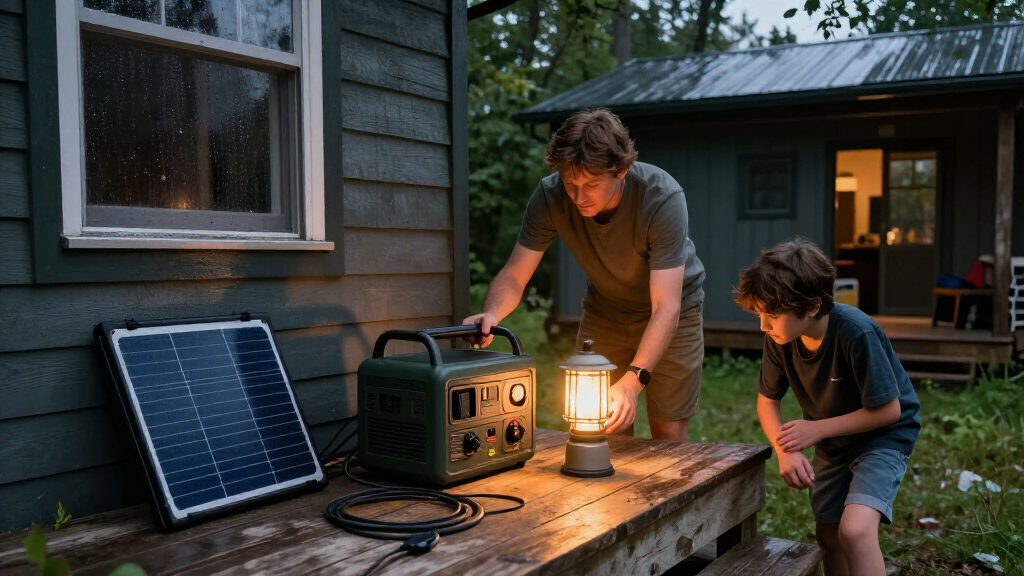
I ranked these options for emergency usefulness, looking at stated battery capacity and output, included solar charging, portability, and the kinds of essential loads each can plausibly support. A larger battery can run more equipment or extend runtime, while a higher output rating matters for appliances with greater startup or running demands. Bundles with panels have a clearer off-grid path, though panel wattage and sunlight conditions affect recharge time.
The ranking favors models that offer a useful balance for outage planning, then separates compact personal backup from higher-capacity household options. I gave credit to bundled panels and practical range, while accounting for limitations such as small capacity, lower output, bulk, or a missing panel. Product details can vary by configuration, so I recommend checking the exact listing for capacity, output limits, included accessories, and charging specifications before choosing.
Factors to Consider When Choosing Solar Generators For Emergency Power
I’d choose a solar generator by starting with the outage tasks it must cover, then checking whether its battery and charging setup can support them. These factors help prevent a common mismatch: buying a portable unit that is convenient to carry but too small for the intended appliance.
List the Loads You Need to Keep Running
Write down each device you expect to use, its wattage, and the number of hours you need it each day. Multiply watts by hours for a rough energy estimate, then add the loads that may run at the same time to check the station’s output limit. Motors in refrigerators and pumps can need a brief surge above their normal running draw, so check both the station’s continuous and surge ratings against the appliance. A phone-and-light plan can fit a compact station; medical equipment, refrigeration, or several devices call for more capacity and careful runtime estimates. Leave a margin for conversion losses and changing usage rather than planning to use every stated watt-hour. If an appliance is essential, verify its requirements from the label or manual before buying.
Treat Solar Recharging as Weather-Dependent
A panel’s rated wattage describes peak conditions, not the power it will deliver through every hour of an outage. Cloud cover, season, shade, panel angle, and the length of daylight all affect the energy collected. For planning, think in terms of whether you can replenish the energy you use each day, not just whether a panel is included in the box. A larger station paired with modest panels may take longer to refill than expected, even when it can store ample energy. Keep a backup charging route, such as wall charging before a storm, and check whether the station supports charging while powering devices. If reliable daily solar recovery matters, compare compatible panel input limits and the panel setup as a complete system.
Balance Portability Against Backup Duration
Small stations are easier to store, carry, and deploy, which matters if you need to move gear between rooms or evacuate. Their limited stored energy means they are best for communication, lighting, and other modest loads rather than prolonged appliance use. Larger units can support a broader outage plan, but their weight, dimensions, and recharge needs can make them awkward to relocate. Consider where the unit will live, whether one person can move it, and how you would position panels outdoors while keeping the station protected. A setup that is difficult to deploy may be less useful in a real outage than a smaller system you can operate quickly. Match capacity to the loads you truly need instead of treating the largest unit as automatically best.
Check Output Limits and Appliance Compatibility
Battery capacity and inverter output answer different questions: capacity indicates stored energy, while output limits indicate what can run at once. A station may hold enough energy for an appliance yet still be unable to start it because the appliance exceeds the inverter’s power limit or surge capability. Pay attention to the outlets you need, including AC, USB, and any vehicle-style ports, and check whether the station can serve the devices in your plan simultaneously. Refrigerators, kettles, heaters, and power tools often impose tougher demands than phones or lights. For critical medical equipment, confirm compatibility with the manufacturer and account for the device’s actual operating draw. This check can rule out a tempting compact option before its portability distracts from the mismatch.
Compare the Complete Kit, Not Just the Station
Some products in this roundup bundle solar panels, while the Anker SOLIX C1000 Gen 2 listing is a station without an included panel. That distinction affects how quickly you can put together an off-grid charging plan and which accessories you must source separately. Confirm the panel’s rated output, connector compatibility, supported input range, and whether cables or adapters are included. Built-in panels can simplify storage and setup, but a small integrated panel may collect less energy than a separate panel that can be aimed toward the sun. Bundled accessories are useful only when their output fits the station and your recharge needs. Check the exact package contents because similarly named product listings may offer different configurations.
Plan for Safe Use and Long-Term Storage
Emergency equipment should be ready before the outage, so learn the manufacturer’s storage charge guidance and check the battery periodically. Keep the station dry, ventilated, and within its stated operating temperature range; panels can be placed outside while the power station stays in a suitable sheltered location. Avoid assuming that every station supports uninterrupted pass-through power or the same battery care routine. Store the cables and adapters with the unit, and test your intended setup with ordinary loads before relying on it. If you plan to power medical equipment or essential home systems, check the manufacturer’s instructions and arrange an appropriate backup plan. These habits reduce the chance that a capable unit is unavailable when you need it.
Frequently Asked Questions
Can a portable solar generator keep my refrigerator running during an outage?
It depends on the refrigerator’s energy use, startup surge, and how long you need backup. Check the appliance label or manual, then compare its running and surge requirements with the station’s output ratings. Estimate daily energy use and compare it with usable battery capacity, allowing for conversion losses and compressor cycling. A smaller unit built for phones and lights may not meet either the output or runtime needs. Solar panels can extend operation only when they collect enough energy during the day to replace what the refrigerator uses.
How much solar panel capacity do I need to recharge a station during an outage?
Start with how many watt-hours you expect to use each day, then compare that amount with realistic daily solar production for your location and season. Panel ratings are peak figures, and shade, clouds, angle, and short winter days can reduce the energy collected. Check the station’s maximum solar input too; panels with a combined rating above that limit may not charge it any faster. A bundle with panels provides a starting point, but it does not guarantee a daily refill. If power is critical, plan to reduce loads or use another charging method during poor weather.
Is a 300Wh-class station enough for emergency power?
It can be enough for a limited plan centered on phones, LED lights, and small electronics, especially when those devices are used intermittently. It is usually a poor match for running high-draw appliances or supporting several household needs for long periods. Compare the actual capacity and output of the specific unit: the two Explorer 300 listings here do not have identical stated configurations. Calculate expected usage in watt-hours and leave room for charging losses. Buyers who need refrigeration or medical equipment should verify those loads first and look beyond compact-capacity options if the numbers do not fit.
Should I choose a bundled solar kit or buy the station and panels separately?
A bundle can simplify setup because the station and panels are sold together, as with several Jackery kits in this roundup. Buying separately can give you more choice over panel size and placement, but you must confirm connector compatibility and the station’s solar input limits. The Anker SOLIX C1000 Gen 2 listing does not include a panel, so its off-grid readiness depends on the buyer’s existing or separately purchased equipment. Compare total panel output with your daily energy needs rather than choosing by bundle status alone. Also confirm the exact package contents, since accessories can vary between listings.
Which type of solar generator makes sense if I may need to evacuate?
Prioritize weight, packed size, setup simplicity, and the ability to charge essential small devices over maximum household capacity. Compact options such as the MARBERO 88Wh or Apowking 100W are easier to move but have a narrower role than larger stations. Include the panel and cables in your portability calculation; a station that seems manageable by itself may become cumbersome as a kit. Decide which devices must stay powered while away and estimate their energy use before choosing. If you also want home backup, you may need to trade easier carrying for a larger unit or maintain separate plans for evacuation and extended outages.
Conclusion
For the broadest balance of stored energy and included solar charging, I recommend the Jackery Explorer 2000 v2 as my best overall pick. Buyers seeking a premium, higher-capacity household setup should compare the Jackery HomePower 3600 Plus and HomePower 3000, choosing only after checking their load needs, space, and charging plan. For value on a specific use case, the GRECELL 500W offers a midrange capacity format, though buyers should verify the panel situation and output fit for their devices. Beginners with modest needs can start with a compact bundled kit such as the Jackery Explorer 300, while accepting its shorter runtime. For a specific need like carrying backup for phones and lights, the MARBERO 88Wh is easier to move; for evacuation or broader outage use, size up only when your load calculations justify it.
Fall Picks
fall essentials
As an affiliate, we earn on qualifying purchases.