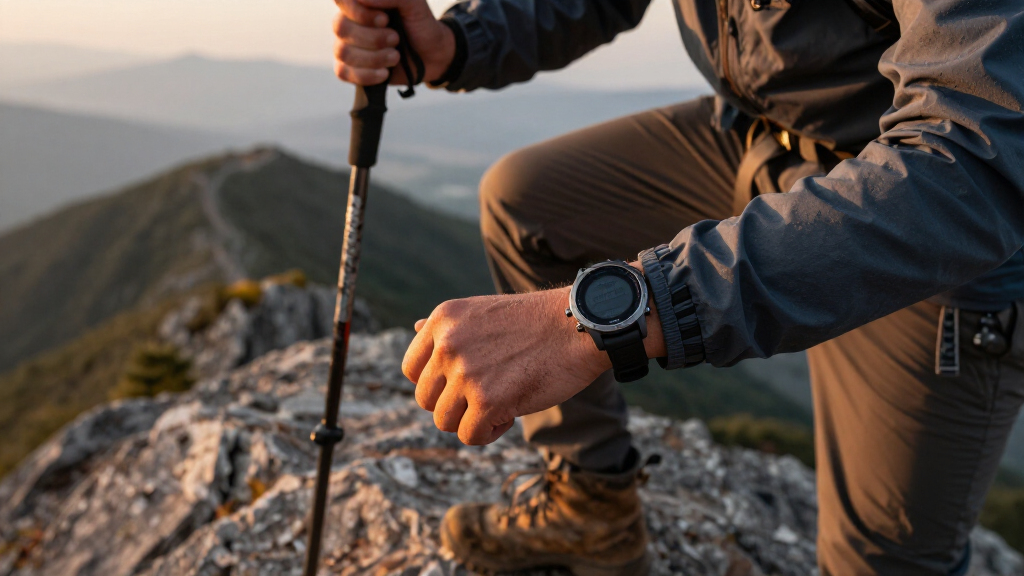

For outdoor training, I rank the Garmin fēnix 8 Solar Sapphire 47 mm as the best overall pick: its solar-focused design and sapphire protection suit long days outside without the bulk of a 51 mm watch. The 43 mm AMOLED Sapphire fēnix 8 is a standout for smaller wrists, while the 51 mm fēnix 8 Pro suits buyers who prioritize a larger, premium multisport setup. The main tradeoffs are watch size, screen style, solar capability, and how much premium hardware your training actually needs. Bundle accessories may add convenience, but they should not outweigh fit and core watch features. Read on for the full comparison and guidance by training style.

Get emergency and outdoor gear delivered free with Prime
- Fast, free delivery on millions of items
- Prime Video, Amazon Music and more included
- Member-only deals all year
Key Takeaways
- The 47 mm Solar Sapphire model is the most balanced outdoor-training choice in this lineup, pairing a mid-size case with solar charging and sapphire protection.
- Case size changes daily usability, not just appearance: the 43 mm AMOLED option is the compact pick, while the 51 mm models suit buyers who want a larger watch and can wear its added bulk.
- Solar and AMOLED serve different priorities. Solar variants suit buyers focused on outdoor use and battery-conscious training; AMOLED variants put a bright display experience first.
- The two 51 mm fēnix 8 Pro listings are closely related choices; compare their exact finish and included package rather than assuming the listing names signal different training capabilities.
- Bundles are secondary to watch fit and configuration: earbuds or accessories can be useful, but the watch’s size, display, and solar or AMOLED setup matter more for most training decisions.


| garmin fenix watches for outdoor training | Display | Case size | Lens | Connectivity |
|---|---|---|---|---|
| Garmin fēnix 8 Solar | 1.3-inch solar-charged display | — | Sapphire | Bluetooth and Wi-Fi for smart notifications |
| Garmin Fenix 8 Multisport GPS | 1.3-inch AMOLED | 43 mm | Sapphire | Bluetooth |
| Garmin fēnix 8 Pro 51 mm Sapph | 1.4-inch AMOLED touchscreen | 51 mm | Scratch-resistant sapphire | Satellite and LTE; active subscription required |
| Garmin fēnix 8 Pro 51mm Sapphi | 1.4-inch AMOLED touchscreen | 51 mm | Scratch-resistant sapphire | Satellite and LTE; active subscription required |
| Garmin Fenix 8 47 mm AMOLED Sa | 1.4-inch AMOLED | 47 mm | Sapphire | — |
| Garmin fēnix 8 Sapphire Multis | 1.4-inch AMOLED | 47 mm | — | — |
| Garmin fēnix 8 Sapphire Solar | 1.4-inch solar-charged AMOLED | 51 mm | — | — |
| Garmin fēnix 8 Premium Multisp | 1.4-inch AMOLED | 51 mm | — | Wi-Fi, Bluetooth |
More Details on Our Top Picks
Garmin fēnix 8 Solar, Sapphire, 47mm, Titanium, Amp Yellow/Graphite
Solar-assisted endurance is the main reason I’d place this fēnix 8 high for outdoor training: Garmin lists up to 92 hours in GPS mode with solar, making it better suited to long outings than the AMOLED fēnix 8 options in this batch. Its multi-band GPS with SatIQ can help maintain positioning in challenging terrain, while the sapphire lens and titanium bezel suit regular exposure to rough conditions. The tradeoff is that solar performance depends on getting suitable light, so I wouldn’t treat the longest battery figure as a guaranteed result. Compared with the fēnix 8 Pro 51 mm AMOLED, this model gives up satellite and LTE messaging, but it avoids making those subscription-based connections its defining feature. Its 47 mm case is also less imposing than the Pro’s 51 mm size.
Pros:- Up to 92 hours of GPS battery life with solar, according to the listing
- Multi-band GPS with SatIQ for outdoor route tracking
- Sapphire lens and titanium bezel for a rugged build
- Compass, gyroscope, and barometric altimeter support outdoor navigation
Cons:- Solar charging depends on suitable light conditions
- Does not list the satellite and LTE messaging features of the fēnix 8 Pro models
- ECG and Pulse Ox availability varies by region
Best for: Trail runners, hikers, and endurance athletes who prioritize long GPS sessions, multiband navigation, and a durable 47 mm watch over a bright AMOLED screen or satellite messaging.
Not ideal for: Athletes who train mostly indoors or want an AMOLED display, and buyers who need satellite or LTE communication when away from phone coverage.
- Display:1.3-inch solar-charged display
- Lens:Sapphire
- Bezel:Titanium
- Smartwatch battery:Up to 28 days with solar
- GPS battery:Up to 92 hours with solar
- GPS:Multi-band with SatIQ
- Sensors:3-axis compass, gyroscope, and barometric altimeter
- Connectivity:Bluetooth and Wi-Fi for smart notifications
Our verdict“Choose this 47 mm Solar model if extended GPS battery life and rugged navigation matter more than AMOLED visuals or subscription-based connectivity.”
Garmin Fenix 8 Multisport GPS Watch (43mm, Carbon Gray, AMOLED Sapphire) Gift Box Bundle
This 43 mm fēnix 8 bundle is the compact choice for athletes who want a bright AMOLED display and useful extras without stepping up to the larger 47 mm and 51 mm models. The sapphire lens helps protect the screen on trail days, and the included hard case, screen protectors, and portable charger give buyers accessories the other watches here don’t list. Its up-to-10-day smartwatch battery is shorter than the 47 mm Solar fēnix 8’s listed endurance, so it’s a less compelling pick for extended GPS-heavy trips. I’d favor this bundle for everyday multisport training, where the smaller case and on-wrist calling are more useful than maximum battery capacity. The accessory package adds convenience, but it doesn’t replace checking whether the included charger and protection suit your setup.
Pros:- 43 mm case offers a more compact fit than the 47 mm and 51 mm options
- AMOLED display paired with a sapphire lens
- Bundle includes screen protectors, portable charger, wall adapter, and hard case
- On-wrist calling and built-in LED flashlight
Cons:- Up to 10 days of smartwatch battery is shorter than the 47 mm Solar model’s listed battery life
- Bundle accessories may be unnecessary for buyers who already have compatible protection and charging gear
- Software update support dates are not specified in the product data
Best for: Athletes with smaller wrists who want a compact AMOLED Garmin for regular training, plus a ready-to-use bundle of screen protection and charging accessories.
Not ideal for: Ultrarunners and hikers planning long GPS sessions, or buyers who prefer a larger display and longer listed battery life such as the 47 mm Solar model.
- Case size:43 mm
- Display:1.3-inch AMOLED
- Lens:Sapphire
- Smartwatch battery:Up to 10 days
- Storage:32 GB
- Navigation systems:GPS, GLONASS, Galileo, and QZSS
- Connectivity:Bluetooth
- Included accessories:Screen protectors, portable charger, wall charging adapter, and protective hard case
Our verdict“Pick this bundle if you want a smaller AMOLED fēnix with included accessories, but choose the 47 mm Solar model for longer off-grid training.”
Garmin fēnix 8 Pro 51 mm Sapphire Multisport GPS Smartwatch, DLC Titanium, Black/Pebble Gray
For training far from reliable phone coverage, this fēnix 8 Pro 51 mm stands apart from the non-Pro watches in this batch: satellite and LTE connectivity can support messaging, calls, and SOS assistance, subject to an active subscription and coverage. Its preloaded TopoActive maps and 40-meter dive rating also make it a versatile choice for athletes who mix mountain routes with water-based training. Compared with the similarly sized fēnix 8 Pro 51 mm Graphite/Black, this listing specifically names DLC titanium construction and calls out scuba and apnea support. The 1.4-inch AMOLED screen is large and clear, but the 51 mm case may feel cumbersome on smaller wrists. Connectivity brings real utility for remote outings, though it adds subscription dependence rather than functioning as a no-cost safety net.
Pros:- Satellite and LTE features support messaging, calls, and SOS assistance with an active subscription
- Sapphire lens and DLC titanium bezel
- TopoActive, golf course, and ski resort maps are listed
- 40-meter dive rating with scuba and apnea support
Cons:- Satellite and LTE functions require an active subscription and depend on coverage
- 51 mm case may be too large for some wrists
- Pulse Ox availability varies by country, and health metrics are estimates
Best for: Remote-area athletes who want satellite and LTE communication, detailed outdoor maps, and dive support in one large multisport watch.
Not ideal for: Buyers with smaller wrists, those who want to avoid connectivity subscriptions, or athletes whose training does not call for remote messaging or dive features.
- Case size:51 mm
- Display:1.4-inch AMOLED touchscreen
- Lens:Scratch-resistant sapphire
- Bezel:DLC titanium
- Connectivity:Satellite and LTE; active subscription required
- Navigation:Preloaded TopoActive, golf course, and ski resort maps
- Health features:Wrist-based heart rate, sleep monitoring, HRV status, ECG app, and Pulse Ox
- Additional features:Built-in LED flashlight; 40-meter dive rating
Our verdict“Choose this Pro if remote communication and diving support justify its large case and subscription-dependent connectivity.”
Garmin fēnix 8 Pro 51mm Sapphire Titanium GPS Smartwatch, Graphite/Black
The Graphite/Black fēnix 8 Pro 51 mm makes the strongest case for athletes who want Pro connectivity without sacrificing long smartwatch-mode endurance: the listing specifies up to 27 days. Like the Black/Pebble Gray Pro, it combines satellite and LTE functions with an AMOLED screen, sapphire lens, maps, and a flashlight; those communication features require an active subscription and may be limited by coverage or local rules. The product data does not spell out a specific GPS battery figure, so I wouldn’t rank it ahead of the 47 mm Solar fēnix 8 for long GPS-only expeditions based on endurance claims. Instead, its appeal is a broad training and navigation toolkit paired with long intervals between smartwatch-mode charges. The 51 mm body remains a substantial tradeoff for smaller wrists.
Pros:- Up to 27 days of smartwatch-mode battery life
- Satellite and LTE features support messaging, calls, location sharing, and SOS with an active subscription
- Titanium bezel and scratch-resistant sapphire lens
- Maps, multisport training features, and built-in LED flashlight
Cons:- Satellite and LTE features require an active subscription and may have coverage limitations
- 51 mm case is large compared with the 43 mm bundle and 47 mm Solar options
- Some jurisdictions regulate or prohibit satellite communication devices
Best for: Outdoor athletes who want a large-screen Pro watch with satellite and LTE features, mapping, and a stated smartwatch battery life of up to 27 days.
Not ideal for: Smaller-wristed buyers, people unwilling to pay for a connectivity subscription, or those choosing primarily by a published long-session GPS battery figure.
- Case size:51 mm
- Display:1.4-inch AMOLED touchscreen
- Bezel:Titanium
- Lens:Scratch-resistant sapphire
- Smartwatch battery:Up to 27 days
- Connectivity:Satellite and LTE; active subscription required
- Color:Graphite/Black
- Additional features:Maps, music storage, built-in LED flashlight, and 40-meter dive rating
Our verdict“Choose this Pro for long smartwatch-mode endurance and remote connectivity in a large format, but favor the 47 mm Solar model for a stated extended GPS runtime.”
Garmin Fenix 8 47 mm AMOLED Sapphire Multisport GPS Smartwatch with Titanium Case and Accessories
This 47 mm fēnix 8 is the balanced AMOLED option for athletes who want a vivid screen without the 51 mm Pro models’ larger fit or subscription-based satellite and LTE features. Its titanium case and sapphire lens pair a durable build with an AMOLED display, while the listed up-to-16-day smartwatch battery gives it more stated endurance than the 43 mm AMOLED bundle. A flashlight, speaker, microphone, and sport-specific strength workouts broaden its training and day-to-day utility. Compared with the 47 mm Solar fēnix 8, this model trades solar-assisted endurance for AMOLED visuals and a longer listed smartwatch-mode runtime than the smaller bundle. The supplied screen protector, dust cover, and USB-C cable are useful extras, though the product data doesn’t specify its operating system or detailed GPS battery performance.
Pros:- 1.4-inch AMOLED display with sapphire lens
- Titanium case in a 47 mm size
- Up to 16 days of smartwatch-mode battery life
- Built-in flashlight, speaker, microphone, and sport-specific strength workouts
Cons:- Does not list satellite or LTE connectivity features found on the fēnix 8 Pro models
- Product data does not specify the operating system
- Some voice features require pairing with a smartphone
Best for: Multisport athletes who want a 47 mm AMOLED screen, titanium construction, strength-training features, and a stated smartwatch battery life longer than the 43 mm bundle.
Not ideal for: Athletes prioritizing solar-assisted GPS endurance, or buyers who need satellite and LTE messaging like the fēnix 8 Pro models.
- Case size:47 mm
- Case material:Carbon gray titanium
- Band:Black silicone
- Display:1.4-inch AMOLED
- Lens:Sapphire
- Smartwatch battery:Up to 16 days
- Storage:32 GB
- Included accessories:Screen protector, dust cover, and USB-C cable
Our verdict“Choose this 47 mm AMOLED model for a durable, feature-rich training watch with a middle-ground fit, but pick the Solar version when long GPS runtime is the priority.”
Garmin fēnix 8 Sapphire Multisport GPS Smartwatch, 47 mm Titanium, Spark Orange/Graphite
The 47 mm fēnix 8 Sapphire suits outdoor athletes who want a bright screen and broad training tools without stepping up to the larger 51 mm models. Its AMOLED display makes maps and workout data easy to read, while the sapphire lens and titanium bezel add protection for regular trail use. Multi-band GPS with SatIQ supports navigation across changing terrain, and the flashlight is useful around camp or on pre-dawn starts. Compared with the 51 mm fēnix 8 Premium, this version is the more compact choice, but gives up its longer stated battery life. Its up-to-16-day smartwatch and up-to-47-hour GPS figures are substantial, though less suited to extended trips than the solar-charged bundle. Calls need a paired smartphone, and some health features vary by region.
Pros:- Bright 1.4-inch AMOLED display with scratch-resistant sapphire lens
- Multi-band GPS with SatIQ and extensive training and navigation functions
- Up to 47 hours of GPS battery life in the stated configuration
- Built-in flashlight, music storage, Garmin Pay, and dive support to 40 meters
Cons:- Shorter stated battery life than the solar-charged 51 mm fēnix 8 bundle
- Calls and smart notifications depend on a compatible paired smartphone
- ECG and Pulse Ox availability varies by region
Best for: Trail runners and multisport athletes who want a readable AMOLED screen, sapphire protection, and extensive navigation in a 47 mm watch.
Not ideal for: Ultralight backpackers prioritizing the longest GPS runtime, or buyers seeking smartphone-free calling and universally available ECG or Pulse Ox features.
- Display:1.4-inch AMOLED
- Case size:47 mm
- Lens and bezel:Scratch-resistant sapphire lens; titanium bezel
- Weight:80 g
- GPS:Multi-band GPS with SatIQ technology
- Battery life:Up to 16 days smartwatch; up to 47 hours GPS
- Additional features:LED flashlight, speaker and microphone, music storage, Garmin Pay, smart notifications
Our verdict“Choose this 47 mm model for a durable, feature-rich AMOLED training watch when the bigger 51 mm options feel like more watch than you need.”
Garmin fēnix 8 Sapphire Solar GPS Multisport Smartwatch, 51 mm, Carbon Gray DLC Titanium, with Earbuds Bundle
For long routes where charging opportunities are scarce, this 51 mm fēnix 8 Sapphire Solar stands out for its advertised endurance: up to 48 days in smartwatch mode and 149 hours in GPS mode with solar charging. Those figures depend on specified sunlight conditions, so I would treat solar as extra runtime rather than a substitute for planning around power needs. Its sapphire lens, titanium bezel, multi-band GPS, and navigation sensors make it a strong fit for demanding outdoor training. Compared with the 47 mm fēnix 8 Sapphire, it offers far longer stated battery life but takes up more wrist space. The included earbuds add bundle utility, though they are not a training advantage for everyone. At 51 mm, it may feel bulky, and calls still require a paired smartphone.
Pros:- Solar charging supports substantially extended stated battery life
- Sapphire lens and titanium bezel suit demanding outdoor use
- Multi-band GPS with SatIQ and built-in navigation sensors
- Includes an LED flashlight, dive support to 40 meters, and earbuds
Cons:- Large 51 mm case may feel bulky during training or on smaller wrists
- Advertised solar battery life depends on specified sunlight conditions
- Phone calls require a paired smartphone
Best for: Backpackers, ultra-distance athletes, and remote-route trainers who want extended GPS runtime and can regularly expose the watch to suitable sunlight.
Not ideal for: People with smaller wrists, indoor-focused athletes, or anyone who wants dependable battery figures without relying on sunlight conditions.
- Display:1.4-inch solar-charged AMOLED
- Case size:51 mm
- Lens and bezel:Scratch-resistant sapphire lens; titanium bezel
- Battery life:Up to 48 days smartwatch and 149 hours GPS with solar charging
- Storage:32 GB
- Satellite navigation:GPS, GLONASS, Galileo; multi-band GPS with SatIQ
- Included accessories:Charging/data cable, black earbuds, microUSB cable
Our verdict“Pick this bundle for remote training and long outings if you value solar-assisted endurance more than a compact fit.”
This 51 mm fēnix 8 Premium brings a broad feature set to athletes who want training, navigation, and dive support in one watch. Its multi-band GPS, TopoActive maps, LED flashlight, and 40-meter dive rating serve varied outdoor sessions, while the AMOLED screen keeps workout information legible. The stated battery life—up to 29 days in smartwatch mode and 84 hours in GPS mode—gives it more listed endurance than the 47 mm Sapphire model, but less than the solar-charged 51 mm bundle. The stainless steel bezel also differs from the titanium construction on those alternatives. Wrist-based calls and off-grid voice commands add flexibility, though they do not make this a phone replacement for every task. The large case can overwhelm smaller wrists, and ECG and Pulse Ox availability varies by region.
Pros:- Up to 29 days of stated smartwatch battery life and 84 hours in GPS mode
- Multi-band GPS with SatIQ and TopoActive maps support outdoor navigation
- LED flashlight, wrist-based calls, and dive rating to 40 meters
- Advanced training and health metrics, including ECG and Pulse Ox features
Cons:- 51 mm case may be too bulky for smaller wrists
- Stainless steel bezel differs from the titanium bezel on the other listed fēnix 8 models
- ECG and Pulse Ox features are not available in all regions
Best for: Athletes with larger wrists who want maps, multi-band GPS, training metrics, and dive capability in a premium all-around outdoor watch.
Not ideal for: Smaller-wristed buyers, casual users unlikely to use its advanced tools, or remote-travel athletes prioritizing the longest solar-assisted runtime.
- Display:1.4-inch AMOLED
- Case size:51 mm
- Case and bezel:Stainless steel
- Band:Silicone
- Battery life:Up to 29 days smartwatch; up to 84 hours GPS
- Connectivity:Wi-Fi, Bluetooth
- Features:LED flashlight, speaker and microphone, ECG app, Pulse Ox, TopoActive maps
Our verdict“Choose this premium 51 mm model for a feature-rich training and navigation watch if you want its maps and call functions more than solar-assisted battery life.”

How We Picked
I ranked these eight listings around their usefulness for outdoor training, weighing case size, display type, solar configuration, sapphire protection, titanium construction, and the practical fit of each model. A watch that matches a buyer’s wrist and training routine ranks ahead of a bundle whose extras do not improve the core watch choice. I also treated listing details carefully: several entries are close variants, so I distinguish them by stated size, display, finish, and package rather than implying unlisted feature differences.
The 47 mm Solar Sapphire fēnix 8 leads because it makes a strong compromise between outdoor-oriented configuration and manageable size. Compact and AMOLED-focused options follow for buyers who value fit or screen presentation more than solar. The larger 51 mm Pro and Solar models serve specific preferences—larger cases, premium finishes, or solar emphasis—but their size and configuration make them less universal. Bundle-only advantages do not move a watch above a better-matched core model.
| garmin fenix watches for outdoor training | Lens | Smartwatch battery | Connectivity |
|---|---|---|---|
| Garmin fēnix 8 Solar | Sapphire | Up to 28 days with solar | Bluetooth and Wi-Fi for smart notifications |
| Garmin Fenix 8 Multisport GPS | Sapphire | Up to 10 days | Bluetooth |
| Garmin fēnix 8 Pro 51 mm Sapph | Scratch-resistant sapphire | — | Satellite and LTE; active subscription required |
| Garmin fēnix 8 Pro 51mm Sapphi | Scratch-resistant sapphire | Up to 27 days | Satellite and LTE; active subscription required |
| Garmin Fenix 8 47 mm AMOLED Sa | Sapphire | Up to 16 days | — |
| Garmin fēnix 8 Sapphire Multis | — | — | — |
| Garmin fēnix 8 Sapphire Solar | — | — | — |
| Garmin fēnix 8 Premium Multisp | — | — | Wi-Fi, Bluetooth |
Factors to Consider When Choosing 8 Best Garmin Fenix Watches For Outdoor Training
Before choosing among these fēnix listings, I would start with how the watch will fit into your training week—not with the longest feature list. Wrist comfort, screen preference, and time away from charging shape the choice more than small differences in color or bundled extras.
Choose Case Size for All-Day Wear
A larger case can be easier to read during movement, but it may feel cumbersome under a jacket cuff or while sleeping with the watch on. The 43 mm option is the clearest fit-led choice in this group; 47 mm sits between compactness and a larger watch face, while 51 mm is for people comfortable with more wrist presence. Do not choose by case diameter alone: wrist shape, strap adjustment, and whether you wear the watch overnight affect comfort. If possible, check the manufacturer’s dimensions and try a similarly sized watch before buying. For long training blocks, a watch that stays comfortable is more useful than one that looks more capable on paper.
Match Display Type to Your Outdoor Routine
AMOLED prioritizes a vivid, high-contrast screen, which can make maps and workout data feel clear and engaging. Solar variants emphasize outdoor use and potential charging support in suitable conditions, rather than the same display experience as an AMOLED model. A common mistake is treating “solar” as a guarantee that charging becomes unnecessary; actual benefit depends on exposure and use. Think about whether you check the screen frequently, train in bright conditions, or spend extended periods away from a charger. Choose the display that suits your viewing habits, not simply the one with the most striking specification.
Treat Solar Charging as a Tradeoff, Not a Shortcut
Solar is most relevant to buyers who regularly spend time outdoors and want charging support from that use. It matters less for someone whose training is mostly indoors or who charges devices routinely between sessions. Conditions and wear habits affect how much solar charging contributes, so it should not replace checking the watch’s stated battery performance for your chosen settings. Compare solar models with AMOLED options by asking which compromise you prefer: outdoor charging support or a more vivid screen. Also check the exact model configuration, since the word “Sapphire” alone does not tell you whether a listing is solar or AMOLED.
Prioritize Fit and Protection Before Bundle Extras
Sapphire crystal and titanium construction are relevant when your watch faces frequent contact with rocks, gear, or rough outdoor use. They do not make a watch immune to damage, and they cannot compensate for a poor fit or a case that feels too large. Bundle listings may include useful accessories, but buyers should verify exactly what is included and whether those items suit their training setup. Avoid paying attention to an accessory headline before confirming the watch’s size, display, and charging configuration. The core watch should be the reason to choose a listing; extras are a bonus only when they solve a real need.
Decide Whether You Need a Pro or Premium Variant
The Pro and Premium labels can signal a higher-tier configuration, but they are not enough on their own to establish which watch best fits your training. Compare the exact model specifications and included features listed by the seller with the capabilities you will use. A premium 51 mm watch may make sense for someone seeking a larger, feature-rich setup, yet feel excessive for a runner who values a compact fit. Similar listings can differ by finish or package, so do not infer a major functional difference from color or naming alone. Spend more only when the specific configuration addresses a need you can name.
Frequently Asked Questions
Which fēnix 8 configuration makes the most sense for long outdoor training days?
I would start with the 47 mm Solar Sapphire model if you want a balanced size and an outdoor-oriented charging setup. The 51 mm Solar Sapphire option may suit you better if you prefer a larger case and are comfortable wearing it. Solar charging depends on exposure and use, so check the watch’s stated battery performance rather than expecting sunlight to eliminate charging. If screen appearance matters more to you than solar support, compare the AMOLED models instead. Your usual training environment should guide the choice.
Should I choose the 43 mm AMOLED model or a 47 mm fēnix 8?
Choose the 43 mm model if compact fit is your main concern or larger watches tend to move around on your wrist. Its AMOLED display favors a vivid viewing experience, while the 47 mm Solar Sapphire option brings a different balance of size and outdoor charging support. A smaller case can be easier to wear around the clock, but check that its screen and fit work for your data-reading habits. If you are unsure, compare case measurements with a watch you already find comfortable. Do not assume a larger case is automatically better for training.
Does solar charging mean I can stop charging my fēnix?
No. Solar charging can support battery life when conditions and use allow, but it is not a promise of charge-free ownership. Sun exposure, training settings, and how you use the watch all affect the contribution. Check Garmin’s battery estimates for the precise model and settings you expect to use. If you train mostly indoors or frequently charge between sessions, an AMOLED configuration may be a better match for your priorities. Choose solar for its potential support, not as a replacement for planning around battery use.
Are the two 51 mm fēnix 8 Pro listings different enough to affect my choice?
The supplied listing details show closely related 51 mm Sapphire titanium Pro watches, with different stated finishes. I would not infer a training-capability difference from those names alone. Check the full seller specifications for exact model configuration, included components, and any differences in finish or package. If the details match, choose based on the appearance you prefer and the listing that clearly identifies what is included. For a more meaningful change in wearing experience, compare either Pro model with the 47 mm or 43 mm options.
Is an earbuds or accessories bundle a better buy than the watch by itself?
A bundle makes sense when its included items are ones you already plan to use and the watch configuration fits you. It is a poor reason to accept a case size, display, or charging setup that does not match your routine. Read the package contents carefully, since bundle titles do not always make every included item clear. Compare the watch itself first, then treat accessories as a secondary convenience. For outdoor training, comfort and the right watch configuration will matter through more sessions than an unwanted extra.
Conclusion
For most outdoor athletes, I recommend the 47 mm Solar Sapphire fēnix 8 as the best overall balance in this lineup. The best value in practical terms is the 43 mm AMOLED Sapphire model for buyers who want a compact fit and do not need solar; the best premium choice is the 51 mm fēnix 8 Pro for those who want a larger, higher-tier setup. Beginners should start by prioritizing comfort and easy-to-read training data, making the 43 mm option a sensible fit-led pick or the 47 mm model a more versatile alternative. For extended outdoor use, look at the 51 mm Solar Sapphire model; for a bright AMOLED screen, choose one of the AMOLED configurations. Match the watch to your wrist and routine first, then let finish and bundle extras break a tie.
Halloween Picks
halloween
As an affiliate, we earn on qualifying purchases.