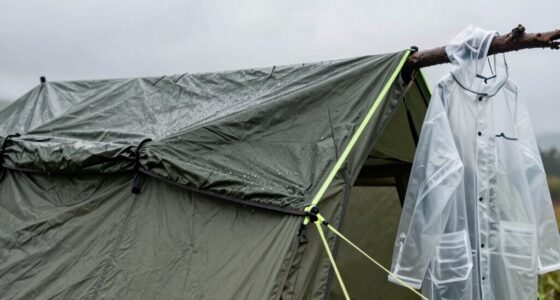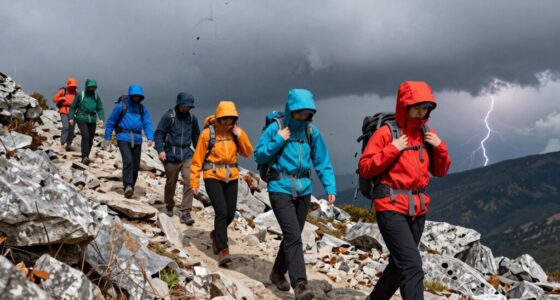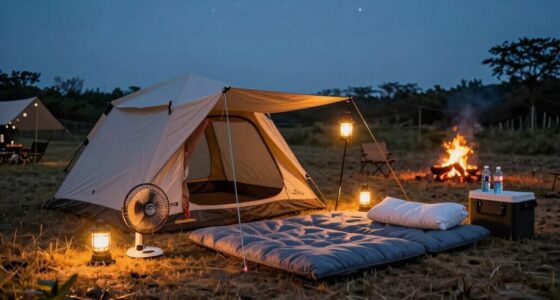
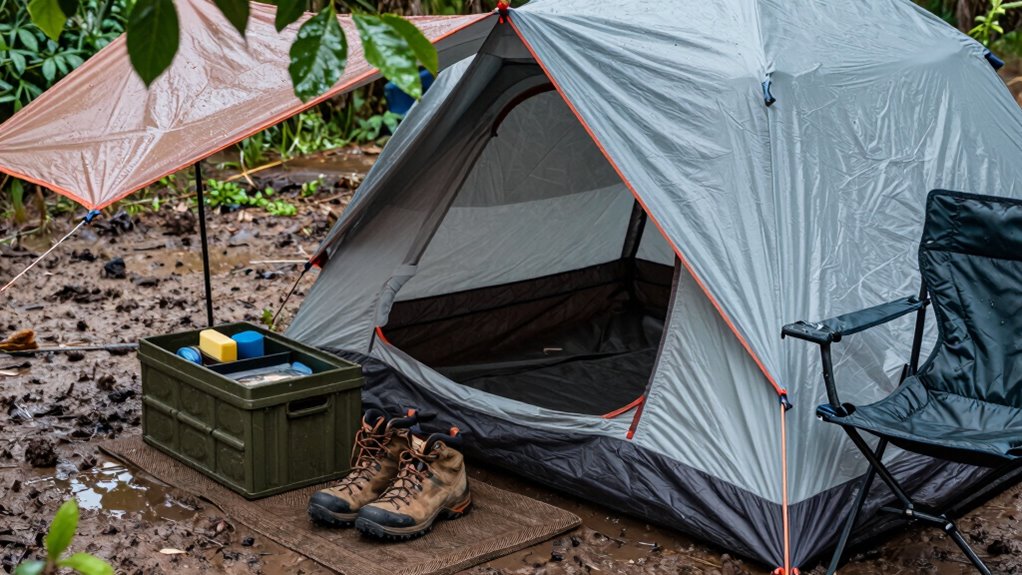
To keep camp life manageable in mud, rain, and mess, organize your gear with waterproof containers and elevate everything off the ground with pallets or rocks. Use tarps to create dry zones for cooking and sitting, and wear waterproof clothing and proper footwear. Maintain cleanliness by shaking off mud and cleaning your gear daily. Stay mindful of safety, keep a well-organized camp, and follow fire safety and wildlife guidelines—there’s more to guarantee your outdoor experience stays smooth, even in tough conditions.
Key Takeaways
- Use tarps and elevated platforms to create dry, organized zones for cooking, sitting, and gear storage.
- Wear waterproof clothing and footwear to stay dry and prevent slipping in muddy or rainy conditions.
- Keep gear elevated on pallets or waterproof containers to avoid sogginess and facilitate easy cleanup.
- Clear and maintain the campsite regularly to manage mess and prevent accumulation of mud and debris.
- Follow fire safety protocols, such as using established fire rings and nearby water, to prevent wildfires in wet conditions.
Camping in muddy, rainy conditions can quickly turn into a challenge if you’re not prepared. Mud tends to seep into everything, and rain can dampen your spirits—and your gear—fast. Staying sane and safe in these conditions means keeping a clear focus on safety and practicality. First, pay attention to campfire safety. A campfire can lift your spirits and provide warmth, but it also presents risks, especially in wet conditions. Always clear a sufficient area of any leaves, grass, or debris before setting up your fire. Use established fire rings if available, and keep a bucket of water or a fire extinguisher nearby. Never leave your campfire unattended, and make sure it’s completely extinguished before heading to bed or breaking camp. Wet wood may be harder to ignite, so bring some dry kindling and fire-starting materials. Proper campfire safety helps prevent wildfires and keeps everyone safe in unpredictable weather. Additionally, being aware of fire safety precautions can help mitigate potential hazards.
As you navigate muddy terrain, wildlife encounters are a real possibility. Animals may be more active as they seek food or shelter from the rain. Keep your distance, and never feed wildlife—feeding can alter their natural behaviors and pose safety risks. Store food securely in airtight containers, ideally hanging it from a tree or using bear-proof lockers if available. Be mindful of your scent and noise levels. Loud noises or strong odors can attract animals, making encounters more likely. If you do meet wildlife, stay calm, back away slowly, and avoid direct eye contact. Remember, most animals prefer to avoid humans, but they can become defensive if threatened. Respecting their space is vital for your safety and theirs. Knowing about wildlife behavior can help you better understand how to react if you encounter animals.
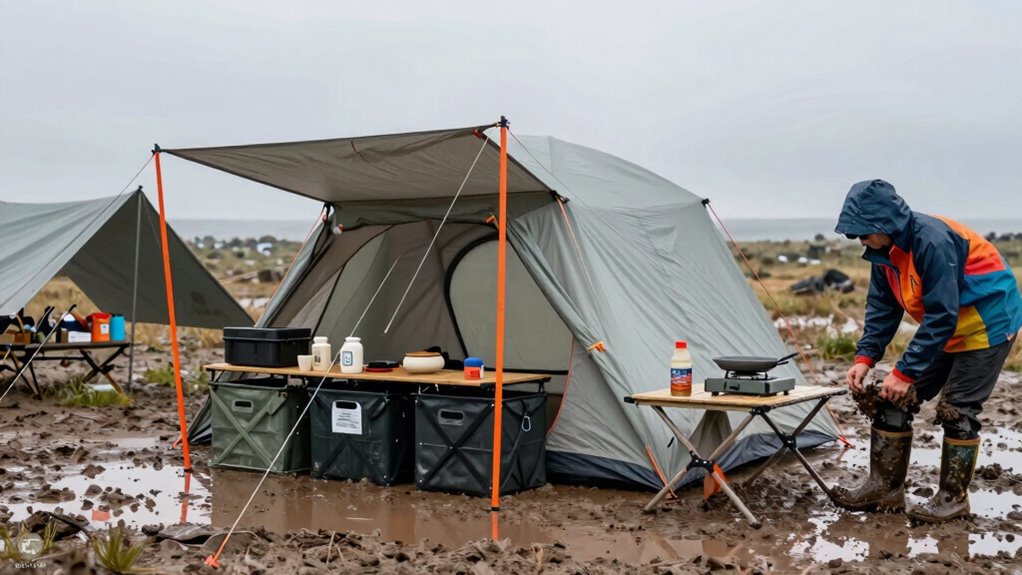
Dealing with mess and mud requires a good sense of organization. Keep your gear elevated off the ground using pallets, rocks, or waterproof containers to avoid unnecessary sogginess. Use tarps to create dry zones for cooking and sitting, and always shake off mud from your boots before entering your tent. Maintain good hygiene by using biodegradable wipes and hand sanitizer, especially when clean water is scarce. Staying dry is essential to prevent hypothermia, so wear waterproof clothing and waterproof footwear. When moving through muddy areas, take small, deliberate steps to avoid slipping. Additionally, proper gear maintenance can extend the life of your equipment and help you stay comfortable. Regularly check your gear and clothes for mud and water, and clean your campsite daily to prevent the mess from becoming overwhelming. Being proactive with camp setup and organization can make a significant difference in managing the mess and enjoying your time outdoors.
waterproof camping gear storage containers
As an affiliate, we earn on qualifying purchases.
As an affiliate, we earn on qualifying purchases.
Frequently Asked Questions
How Can I Prevent My Gear From Getting Muddy Quickly?
To prevent your gear from getting muddy quickly, focus on gear maintenance and mud protection. Use waterproof covers or pack gear inside waterproof bags, and keep it elevated off the ground to avoid mud contact. Regularly clean and dry your gear to prevent mud buildup and damage. Applying a waterproof spray can also add an extra layer of protection, helping your equipment stay cleaner and functional longer during muddy conditions.
What Are the Best Footwear Options for Wet and Muddy Conditions?
Like a modern-day Odysseus maneuvering treacherous waters, you need reliable footwear for muddy conditions. Opt for waterproof boots or mud-resistant shoes that keep your feet dry and stable. These options offer protection against the elements, prevent slipping, and last through rough terrain. Invest in quality gear with good traction and waterproofing, so you can move confidently through wet, muddy environments without worry, just like a seasoned explorer.
How Do I Keep Food Dry During Rainy Weather?
To keep food dry during rainy weather, use waterproof containers or resealable plastic bags for storage, and keep them elevated off the ground. When campfire cooking, cover pots with lids or foil to prevent splashes. Employ effective drying techniques, like using a portable clothesline or absorbent towels, to dry wet utensils and ingredients quickly. Always bring extra dry supplies and stay vigilant to avoid moisture ruining your food.
What Are Quick Cleanup Tips for Muddy Campsite Areas?
Don’t let muddy messes turn your trip into a nightmare. Quickly gather debris, and use a tarp or mat to contain the mud. Rinse off gear at a nearby water source, and keep food and valuables elevated. Always prioritize campfire safety and stay aware of wildlife to avoid attracting animals. These simple steps help you manage mud efficiently, so your adventure remains fun and safe despite the mess.
How Can I Stay Warm and Dry Overnight in Persistent Rain?
To stay warm and dry overnight in persistent rain, set up a waterproof shelter with a tarp or rainfly, ensuring proper venting. Keep a safe campfire nearby, but follow campfire safety rules to prevent accidents. Use a sleeping bag rated for damp conditions and wear moisture-wicking layers. During nighttime navigation, carry a headlamp or flashlight, and stick to well-marked paths to avoid getting lost in the rain.
camping tarp for rain protection
As an affiliate, we earn on qualifying purchases.
As an affiliate, we earn on qualifying purchases.
Conclusion
Staying organized in muddy, rainy conditions is like steering a boat through a storm—your calm and steady hand keeps things afloat. Remember that a little preparation goes a long way; I once watched a camper turn a plastic tarp into a makeshift porch, turning chaos into comfort. With a proactive mindset, you’ll navigate messy camp days smoothly, making every adventure memorable for all the right reasons. Keep your gear tidy, and enjoy the journey, no matter the weather!
waterproof hiking boots for muddy conditions
As an affiliate, we earn on qualifying purchases.
As an affiliate, we earn on qualifying purchases.
bear-proof food storage containers
As an affiliate, we earn on qualifying purchases.
As an affiliate, we earn on qualifying purchases.