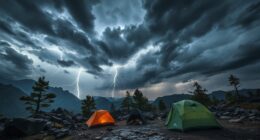
When camping near volcanoes, equip yourself with advanced air quality monitors to detect ash and hazardous gases in real time. Keep emergency gear like masks, gas detectors, and quick-escape routes ready for rapid evacuation. Make sure your communication devices are reliable and accessible, so you can get alerts instantly. Regularly practice your evacuation plans, and stay aware of volcanic activity reports. If you’re curious about integrating the latest safety tech and strategies, there’s more to discover ahead.
Key Takeaways
- Use portable air quality monitors and gas detectors to detect hazardous gases like sulfur dioxide promptly.
- Equip GPS and satellite communication devices for reliable navigation and emergency contact in remote volcanic areas.
- Install real-time alert systems that notify you instantly of rising ash or gas levels, enabling quick decision-making.
- Keep emergency gear, such as masks and first aid kits, easily accessible near tents for rapid response.
- Practice predefined evacuation routes regularly and ensure vehicle readiness for swift departure if needed.

Camping near volcanoes offers a unique adventure for thrill-seekers and nature lovers alike. But while the thrill is undeniable, so is the significance of safety. Before you set out, you need to prioritize your safety gear and emergency planning. Having the right safety gear isn’t just about comfort; it’s about guaranteeing your survival if an unexpected event occurs. Pack masks or respirators to filter ash and harmful gases, sturdy gloves, goggles, and a reliable first aid kit. A gas detector capable of sensing volcanic gases like sulfur dioxide can be a lifesaver, alerting you before the levels become dangerous. Your safety gear should be lightweight yet thorough, allowing you to move quickly and respond effectively to any changes in the environment.
Prioritize safety gear and emergency plans for a secure volcano camping adventure.
Emergency planning is equally essential. Know your escape routes before you even pitch your tent. Study the volcano’s activity reports and keep an eye on real-time alerts from geological agencies. Establish a clear evacuation plan, and make sure everyone in your group understands it. Have a designated meeting point outside the danger zone, and keep emergency contacts easily accessible. It’s smart to carry a portable GPS device or a satellite phone, especially if you’re in remote areas where cell service may be unreliable. A well-thought-out plan minimizes panic and confusion if an eruption occurs or if the volcanic activity suddenly intensifies. Additionally, understanding air quality monitoring and how it can help you detect hazardous conditions is crucial for your safety.
When camping near a volcano, it’s indispensable to stay aware of your surroundings. Always monitor volcanic activity updates, and don’t ignore signs of increased unrest such as small tremors, unusual gases, or ash plumes. Use tech gadgets designed for air quality monitoring to keep tabs on the atmosphere around you. These devices can detect dangerous levels of ash or gases, giving you precious seconds to prepare or evacuate. Equipping yourself with the latest tech isn’t just about convenience; it’s your best defense against sudden hazards.
Quick exits are indispensable. Keep your emergency gear near your tent, and ensure your vehicle is ready for rapid departure. Practice your evacuation route a few times if possible, so it becomes second nature. Remember, the terrain can be unpredictable, and road conditions might change rapidly after an eruption. Always have backup plans, and stay flexible. In the end, your preparedness can mean the difference between a safe escape and a dangerous situation. By combining the right safety gear, meticulous emergency planning, and modern tech, you make your volcano camping experience as safe as it is exhilarating.
Frequently Asked Questions
What Types of Air Quality Monitoring Devices Are Most Reliable?
You should look for air quality sensors with high monitoring accuracy, as they give you reliable data during volcano camping. Trusted brands like Aeroqual or PurpleAir offer devices that accurately measure gases, particulates, and other pollutants. Portable and easy to use, these sensors help you quickly assess air safety. Always check reviews and calibration features to verify the device maintains accuracy, especially in volatile environments.
How Quickly Can Evacuation Alerts Be Issued During an Eruption?
Ever wondered how fast evacuation alerts can be issued during an eruption? With advanced volcano monitoring and eruption prediction systems, alerts can be sent within minutes of detecting signs of activity. These technologies enable authorities to act swiftly, giving you essential time to evacuate safely. By continuously analyzing seismic data and gas emissions, emergency teams can guarantee that alerts reach you promptly, minimizing danger during unpredictable volcanic events.
What Are the Best Portable Filtration Systems for Volcanic Ash?
You should consider portable filtration systems designed for ash filtration, like HEPA-filtered air purifiers with activated carbon layers. Models such as the Blueair Classic 605 or Coway Airmega 300S excel at trapping volcanic ash particles and odors. These air purifier options are lightweight, easy to carry, and effective in filtering fine ash, helping you breathe cleaner air during a volcanic event. Make sure to select one with high CADR ratings for best results.
How Do Weather Conditions Affect Evacuation Routes?
Weather conditions can turn evacuation routes into treacherous rivers, altering your path like a wild current. Heavy rain, snow, or fog intensify volcano hazards, making routes slippery or obscured, and can delay or block your escape entirely. Wind can carry ash, reducing visibility and creating dangerous conditions. Always stay alert, monitor weather updates, and be ready to adapt quickly—because in a volcanic emergency, weather impact can mean the difference between safety and disaster.
What Training Is Recommended for Safe Volcano Camping?
You should undergo volcano safety and emergency preparedness training before venturing into volcano camping. This training teaches you how to recognize signs of volcanic activity, use safety gear effectively, and implement quick exit strategies. You’ll learn essential skills like monitoring air quality, understanding evacuation procedures, and staying calm under pressure. Proper training helps make certain of your safety, allows you to respond swiftly during emergencies, and enhances your overall preparedness for this adventurous activity.
Conclusion
So, are you ready to embrace the thrill of volcano camping with all the latest tech at your side? With air quality monitors and quick escape tools, you can satisfy your adventure spirit while staying safe. Remember, daring is exciting, but smart planning makes it safer. Will you take the leap into this fiery adventure, knowing you’ve got the right gear to handle whatever nature throws your way? The volcano awaits—are you prepared to face it?