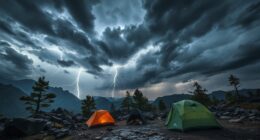

During a desert storm, act quickly by seeking natural or man-made shelters, such as caves or sturdy buildings, to avoid flying debris and dust. Cover your face with clothing or masks to prevent inhaling harmful particles, and protect your eyes with goggles. Use maps or a compass to maintain orientation if visibility drops, and stay calm inside your shelter until the storm passes. Staying prepared and knowing survival techniques can greatly increase your safety in these harsh conditions. Keep exploring to learn more essential tips.
Key Takeaways
- Carry essential safety gear like dust masks, goggles, and flashlights for protection and visibility during storms.
- Seek immediate shelter in natural formations or sturdy structures to avoid exposure and disorientation.
- Use GPS, maps, and compasses to maintain orientation when visibility drops.
- Seal shelter openings and protect your face to prevent inhaling dust particles.
- Stay calm, avoid unnecessary movement, and wait patiently until the storm passes.

Sandstorms and dust storms are powerful natural phenomena that can strike suddenly, reducing visibility and disrupting daily life. When caught in such a storm, your first priority is staying safe and minimizing exposure. Proper sandstorm navigation becomes essential. As visibility drops, you need to rely on landmarks, compasses, or GPS devices to find your way. If you’re unfamiliar with the terrain, it’s best to stop moving and wait for the storm to pass rather than risk getting lost. Moving blindly can lead to disorientation, especially when the sky darkens and dust clouds obscure familiar features. Always carry a map and know how to use it, along with a reliable compass, to maintain your orientation.
Finding dust storm shelters is critical to survival during these events. If you notice the signs of an approaching storm—such as a sudden drop in temperature, darkening skies, or a strange silence—seek shelter immediately. In desert environments, natural formations like caves, crevices, or rock overhangs can serve as quick refuges. If you’re in an urban or populated area, look for sturdy buildings or designated storm shelters. When you spot a shelter, move swiftly but carefully, protecting your face with clothing or a mask if possible. Covering your mouth and nose helps prevent inhaling harmful dust particles, which can cause respiratory issues or aggravate existing conditions.
Once inside a shelter, seal all openings to keep dust from seeping in. Use damp cloths or masks if available, and avoid opening windows or doors until the storm subsides. Dust storms can last from a few minutes to several hours, so patience is key. If you’re unable to find shelter immediately, try to create a barrier using materials at hand—like a tarp or clothing—and stay low to the ground to avoid airborne dust. Remember, during a sandstorm or dust storm, staying calm is crucial. Panic can lead to poor decision-making and increase your risk of injury or exposure.
Preparation is your best defense. Before venturing into desert areas, always check weather forecasts and be aware of potential storm patterns. Keep emergency supplies, including a dust mask, goggles, water, and a flashlight, readily accessible. Knowing how to navigate safely during a sandstorm and having a plan for quick access to dust storm shelters can mean the difference between safety and disaster. Additionally, understanding the importance of contrast ratio in projectors can help you appreciate the significance of visual clarity, especially when visibility is compromised. Always prioritize sheltering in place when storms hit, and wait patiently until conditions improve before resuming your journey.
Frequently Asked Questions
What Are the Long-Term Health Effects of Dust Inhalation?
Inhalation of dust can harm your pulmonary health over the long term, increasing respiratory risks like chronic bronchitis, asthma, or even lung scarring. You might experience persistent coughing, shortness of breath, or wheezing, which can worsen with continued exposure. Protecting yourself by wearing masks and minimizing dust inhalation is essential, as ignoring these risks could lead to serious, lasting damage to your respiratory system.
How Do Animals Adapt to Survive Sandstorms?
You see, animals adapt to survive sandstorms through remarkable resilience and desert adaptations. They often develop features like thick fur or feathers to shield against dust, or burrow underground to escape the storm’s fury. Some animals close their nostrils or have specialized nasal passages to filter out dust. These survival strategies demonstrate their incredible resilience and ability to thrive despite harsh desert conditions.
Can Plants Recover After Sandstorm Damage?
Yes, plants can recover after sandstorm damage through their natural resilience. You should focus on recovery strategies like removing debris, watering deeply to encourage regrowth, and protecting roots from further erosion. Many plants have adapted to survive harsh conditions, so with proper care, they can bounce back. Your patience and attention to their needs will help restore their health and ensure they thrive despite the storm’s impact.
What Technology Is Used to Predict Upcoming Sandstorms?
Think of satellite monitoring and advanced weather modeling as your desert’s weather radar, alerting you to oncoming sandstorms like a lighthouse guiding ships. These technologies analyze real-time data, tracking wind patterns and dust movement, so you can prepare ahead. For example, meteorologists use satellite images to forecast storms days in advance, giving you essential time to seek shelter or protect your equipment from the fierce desert winds.
How Do Different Clothing Materials Perform in Dust Storms?
You’ll find that clothing material durability varies, impacting how well dust storm protective gear functions. Lightweight, tightly woven fabrics like nylon or polyester resist dust infiltration better than loose or porous materials. Breathable options with a high thread count offer comfort while shielding you from abrasive particles. Guarantee your gear covers your face and head completely, and opt for materials that withstand harsh conditions without tearing, so you stay protected and dry during storms.
Conclusion
As you face desert storms, remember that preparation is your best shield. With the right gear and awareness, you can navigate even the fiercest dust clouds. Stay vigilant and adapt quickly—it’s said that “forewarned is forearmed.” By understanding the dangers and employing survival tech, you turn adversity into an opportunity to survive and thrive amid the sand and dust. Trust in your skills, and you’ll weather any storm that comes your way.