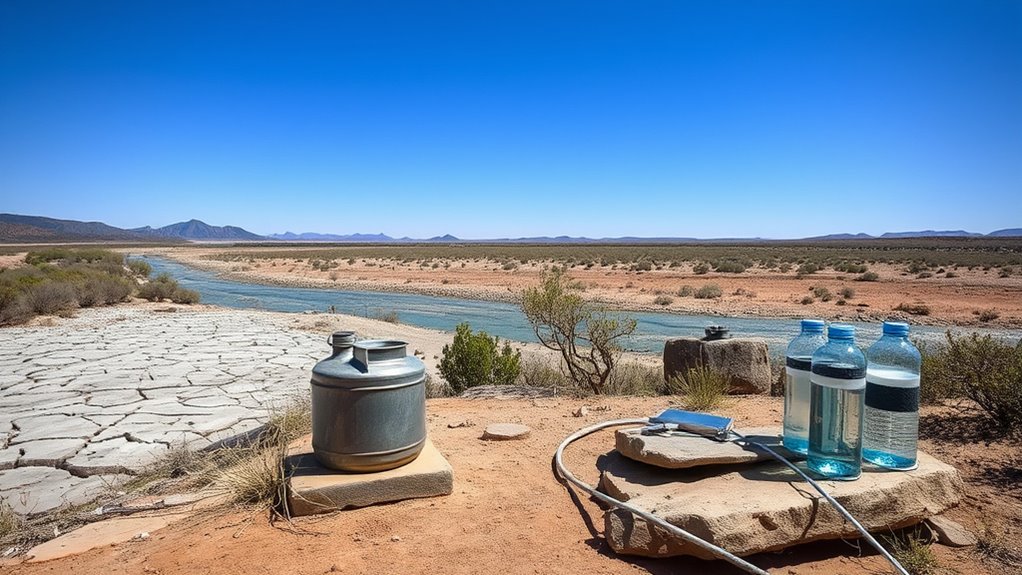

During a drought, you should look for vague water sources like small streams, puddles, or even dew early in the morning. Always treat any water you find, preferably by boiling for at least a minute or using chemical purifiers like iodine tablets. Collect rainwater or dew when possible and minimize water use by employing eco-friendly wipes. To stay safe and well-hydrated, understanding these tips will help you locate and purify water effectively in dry conditions.

Get emergency and outdoor gear delivered free — and shop member deals
- Fast, free delivery on millions of items
- Access to Prime Big Deal Days deals on October 6–7
- Prime Video, Amazon Music and more included
Key Takeaways
- Search for small, natural water sources like streams, ponds, or puddles, but always treat the water before drinking.
- Collect rainwater or dew using catchment systems or cloths to supplement limited water supplies.
- Use portable water filters or chemical treatments such as iodine tablets to purify natural water sources.
- Boil water for at least one minute in a metal container to effectively eliminate harmful organisms.
- Conserve water by minimizing usage, turning off taps, and carrying sufficient supplies to reduce dependence on natural sources.
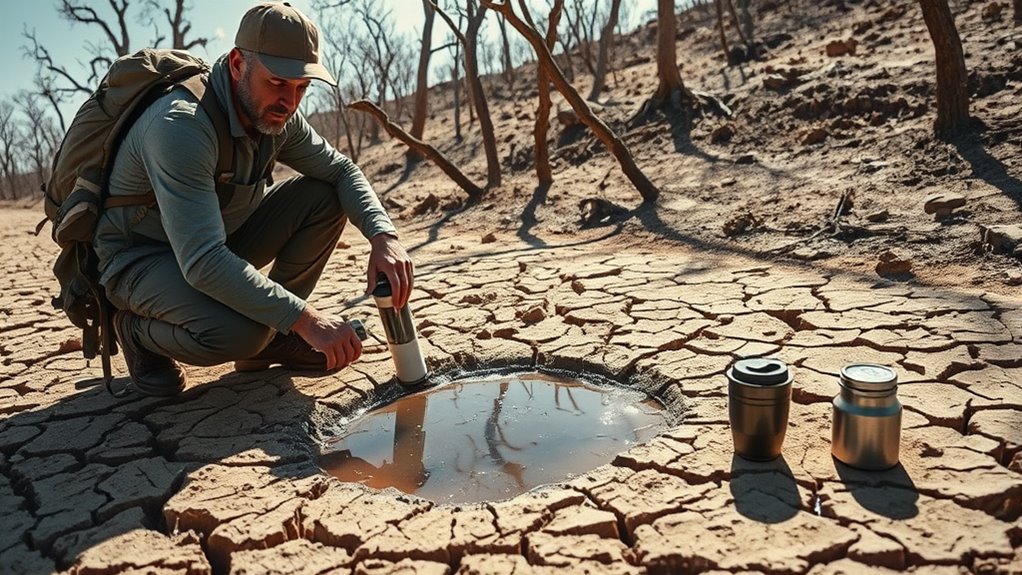
Have you ever considered camping during a drought? It might seem like a challenge, but with proper planning, you can enjoy the outdoors while respecting the limited water resources. When water is scarce, practicing water conservation becomes essential. You’ll want to use water sparingly, turning off taps when not in use and collecting rainwater if possible. Bring enough supplies to minimize your reliance on natural sources, but be prepared for times when you’ll need to find alternative water sources. Knowing how to locate and purify water is pivotal, especially since natural water sources may be contaminated or scarce during drought conditions. Understanding safe water treatment methods can make all the difference in staying healthy during your trip.
During drought camping, the first step is to identify potential water sources. Look for streams, ponds, or even small puddles that might still hold water. Remember, just because water is visible doesn’t mean it’s safe to drink. Always treat any natural water source before consumption. Carrying a portable water filter is wise, but in emergency situations, emergency filtration methods can be lifesaving. Boiling water is one of the most dependable forms of emergency filtration—you just need a way to heat it. If you don’t have a stove, a fire pit can work in a pinch. Bring a metal container to boil water for at least a minute to kill bacteria, viruses, and parasites. If boiling isn’t feasible, chemical treatments like iodine tablets or water purification drops are effective alternatives, especially when you’re short on time or fuel.
You’ll also want to prioritize water conservation by rationing your supplies and minimizing unnecessary water use. Use water sparingly for cooking and hygiene, and consider using biodegradable wipes instead of frequent washing in streams or lakes. Keep in mind that collecting rainwater or dew can supplement your water supply if the weather permits. This involves setting up simple catchment systems or using cloths to gather dew early in the morning. Always remember, even if water looks clean, it can harbor harmful microorganisms, so proper filtration and purification are indispensable.
portable water filter for camping
As an affiliate, we earn on qualifying purchases.
As an affiliate, we earn on qualifying purchases.
Frequently Asked Questions
Can Plants Provide Safe Drinking Water During a Drought?
Plants generally aren’t safe sources of drinking water during a drought, even if they show water indicators like lush leaves or vibrant stems. These plants might contain harmful toxins or pollutants, making their water unsafe. Always prioritize finding natural water sources like streams or rain catchments, and purify any water you collect. Relying on plants for water safety can risk illness, so seek verified sources and treat water properly before drinking.
What Are the Signs of Contaminated Water Sources?
Did you know that over 70% of waterborne illnesses come from contaminated sources? Signs of contaminated water include a foul odor, strange color, or a slimy texture. Water testing helps identify contamination sources like bacteria, chemicals, or algae. If water looks, smells, or tastes abnormal, avoid drinking it. Always perform testing before consumption, and look for visible signs of pollution to prevent illness during your drought camping adventure.
How Do You Locate Underground Water in Drought Conditions?
You can locate underground water in drought conditions by using subsurface detection methods like divining rods or ground-penetrating radar. Look for water table indicators such as lush vegetation, damp patches, or mineral-rich soil, which suggest water nearby. Pay attention to terrain features like valleys or low-lying areas, as they tend to collect underground water. Combining these signs with detection tools increases your chances of finding reliable water sources.
Are There Any Natural Indicators of Nearby Water?
Think of the land as nature’s blood vessels, guiding you to water. Look for green vegetation, lush patches, or areas with darker, damp soil—these are natural indicators of a higher water table nearby. Water runoff often leaves streaks or puddles on rocks and slopes, signaling underground sources. Follow animal trails or bird activity, as these often lead to water sources, helping you stay hydrated during drought camping.
How Often Should Water Purification Be Performed in Drought Areas?
You should perform water testing and purification methods regularly whenever you find water in drought areas. Test the water for contaminants each time before use, especially after heavy rain or runoff. Use effective purification methods like boiling, filters, or chemical treatments consistently to guarantee safety. This routine helps prevent illness, as water quality can vary greatly during a drought, so staying vigilant is vital for your health.
emergency water purification tablets
As an affiliate, we earn on qualifying purchases.
As an affiliate, we earn on qualifying purchases.
Conclusion
During a drought, finding and purifying water becomes essential for survival. Remember, even in dry conditions, natural sources like dew or distant streams can provide water if you know where to look. Always verify water quality before drinking, using purification methods like boiling or filters. Think of water sources as a web—pull one strand, and others may follow. With careful investigation and preparation, you can stay safe and hydrated despite the dry spell.
metal camping pot for boiling water
As an affiliate, we earn on qualifying purchases.
As an affiliate, we earn on qualifying purchases.
dew collection cloth for camping
As an affiliate, we earn on qualifying purchases.
As an affiliate, we earn on qualifying purchases.
Fall Picks
fall essentials
As an affiliate, we earn on qualifying purchases.