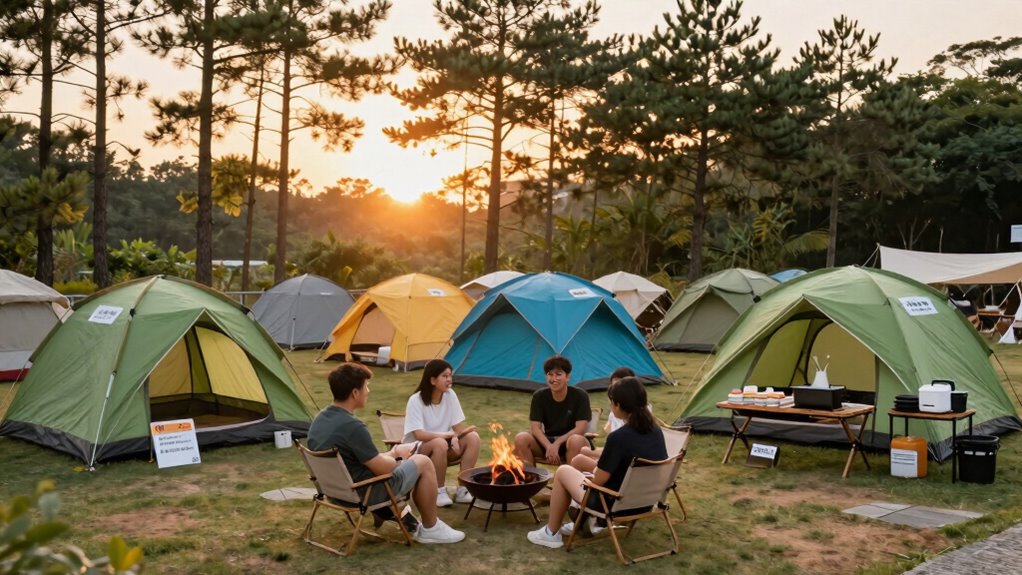

Clearer campsite rules help you avoid misunderstandings and conflicts, making your group trip smoother. When everyone knows their responsibilities for fire safety, respecting quiet hours, and keeping the campsite clean, you reduce stress and create a more enjoyable environment. Establishing guidelines for shared spaces and safety guarantees everyone feels accountable and secure. If you want to discover how setting good rules can turn your trip into a hassle-free adventure, keep going for more tips.

Get emergency and outdoor gear delivered free — and shop member deals
- Fast, free delivery on millions of items
- Access to Prime Big Deal Days deals on October 6–7
- Prime Video, Amazon Music and more included
Key Takeaways
- Clear rules prevent misunderstandings, ensuring everyone knows their responsibilities and reduces conflicts.
- Well-defined safety protocols enhance preparedness, making emergency responses quicker and more effective.
- Establishing campsite etiquette fosters respect, minimizing disturbances and promoting a harmonious environment.
- Responsible environmental practices protect natural resources, preserving the site for future trips.
- Organized logistics and assigned tasks streamline daily routines, making group experiences more enjoyable and efficient.
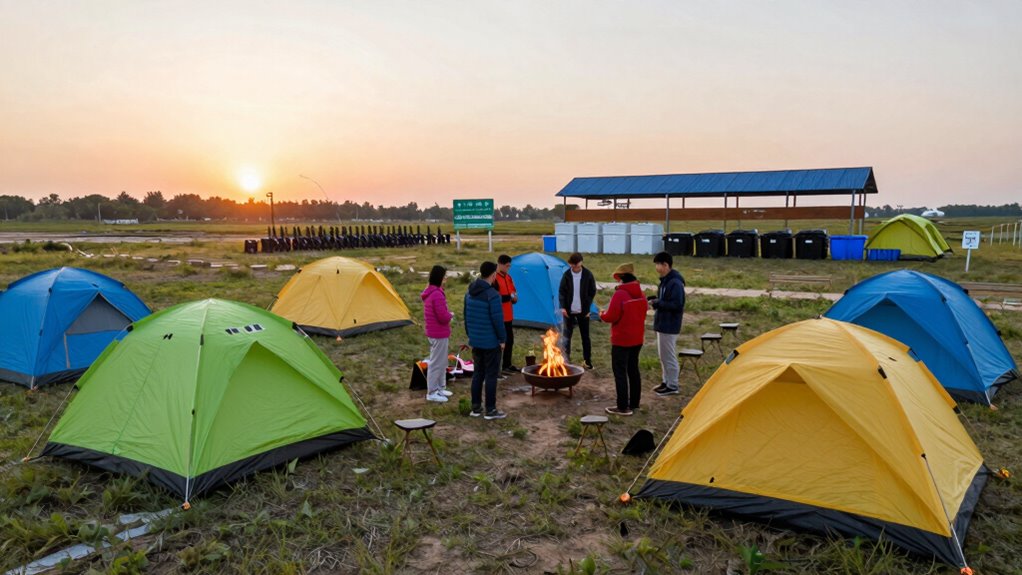
Planning a group trip to a campsite can be exciting, but it also requires setting clear rules to guarantee everyone has a safe and enjoyable experience. When you establish good campsite rules, you create a framework that helps prevent misunderstandings and mishaps. This is especially important when it comes to fire safety, as campfires are central to outdoor experiences but can quickly become dangerous if not managed properly. Make sure everyone understands how to build, maintain, and extinguish fires safely. Keep fire extinguishers or buckets of water nearby, and emphasize that fires should never be left unattended. By setting these boundaries, you reduce the risk of accidental wildfires and assure that everyone stays safe.
Campsite etiquette is another vital aspect of better rules. Respect for others’ space and belongings keeps the group harmony intact. Encourage everyone to keep noise levels reasonable, especially during quiet hours, and to clean up after themselves. You want to foster an environment where everyone feels comfortable and respected. This includes disposing of trash correctly, not disturbing wildlife, and sharing communal spaces fairly. Clear guidelines about respecting each other’s privacy and belongings help prevent conflicts and promote a positive group dynamic. Biodiversity preservation is also crucial, and reminding everyone to avoid disturbing local flora and fauna helps protect the environment for future visitors. Incorporating environmental awareness into your rules can further enhance conservation efforts during your trip. Additionally, knowing how to minimize human impact is an essential part of responsible outdoor recreation, and emphasizing the importance of sustainable practices can inspire more eco-friendly behaviors among group members. Establishing Leave No Trace principles can guide your group toward more sustainable camping practices and help safeguard the natural beauty of the area.
Having clear rules also simplifies the logistics of the trip. When everyone knows the expectations, you spend less time resolving disputes or repeating instructions. For example, setting designated cooking areas and establishing quiet hours helps streamline daily routines. It’s also wise to assign responsibilities, like who manages the fire or keeps the campsite tidy, so everyone shares the workload. This shared accountability makes the trip smoother and more enjoyable for everyone involved.
Additionally, establishing safety protocols beyond fire safety is essential. Make sure everyone knows what to do in case of emergencies, whether it’s a medical incident or severe weather. Sharing emergency contact info and outlining evacuation procedures can be lifesaving. When you set these rules beforehand, it builds confidence within the group, knowing that everyone is prepared and aware. Clear communication and mutual understanding foster a sense of security, which enhances the overall experience. Proper emergency preparedness can make all the difference in handling unforeseen situations effectively.
As an affiliate, we earn on qualifying purchases.
Frequently Asked Questions
How Do You Enforce Campsite Rules Among Large Groups?
You enforce campsite rules among large groups by establishing group consensus beforehand, ensuring everyone agrees on the guidelines. Use clear signage to communicate rules visibly around the site, so everyone knows what’s expected. Regularly remind your group of the rules and encourage respectful behavior. If issues arise, address them promptly and kindly, reinforcing the importance of adhering to the rules to keep the trip enjoyable for all.
What Are Common Conflicts Due to Poor Campsite Rules?
Ever wondered what causes conflicts in campsites? Poor rules often lead to disagreements over campfire etiquette and wildlife protection. When everyone ignores fire safety or leaves food out, tensions rise. People might argue about noise levels or disturbing animals. Without clear guidelines, respecting nature and each other becomes difficult. Setting firm, fair rules helps prevent these conflicts, ensuring everyone enjoys the trip and nature stays protected.
How to Handle Rule Violations Politely?
You handle rule violations politely by addressing the issue calmly and respectfully, recognizing cultural differences and personal boundaries. Start with a friendly reminder, explaining why the rule is important for everyone’s comfort. If needed, listen to their perspective and find a compromise. Staying patient and understanding helps maintain harmony, ensuring everyone feels respected and comfortable, even when disagreements arise. Clear communication keeps the trip enjoyable for all.
Are There Legal Requirements for Campsite Rules?
Yes, there are legal requirements for campsite rules to guarantee legal compliance and promote good campsite etiquette. These rules often follow local, state, or federal regulations designed to protect the environment and public safety. As a camper, you’re responsible for understanding and following these laws. Parks may also have their own rules, so always check posted signage or official guidelines to stay compliant and enjoy your trip responsibly.
How Often Should Campsite Rules Be Reviewed or Updated?
Think of your campsite rules as a living map—always guiding, ever-evolving. You should review and update campground etiquette at least once a year or after any major changes. Regular checks make certain maintenance schedules stay aligned, problems are caught early, and everyone knows what to expect. Keeping rules fresh helps prevent misunderstandings, fosters respect, and makes your group trip smoother, like a well-oiled machine.
As an affiliate, we earn on qualifying purchases.
Conclusion
By setting clear campsite rules, you create a smooth sailing experience for everyone. When expectations are laid out, conflicts are fewer, and the trip becomes a breeze. Think of it as planting a sturdy anchor—your group can weather any storm that comes their way. So, take the time to establish good rules early on, and you’ll find your adventure flows effortlessly, leaving everyone with memories as warm as a crackling campfire under the starlit sky.
As an affiliate, we earn on qualifying purchases.
camping organization and task management tools
As an affiliate, we earn on qualifying purchases.
As an affiliate, we earn on qualifying purchases.
Fall Picks
fall essentials
As an affiliate, we earn on qualifying purchases.