
Satellite SOS in smartphones allows you to send emergency messages directly via satellites when you’re outside cellular coverage. It works by connecting your phone to orbiting satellites, which relay your distress signals quickly to ground stations and emergency services. Some models, like certain iPhones, already include this feature, and it’s expanding to more devices. As this technology grows, it will become more common, offering you safer adventures even in remote areas—keep going to discover the details.
Key Takeaways
- Satellite SOS allows smartphones to send emergency messages directly via satellites, bypassing cellular networks.
- Devices with Satellite SOS detect when cellular or Wi-Fi signals are unavailable to activate satellite communication.
- Apple iPhone 14 and later models feature built-in Emergency Satellite capabilities; some Android devices also support satellite connectivity.
- Satellite SOS enhances safety for travelers, hikers, sailors, and adventurers in remote areas lacking cellular coverage.
- The technology is rapidly expanding, making satellite emergency communication more accessible across various smartphone brands.
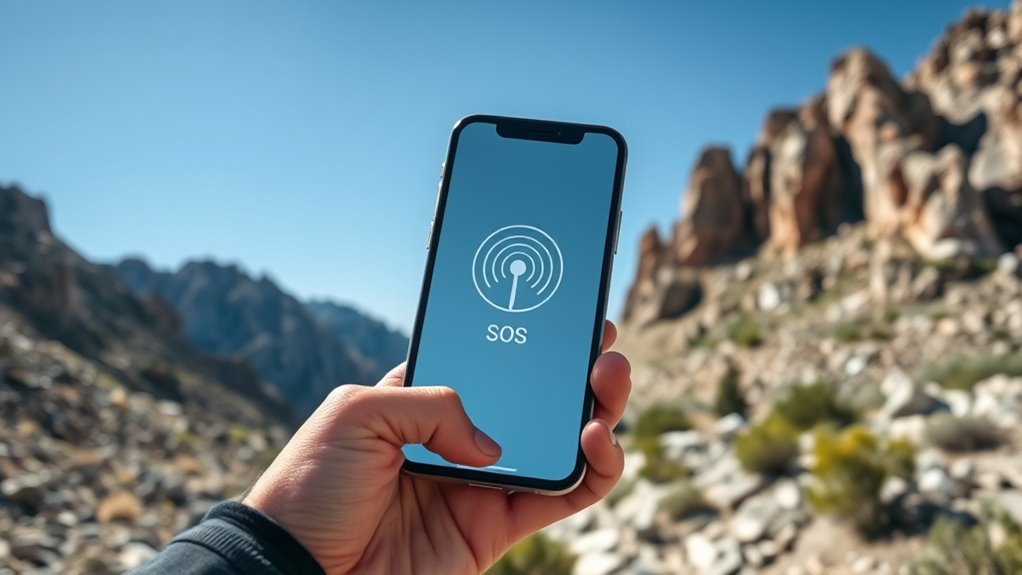
Have you ever wondered how smartphones can now summon help even when you’re out of cellular range? It’s a game-changer for emergency communication, especially in remote areas where cell towers don’t reach. Thanks to satellite technology, some of today’s smartphones can connect directly to satellites, enabling you to send distress signals regardless of your location. This innovation means you’re no longer entirely dependent on traditional cellular networks in emergencies. Instead, your phone can leverage satellite networks to transmit your location and distress messages, increasing your safety and chances of rescue.
Smartphones now connect directly to satellites, enabling emergency help even out of cellular range.
Satellite communication works by connecting your device directly to orbiting satellites. When you activate a satellite SOS feature, your phone sends a specialized signal to a satellite overhead. That satellite then relays your message to a ground station, which routes it to emergency services or designated contacts. This process happens quickly, often within seconds, ensuring your critical information reaches help as fast as possible. The entire system relies heavily on satellite technology, which is designed to operate globally and provide coverage even in the most isolated regions. This is particularly essential for adventurers, sailors, hikers, or anyone venturing into areas with limited or no cellular service. Additionally, advancements in global coverage are making these services accessible to more users worldwide.
Several smartphone manufacturers have integrated satellite SOS features into their latest devices. For example, certain Apple iPhone models include Emergency Satellite features that activate when no cellular or Wi-Fi connection is available. These phones use satellites to send basic emergency messages and your location, with plans to expand the service to include more detailed communication. Similarly, some Android phones now incorporate satellite connectivity, either through built-in hardware or via partnerships with satellite service providers. These phones are designed to automatically switch to satellite communication when cellular signals are weak or absent, ensuring you’re never truly cut off in critical moments.
The adoption of satellite SOS in smartphones marks a significant step forward in emergency communication. It offers peace of mind for users venturing into remote or rugged environments, knowing they have a reliable way to summon help. While not yet widespread across all devices, this feature is expected to become more common as satellite technology becomes more affordable and integrated into consumer electronics. By bridging the gap between traditional cellular networks and satellite coverage, these smartphones are transforming safety protocols and empowering users to stay connected when it matters most. So, whether you’re exploring the wilderness or sailing in open waters, satellite SOS capabilities ensure you’re never truly out of reach.
Frequently Asked Questions
Can Satellite SOS Be Used Without Cellular Service?
Yes, satellite SOS can be used without cellular service because it relies on satellite technology, which doesn’t need cell towers. When you activate emergency protocols, your device connects directly to satellites, ensuring help even in remote areas. This feature is essential for safety, enabling you to send distress signals and receive assistance regardless of your location’s cellular coverage. Just make sure your phone supports satellite SOS before heading out.
How Accurate Is Satellite SOS Location Data?
Imagine a lighthouse guiding a ship through fog—that’s how satellite SOS location data works. It’s quite accurate, with satellite accuracy typically within a few meters, providing precise location information during emergencies. While factors like weather or terrain can slightly affect location precision, modern systems are designed to deliver reliable, real-time data. So, when you activate satellite SOS, you can trust that your location is pinpointed precisely enough to ensure help arrives quickly.
Is Satellite SOS Available in All Countries?
Satellite SOS isn’t available in all countries yet. Its global coverage depends on regulatory approval in each region, which varies widely. You might find it in some countries where authorities approve satellite communication services, but others still lack the necessary permissions. To guarantee you can use Satellite SOS when needed, check your phone’s compatibility and whether service providers have secured approval for your location.
What Are the Costs Associated With Satellite SOS?
The cost implications of Satellite SOS vary based on your phone provider and coverage area. Typically, you’ll need a service subscription, which can range from a few dollars a month to more, depending on the plan. Some providers include Satellite SOS in their premium packages, while others charge separately. Be sure to check your carrier’s specific costs and subscription details to understand the overall expenses before relying on this emergency feature.
How Long Does It Take to Establish a Satellite SOS Connection?
Establishing a satellite SOS connection usually takes just a few seconds to a minute, depending on satellite coverage and your location. When you activate emergency protocols, your device quickly searches for the best satellite link, ensuring fast communication even in remote areas. Keep in mind that factors like obstructions or weak signal strength can slightly delay the connection, but overall, satellite SOS aims for rapid response during critical moments.
Conclusion
Satellite SOS in smartphones is like a lifeline thrown into the vast ocean, offering hope when you’re lost or in danger. It’s a game-changer for safety, connecting you to help no matter how remote your location. As technology continues to evolve, this feature becomes your personal beacon, guiding you through the unknown. Embrace it as your trusty lighthouse, shining bright in the darkest moments, ensuring you’re never truly alone in the storm.