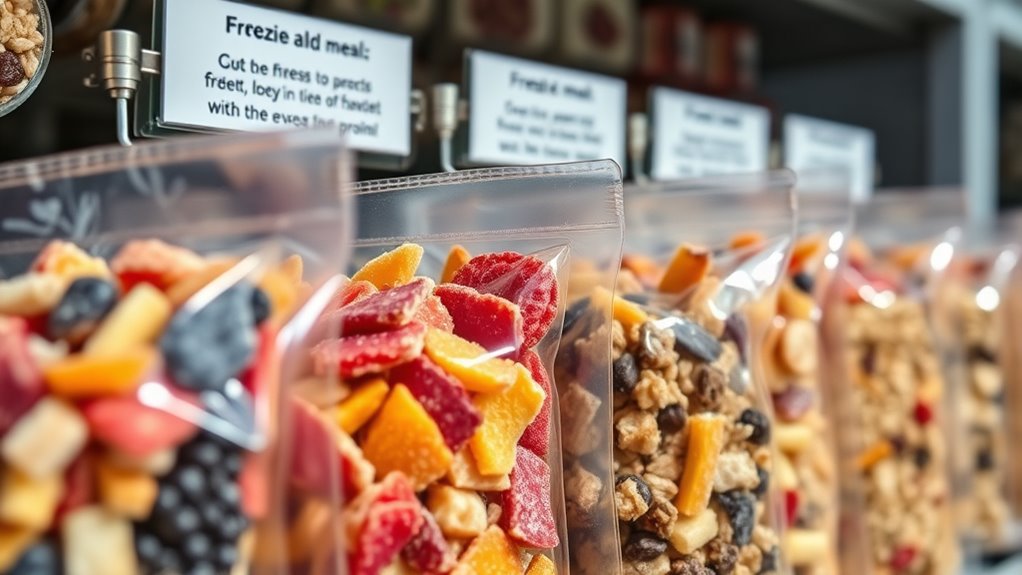

Freeze-dried foods can last up to 25 years or more when stored properly in cool, dark, airtight containers. The key is removing moisture during the freeze-drying process and protecting the food from moisture, oxygen, and light over time. Good packaging and stable storage conditions help preserve nutrients, flavor, and texture. If you want to learn how to maximize shelf life and maintain quality for decades, there’s more to discover below.
Key Takeaways
- Properly packaged freeze-dried foods can last 20 to 25 years or more with minimal nutrient and flavor loss.
- Moisture intrusion and packaging breaches significantly reduce shelf life and food safety.
- Storage in cool, dark, and stable environments prolongs the longevity of freeze-dried meals.
- Advances in packaging, such as vacuum-sealing and oxygen absorbers, help maintain freshness over decades.
- Consistent quality control and proper handling are essential for achieving long-term shelf stability.
The Freeze-Drying Process Explained

The freeze-drying process, also known as lyophilization, involves removing moisture from food while keeping its structure and nutrients intact. During this process, food is first frozen, then subjected to a vacuum that allows ice to sublimate directly into vapor. This method minimizes nutrient degradation because it operates at low temperatures, preserving vitamins and minerals. Advances in packaging innovations play a crucial role in maintaining the quality of freeze-dried foods, ensuring they stay dry and protected from moisture, oxygen, and contaminants. Proper packaging helps prevent nutrient loss over time and extends shelf life. By understanding how the process works and how packaging supports preservation, you can better appreciate why freeze-dried foods remain nutritious and stable for long periods. Moisture control is essential in maintaining the longevity and quality of freeze-dried foods, as it directly impacts storage stability and nutrient retention. Additionally, oxygen removal during packaging further reduces the risk of spoilage and oxidation, enhancing product shelf life.
How Moisture Affects Food Preservation
Moisture levels directly impact how well food stays preserved, as excess moisture encourages microbial growth that spoils your supplies. Using proper drying techniques helps remove enough moisture to prevent this, extending shelf life. Keeping your food dry is essential for maintaining quality and safety over time. Additionally, understanding food preservation techniques can help optimize shelf life and prevent spoilage. Exploring the science of dehydration can further improve storage outcomes and ensure food remains safe for long-term use. Implementing moisture control methods is also crucial for achieving optimal preservation results. For instance, utilizing desiccants can help absorb residual moisture in storage containers, enhancing preservation. The use of solar pool covers can be adapted in some cases to maintain ideal conditions by reducing external moisture exposure in storage environments.
Moisture and Microbial Growth
Since moisture levels directly influence microbial activity, controlling humidity is vital for preserving freeze-dried foods. Excess moisture allows bacteria, mold, and yeasts to thrive, compromising your food’s safety and shelf life. Microbial growth often results from botanical interactions during processing or storage, where residual moisture creates ideal conditions. Packaging innovations, such as vacuum-sealed or moisture-resistant materials, play a key role in maintaining low humidity levels. By minimizing moisture, you inhibit microbial proliferation and extend the longevity of your freeze-dried meals. Proper sealing and storage in cool, dry environments further reduce risk. Additionally, filter maintenance on your storage containers can prevent the buildup of moisture and contaminants. Implementing storage best practices such as using desiccants and monitoring humidity levels can further enhance preservation. Maintaining humidity control with reliable hygrometers or dehumidifiers ensures consistent moisture levels are kept at bay. Regularly inspecting storage environments for moisture intrusion is essential to prevent unexpected spoilage. Utilizing advanced packaging technologies can also help create a barrier against environmental moisture. Ultimately, controlling moisture through smart packaging and storage practices ensures your freeze-dried foods stay safe, nutritious, and ready to eat for years.
Proper Drying Techniques
Proper drying techniques are essential for effectively preserving food by removing excess moisture that can lead to spoilage. By thoroughly drying food, you reduce the risk of microbial growth and extend shelf life. Using proper methods guarantees the food retains its nutrients and flavor while maintaining ideal rehydration techniques when you’re ready to eat. Consistent drying prevents pockets of moisture that could compromise the entire batch. Packaging innovations, like vacuum-sealing or moisture barriers, further protect dried foods from humidity and air exposure. These techniques work together to maintain the low moisture content necessary for long-term storage. Attention to quality assurance during the drying process helps ensure consistent results and prolongs shelf life. Implementing standardized drying procedures minimizes variability and enhances food safety during preservation. Incorporating appropriate essential oils can also provide additional antimicrobial protection, further extending the shelf life of dried foods, especially when combined with effective moisture control. Additionally, monitoring humidity levels throughout the drying process is crucial to prevent under- or over-drying, which can compromise food quality and safety.
The Role of Packaging and Storage Conditions
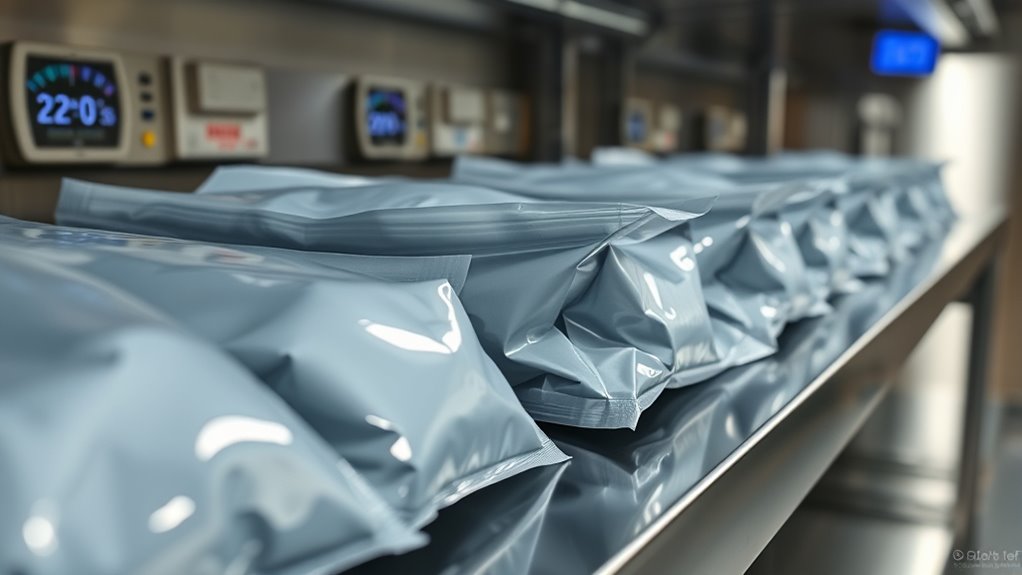
The way you package and store freeze-dried foods directly impacts their shelf life and quality. Proper packaging prevents moisture, light, and contaminants from degrading the product. Using vacuum packaging removes air, reducing oxidation and spoilage risks. Incorporating oxygen absorbers further enhances preservation by eliminating residual oxygen, which can cause spoilage over time. To optimize shelf life, consider these strategies:
- Seal foods in airtight vacuum bags to prevent moisture ingress.
- Include oxygen absorbers to eliminate residual oxygen inside packages.
- Store packages in a cool, dark, and dry environment to slow deterioration.
- Understanding the importance of proper storage conditions can significantly extend the longevity of freeze-dried meals. Additionally, maintaining controlled temperature and humidity levels is crucial for preserving food quality over decades. Proper storage conditions, such as consistent temperature and humidity, help prevent food spoilage and ensure the meals remain safe and flavorful for extended periods. Maintaining consistent environmental conditions is key to preventing fluctuations that may compromise food integrity over time, especially when combined with proper packaging methods.
Nutritional Stability Over Time

Over time, freeze-dried foods can lose some of their nutritional value, but proper storage and handling help preserve their nutrients longer. Nutrient degradation occurs gradually, especially with vitamins, which are more sensitive to environmental factors like heat, light, and moisture. Vitamin stability varies; for example, vitamin C degrades faster than minerals or fats. To maximize nutritional retention, keep packages in a cool, dark, and airtight environment. Avoid frequent temperature fluctuations, as they accelerate nutrient loss. Proper storage conditions, including airtight packaging, can significantly slow down nutrient degradation. While some decline in nutrients is inevitable over decades, well-preserved freeze-dried foods can retain most of their nutritional content for years. Understanding how storage impacts nutrient stability helps you maintain the nutritional quality of your freeze-dried meals longer. Additionally, consulting storage best practices can further optimize nutrient preservation over extended periods.
Flavor Retention and Quality Maintenance
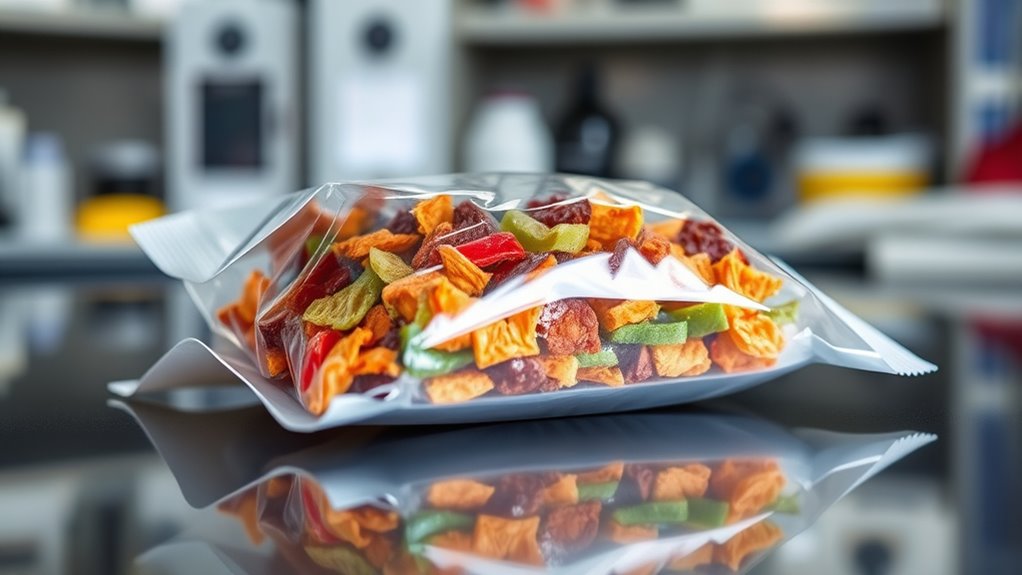
You want your freeze-dried foods to taste fresh and appealing over time, so understanding flavor preservation techniques is vital. Maintaining the right texture and aroma also plays an essential role in keeping quality high. By focusing on these factors, you can guarantee your stored foods stay enjoyable and satisfying. Additionally, employing proper storage methods, such as controlled humidity, helps prevent spoilage and preserves the overall integrity of the food. Proper packaging that minimizes oxygen exposure further enhances flavor retention, ensuring your meals remain delicious for decades. To optimize longevity, it’s important to monitor storage conditions regularly and adjust as needed.
Flavor Preservation Techniques
Maintaining flavor during freeze-drying is essential to guarantee the food remains appealing after processing. To achieve this, flavor preservation techniques focus on preventing the loss of taste and aroma. Implementing effective flavor sealing ensures that moisture and air don’t diminish flavor quality over time. Aroma locking techniques help keep volatile compounds intact, preserving the food’s original scent and taste. Consider these methods:
- Using airtight packaging to prevent flavor leakage
- Incorporating flavor carriers like encapsulated oils
- Applying vacuum sealing to enhance aroma retention
These strategies work together to protect the food’s sensory qualities, ensuring that each meal remains flavorful and fresh long after processing. Proper flavor preservation not only maintains quality but also enhances consumer satisfaction and confidence in freeze-dried foods.
Texture and Aroma Stability
Ensuring that freeze-dried foods retain their texture and aroma is essential for preserving overall quality and consumer satisfaction. Over time, texture degradation and aroma loss can occur, diminishing flavor appeal. Proper packaging and storage help minimize these issues, but some quality changes are inevitable. To better understand, consider this table:
| Factor | Impact on Stability |
|---|---|
| Oxygen exposure | Accelerates aroma loss |
| Moisture ingress | Causes texture degradation |
| Light exposure | Leads to aroma and flavor decline |
Common Factors That Limit Shelf Life
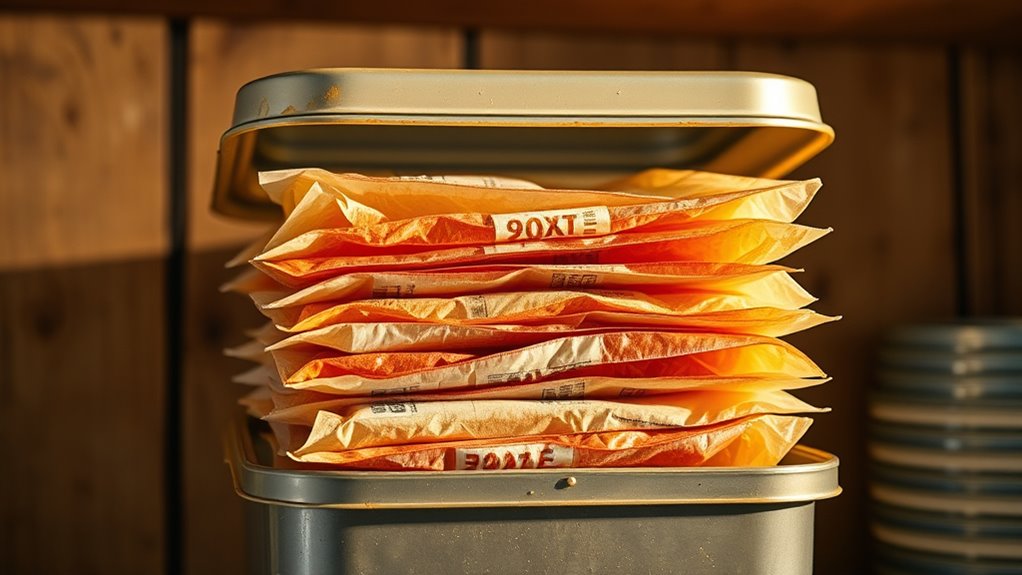
Several factors can markedly shorten the shelf life of freeze-dried foods. Packaging integrity is essential; any breach allows moisture and oxygen to enter, accelerating spoilage. Proper sealing prevents contamination and preserves quality. Temperature fluctuations also impact longevity; repeated changes cause condensation inside packaging, promoting microbial growth and oxidation. To minimize these risks, make certain your packaging remains airtight and stored in a stable, cool environment. Additionally, avoid exposure to heat and humidity, which can degrade the food’s structure and flavor. Regularly check packaging for signs of damage or leaks, and store your freeze-dried foods in a consistent temperature setting to maximize shelf life. Staying vigilant about these factors helps guarantee your meals stay safe and nutritious for years to come.
Advances in Freeze-Drying Technology

Recent advances in freeze-drying technology have markedly improved the efficiency and quality of preserved foods. Innovations in freeze-dried agriculture have allowed farmers to produce higher-quality crops specifically optimized for freeze-drying, resulting in better flavor retention and nutrient preservation. Technological innovations, such as improved vacuum systems and rapid freezing methods, have shortened processing times and increased scalability. These developments enable manufacturers to produce more consistent products with longer shelf lives, making freeze-dried foods more reliable for long-term storage. Additionally, advances in automation and monitoring systems ensure better control over temperature and pressure, reducing waste and energy consumption. As a result, you’re now able to enjoy freeze-dried foods that maintain their nutritional value and taste for decades, thanks to these cutting-edge technologies.
Tips for Proper Storage and Handling

Proper storage and handling are essential to maximize the shelf life and quality of your freeze-dried foods. To prevent moisture intrusion, use airtight containers and consider packaging innovations that enhance barrier properties. Store your food in a cool, dark place, avoiding temperature fluctuations that can accelerate degradation. Pay attention to evaporation techniques during packaging to ensure minimal residual moisture, which helps preserve flavor and texture. Additionally, check seals regularly to prevent air leaks. Here are some tips to improve storage:
Proper storage, airtight containers, cool dark places, and regular seal checks preserve freeze-dried food quality.
- Use vacuum-sealed bags or mylar pouches with oxygen absorbers
- Incorporate advanced packaging innovations like multilayer films
- Store in a consistent, cool environment away from sunlight
Evaluating Safety and Freshness After Decades

After years of careful storage, it’s important to assess whether your freeze-dried foods remain safe and fresh for consumption. In emergency preparedness situations, relying on food that’s past its prime can compromise your safety. Check for signs of spoilage, such as off-odor, discoloration, or texture changes. While freeze-dried foods are known for long shelf lives, decades can still impact quality. Use sensory evaluation as your first test. If the food looks, smells, and tastes normal, it’s likely safe to eat, but consider incorporating culinary innovation by rehydrating and enhancing flavors to improve freshness. Remember, proper storage helps preserve safety, but periodic checks ensure your emergency supplies stay reliable. Staying vigilant guarantees your preparedness and culinary options remain available even after many years.
Frequently Asked Questions
How Does Temperature Fluctuation Impact the Shelf Life of Freeze-Dried Foods?
Temperature fluctuation can considerably impact your freeze-dried food’s shelf life by causing moisture ingress, which leads to spoilage. When temperatures vary, the packaging’s integrity may weaken, allowing humidity to seep in. To guarantee maximum longevity, keep your freeze-dried foods in a cool, consistently stable environment, as temperature stability prevents moisture buildup and preserves the food’s quality and safety over time.
Can Freeze-Dried Foods Develop Harmful Bacteria Over Decades?
Freeze-dried foods are unlikely to develop harmful bacteria over decades if packaging remains intact. Microbial growth requires moisture and oxygen, which are minimized during the freeze-drying process and maintained by good packaging. As long as the packaging stays sealed and undamaged, your freeze-dried foods stay safe and free from bacteria, even after many years. Just remember to check packaging integrity before consuming.
Are There Specific Storage Environments Best Suited for 25-Year Freeze-Dried Meals?
You should store your 25-year freeze-dried meals in a cool, dark, and dry environment. Use vacuum sealing to remove excess air and prevent oxidation, which can degrade food quality over time. Additionally, controlling humidity is essential; keep packages in an area with low humidity to avoid moisture absorption that could compromise the food’s shelf life. Proper storage ensures your meals stay safe and flavorful for decades.
How Do Packaging Materials Influence Long-Term Preservation Effectiveness?
Imagine sealing your freeze-dried meals in a vacuum-packed pouch, creating a fortress against spoilage. Packaging materials like oxygen barriers play an essential role, blocking out air and moisture that could compromise freshness. These advanced containers keep your food safe, preserving nutrients and flavor for decades. By choosing the right packaging, you guarantee your long-term meals stay just as delicious and nutritious as the day they were packed.
Is There a Visual Indicator to Determine if Freeze-Dried Food Has Spoiled?
You can usually spot spoilage in freeze-dried food by observing color change or texture alteration. If the food develops dull, discolored patches or becomes sticky or overly soft, it’s a sign it may have gone bad. Keep an eye out for off-odor or mold, but visually, these indicators are your best clues. Remember, proper storage helps prevent these changes and extends shelf life.
Conclusion
So, after all this science, it’s almost ironic—you can freeze-dry food for decades, yet a simple mistake in storage can ruin it overnight. You trust centuries-old techniques to preserve your meals, but forget that your own care plays a vital role. Ultimately, the longevity of your 25-year meals depends less on technology and more on your vigilance. Ironically, it’s your attention, not just the process, that truly keeps your food safe and tasty.