

In deserts, innovative tech helps you access water by capturing moisture from the air or solar-powered desalination. Solar desalination devices use sunlight to purify salty water, turning it into fresh drinking water. Atmospheric water generators attract and condense moisture directly from the atmosphere, even in dry conditions. These advancements transform harsh environments into sustainable water sources. To discover how these technologies work and what they mean for arid regions, explore further.
Key Takeaways
- Solar desalination uses sunlight to purify salty water, providing drinkable moisture in desert regions.
- Atmospheric water generation captures humidity directly from the air, even in dry climates.
- Innovative technologies leverage natural evaporation and condensation processes for sustainable water extraction.
- These methods reduce reliance on traditional water sources like rivers and underground aquifers.
- Future advancements aim to transform deserts into habitable environments using moisture-harvesting technologies.

Have you ever wondered how life survives in the harshest desert environments? It’s incredible how plants, animals, and even humans manage to find water when most sources seem impossible to access. Recent technological advances make this possible through methods like solar desalination and atmospheric harvesting. These innovations tap into natural processes, turning the desert’s extreme conditions into opportunities to extract moisture efficiently and sustainably. Solar desalination, for instance, uses the sun’s energy to purify salty or brackish water. You set up solar-powered systems that mimic the natural evaporation process, turning contaminated water into fresh, drinkable moisture. This approach is particularly effective in desert areas where sunlight is abundant, and traditional water sources are scarce. The process involves using solar collectors to heat water, causing it to evaporate and leave behind salts and impurities. The vapor then condenses into clean water, ready for consumption or irrigation. This method requires minimal infrastructure and leverages renewable energy, making it a sustainable solution for arid regions. It’s a game-changer for communities that rely on limited water supplies and face the challenge of desalination without expensive or complicated machinery. Furthermore, innovations in atmospheric water generation are expanding the possibilities for water sourcing, even in extremely dry climates. Meanwhile, atmospheric harvesting takes a different approach by capturing moisture directly from the air. You might think that deserts are too dry for this to work, but atmospheres often contain tiny amounts of water vapor, even in extreme conditions. Advanced atmospheric harvesting devices use materials that attract and condense moisture from the air. These systems typically involve specialized membranes or surfaces that cool down or adsorb water molecules when exposed to the ambient environment. As the vapor condenses, it forms droplets that can be collected for use. This technology is especially promising because it doesn’t depend on traditional water sources like rivers or underground aquifers, which are often depleted in desert areas. Instead, it taps into the invisible moisture present in the atmosphere, making it a versatile and innovative solution for water-scarce regions. Both solar desalination and atmospheric harvesting exemplify how science and technology turn dire circumstances into opportunities. They harness natural energy sources and environmental processes to provide a reliable, sustainable supply of water. As you explore these methods, you’ll see how they transform the desert from a barren wasteland into a landscape capable of supporting life. These innovations not only address immediate water needs but also pave the way for future resilience in some of the world’s most challenging environments.
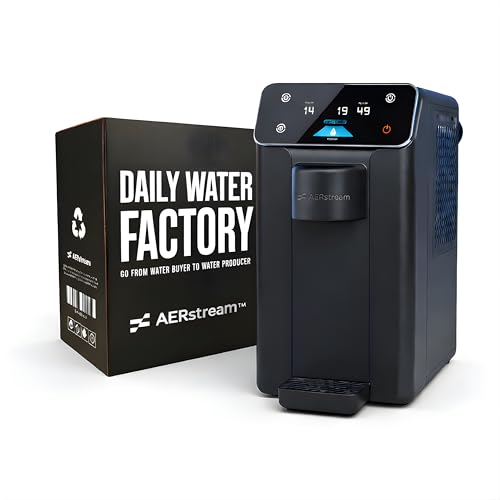
AERstream GW Pro Daily Water Factory™ Atmospheric Water Generator, 10L/Day
- Daily Water Production: Produces up to 10L of water daily
- Air-to-Water Conversion: Extracts water from ambient humidity
- No Plumbing Needed: No installation required
As an affiliate, we earn on qualifying purchases.
As an affiliate, we earn on qualifying purchases.
Frequently Asked Questions
How Much Water Can Desert Moisture-Collection Devices Realistically Produce Daily?
You can expect desert moisture-collection devices to produce around 1 to 4 liters of water daily, depending on desert humidity and water collection efficiency. In areas with higher humidity, these devices work more effectively, capturing more moisture from the air. However, in extremely dry conditions, their output drops markedly. Proper maintenance and ideal design can improve water yield, making them a valuable resource in arid environments.
What Are the Environmental Impacts of Large-Scale Moisture Extraction Technologies?
Sure, extracting moisture on a large scale might seem eco-friendly, but it risks ecosystem disruption and resource depletion. You could unintentionally drain local humidity, harming plants and animals that rely on natural water cycles. As you chase after endless water sources, you might cause more harm than good, turning deserts into overused, fragile landscapes. So, think twice before your moisture tech becomes the next environmental villain.
How Do These Technologies Perform in Extreme Desert Temperatures?
In extreme desert temperatures, moisture extraction tech can still perform well if designed properly. Solar efficiency remains high when panels are optimized for intense heat, ensuring energy supply even during scorching days. Material durability is vital; sturdy materials withstand temperature fluctuations without degrading, maintaining performance over time. With these factors in mind, such technologies become reliable, providing essential water sources in harsh desert environments.
Are Moisture-Harvesting Devices Affordable for Individual Use or Communities?
Think of moisture-harvesting devices as tiny oases—some are affordable and accessible, while others are more like luxury resorts. The cost comparison varies widely; small-scale devices are generally within reach for individuals or communities, making them practical solutions. However, advanced systems with higher efficiency tend to be pricier. Overall, many options are designed for user accessibility, helping communities turn arid lands into thriving habitats.
What Maintenance Is Required for Long-Term Operation of Desert Moisture Extractors?
To keep your desert moisture extractor running long-term, you need to regularly check for corrosion prevention and clean or replace filters as needed. Inspect components for rust or damage, especially in harsh conditions. Schedule routine maintenance, including filter replacements, to guarantee efficient operation. Staying proactive helps prevent breakdowns, extends device lifespan, and guarantees a consistent water supply, making your moisture-harvesting system reliable and effective over time.

Solar Energy Desalination Technology
As an affiliate, we earn on qualifying purchases.
As an affiliate, we earn on qualifying purchases.
Conclusion
You now see how innovative tech is transforming deserts into water sources, helping communities thrive. With devices that can extract moisture from the air, some solutions can produce up to 10 liters of water daily in arid conditions. Imagine the impact if widespread adoption occurs—millions gaining access to clean water. As technology advances, you’ll play a part in turning desert landscapes into sustainable habitats, proving that even the driest places can hold hope and life.

Collapsible Rain Barrel Water Storage Containers-53 Gallon Portable Rainwater Collect System Water Tank to Collect Rainwater from Gutter Downspout Water Catcher with Spigots,Filter&Overflow Kits
- Leak-Proof Integrated Design: Simple screw-in faucet for easy installation
- Durable Three-Layer PVC Material: Withstands tough conditions and prevents wobbling
- Foldable and Portable: Easy to store and transport
As an affiliate, we earn on qualifying purchases.
As an affiliate, we earn on qualifying purchases.

A Compendium Of Gold Metallurgy Ores: And Digest Of United States Mining Laws, Water Rights, Desert Land Law, Etc. (1901)
As an affiliate, we earn on qualifying purchases.
As an affiliate, we earn on qualifying purchases.