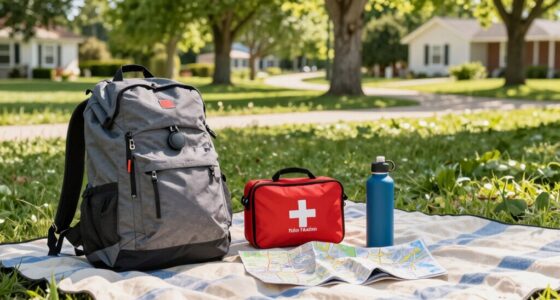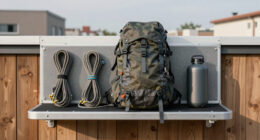
When camping in an unfamiliar site, always assess your surroundings first for hazards and wildlife signs, then choose a safe spot away from overhanging branches and dry areas. Keep your fire contained and fully extinguished, and store food securely to avoid attracting animals. Carry noise makers, carry essential safety tools, and have an emergency plan in place. Paying attention to these details helps you stay secure, and with more tips, you’ll be better prepared for any outdoor situation.
Key Takeaways
- Conduct a thorough site scan upon arrival to identify hazards and wildlife activity.
- Store all food securely and away from sleeping areas to prevent attracting animals.
- Keep a fire ring contained and fully extinguish fires before sleeping or leaving.
- Carry noise-making devices and natural deterrents to discourage wildlife encounters.
- Have an emergency plan and safety devices ready for unexpected situations.

Camping can be a fun and invigorating way to connect with nature, but staying secure should always be a top priority. When you’re in an unfamiliar campsite, it’s essential to be proactive about your safety. Start by evaluating your surroundings as soon as you arrive. Look for any potential hazards, such as uneven ground, overhanging branches, or signs of wildlife activity. Knowing what’s around you helps you make smarter decisions about where to set up your tent and how to navigate the area safely.
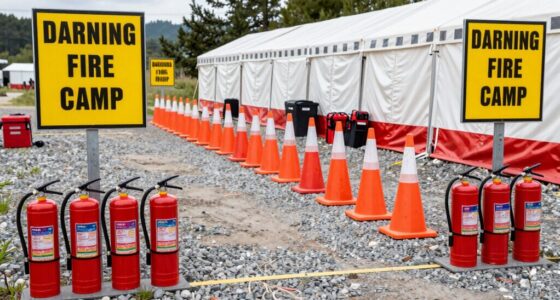
One of the most important safety measures is practicing campfire safety. If you plan to have a campfire, always keep it contained within a designated fire ring or pit. Never leave your fire unattended, and make sure it’s completely extinguished before you go to sleep or leave the site. Keep plenty of water or a fire extinguisher nearby to quickly put out any stray sparks. Remember, fires can spread rapidly, especially in dry conditions. Being diligent about campfire safety not only protects your campsite but also helps prevent wildfires that could threaten the entire area.
Always contain your campfire and ensure it’s fully extinguished to prevent wildfires and keep everyone safe.
Wildlife awareness is equally vital. When you’re in a new setting, animals might be more curious or cautious than you expect. Store all food securely—use bear-proof containers or hang your food at a safe height away from your tent. Avoid leaving food scraps or trash around, as these can attract unwanted visitors. Be mindful of your scent; avoid cooking strong-smelling foods near your sleeping area to prevent attracting animals. Also, keep a safe distance if you encounter wildlife. Approaching or feeding animals can be dangerous and disrupt their natural behaviors. Instead, observe quietly and respect their space.
In addition to managing your food and maintaining awareness, always keep your campsite clean. Dispose of trash properly, and never leave food or scented items lying around overnight. Staying alert to signs of wildlife nearby helps you react promptly if an animal approaches. Carry a whistle or noise-making device to deter curious or aggressive creatures if needed, and familiarize yourself with the local wildlife—know which animals pose risks and how to respond if you encounter them. A good understanding of natural habitats can further enhance your safety by helping you recognize signs of animal activity early. Additionally, understanding essential oils for wildlife deterrence can provide natural ways to keep animals at a safer distance. Being aware of security measures in outdoor settings can also help you prepare better for unexpected situations. For example, carrying a personal safety device or having an emergency plan can make a significant difference if you face an unexpected encounter. Moreover, knowing about different types of electric bikes and their capabilities can be useful if you plan to explore the area on a bike or need a reliable means of transportation in remote locations.

NO-FED-BEAR UDAP Bear Resistant Canister, Hiking Camping Backpacking Hunting Food Storage Container with Carrying Case, 2 Gallons,8” x 10”, BRCWC
INCLUDES CARRY CASE FOR EASY TRANSPORT – Includes a durable fabric carry case with adjustable straps, allowing you…
As an affiliate, we earn on qualifying purchases.
As an affiliate, we earn on qualifying purchases.
Frequently Asked Questions
How Can I Find Out About Local Safety Concerns Before Arriving?
You can find out about local safety concerns by checking recent local crime statistics online or through community safety apps. Reach out to park rangers or local authorities for up-to-date information. Additionally, read community safety tips posted on official websites or social media. Engaging with local residents or online forums can also give you valuable insights, helping you stay alert and prepared for any safety issues before arriving at a new campsite.
Are There Specific Items I Should Avoid Bringing to New Campsites?
Avoid bringing inappropriate items or risky gear that could put you in danger. Items like fireworks, firearms, or excessive valuables might attract trouble or cause accidents. Also, steer clear of fragile or bulky equipment that’s hard to secure. Think twice before packing anything that could compromise your safety or the safety of others. Staying cautious with what you bring ensures your camping experience remains enjoyable and risk-free, no matter the location.
How Do I Handle Encounters With Wild Animals Safely?
When encountering wild animals, stay calm and avoid sudden movements. Understanding wild animal behavior helps you react appropriately; make yourself look bigger and speak loudly to deter them. Use proper food storage techniques, like hanging food away from your tent, to prevent attracting animals. Never feed or approach wildlife, as that can escalate the situation. If an animal gets too close, back away slowly, and never turn your back.
What Should I Do if I Lose My Campsite Reservation?
Imagine your camping trip suddenly in limbo, with your reservation lost like a forgotten trail. First, check the reservation procedures and contact the campsite immediately. Explain your situation calmly. Review cancellation policies, as some sites may offer refunds or rescheduling options. Stay patient and polite; this can often help resolve the issue faster. Always keep backup plans in mind, and consider nearby campsites to avoid missing out on your adventure.
How Can I Discreetly Alert Authorities if I Feel Unsafe?
If you feel unsafe, use discreet alert methods like a whistle, flashlight, or tapping sounds to attract attention without escalating the situation. Emergency communication apps on your phone can send quick alerts to authorities or trusted contacts silently. Carry a personal safety device, such as a whistle or panic alarm, and keep your phone accessible. These tools help you discreetly alert authorities, ensuring you get help while maintaining safety and calm.

MalloMe Smores Sticks for Fire Pit Long – Marshmallow Roasting Sticks Smores Kit – Smore Skewers Hot Dog Fork Campfire Cooking Equipment, Camping Essentials S'mores Gear Outdoor Accessories 32" 5 Pack
BUILT TO LAST! Highest quality power welded forks use non-toxic 18/8 304 stainless steel to ensure easy cleaning,…
As an affiliate, we earn on qualifying purchases.
As an affiliate, we earn on qualifying purchases.
Conclusion
Staying secure at unfamiliar campsites is all about staying alert and prepared. Remember, over 60% of campsite thefts happen when campers leave valuables unattended. Keep your belongings close, lock up when you’re away, and trust your instincts. By staying vigilant and proactive, you greatly reduce your risk. So, enjoy your adventure, but always prioritize your safety—after all, a secure campsite makes for the best memories.

HappyAlley Air Horn, 1.4 oz 120 dB Loud Safety Alarm, Emergency Sound Device for Outdoor Hiking Camping & Sports Events, Portable Attention Getter & Personal Safety Tool, Blue(1 Pack)
High Decibel Sound Output: This safety air horn produces a powerful 120dB sound that can transmit over 1…
As an affiliate, we earn on qualifying purchases.
As an affiliate, we earn on qualifying purchases.

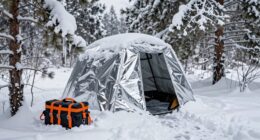
Survival Kit, 250Pcs Survival Gear First Aid Kit with Molle System Compatible Bag and Emergency Tent, Emergency Kit for Earthquake, Outdoor Adventure, Hiking, Hunting, Gifts for Men Women
[250 in 1 Survival Kit]: Having an emergency kit is an important step to prepare and protect your…
As an affiliate, we earn on qualifying purchases.
As an affiliate, we earn on qualifying purchases.