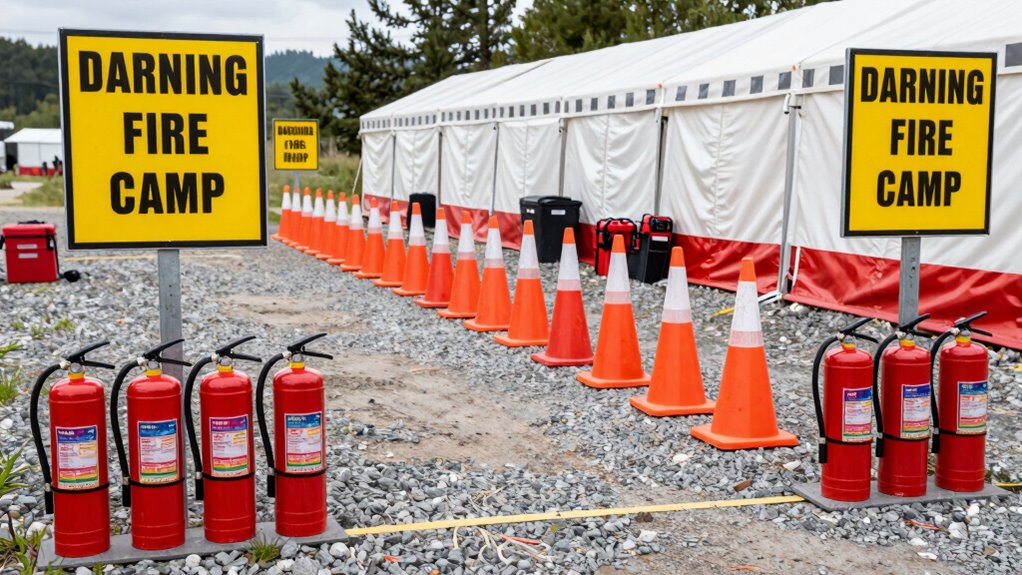

In a serious safety-focused camp setup, you’ll see multiple layers of redundancy working together. You’ll have well-documented emergency protocols, backup equipment, and regular drills to keep everyone prepared. Communication systems like radio, satellite phones, and visual signals stay active even if one fails. Cross-trained staff and layered safety measures guarantee help is always available, minimizing risks. If you want to understand how these elements come together seamlessly, keep exploring the details of a resilient safety system.

Get emergency and outdoor gear delivered free — and shop member deals
- Fast, free delivery on millions of items
- Access to Prime Big Deal Days deals on October 6–7
- Prime Video, Amazon Music and more included
Key Takeaways
- Multiple communication channels (radio, satellite, visual signals) ensure contact remains during emergencies.
- Redundant safety equipment and backup supplies are readily available and regularly maintained.
- Cross-trained personnel capable of handling various emergency procedures prevent skill gaps.
- Regular drills and reviews reinforce response readiness and identify potential system failures.
- Layered safety protocols and backup systems create a resilient environment minimizing single points of failure.
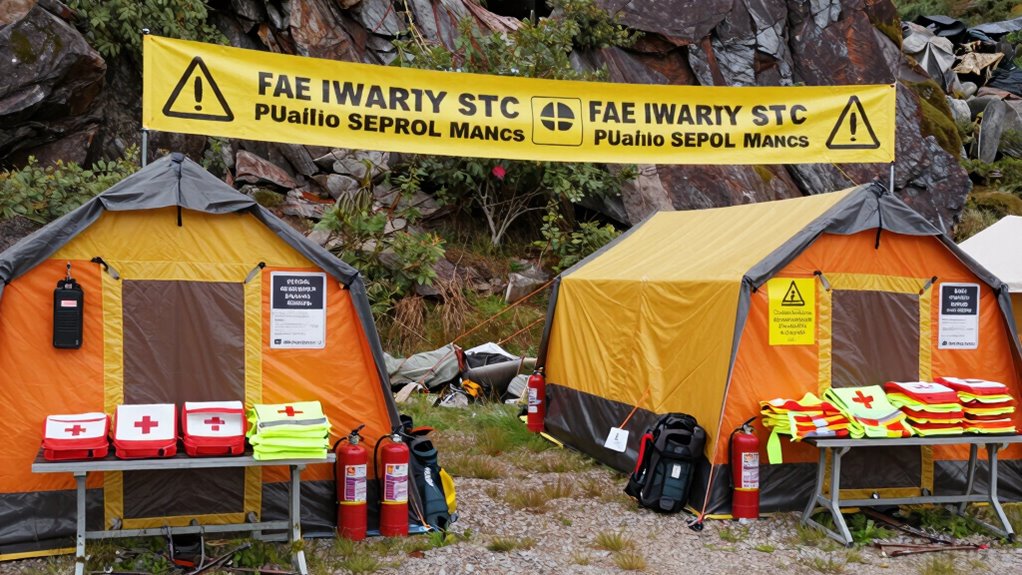
Safety camps are crucial for safeguarding workers in high-risk environments, but relying solely on a single safety protocol isn’t enough. To truly protect everyone on site, you need a layered approach that emphasizes redundancy. One critical aspect is having thorough emergency protocols in place. These protocols should not only be well-documented but also regularly drilled and reviewed so everyone knows exactly what to do in different scenarios. When emergency protocols are redundant, it means multiple measures exist to ensure quick and effective responses, such as clear evacuation routes, designated rescue teams, and accessible communication devices. This layered approach to safety ensures that if one method fails—say, a communication line gets cut—others are ready to step in, reducing chaos and potential injuries.
Another essential element is equipment maintenance, which must also be approached with redundancy. You can’t rely on just one piece of safety gear or a single maintenance schedule. Instead, you need backup equipment, routine inspections, and immediate replacement plans. For example, if a fire extinguisher fails or an emergency alarm system malfunctions, there should be alternative devices or systems in place to alert workers and respond swiftly. Ensuring that safety equipment is double-checked and maintained regularly minimizes the chance of failure when it matters most. Redundancy in equipment maintenance also involves having spare parts readily available, so repairs don’t cause delays during emergencies. Incorporating preventive maintenance practices is essential to catch potential failures before they happen, and establishing redundant safety systems can further enhance reliability. Having clear procedures for body jewelry measurements and materials can also be important in ensuring safety when using certain equipment or protective gear. Additionally, implementing regular safety audits can help identify vulnerabilities before they lead to failure.
In a serious safety-focused camp, redundancy extends beyond just protocols and equipment. It encompasses training too. You want all workers to be cross-trained in multiple emergency procedures, so if one team member is unavailable, others can step up without hesitation. Regular drills reinforce this, making responses instinctive rather than reactive. Redundant training ensures that safety isn’t dependent on a single person’s knowledge or skills. Additionally, implementing multiple safety measures ensures that even if one fails, others can maintain safety standards without compromise.
You also need multiple communication channels—radio, satellite phones, visual signals—to ensure that messages get through regardless of circumstances. This layered communication approach prevents isolated failures from leaving the site in the dark during critical moments. When you combine redundancy in emergency protocols, equipment maintenance, training, and communication, you create a resilient safety system that can withstand unexpected failures. This approach minimizes risks and maximizes the protection of everyone on site. Ultimately, your goal is to create a safety environment where no single point of failure can compromise workers’ well-being, and that’s what redundancy in a safety camp setup truly looks like.
emergency communication radio for camping
As an affiliate, we earn on qualifying purchases.
As an affiliate, we earn on qualifying purchases.
Frequently Asked Questions
How Often Should Redundancy Systems Be Tested in Safety Camps?
You should test redundancy systems regularly, ideally every three to six months, to guarantee they function correctly when needed. During these tests, conduct emergency drills to simulate real scenarios and identify any issues. Additionally, perform thorough equipment checks to verify everything is operational. Regular testing keeps your safety measures reliable, helps train staff, and ensures your camp maintains the highest safety standards at all times.
What Is the Cost Impact of Implementing Redundancy Measures?
Implementing redundancy measures increases your upfront costs, but a thorough cost analysis shows they save money long-term by preventing accidents and downtime. You’ll need to allocate resources wisely, balancing safety priorities with budget constraints. While initial investments might seem high, the benefits of reduced risk and enhanced safety justify the expense. Proper resource allocation guarantees you maximize safety without compromising operational efficiency, ultimately protecting your team and camp infrastructure.
Who Is Responsible for Maintaining Redundancy Protocols?
You’re responsible for maintaining redundancy protocols in your camp setup. Studies show that 80% of safety incidents could be prevented with proper emergency planning and equipment maintenance. You need to guarantee that backup systems are regularly checked and tested. By taking ownership, you minimize risks and guarantee that safety measures are reliable. Regular training and audits help you stay prepared, keeping everyone safe in critical moments.
How Do Redundancy Strategies Adapt to Different Camp Sizes?
You adapt redundancy strategies based on your camp size by scaling your camp infrastructure and emergency preparedness measures accordingly. In smaller camps, you focus on essential backup systems like secondary power sources and communication tools. Larger camps require multiple layers of redundancy, including multiple supply routes and emergency protocols. This guarantees safety and continuity, no matter your camp’s size, by proactively addressing potential failures and maintaining preparedness across all operational levels.
What Training Is Needed for Staff on Redundancy Procedures?
You need exhaustive staff training on redundancy procedures, including regular emergency drills, since studies show that well-trained teams respond 40% faster in crises. Your staff should understand backup systems, communication protocols, and evacuation plans thoroughly. Conduct frequent emergency drills to reinforce these skills, ensuring everyone knows their role during unexpected events. This ongoing training keeps redundancy measures effective and your camp’s safety protocols resilient against unforeseen incidents.
satellite phone for outdoor safety
As an affiliate, we earn on qualifying purchases.
As an affiliate, we earn on qualifying purchases.
Conclusion
Just as Icarus relied on his wings to soar safely, your commitment to redundancy guarantees your camp remains resilient in the face of unforeseen challenges. By embracing multiple safety layers, you create a fortress of preparedness, where one failure doesn’t spell disaster. Remember, in safety as in myth, it’s the careful layering of safeguards that keeps everyone grounded and secure. Stay vigilant, and let your diligence be the wings that keep your camp aloft.
camp safety equipment backup kit
As an affiliate, we earn on qualifying purchases.
As an affiliate, we earn on qualifying purchases.
As an affiliate, we earn on qualifying purchases.
Fall Picks
fall essentials
As an affiliate, we earn on qualifying purchases.