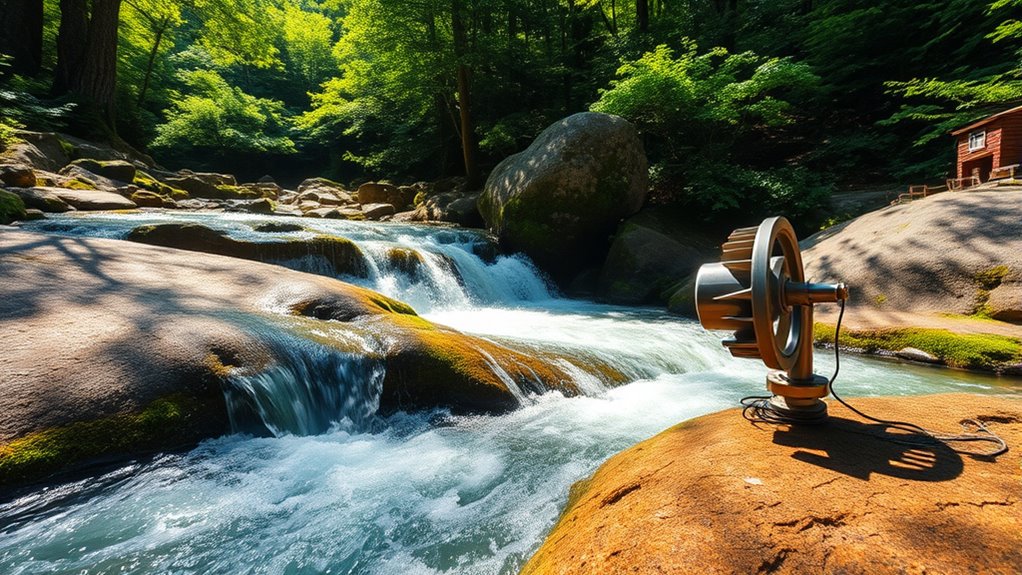

Using streams at your campsite to generate electricity with micro-hydro power is a smart, renewable solution. You’ll need to evaluate the stream’s flow rate and flow consistency to determine if it’s suitable. Selecting the right turbine, like Pelton or cross-flow, is key based on water movement and head height. Proper installation of the turbine, generator, and water flow system guarantees reliable energy. Keep exploring to discover how to optimize your setup for maximum efficiency.
Key Takeaways
- Measure stream flow rate and head to determine if micro-hydro is feasible for your campsite.
- Select an appropriate turbine type based on the stream’s water flow and elevation drop.
- Install a suitable intake screen and position the turbine downstream of a weir or dam to optimize water flow.
- Connect the turbine to a generator and batteries for reliable electricity supply at your camp.
- Ensure secure, proper installation of all components to withstand environmental conditions and maximize efficiency.
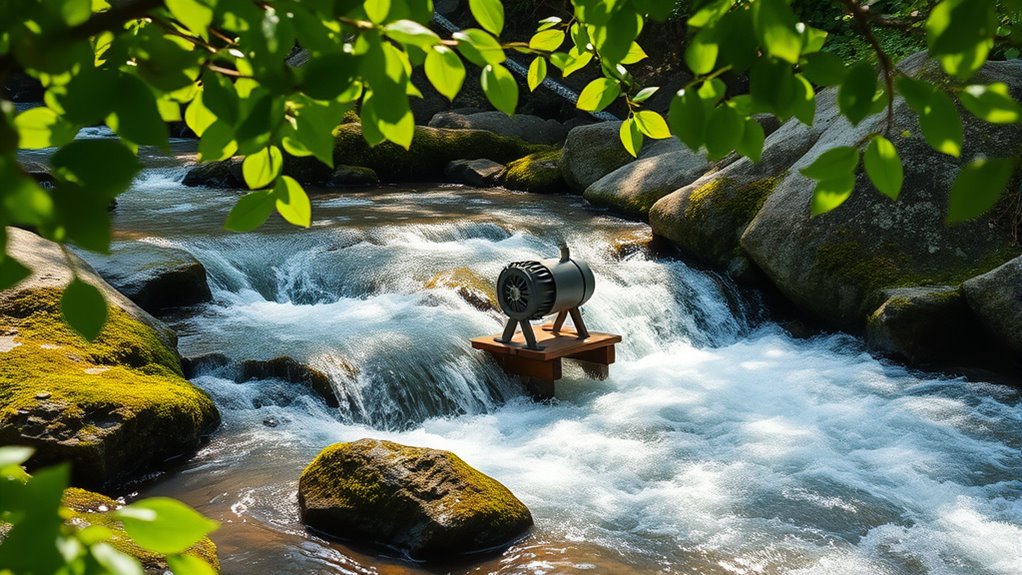
Micro-hydro power harnesses the energy of flowing water to generate electricity on a small scale, making it an efficient and sustainable option for remote communities and individual households. When setting up a micro-hydro system at your campsite, understanding how river flow and turbine design work together is vital. The key is to tap into the natural movement of water, which provides a reliable and renewable energy source without the need for fuel or extensive infrastructure.
Your first step is to assess the river or stream’s flow. The amount of water moving through the stream directly impacts the amount of energy you can generate. Consistent, steady flow offers the best potential for reliable power, but even seasonal variations can be accommodated with appropriate system design. You’ll want to measure the flow rate, typically in liters per second or gallons per minute, to determine the feasibility of your setup. Once you know the flow, you can select a turbine that matches the water movement. Different turbines are optimized for various flow conditions—some are better suited for high-flow, fast-moving streams, while others excel in lower-flow situations.
Assess river flow and choose turbines suited to steady or seasonal water movement.
Turbine design is central to maximizing efficiency. A well-chosen turbine converts the kinetic energy of flowing water into mechanical energy, which then drives a generator to produce electricity. For streams with moderate flow, impulse turbines like Pelton wheels or Turgo turbines are popular choices due to their ability to handle varying flow rates efficiently. If your stream has a lower flow but a significant vertical drop, a turbine designed for high head, such as a cross-flow or a Francis turbine, might be more effective. The key is to match the turbine’s design to your specific river flow characteristics, ensuring maximum energy extraction with minimal maintenance.
Additionally, incorporating Free Floating components in the system can reduce the need for extensive infrastructure and simplify installation, especially in remote locations. Installation involves positioning your turbine in the stream where water velocity is highest, typically downstream of a weir or a small dam to increase water head. You’ll also need to consider how to channel water efficiently into the turbine, using intake screens to prevent debris from damaging the equipment. Connecting the turbine to a generator, and then to your batteries or directly to your campsite’s electrical system, completes the setup. Proper alignment and securing of components are essential to withstand environmental elements and prevent damage.
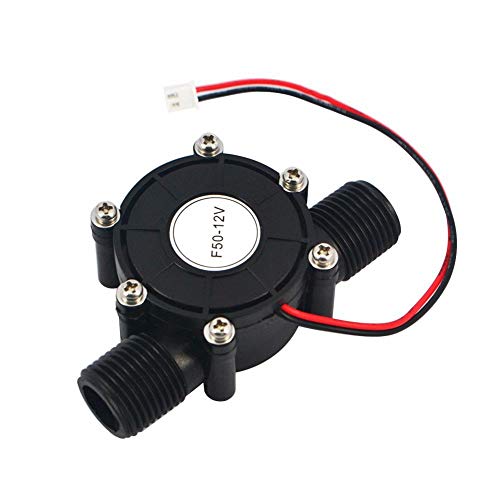
Beduan Micro Water Turbine Generator Hydroelectric Power G1/2" Male Thread 12V Micro Hydro Generator Changeing Tool
The output voltage :12V DC; The outlet opening maximum pressure 1.2Mpa
As an affiliate, we earn on qualifying purchases.
As an affiliate, we earn on qualifying purchases.
Frequently Asked Questions
What Is the Typical Cost to Install a Micro-Hydro System?
The typical cost to install a micro-hydro system usually ranges from $1,000 to $5,000, depending on size and complexity. Your cost estimation should include installation expenses, which cover site assessment, equipment, and labor. Keep in mind that more powerful setups or remote locations may increase costs. Planning carefully and consulting with experts can help you stay within your budget while ensuring your system works efficiently.
How Much Maintenance Does a Micro-Hydro Setup Require?
Think of your micro-hydro setup as a well-tuned engine; it needs regular tune-ups to run smoothly. You should expect to perform maintenance about once or twice a year, depending on water flow and system durability. Routine tasks include inspecting for debris, cleaning the turbine, and checking for leaks. By staying proactive, you’ll keep your system efficient and extend its lifespan, ensuring reliable power generation for years to come.
Can Micro-Hydro Power Systems Operate During Droughts?
Micro-hydro power systems can struggle during droughts due to stream flow variability, which reduces water availability needed to generate electricity. During low flow periods, installation feasibility becomes challenging, and power output decreases substantially. While some systems may operate intermittently, their efficiency drops, so it’s essential to take seasonal flow patterns into account when planning your setup. Properly designed systems can sometimes adapt to these changes, but droughts usually impact performance.
What Are the Environmental Impacts of Micro-Hydro Installations?
You might see micro-hydro installations as gentle giants, but they can cause wildlife disruption and sedimentation issues. These systems can alter stream flow, affecting fish and other aquatic life, like ripples spreading through water. Sediment buildup can clog turbines and harm ecosystems. While eco-friendly, you should weigh these impacts, ensuring installations are designed to minimize disruptions and protect the natural harmony of the stream environment.
How Much Energy Can a Small Stream Realistically Produce?
A small stream can realistically produce between a few hundred watts to several kilowatts of energy, depending on its flow and head. By evaluating stream flow, you determine its energy potential, which is influenced by the volume of water and its speed. With proper installation, you can harness this energy to power your camp, providing a sustainable and reliable source of electricity tailored to your stream’s flow and head.
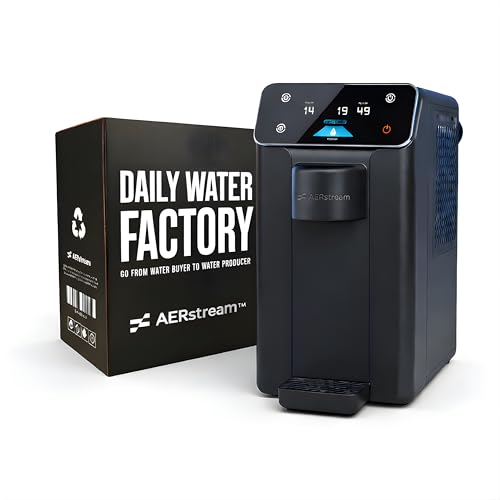
AERstream GW Pro Atmospheric Water Generator – Daily Water Factory™, Up to 10L/Day Water from Air Machine for Home & Office, Countertop Drinking Water System, Multi-Stage Filtration
DAILY WATER FACTORY – WATER FROM AIR TECHNOLOGY – Produces up to 10 liters (2.5 gallons) of drinking…
As an affiliate, we earn on qualifying purchases.
As an affiliate, we earn on qualifying purchases.
Conclusion
Harnessing a stream for micro-hydro power is a practical, eco-friendly way to generate electricity at camp. With a bit of ingenuity—think of it as your modern-day steampunk gadget—you can enjoy reliable power without relying on fossil fuels. Just remember, even in this digital age, respecting the stream’s flow keeps your setup sustainable. So, go ahead, channel that ancient force, and keep your camp powered like a true eco-warrior in a world that’s always racing towards the future.

Wind Hydroelectric Generator Model STEM Physics Teaching Tool Science Education Kit for Ages 14+ Power Generation Learning Lab
Professional demonstration model designed for teaching the principles of AC wind power generation in physics education.
As an affiliate, we earn on qualifying purchases.
As an affiliate, we earn on qualifying purchases.

Hydroelectric Micro Hydro Generator 1/2 Inch Portable Water Flow Generator Charger 10W 12V
Micro hydro generator, the potential energy conversion of the water into electrical energy mechanical equipment
As an affiliate, we earn on qualifying purchases.
As an affiliate, we earn on qualifying purchases.