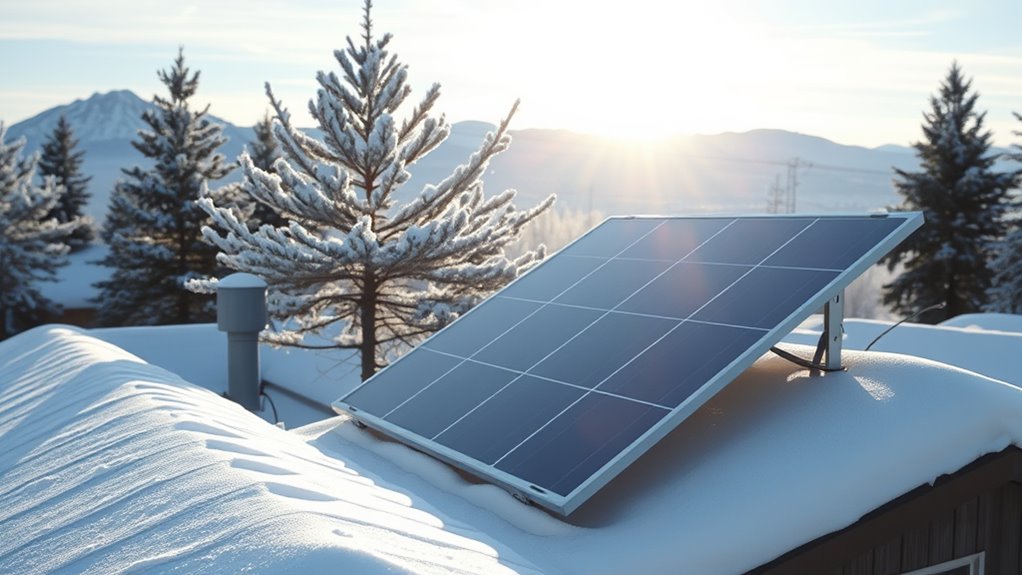

To maximize power during winter’s weaker sunlight, regularly clean your solar panels to remove snow, dust, and debris that block sunlight. Adjust their tilt to better catch low-angle rays and clear any obstructions like branches or snow buildup. Store excess energy in efficient batteries and monitor system performance to catch issues early. Implementing these strategies helps guarantee reliable energy flow despite shorter, cloudier days — keep exploring to discover even more ways to optimize your winter solar setup.

Get emergency and outdoor gear delivered free — and shop member deals
- Fast, free delivery on millions of items
- Access to Prime Big Deal Days deals on October 6–7
- Prime Video, Amazon Music and more included
Key Takeaways
- Regularly clean snow, ice, and dirt from panels to maximize sunlight absorption during winter.
- Adjust panel tilt and clear obstructions to reduce shading and improve low-angle sunlight capture.
- Store excess energy in properly sized, efficient batteries to ensure power during cloudy days.
- Monitor system performance regularly to detect and address drops in energy output promptly.
- Optimize positioning and maintenance routines to ensure consistent energy production despite weaker winter sunlight.
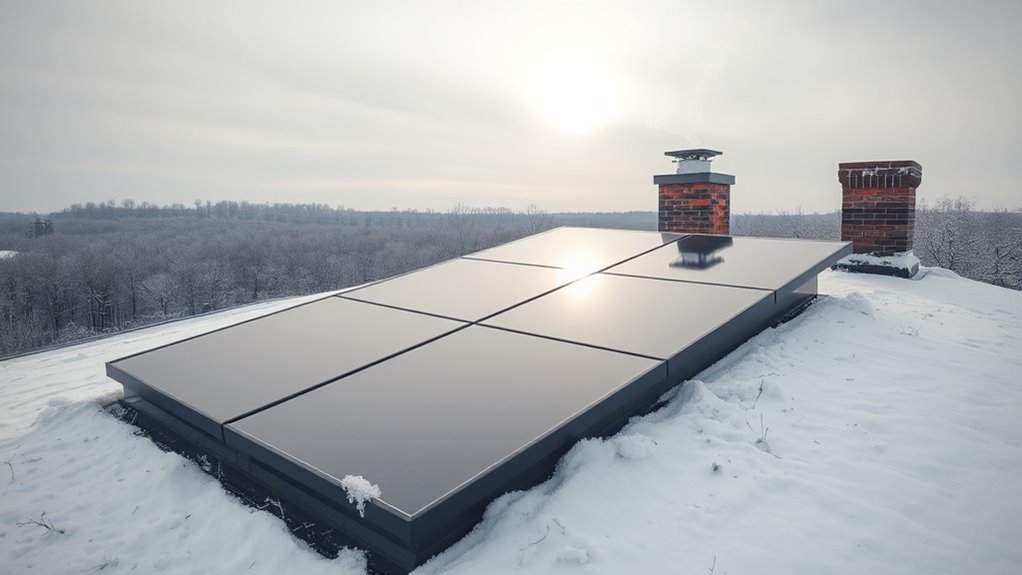
Have you ever wondered how to maximize your solar energy during the winter months? With shorter days and weaker sunlight, it can feel challenging to keep your energy flowing efficiently. However, focusing on solar panel maintenance and energy storage solutions can make a significant difference. Regularly inspecting and cleaning your solar panels is essential. Snow and ice can accumulate quickly, blocking sunlight and reducing your system’s efficiency. Gently removing snow with a soft brush or a squeegee designed for solar panels helps ensure maximum sunlight absorption. Keep an eye out for dust, leaves, or dirt that can settle on the panels, especially during winter storms, and clean them as needed. Maintaining your panels in top condition guarantees they operate at peak performance when sunlight is scarce.
In addition to keeping your panels clean, consider optimizing their positioning if possible. Clear obstructions like overgrown branches or snow buildup that cast shadows on your panels can drastically reduce energy output. If you have adjustable mounts, tilt your panels to an ideal angle to catch the low-angled winter sun, enhancing energy absorption. Investing in high-quality solar panel maintenance tools or professional inspections can prevent minor issues from turning into major performance drops during critical months. Regular maintenance is crucial for ensuring your system remains efficient during this challenging season.
Beyond maintenance, energy storage solutions are essential during winter. Since the sun’s strength diminishes, you want to store excess energy generated during sunnier days for use when sunlight wanes. Batteries, especially lithium-ion ones, are excellent options to store surplus energy, allowing you to draw from your reserves during cloudy days or at night. Properly sizing your storage system ensures you have enough capacity to cover your energy needs, even when sunlight is limited. Keep your batteries in a cool, dry place to maintain their longevity and efficiency, as cold temperatures can impact their performance if not properly managed.
Another smart move is to monitor your system’s performance regularly. Use energy management tools or apps to track how much power your panels produce and how your batteries are functioning. This allows you to identify potential issues early, such as decreased output due to dirt or snow, and address them promptly. By staying proactive with solar panel maintenance and making wise choices about energy storage, you’ll maximize your solar power during the winter months. This way, you’ll enjoy steady, reliable energy even when the sun is weak, saving money and reducing your reliance on the grid. Winter solar strategies aren’t just about surviving the season—they’re about thriving despite it.
As an affiliate, we earn on qualifying purchases.
Frequently Asked Questions
How Do Snow and Ice Affect Solar Panel Efficiency?
Snow and ice can reduce your solar panel efficiency by causing ice accumulation, which blocks sunlight, and by covering panels with snow. However, if your panels are installed at the right angle, snow shedding can occur naturally, helping clear the surface and restore power. Regularly removing heavy snow and ice buildup guarantees your panels stay clean and efficient, especially during winter months when sunlight is already weaker.
Can Battery Storage Fully Power My Home During Winter?
Yes, battery storage can fully power your home during winter if your battery capacity is sufficient. You need a well-sized system to handle your winter grid reliance, especially on cloudy days or when snow reduces solar input. Properly managed, your batteries store excess energy during sunny periods and supply power when sunlight wanes, ensuring continuous power despite winter’s challenges.
What Maintenance Is Required for Winter Solar Systems?
You need to regularly maintain your winter solar system by cleaning your panels to remove snow, ice, and dirt that block sunlight. Check your inverter to verify it’s functioning correctly and monitor for any error messages. Keep an eye on wiring and connections for damage caused by cold weather. Proper maintenance guarantees your system operates efficiently during winter, maximizing power generation even when the sun is weak.
Are There Specific Solar Panel Types Better for Winter Use?
Did you know that monocrystalline solar panels perform up to 20% better in winter conditions? For winter use, opt for panels with high-efficiency solar panel materials like monocrystalline or bifacial panels. These materials handle cold temperatures well and generate more power. Also, adjust your panel tilt optimization to maximize sun exposure, especially when the sun is lower in the sky, ensuring you get the most out of your winter solar setup.
How Does Shading Impact Winter Solar Energy Production?
Shading effects considerably reduce your winter sunlight intake, lowering solar energy production. Even partial shading from trees, snow buildup, or nearby structures can drastically cut your panels’ efficiency. During winter, sunlight is weaker and more oblique, so shading impacts are amplified. To maximize power, you should clear snow, trim trees, and position panels where shading is minimized, ensuring your system captures as much winter sunlight as possible.
As an affiliate, we earn on qualifying purchases.
Conclusion
Embrace winter solar strategies to maximize your power, to optimize your energy, and to guarantee your independence. Stay proactive with panel maintenance, stay flexible with your energy use, and stay informed about seasonal changes. By planning ahead, adjusting your habits, and investing in smart solutions, you’ll keep your system running efficiently no matter how weak the sun may be. Take charge of winter’s challenges, harness its opportunities, and stay powered all season long.
As an affiliate, we earn on qualifying purchases.
solar system performance monitor
As an affiliate, we earn on qualifying purchases.
As an affiliate, we earn on qualifying purchases.
Fall Picks
fall essentials
As an affiliate, we earn on qualifying purchases.