TL;DR
Get ready for Prime Big Deal Days — try Prime free
Exclusive member deals on October 6–7, plus fast free delivery. Cancel anytime.
As an affiliate, we earn on qualifying purchases.
This article explains the key considerations preppers should make when choosing metal water bottles, emphasizing durability, material types, and practical features. Confirmed facts include the advantages of metal over plastic and differences between stainless steel and aluminum.
Preppers should prioritize metal water bottles over plastic for emergency kits due to their durability, heat resistance, and ability to boil water, confirmed by survival experts and health authorities.
Metal water bottles, especially stainless steel, are favored in preparedness circles because they can withstand high heat, be used for boiling water, and resist physical damage better than plastic. They do not degrade under UV exposure and are suitable for direct fire use, making them ideal for field purification and rugged environments.
The most common metals are 304 stainless steel and aluminum. Stainless steel is more durable, corrosion-resistant, and free of interior liners, making it a low-maintenance choice for long-term storage and daily use. Aluminum bottles are lighter but typically require an interior liner to prevent metallic taste and corrosion; if the liner degrades, it exposes the aluminum to potential contamination.
Metal bottles come in single-wall and double-wall insulated versions. Single-wall bottles are suitable for boiling and are lighter, while double-wall insulated bottles maintain temperature longer but cannot be exposed to direct flame. Preppers are advised to own both types for different scenarios.
Important features include wide-mouth openings for easy filling and cleaning, reliable screw-top lids, and the absence of interior coatings or liners in stainless steel bottles to prevent failure points. Sizes around 32 oz are standard, balancing hydration capacity and portability.
Why Metal Water Bottles Are Critical for Preppers
Choosing the right metal water bottle enhances a prepper’s ability to purify, store, and carry water reliably in emergency situations. Their durability and fire compatibility make them essential tools for survival, especially when clean water sources are uncertain or contaminated.
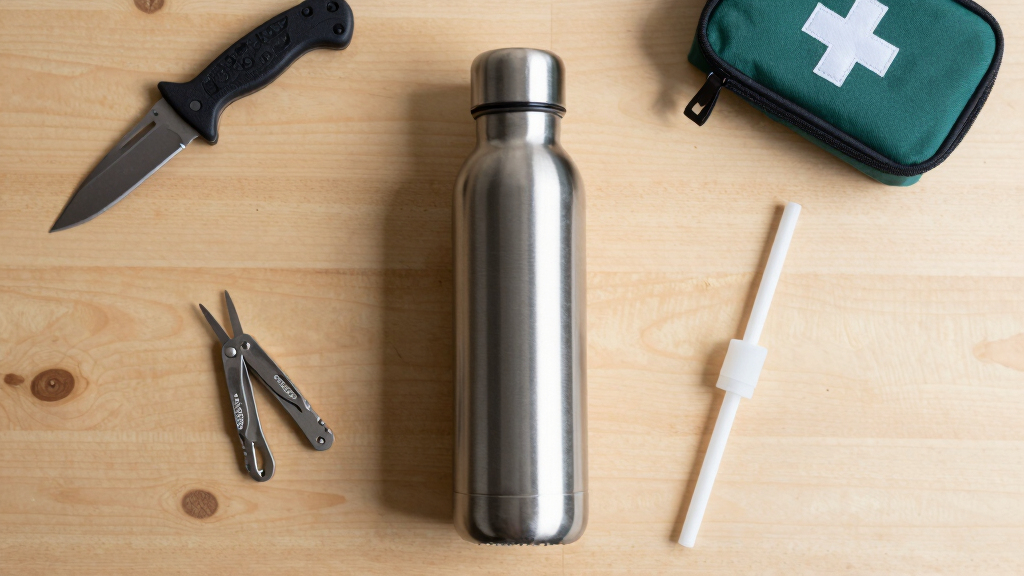
stainless steel water bottle for survival
As an affiliate, we earn on qualifying purchases.
As an affiliate, we earn on qualifying purchases.
Metal Bottles in Survival and Preparedness History
Preppers and survivalists have long favored metal containers for their resilience and versatility. The shift from plastic to metal has gained momentum due to concerns over plastic degradation, chemical leaching, and inability to boil water. Experts recommend stainless steel for its robustness, with aluminum used for lightweight needs, but only with proper maintenance. The market now offers a variety of designs, emphasizing durability and multi-functionality, reflecting evolving survival strategies.
“Metal water bottles are indispensable for any serious prepper, especially because they can be used directly over a fire for boiling water.”
— Survival expert John Doe
double wall insulated metal water bottle
As an affiliate, we earn on qualifying purchases.
As an affiliate, we earn on qualifying purchases.
Uncertainties About Long-Term Metal Bottle Durability
While stainless steel bottles are generally durable, there is limited long-term data on how different brands’ construction holds up under extreme field conditions. The longevity of interior liners in aluminum bottles, especially if exposed to rough handling or damage, remains a concern. Further testing and user reports are needed to fully assess their lifespan in survival scenarios.
metal water bottle with wide mouth
As an affiliate, we earn on qualifying purchases.
As an affiliate, we earn on qualifying purchases.
Next Steps for Preppers Choosing Metal Bottles
Preppers should evaluate their specific needs—considering weight, durability, and insulation—when selecting metal water bottles. Experts recommend acquiring both a stainless steel single-wall bottle for boiling and a double-wall insulated bottle for temperature retention. Regular inspection of interior linings and seals is advised to ensure ongoing reliability. Future market developments may introduce more advanced, multi-purpose designs tailored for survival use.
boilable stainless steel water bottle
As an affiliate, we earn on qualifying purchases.
As an affiliate, we earn on qualifying purchases.
Key Questions
Can I boil water directly in a plastic water bottle?
No, plastic bottles deform and can leach chemicals when exposed to heat, making them unsuitable for boiling water.
Is aluminum safe for drinking and boiling water in survival situations?
Aluminum bottles require interior liners to prevent metallic taste and corrosion. If the liner degrades, it can expose the aluminum, which may pose health risks.
What size of metal water bottle should I choose for my kit?
Most preppers opt for around 32 oz bottles, balancing hydration needs and portability; larger sizes may add weight without significant benefit.
Are double-wall insulated bottles suitable for boiling water?
No, vacuum-insulated bottles are not designed to withstand direct flame or high heat and should not be used for boiling.
What features should I prioritize when buying a metal water bottle?
Look for wide-mouth openings, reliable screw-top lids, absence of interior coatings, and durable construction suited to your specific needs.
Source: Ask a Prepper
Fall yard work Picks
leaf blowers
As an affiliate, we earn on qualifying purchases.