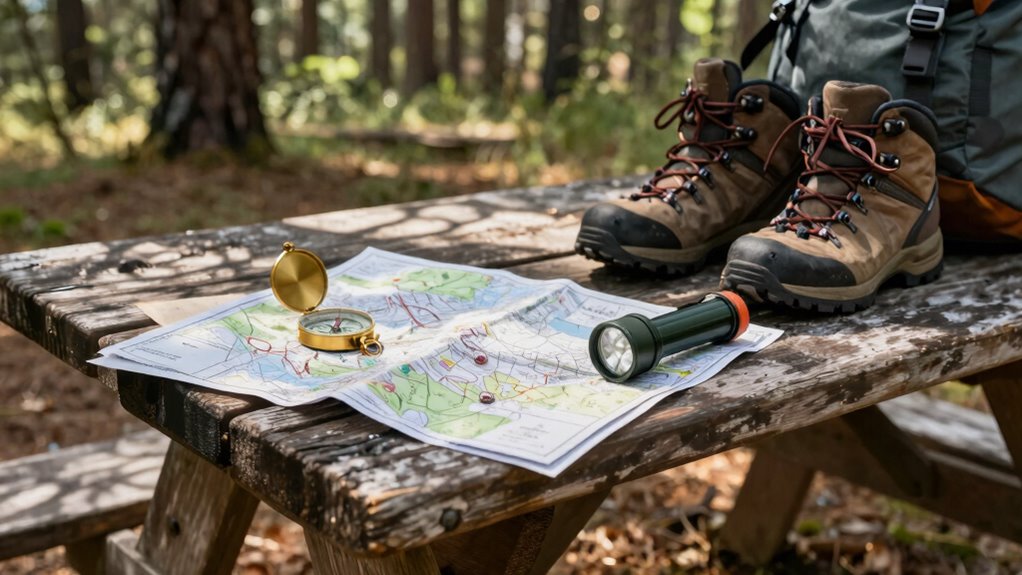

To build a better exit plan, familiarize yourself with emergency contacts and local safety procedures before your trip. Identify multiple routes and check for hazards like flooding or blocked paths. Keep a safety kit, secure food and waste, and guarantee everyone knows the plan. Regularly inspect your surroundings for hazards and communicate your plans with a trusted person. Staying prepared and organized makes departure smooth and safe—continue exploring ways to guarantee your next trip is even safer.

Get emergency and outdoor gear delivered free — and shop member deals
- Fast, free delivery on millions of items
- Access to Prime Big Deal Days deals on October 6–7
- Prime Video, Amazon Music and more included
Key Takeaways
- Identify and mark multiple safe exit routes, considering terrain and potential hazards like flooding or closures.
- Share your planned route and estimated return time with a trusted contact before departure.
- Conduct a thorough safety check of the campsite, ensuring fire is out and food is secured to prevent wildlife encounters.
- Keep emergency contacts and essential supplies easily accessible for quick response if needed.
- Regularly reassess environmental conditions and update your exit plan accordingly throughout the trip.

Planning a camp trip can be exciting, but without a solid exit plan, it’s easy to overlook important details that could cause stress or danger later. A well-thought-out exit plan is indispensable for guaranteeing your safety and the safety of those with you. It’s not just about packing up your gear; it’s about preparing for emergencies and maintaining campsite safety until you’re ready to leave.
Start by familiarizing yourself with the area before you set out. Know the nearest emergency services, including the location of the closest hospital or ranger station. Save these details on your phone or write them down in a waterproof container. Having quick access to emergency contacts is vital if something unexpected happens. Also, review the campsite’s rules and guidelines. Many parks and camping sites have specific procedures for evacuations or emergencies. Understanding these can help you act swiftly if needed. Additionally, being aware of local biodiversity can help you avoid disturbing sensitive habitats and ensure a respectful interaction with wildlife.
Next, plan your exit route before you even pitch your tent. Identify multiple ways to leave the area, especially if the terrain is challenging or if certain paths are prone to flooding or closures. Share your planned route with a trusted friend or family member, so someone outside your trip knows where you’re headed and your expected return time. This is a key part of emergency preparedness—being able to communicate your plans and having a point of contact outside the campsite. Recognizing the importance of campsite safety can help you stay vigilant throughout your trip and avoid potential hazards. Additionally, understanding environmental hazards specific to your location can further improve your safety plan. Taking note of local wildlife activity patterns can also help you avoid unnecessary encounters.
Campsite safety doesn’t end once you’ve arrived; it continues until you’re back home. Keep a safety kit handy, including items like first aid supplies, flashlights, extra batteries, and a whistle to signal for help if needed. Make sure everyone in your group knows basic first aid and how to respond to emergencies, such as fires or injuries. Regularly check your surroundings for hazards like unstable trees, sharp rocks, or wildlife that could pose a threat. Additionally, knowing how to respond to wildlife encounters can significantly reduce risks during your trip.
As you prepare to leave, double-check that your campsite is clean and that no dangerous items or trash are left behind. Guarantee fires are completely extinguished, and secure all food and waste to prevent attracting wildlife. Confirm your exit route is clear of obstacles, and communicate your plans again to your emergency contact. A good exit plan isn’t just about leaving—it’s about leaving safely and being ready for any surprises. By prioritizing emergency preparedness and campsite safety, you’ll enjoy your trip more and return home without issues.
As an affiliate, we earn on qualifying purchases.
Frequently Asked Questions
How Do I Handle Emergencies During the Exit Process?
In emergencies during the exit process, stay calm and quickly assess the situation. Make sure you leave documentation like your campsite details and emergency contacts easily accessible. Contact emergency services if needed, and inform your trusted contacts about the situation. Keep a first aid kit on hand, and follow your predefined emergency plan. Clear communication and having all essential information ready help you manage emergencies effectively and ensure everyone’s safety.
What Should I Do if I Encounter Unexpected Weather?
When unexpected weather hits, think of it as nature’s surprise gift—adapt and respond. You should immediately prioritize weather preparedness by seeking an emergency shelter to stay safe. Keep an eye on weather updates, and be ready to alter your plans if needed. Pack extra gear and supplies to handle sudden storms, and stay calm while adjusting your exit strategy. Flexibility and readiness are your best tools in weathering the storm.
How Can I Ensure My Exit Plan Is Eco-Friendly?
To make your exit plan eco-friendly, prioritize Leave No Trace principles, ensuring you pack out all waste and minimize your impact on the environment. Opt for eco conservation practices by using reusable gear and avoiding harmful chemicals. Stick to established trails to prevent erosion, and leave natural features untouched. Respect wildlife and plant life, leaving the area as pristine as you found it, helping preserve nature for future campers.
What Are Common Mistakes to Avoid in Exit Planning?
Skipping details like camping gear and food supplies can be like forgetting your map on a hike—dangerous. Avoid common mistakes by not overpacking or underestimating your exit route. Don’t ignore weather forecasts, and leave no trace, especially when packing up food supplies. Failing to plan for emergencies or neglecting to communicate your plan can turn a trip into a crisis. Double-check your exit strategy to make certain of safety and sustainability.
How Do I Coordinate With Others for Group Departures?
You coordinate with others for group departures by setting clear travel timing, ensuring everyone arrives on schedule. Use an equipment checklist to confirm all essentials are packed, preventing last-minute surprises. Communicate plans beforehand, share the checklist, and agree on departure times. Encourage open discussions about individual needs and contingencies. This way, everyone stays organized, and your group leaves smoothly, making the trip more enjoyable and stress-free.
As an affiliate, we earn on qualifying purchases.
Conclusion
By planning your exit strategy carefully, you guarantee every camp trip ends as smoothly as it begins. Think of your exit plan as a safety net, catching you if things go awry and guiding you back home easily. With a clear plan in place, you’ll leave the wilderness behind with confidence, like a skilled sailor steering through a storm. Remember, a well-prepared exit isn’t just smart—it’s essential for every adventurer.
portable first aid kit for camping
As an affiliate, we earn on qualifying purchases.
As an affiliate, we earn on qualifying purchases.
As an affiliate, we earn on qualifying purchases.
Fall Picks
fall essentials
As an affiliate, we earn on qualifying purchases.