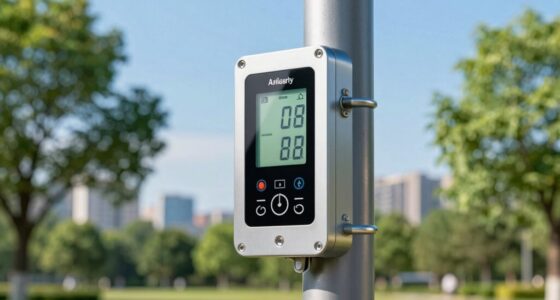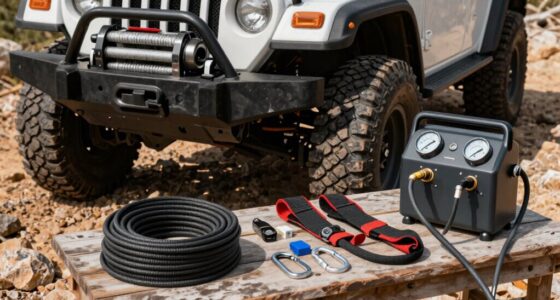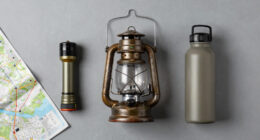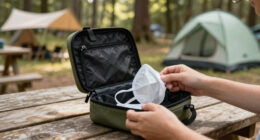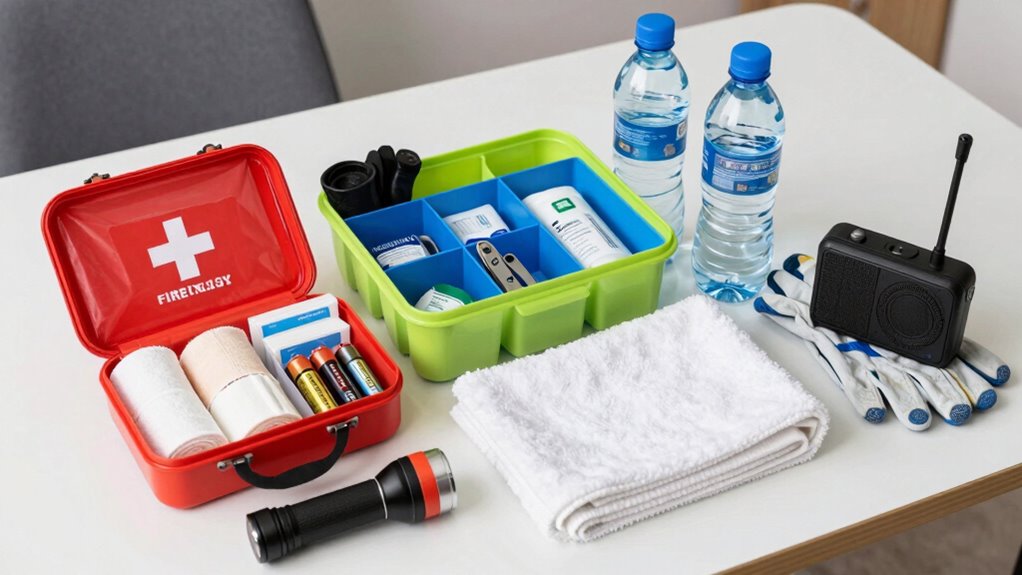
To organize emergency gear for quick access, assign clear storage spots using labeled containers or bins for categories like medical supplies, water, and tools. Keep frequently used items at the front and place quick-reference guides nearby. Use visual cues like reflective tape or glow-in-the-dark labels for better visibility. Regularly review and test your supplies, update expired items, and guarantee a reliable organization system is in place. Keep your setup simple and coordinated—if you want expert tips, keep exploring further.
Key Takeaways
- Assign specific, labeled storage spots for different gear categories for quick access during emergencies.
- Use clear containers and color coding to enhance visibility and easy identification of supplies.
- Place frequently used items at the front and store emergency kits centrally for rapid retrieval.
- Regularly review, update, and test supplies to ensure they are functional and ready when needed.
- Conduct periodic drills to familiarize everyone with gear locations and response procedures.
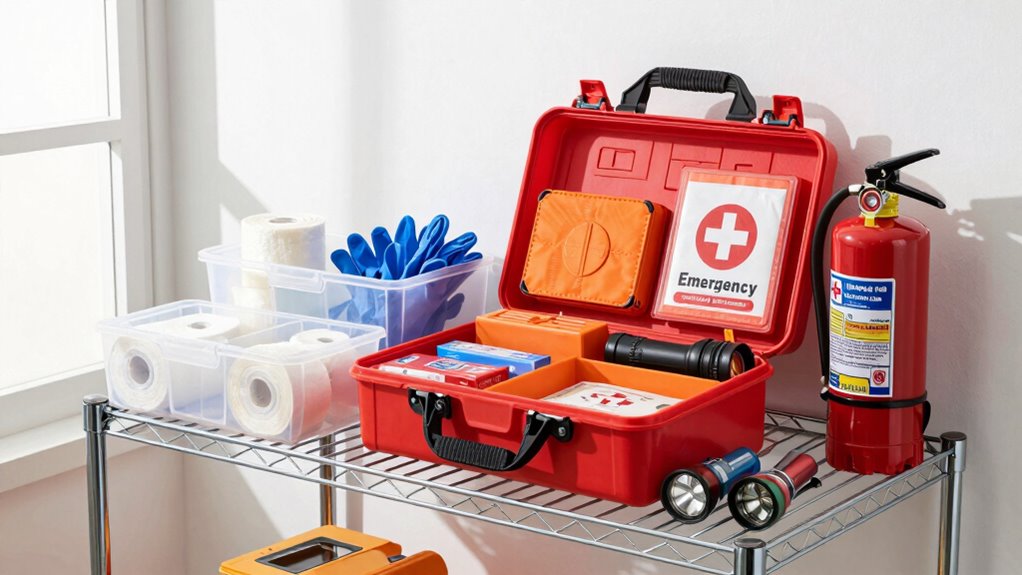
Have you ever wondered if your emergency gear is ready when you need it most? The truth is, no matter how prepared you think you are, disorganized gear can turn a crisis into chaos. To ensure your emergency supplies truly help in a pinch, you need a system that’s easy to access and understand. Start by creating clear communication plans that everyone in your household or team can follow. Knowing who to contact, how to reach them, and what information to share can make a significant difference during an emergency. Your communication plan should include multiple methods of contact—phone, email, messaging apps—and designate a safe meeting point. When you have a well-thought-out plan, it’s easier to coordinate and avoid confusion, especially when adrenaline is running high.
Next, think about safety protocols. These are the step-by-step actions you and your loved ones or colleagues should take during different emergencies, like fires, earthquakes, or severe storms. Incorporate these protocols into your organization system by placing quick-reference guides near your emergency gear. Use labels or color codes to make instructions easily identifiable. This way, anyone can quickly find what they need and follow the proper procedures without wasting precious time searching or second-guessing. Safety protocols should be aligned with your communication plans, ensuring everyone knows how to report issues, seek help, or evacuate safely. Additionally, implementing requirements traceability can help you track the readiness of each item in your supplies, ensuring nothing is overlooked or forgotten. Regularly verifying the storage conditions of your supplies can prevent deterioration or damage, ensuring everything remains functional when needed. Maintaining proper documentation of your inventory can also streamline the process of replacing or replenishing supplies.
When organizing your gear, assign specific spots for each category of supplies—medical kit, water, food, tools, and clothing—so nothing gets misplaced. Use clear containers or labeled bins, and keep frequently used items at the front for quick access. Store your emergency kit in a central, accessible location, but also consider having portable versions ready to grab in case you need to evacuate quickly. Regularly review and update your supplies, replacing expired items and testing your gear to confirm everything works properly. It’s also a good idea to conduct drills based on your safety protocols, so everyone becomes familiar with the process and knows exactly where to find what they need. Additionally, understanding the contrast ratio of your emergency lighting or signage can improve visibility during power outages or low-light conditions. Keeping a detailed inventory and maintaining traceability records can further enhance your overall preparedness. Incorporating visual indicators like reflective tape or glow-in-the-dark labels can also improve visibility in critical moments.
Ultimately, organizing your emergency gear isn’t just about stacking supplies; it’s about creating a system that’s intuitive and reliable. Incorporate communication plans and safety protocols into your setup so that, when crisis hits, you’re not wasting time looking for essentials or trying to figure out what to do. Instead, you’ll feel confident knowing your gear is ready to support you and your loved ones when it matters the most.

CoreMuse Camping Water Container 2 Gallon Collapsible Water Jug with Spout – Reusable Plastic Flasks, Foldable Empty Gallon Jug for Water Storage, Water Bag for Outdoor Hiking Emergency Prep (2 Pack)
- Portable and Lightweight: Collapsible, easy to store and carry
- 2-Gallon Capacity: Holds 8 liters of water, suitable for camping
- User-Friendly Design: Separated inlet and outlet for easy refilling
As an affiliate, we earn on qualifying purchases.
As an affiliate, we earn on qualifying purchases.
Frequently Asked Questions
How Often Should I Update My Emergency Gear?
You should update your emergency gear at least once a year, following a regular maintenance schedule. Check expiration dates, batteries, and gear condition regularly. Replace any worn-out or expired items promptly to guarantee reliability. After any significant incident or if you notice damage, review and refresh your gear immediately. This proactive approach guarantees your emergency supplies stay effective, giving you peace of mind knowing you’re prepared when it matters most.
What Are the Essential Items for a Basic Emergency Kit?
A basic emergency kit should include essentials like water, non-perishable food, a flashlight, batteries, a first aid kit, and a multi-tool. For effective emergency preparedness, customize your kit to suit your family’s needs, adding items like medications or important documents. Regularly review and update your supplies, ensuring everything is functional and ready to use when needed. Proper kit customization makes sure you’re prepared for various situations.
How Do I Label or Categorize My Emergency Supplies?
You should use clear labeling techniques like color-coded tags or waterproof labels to categorize your emergency supplies. Implement a practical categorization system, such as grouping items by function (medical, food, tools) or location (kit, car, home). Keep labels visible and durable. Regularly review and update your labels to guarantee they stay legible and accurate, making it easy to find what you need quickly during an emergency.
Where Is the Safest Place to Store Emergency Gear at Home?
You should store your emergency gear in a secure, easily accessible storage location, like a closet, basement, or garage, away from potential hazards like water or heat. Consider safety considerations, such as avoiding areas prone to flooding or fire. Keep the storage location clearly labeled and make certain everyone knows where it is. Regularly check and update your supplies to maintain readiness, so your gear is effective when you need it most.
How Can I Make My Emergency Kit Accessible During a Power Outage?
To make your emergency kit accessible during a power outage, keep it in a designated, easily reachable spot near your main exit or common area. Make sure your flashlight batteries are fresh, and keep a portable charger within reach to power essential devices. Regularly check and update your kit, so everything’s ready when needed. This way, you can quickly access your gear and stay safe, no matter what happens.

556 Piece Premium Large First Aid Kit, Survival Medical Bag with Labelled Compartments, Workplace Essential for Home & Sports, Molle Tactical Rip-Away Design, First Responders' Choice for Trauma
- Comprehensive 556-Piece Kit: Covers all emergency scenarios
- Labeled Compartments for Quick Access: Organized for fast emergency response
- Durable Molle Rip-Away Design: Heavy-duty, attachable, and portable
As an affiliate, we earn on qualifying purchases.
As an affiliate, we earn on qualifying purchases.
Conclusion
When your emergency gear is perfectly organized, you’re not just prepared—you’re a superhero ready to conquer any disaster. Imagine having everything you need at your fingertips in seconds, turning chaos into calm. This isn’t just about saving time; it’s about saving lives—yours and others’. So get organized now, because in an emergency, a second saved could be the difference between disaster and survival. Be ready, be fearless, and never let chaos catch you off guard.

SmartSign “Emergency Exit” Label | 4" x 18" Glow-in-The-Dark Laminated Vinyl, Made in USA
- Durable 9 mil Vinyl Material: Lasts over 2 years outdoors
- Safety Compliant Photoluminescence: Meets ASTM, DIN, ISO, IMO, PSPA standards
- Glow-in-The-Dark Visibility: Absorbs light by day, glows at night
As an affiliate, we earn on qualifying purchases.
As an affiliate, we earn on qualifying purchases.

Mini First Aid Kit – 150 Piece Small Waterproof Hard Shell Medical Kit for Home, Car, Travel, Camping, Truck, Hiking, Sports, Office, Vehicle & Outdoor Emergencies- Small First Aid Medical Kit (Red)
- Complete Emergency Supplies: Over 150 professional-grade medical items
- Lightweight & Compact: Measures 6.4 x 4.9 x 2.7 inches, 0.73 lbs
- Travel-Friendly Design: Includes zippers and carabiners for convenience
As an affiliate, we earn on qualifying purchases.
As an affiliate, we earn on qualifying purchases.