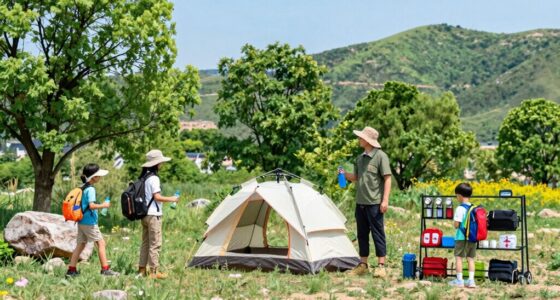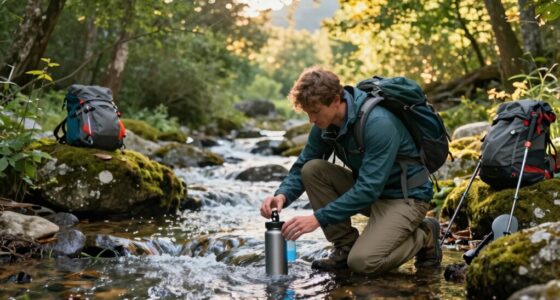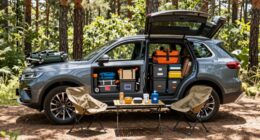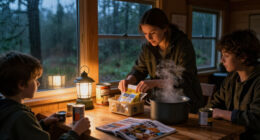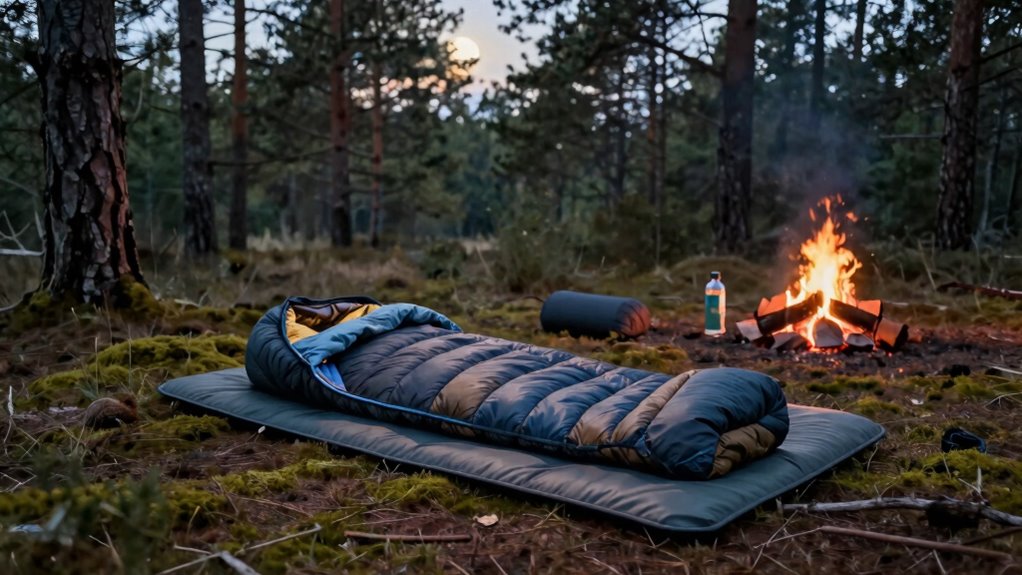
To build a better sleep system outdoors, prioritize quality gear like a supportive sleeping pad, a temperature-rated sleeping bag, and a comfortable pillow. Choose a sheltered, flat campsite away from wind and noise, and keep your tent dark and well-ventilated. Dress in layers, use extra heat sources if needed, and establish consistent rituals to signal your body it’s time to rest. For more tips on improving your outdoor sleep setup, keep exploring ways to enhance your recovery.

Get emergency and outdoor gear delivered free with Prime
- Fast, free delivery on millions of items
- Prime Video, Amazon Music and more included
- Member-only deals all year
Key Takeaways
- Use high-quality, insulated sleeping gear and layered clothing to maintain optimal body temperature.
- Choose a sheltered, flat campsite and set up a dark, quiet tent environment for uninterrupted rest.
- Ensure proper ventilation and prevent condensation with strategic airflow and appropriate gear insulation.
- Establish consistent pre-sleep routines and limit electronic use to improve sleep quality outdoors.
- Incorporate calming rituals and protective hairstyles to enhance comfort and reduce environmental disruptions.
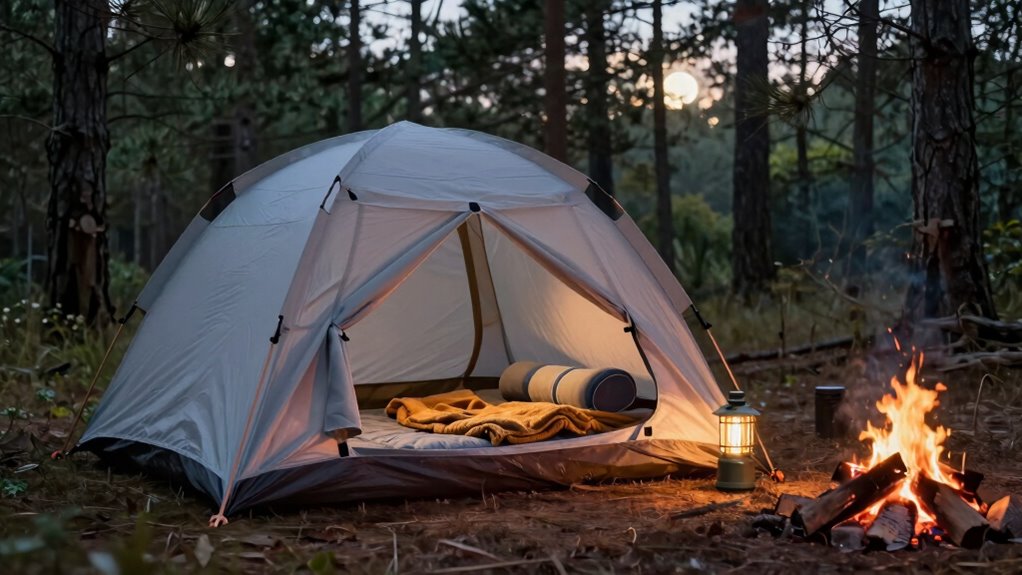
Getting a good night’s sleep outdoors can be challenging, especially when you’re away from the comforts of home. The unpredictable environment, unfamiliar sounds, and lack of familiar routines can all interfere with your sleep. To improve your chances of restful recovery, you need to focus on building a sleep system that considers your camping gear and sleep hygiene. Your gear plays a vital role because it determines how comfortable and insulated you are from the ground and the weather. Opt for a high-quality sleeping pad that provides support and cushioning, and pair it with a sleeping bag suited for the expected temperatures. Investing in a good sleeping pillow can also make a significant difference, helping to maintain proper neck alignment and reduce discomfort.
Creating a sleep-friendly environment is equally important. First, choose your campsite wisely—look for a flat, sheltered spot that minimizes exposure to wind and noise. Setting up your tent in a location shielded by trees or natural barriers can help block out distractions and create a sense of privacy, which aids sleep hygiene. Once inside, keep the interior dark by using a sleep mask or blackout curtains, and try to eliminate any bright lights or electronic devices that could disrupt your circadian rhythm. Maintaining a consistent sleep schedule, even outdoors, helps your body establish a routine, making it easier to fall asleep and stay asleep. A well-designed camping setup can significantly influence your overall comfort and sleep quality. Incorporating sleep hygiene practices like limiting screen time before bed can further enhance your rest.
Choose a sheltered, flat campsite, keep your tent dark, and stick to a consistent sleep routine outdoors.
Temperature regulation is another key aspect. Dress appropriately and layer your clothing to stay warm without overheating. Use your camping gear’s insulation features—like sleeping bags rated for the conditions—and consider adding a hot water bottle or hand warmers if it gets particularly cold. Keep your tent ventilated to prevent condensation, which can make you uncomfortable and disrupt sleep. Additionally, stick to your pre-sleep rituals as much as possible; brushing your teeth, doing some light stretching, or listening to calming sounds can reinforce sleep hygiene routines that signal your body it’s time to rest. Research shows that environmental factors like temperature and noise levels can greatly influence sleep quality, especially outdoors. Incorporating protective styling options, such as crochet styles for locs, can also help keep your hair manageable and comfortable during outdoor sleep.
Finally, limit caffeine and alcohol intake before bedtime, as both can interfere with sleep quality. Hydrate well but avoid drinking large amounts right before bed to reduce nighttime trips outside. By thoughtfully selecting your camping gear and practicing good sleep hygiene, you create a sleep system that promotes recovery and prepares you for the adventures ahead. Restful, restorative sleep outdoors isn’t just a dream—it’s achievable with the right approach.
high support camping sleeping pad
As an affiliate, we earn on qualifying purchases.
As an affiliate, we earn on qualifying purchases.
Frequently Asked Questions
What Are the Best Materials for Outdoor Sleeping Gear?
You should choose a sleeping pad made from durable, lightweight materials like closed-cell foam or self-inflating foam for comfort and insulation. Opt for breathable fabrics such as nylon or polyester for your sleeping bag and tent, ensuring good airflow and moisture management. These materials keep you warm, dry, and comfortable outdoors, making your sleep system more effective for recovery. Prioritize quality and weather resistance to enhance your outdoor sleeping experience.
How Do I Prevent Insects From Bothering Me at Night?
Think of bugs as uninvited guests at a party—you want to keep them out. To prevent insects from bothering you, use insect repellents and set up a high-quality sleeping net. I once camped in a bug-heavy area, and my sleeping net kept critters at bay, ensuring restful sleep. Apply repellents around your campsite, and always opt for a tightly woven sleeping net to block out tiny pests effectively.
What Safety Precautions Should I Take While Camping Alone?
When camping alone, prioritize wild animal safety by storing food securely and avoiding attracting animals. Set up your tent away from animal trails and keep a whistle or noise maker nearby. For fire hazard prevention, build campfires in designated areas, keep them small, and never leave them unattended. Always have a fire extinguisher or water nearby, and fully extinguish fires before sleeping or leaving the site. Stay alert and cautious to guarantee a safe, enjoyable outdoor experience.
How Can I Stay Warm in Extreme Weather Conditions?
To stay warm in extreme weather, focus on insulation techniques and clothing layering. Wear moisture-wicking base layers, add insulating mid-layers like fleece or down, and top with a waterproof, windproof outer shell. Keep your head, hands, and feet covered with hats, gloves, and thermal socks. Use a sleeping pad with good insulation and a sleeping bag rated for low temperatures. Staying dry and layered is key to maintaining warmth outdoors.
What Are Quick Fixes for Common Outdoor Sleep Issues?
Did you know that nearly 60% of outdoor sleepers face issues with comfort? To fix common outdoor sleep problems quickly, focus on optimizing your sleep environment—use a quality sleeping pad to prevent cold spots and improve insulation. Keep your gear organized so you can easily access essentials like a sleep mask or earplugs, reducing disruptions. These small adjustments help you rest better and recover faster during your outdoor adventures.
temperature rated sleeping bag for camping
As an affiliate, we earn on qualifying purchases.
As an affiliate, we earn on qualifying purchases.
Conclusion
So, there you have it—your foolproof guide to sleeping like royalty beneath the stars. With these tips, you’ll master the art of outdoor recovery, turning a simple camp into a five-star sleep haven. Who knew that a bit of foam, the right sleeping bag, and some strategic insulation could elevate your snooze from zombie to Zen master? Now go forth, brave camper, and conquer the night—your dreams (and muscles) will thank you.
As an affiliate, we earn on qualifying purchases.
As an affiliate, we earn on qualifying purchases.
Halloween Picks
halloween
As an affiliate, we earn on qualifying purchases.