TL;DR

Get emergency and outdoor gear delivered free — and shop member deals
- Fast, free delivery on millions of items
- Access to Prime Big Deal Days deals on October 6–7
- Prime Video, Amazon Music and more included
Outdoor Life writer Tyler Freel tested whether cleaning a rifle bore before shooting monolithic copper bullets improves accuracy. Across two rifles, the results showed no clear improvement beyond normal variation, but the small test does not settle the question for all rifles and loads.
Outdoor Life writer Tyler Freel found no clear accuracy improvement when he cleaned two rifle barrels before testing monolithic copper bullets, challenging the common advice that shooters must remove fouling from other ammunition first. The results came from a limited test of two rifles and two loads; Freel said broader testing would be needed to establish whether the pattern holds more generally.
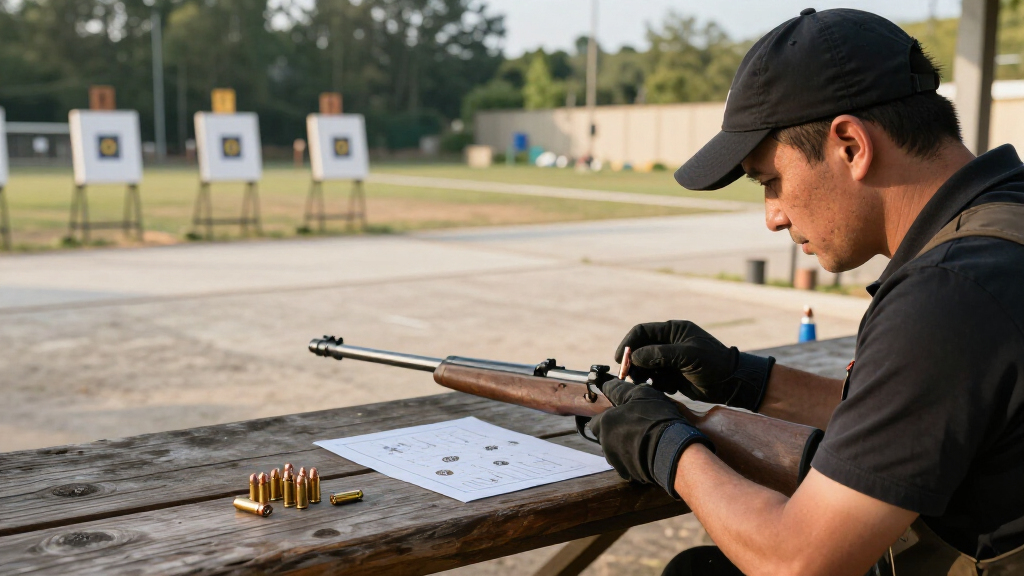
Freel tested a 70-grain Hornady CX load in a 22 ARC rifle and a 55-grain Barnes TSX load in a .223 Remington. Both rifles had Proof carbon-fiber barrels and about 300 rounds of other ammunition through them without cleaning before the evaluation began.
For each rifle, he fired a five-shot fouling group, then four five-shot groups for recorded results. He cleaned the barrel, checked it with a bore scope, and repeated the same sequence. Freel combined the four recorded groups into 20-shot aggregates and compared group size and mean radius before and after cleaning.
The 22 ARC’s group measured 1.53 inches before cleaning and 1.66 inches afterward; its mean radius changed from 0.41 to 0.40 inches. The .223’s group changed from 1.97 to 1.59 inches, while mean radius changed from 0.55 to 0.45 inches. Freel said the .223’s improvement remained within the variation he typically sees and was not enough to establish a reliable effect.
What the Results Mean for Shooters
The test offers a practical check on a widely repeated piece of rifle-cleaning advice: the results did not show a clear accuracy gain from removing previous fouling before shooting these copper loads. For shooters whose rifles handle copper bullets inconsistently, the findings suggest that cleaning may not be a dependable fix on its own.
Freel also described seeing changes in the first one to three shots after switching ammunition or starting with a clean bore. He and Outdoor Life shooting editor John Snow sometimes fire a fouling group before collecting accuracy data. That observation may matter when interpreting early shots, but the article does not establish a universal procedure or guarantee that every rifle will behave the same way.
How Freel Tested Bore Fouling
Monolithic copper bullets, including the Barnes TSX, TTSX and LRX and Hornady’s GMX and CX, have both advocates and critics among hunters and shooters. One common explanation for inconsistent accuracy is that fouling left by lead-core ammunition changes how a copper bullet engages the rifling. Freel said he had seen some rifles shoot copper loads accurately and others perform less well.
The test used four five-shot groups to create a 20-shot sample for each condition. Freel argued that larger samples offer a steadier view than a single small group, which can vary substantially. He treated changes of up to about 15 to 20 percent as normal variation in his testing, while noting that results differ by rifle and ammunition combination.
““Essentially, we didn’t see any statistically relevant improvements that clearly indicate cleaning makes a difference.””
— Tyler Freel, Outdoor Life
Limits of the Two-Rifle Test
The evaluation covered two rifles, two cartridges and two copper loads. It cannot show whether cleaning affects other barrel designs, bullet weights, powders, rifles or levels of fouling. The article also does not report repeated test sessions across different days or a broader statistical analysis that could establish a general effect.
The .223 results moved in the direction of better accuracy after cleaning, but Freel judged the change to be within typical variation. Whether a larger or repeated test would confirm an improvement for that rifle remains unknown. The source material also ends before Freel completes his final practical takeaway about switching ammunition.
More Testing Would Settle It
Freel said a conclusive answer would require more extensive testing. Further comparisons across additional rifles and ammunition combinations, repeated over time, could show whether bore cleaning has a consistent effect or whether the observed changes reflect ordinary group-to-group variation.
For now, the report’s finding is limited: these two tests did not show a clear, repeatable accuracy benefit from cleaning before shooting copper bullets. Freel’s observations about early shots after an ammunition change remain part of his experience, rather than a finding established across a wide range of rifles.
Key Questions
Did cleaning improve accuracy with copper bullets in the test?
The test found no clear improvement across the two rifles. The .223 groups were smaller after cleaning, but Freel said the change was within typical variation.
Which rifles and bullets were tested?
Freel tested a 22 ARC with a 70-grain Hornady CX load and a .223 Remington with a 55-grain Barnes TSX load.
How did Freel compare accuracy?
He fired four recorded five-shot groups for each condition and combined them into 20-shot aggregates, comparing group size and mean radius before and after cleaning.
Does the test prove cleaning never helps?
No. It involved two rifles and two loads. Freel said more extensive testing would be needed to determine whether the results apply more broadly.
Source: rss
Fall Picks
fall essentials
As an affiliate, we earn on qualifying purchases.