
TL;DR

Get emergency and outdoor gear delivered free with Prime
- Fast, free delivery on millions of items
- Prime Video, Amazon Music and more included
- Member-only deals all year
Outdoor Life published a review of a family-owned 1951 FN Mauser sporting rifle, chambered in .270 Winchester, and its history as a postwar deer rifle. The report documents its features and condition, but the claim that it is the “best” deer rifle is an assessment, not a comparative test finding.
Outdoor Life published a report Nov. 3 examining a family-owned, Belgian-made FN Mauser sporting rifle from 1951, a postwar hunting model the article says is often left out of familiar accounts of classic American deer rifles. The report describes the specific rifle and its family history; its headline calls the FN Mauser the “best” deer rifle history forgot, but that is an evaluative claim rather than a result established by a comparative test.
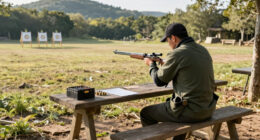
The rifle profiled is chambered in .270 Winchester and built around a Mauser 98 action. Outdoor Life writer Tyler Freel says his great-grandfather owned it and used it to hunt deer and elk. Freel reports that his father and uncle said a gunsmith in the family built the rifle for their grandfather. The gun is marked with the year 1951 and matching serial numbers on its receiver and barrel.
According to the report, the rifle weighs 9 pounds, 10 ounces, has a 22-inch chrome-vanadium-steel barrel and an adjustable trigger set at 3 pounds, 7 ounces. It retains a Redfield Bear Cub fixed-power scope, rated at 2.75X. Freel says the barrel appears to have been shortened from the 24-inch length typical of these rifles, though the report presents that as his assessment of this particular gun.
The rifle has a custom wooden stock with bedding pillars and glass bedding, plus a detachable floorplate held by a spring-loaded button and a retaining lip. Freel describes close fitting between the stock and metal parts. The report also distinguishes these factory-made sporting rifles from military surplus Mausers later converted for hunting: FN produced sporting configurations, and imported rifles and barreled actions were sold through several American companies.
A Postwar Rifle Outside the Usual Canon
The report adds a documented example to the history of postwar sporting rifles, a period often remembered through models such as the Pre-64 Winchester Model 70, Savage 99 and vintage Marlins. FN Mausers were also sold in the United States, including through Sears under the J.C. Higgins Model 50 name, according to the article. Their varied importers and configurations help explain why they are less familiar to many hunters today.
For readers interested in hunting firearms, the rifle also offers a case study in how a mid-century sporting arm was assembled and maintained. Its reported weight, scope, stock work and .270 chambering give a concrete comparison point with contemporary rifles. But one heirloom rifle and one writer’s assessment cannot establish that the FN Mauser was objectively the best deer rifle of its era.
Popular right now

Samsung The Frame Pro LS03HW 65-inch Neo QLED TV with 27-Month Axiom Care

Ninja Flip Toaster Oven & Air Fryer, 8-in-1, Stainless Steel, SP151

Ninja CM401 Specialty Coffee Maker with 10-Cup Carafe and Fold-Away Frother
As an affiliate, we earn on qualifying purchases.
How FN Mausers Reached U.S. Hunters
Outdoor Life places the rifle amid a post-World War II increase in hunting and demand for new rifles and cartridges. FN-made sporting Mausers were imported in different forms, the report says: some as complete rifles and others as barreled actions for custom builders. Companies named in the article include Firearms International Corp., Weatherby, Harrington & Richardson and Colt.
Period advertisements cited by Freel show the J.C. Higgins Model 50 offered through Sears in 1951 for $135, with a 2.5-power scope included. A 1952 Parker-Whelen catalog listed FN Mausers in .30-06 and .270 Winchester for $137.50, with an additional charge for a receiver-mounted rear sight. Those advertisements establish that the rifles were marketed to American buyers; they do not show how many were sold or how they performed compared with competing models.
“The FN Mauser Is the Best Deer Rifle that History Forgot”
— Outdoor Life headline
What One Heirloom Cannot Establish
The report focuses on one rifle and does not provide a comparative accuracy test, field trial or reliability data against other deer rifles. Its headline’s “best” characterization is therefore an opinion, not a demonstrated ranking. The article also says the exact route by which this rifle reached its final form is uncertain: it may have arrived as a barreled action and appears to have had its barrel shortened, but the report does not establish the rifle’s full construction history.
The source material gives no overall production or U.S. sales totals for FN sporting Mausers, and it does not quantify how many survive. It also does not establish how representative this family rifle’s custom stock and fittings are of factory-built examples. Those limits matter when drawing broader conclusions about the model’s quality or popularity.
Further Evidence Would Clarify Its Place
The report is a retrospective examination, not an announcement of a new product or a developing investigation. Readers seeking a firmer comparison would need evidence beyond the single rifle described here, such as period sales and production records, additional examples across different configurations, and consistent performance testing against contemporary hunting rifles. The article does not announce any such follow-up.
For now, the confirmed takeaway is narrower: FN sporting Mausers were marketed in the United States after the war, and this 1951 .270 Winchester example has remained in one family and was used for hunting. How well it represents the wider FN Mauser line—and whether it merits the “best” label—remains a matter of further evidence and individual judgment.
Key Questions
What rifle does the report examine?
It examines a family-owned 1951 FN Mauser sporting rifle chambered in .270 Winchester, built around a Mauser 98 action.
Is the rifle described as a converted military Mauser?
No. Outdoor Life distinguishes FN’s purpose-built sporting Mausers from military surplus rifles later converted for hunting. The profiled rifle appears to have been custom-built or fitted, but the article does not give a complete account of its assembly.
Why does Outdoor Life call it the best deer rifle history forgot?
That wording is the article’s evaluative headline. Its report highlights the rifle’s construction, family hunting history and limited recognition, but does not establish a definitive ranking through comparative testing.
What are the rifle’s reported specifications?
The specific example is chambered in .270 Winchester, weighs 9 pounds, 10 ounces, and has a 22-inch chrome-vanadium-steel barrel, an adjustable trigger and a 2.75X fixed-power scope.
Source: outdoorlife.com