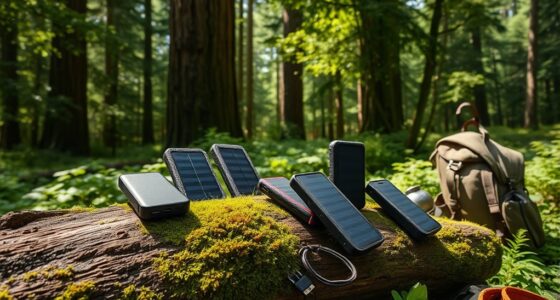

For most people seeking an emergency power bank, my best overall pick is the Anker Prime 26,250mAh 300W: its high output and large capacity suit phones, tablets, and some laptops without the bulk of a power station. The Jackery Explorer 300 is a better fit when you need household-style outlets, while the VRURC 20,000mAh favors simple phone backup with built-in cables. The main tradeoffs are capacity versus portability, fast charging versus runtime, and solar features versus dependable wall charging. Solar-equipped banks can be useful outdoors, but their small panels are generally a supplement rather than a reliable way to refill quickly during an outage. Continue reading for the full breakdown and help matching a backup source to your devices.

Get emergency and outdoor gear delivered free with Prime
- Fast, free delivery on millions of items
- Prime Video, Amazon Music and more included
- Member-only deals all year
Key Takeaways
- The Anker Prime 26,250mAh 300W is the most balanced pick for people who need substantial USB power while keeping a bank-sized setup.
- Jackery Explorer 300 and Anker SOLIX C300 offer a different class of backup: their 288–292Wh capacities and power-station format suit broader device needs, but they are less pocketable than USB banks.
- Several solar models advertise capacities from 38,800mAh to 50,000mAh, but panel charging should be treated as a slow backup input, not the main emergency recharge plan.
- Built-in cables and wireless charging reduce what you need to pack, but they do not replace checking connector compatibility, charging speed, or how many devices can run at once.
- The EF ECOFLOW Rapid Pro and Anker Prime emphasize high-output charging, while the 10,000mAh BLAVOR and 20,000mAh VRURC favor simpler, more portable phone backup.
| Anker Prime 26,250mAh 300W Portable Power Bank |  | Best for High-Power Laptop Backup | Battery capacity: 26,250mAh (99.75Wh) | Total output: 300W | Maximum single-port output: 140W | VIEW LATEST PRICE | See Our Full Breakdown |
| 49,800mAh Solar Power Bank with Wireless Charging, Built-In Cables, and LED Flashlights |  | Best for Extended Outdoor Emergencies | Battery capacity: 49,800mAh | Battery voltage: 3.7V | Connectors: USB Type-C, Micro USB, USB Type-A, Lightning | VIEW LATEST PRICE | See Our Full Breakdown |
| Durecopow 20,000mAh Solar Power Bank with Built-In Cables and Dual Flashlight |  | Best for Simple Outdoor Grab-and-Go Kits | Battery capacity: 20,000mAh | Battery cell type: Lithium polymer | Ports: 3 | VIEW LATEST PRICE | See Our Full Breakdown |
| BLAVOR 10,000mAh Solar Power Bank with Wireless Charging |  | Best Compact Backup for Short Outages | Battery capacity: 10,000mAh | USB-C output: 20W | Ports: 3 | VIEW LATEST PRICE | See Our Full Breakdown |
| Jackery Explorer 300 Portable Power Station, 292Wh |  | Best for AC-Powered Emergency Gear | Capacity: 292Wh | Weight: 7.5lbs | Peak surge: 600W | VIEW LATEST PRICE | See Our Full Breakdown |
| SOARAISE 50000mAh Solar Power Bank with 22.5W Fast Charging and Wireless Charging |  | Best for Maximum Backup Capacity | Battery capacity: 50,000mAh | USB-C charging: 22.5W fast charging | Wireless charging: Up to 15W | VIEW LATEST PRICE | See Our Full Breakdown |
| Boogostore M3 27,000mAh Solar Power Bank, 65W, with Built-In Cables and Wireless Charging |  | Best for Fast-Charging Laptops | Battery capacity: 27,000mAh | Battery type: Lithium polymer | Maximum output: 65W | VIEW LATEST PRICE | See Our Full Breakdown |
| 38,800mAh Solar Power Bank with 22.5W USB-C Fast Charging, Built-In Cables, and Dual LED Flashlights |  | Best Rugged Solar Backup | Battery capacity: 38,800mAh | USB-C output: 22.5W fast charging | Connectors: USB Type-A, USB Type-C, Lightning, and Micro USB | VIEW LATEST PRICE | See Our Full Breakdown |
| EF ECOFLOW Rapid Pro 4-Port 300W Power Bank with Built-In 140W USB-C Cable |  | Best High-Output Travel Backup | Battery capacity: 99.54Wh | Maximum output: 300W | Maximum input: 320W | VIEW LATEST PRICE | See Our Full Breakdown |
| BLAVOR 20,000mAh Solar Power Bank with Wireless Charging |  | Best Compact Outdoor Kit | Battery capacity: 20,000mAh | Built-in cables: 4: two USB-C, one iOS, and one USB-A | Ports: 3: USB-C, USB-A, and iOS | VIEW LATEST PRICE | See Our Full Breakdown |
| Anker SOLIX C300 Portable Power Station, 288Wh |  | Best Compact Power Station | Capacity: 288Wh | AC output: 300W total; 600W surge | Battery chemistry and life: LiFePO4; rated for 3,000 cycles | VIEW LATEST PRICE | See Our Full Breakdown |
| VRURC 20,000mAh Portable Charger with Built-In Cables |  | Best for Cable-Free Phone Backup | Battery capacity: 20,000mAh | Maximum charging power: 22.5W | Built-in cables: USB-C, phone connector, Micro USB, USB-A | VIEW LATEST PRICE | See Our Full Breakdown |
| emergency power bank | Battery capacity | Ports |
|---|---|---|
| Anker Prime 26,250mAh 300W Por | 26,250mAh (99.75Wh) | 2 USB-C, 1 USB-A |
| 49,800mAh Solar Power Bank wit | 49,800mAh | — |
| Durecopow 20,000mAh Solar Powe | 20,000mAh | 3 |
| BLAVOR 10,000mAh Solar Power B | 10,000mAh | 3 |
| Jackery Explorer 300 Portable | — | 2 AC outlets, 1 USB-C PD, 2 USB-A, 1 car port |
| SOARAISE 50000mAh Solar Power | 50,000mAh | 3 |
| Boogostore M3 27,000mAh Solar | 27,000mAh | 4 |
| 38,800mAh Solar Power Bank wit | 38,800mAh | — |
| EF ECOFLOW Rapid Pro 4-Port 30 | 99.54Wh | 4 |
| BLAVOR 20,000mAh Solar Power B | 20,000mAh | 3: USB-C, USB-A, and iOS |
| Anker SOLIX C300 Portable Powe | — | — |
| VRURC 20,000mAh Portable Charg | 20,000mAh | — |
More Details on Our Top Picks
Anker Prime 26,250mAh 300W Portable Power Bank
For an emergency kit that needs to keep a laptop working, the Anker Prime 26,250mAh is the strongest pocketable option in this group. Its 140W single-port output can support fast charging for compatible laptops, while 300W shared across three ports leaves room for a phone or another device. Compared with the Jackery Explorer 300, it is lighter and more travel-friendly, but it cannot run AC appliances because it has no AC outlets.
The 99.75Wh capacity sits just below the common 100Wh airline limit, and dual USB-C input can shorten the wait to recharge when the right equipment is available. The display and app add useful output information and controls during an outage. The tradeoff is a premium, cable-dependent setup: reaching 140W requires a 5A cable, and the charging base is not included.
Pros:- Up to 140W from one USB-C port supports fast charging for compatible laptops.
- 300W total output and three ports allow several USB devices to charge together.
- 99.75Wh capacity is just below 100Wh, making it a compact travel-oriented choice.
- Display, app controls, and up to 250W dual USB-C input add useful monitoring and faster recharging.
Cons:- No AC outlets, unlike the Jackery Explorer 300, so it cannot power AC devices.
- Maximum 140W output requires a compatible 5A cable.
- Charging base is not included.
Best for: Laptop users who want a high-output backup that can travel with them and charge several USB devices.
Not ideal for: People who need to run household appliances, or buyers who want a complete charging setup without sourcing a compatible charging base or 5A cable.
- Battery capacity:26,250mAh (99.75Wh)
- Total output:300W
- Maximum single-port output:140W
- Maximum dual-port input:250W
- Ports:2 USB-C, 1 USB-A
- Weight:600g
- Dimensions:6.3 × 2.5 × 1.5in
- Included accessories:3.3ft 240W USB-C cable and travel pouch
Our verdict“Choose the Anker Prime if your emergency priority is fast laptop and USB-device charging in a compact, airline-oriented package.”
49,800mAh Solar Power Bank with Wireless Charging, Built-In Cables, and LED Flashlights
This solar power bank leans into outdoor preparedness: it combines a stated 49,800mAh capacity with built-in charging options, wireless charging, and dual SOS-capable flashlights. The carabiner and compass also suit a trail kit better than the more electronics-focused Anker Prime. Its claimed shockproof, sandproof, rainproof, and splashproof construction is aimed at rougher conditions, though the supplied details do not give a formal IP rating.
The main compromise is uncertainty. The listing conflicts on whether it includes three or four built-in cables, and its stated 18–24 hours of sunlight for a full solar charge makes the panel a backup input rather than a dependable quick recharge. Compared with the Durecopow 20,000mAh, it offers a much larger stated capacity and wireless charging, but Durecopow provides clearer cable and port details. I would treat solar as supplementary and verify the cable configuration before relying on it.
Pros:- Stated 49,800mAh capacity offers more reserve than the Durecopow 20,000mAh.
- Supports wired, wireless, and solar charging.
- Built-in cables cover USB-C, Lightning, and Micro USB devices.
- Dual flashlights include standard, SOS, and strobe modes.
Cons:- Listing details conflict on the number of built-in cables.
- Solar charging is slow by the stated 18–24-hour full-charge estimate.
- No formal IP rating is supplied to clarify its outdoor water protection.
Best for: Campers and emergency-kit builders who want a high stated capacity, multiple device-charging methods, and built-in signaling lights.
Not ideal for: Buyers who need verified cable compatibility, predictable recharge times, or a clearly rated level of water protection.
- Battery capacity:49,800mAh
- Battery voltage:3.7V
- Connectors:USB Type-C, Micro USB, USB Type-A, Lightning
- Charging features:Wireless, built-in cables, and solar charging
- Output current:3A
- Flashlight modes:Standard, SOS, and strobe
- Flashlight range:Up to 15m
- Outdoor protection:Described as shockproof, sandproof, rainproof, and splashproof
Our verdict“Pick this for a feature-packed outdoor kit when capacity and emergency lighting matter more than verified cable details or fast solar recharging.”
Durecopow 20,000mAh Solar Power Bank with Built-In Cables and Dual Flashlight
The Durecopow 20,000mAh is a practical middle ground for an emergency bag: its built-in Type-C, Lightning, and Micro USB output cables reduce the chance of being caught without a lead, and its USB-C input/output adds a familiar charging route. Reinforced silicone corners and covered ports make it better suited to outdoor handling than the Anker Prime, which is built around high-output electronics rather than rugged kit use.
Its solar panel and dual steady, SOS, and strobe lights add useful backup functions, but I would not count on solar to restore the battery quickly; the supplied data gives no dependable solar recharge time. The 49,800mAh solar model claims much more capacity and adds wireless charging, while Durecopow has a simpler, clearer cable set. Its 2.4A output is also modest beside the Anker’s laptop-oriented output, so this is better for phones and small USB devices than demanding equipment.
Pros:- Built-in Type-C, Lightning, and Micro USB cables reduce loose accessories.
- USB and solar charging provide two replenishment options.
- Dual LEDs include steady, SOS, and strobe modes.
- Silicone corners and covered ports add protection for outdoor handling.
Cons:- Solar recharge speed is not specified and depends on sunlight.
- Listed 2.4A output is modest for power-hungry devices.
- Charging performance and timing may vary by device and conditions.
Best for: Hikers and households assembling a straightforward phone-focused emergency kit with cables and a flashlight built in.
Not ideal for: Laptop users or anyone who needs fast charging, precise recharge-time expectations, or dependable solar replenishment during a short outage.
- Battery capacity:20,000mAh
- Battery cell type:Lithium polymer
- Ports:3
- Built-in output cables:Type-C, Lightning, and Micro USB
- Built-in input cable:USB-A
- Output current:2.4A
- Charging methods:Solar or USB
- Materials:Silicone rubber and ABS PC
Our verdict“Choose Durecopow for a cable-ready, phone-focused outdoor backup, but not for laptop charging or quick solar recovery.”
BLAVOR 10,000mAh Solar Power Bank with Wireless Charging
For a small emergency pouch or daypack, the BLAVOR 10,000mAh keeps the basics close: Qi wireless charging, 20W USB-C output, three ports, and dual flashlights in a 9.3-ounce package. Its IPX5 rating gives it a clearer stated water-resistance level than the Durecopow or the 49,800mAh solar model, whose supplied details do not list a formal IP rating. A compass carabiner adds a simple outdoor-use touch.
Capacity is the limiting factor. This is a short-outage or personal-device backup, not the choice for keeping several phones powered over a long disruption. The Anker Prime offers far more capacity and laptop-class output, while BLAVOR is smaller and supports Qi charging without a cable. Although the title calls it a solar power bank, the listed power source is corded electric and solar charging capability is unclear; I would buy it for its ports and compactness, not assume its panel can recharge it.
Pros:- Compact 9.3-ounce design is easier to carry than the larger-capacity solar banks.
- 20W USB-C output and Qi wireless charging provide wired and cable-free options.
- Three ports can support multiple devices at once.
- IPX5 rating, dual flashlights, and compass carabiner suit short outdoor trips.
Cons:- 10,000mAh capacity may need frequent replenishment during an extended outage.
- Solar charging capability is unclear despite the product title.
- Four-hour battery charge time is listed, with no higher-capacity emergency reserve.
Best for: Commuters, day hikers, and household members who want a compact phone backup with wireless charging and stated splash protection.
Not ideal for: People preparing for multi-day outages or buyers who require confirmed solar recharging and substantial capacity for multiple devices.
- Battery capacity:10,000mAh
- USB-C output:20W
- Ports:3
- Wireless charging:Qi compatible
- Water resistance:IPX5
- Weight:9.3 ounces
- Dimensions:5.9 × 3.1 × 0.8in
- Battery charge time:4 hours
Our verdict“Choose BLAVOR for a compact, water-resistant phone backup, but skip it if your plan depends on long runtimes or solar recharging.”
Jackery Explorer 300 Portable Power Station, 292Wh
The Jackery Explorer 300 is the most capable option here when an emergency calls for AC power rather than phone charging alone. Its two AC outlets, USB ports, and 120W car port can serve a wider mix of small devices than the Anker Prime, which is a high-output USB power bank but has no AC outlets. At 7.5 pounds, it is still portable enough for a car kit or home backup shelf, though it is far less pocketable than any power bank in this group.
The 292Wh capacity and 300W rated output make it suitable for select low-wattage gear; check the device’s power draw before relying on it. Solar charging is supported, but the panel is sold separately. Product details also conflict on battery chemistry, listing LiFePO4 in the description and Lithium Ion in the specifications, so I would verify the cell type rather than use the stated cycle life as a deciding point. Compared with BLAVOR, it offers a much broader emergency-power role but demands more storage space.
Pros:- Two AC outlets extend use beyond USB-only charging.
- 292Wh capacity and 300W rated output suit select low-wattage devices.
- Multiple outputs include USB-C, USB-A, and a 120W car port.
- Supports solar charging and is listed with more than 4,000 cycles to 70% capacity.
Cons:- At 7.5 pounds, it is substantially heavier than the Anker Prime or BLAVOR.
- Solar panel is not included.
- Battery chemistry is inconsistent across the supplied product details.
Best for: Households and drivers who need portable AC outlets for compatible low-wattage emergency equipment alongside USB charging.
Not ideal for: Airline travelers or anyone seeking a lightweight phone-only power bank; it is heavier, larger, and lacks a confirmed battery chemistry in the supplied details.
- Capacity:292Wh
- Weight:7.5lbs
- Peak surge:600W
- Ports:2 AC outlets, 1 USB-C PD, 2 USB-A, 1 car port
- USB-C output:100W
- Car port output:120W
- Solar charging:80% in approximately 2.8 hours with a 100W panel or 7.5 hours with a 40W panel; panel not included
Our verdict“Pick the Explorer 300 when AC outlets and a larger energy reserve matter more than pocketable size or a fully verified specification sheet.”
SOARAISE 50000mAh Solar Power Bank with 22.5W Fast Charging and Wireless Charging
For emergency kits where stored charge matters more than pocketability, the SOARAISE 50,000mAh has the largest stated capacity in this group. Its built-in USB-C and Lightning cables, three ports, and wireless charging make it easier to supply several phones without packing a cable for each one. Compared with the 38,800mAh Solar Power Bank, it offers more capacity and adds a compass and thermometer, but the lower-capacity option lists IP65 protection and dual flashlights. The SOARAISE’s 22.5W USB-C output is useful for compatible phones, while wireless charging can vary with cases and device models. Its solar panel is a backup source, not a dependable way to refill a depleted battery quickly. The rugged design and three-mode flashlight suit outdoor emergencies, though this is a bulky choice for daily carry.
Pros:- 50,000mAh capacity provides a large stored-charge reserve for multiple devices.
- Built-in USB-C and Lightning cables reduce the number of separate cords to pack.
- Wired and wireless charging support several types of compatible devices.
- Waterproof, shockproof, and dustproof design includes a three-mode flashlight, compass, and thermometer.
Cons:- Solar charging is intended only as a backup and should not be treated as the main recharge method.
- Wireless charging performance can vary with phone cases, metal attachments, and device model.
- Its large capacity and multi-device focus make it less suited to compact everyday carry.
Best for: Households or outdoor groups who want a high-capacity reserve, built-in phone cables, and basic navigation and lighting features in one unit.
Not ideal for: Travelers prioritizing a lightweight everyday charger or anyone expecting solar exposure to recharge the bank quickly.
- Battery capacity:50,000mAh
- USB-C charging:22.5W fast charging
- Wireless charging:Up to 15W
- Simultaneous device capacity:Up to 6 devices
- Built-in cables:USB-C and Lightning
- Ports:3
- Power sources:Corded electric and solar
- Durability:Waterproof, shockproof, and dustproof
Our verdict“Choose the SOARAISE if your emergency priority is a large charge reserve with versatile connections, not minimal size or solar-only recharging.”
Boogostore M3 27,000mAh Solar Power Bank, 65W, with Built-In Cables and Wireless Charging
The Boogostore M3 is the strongest fit here for people who need more than phone charging: its 65W USB-C output can serve compatible laptops and other higher-draw devices, while four ports and Qi charging add flexibility during an outage. The EF ECOFLOW Rapid Pro offers much higher total output at 300W and a built-in 140W cable, but its 99.54Wh capacity and 700g weight point toward a different, more power-focused travel setup. The M3 instead combines a 27,000mAh battery with built-in cables, pass-through charging, a carabiner, compass, and SOS/strobe/steady flashlight modes. That makes it more geared to an outdoor kit, though the listed eight-hour recharge time is not especially quick. Solar charging is mentioned without a recharge rate, so I would treat it as incidental backup rather than a reliable refill plan.
Pros:- Up to 65W USB-C output supports compatible laptops and other higher-power devices.
- Four ports, built-in cables, and Qi wireless charging offer several ways to connect devices.
- Pass-through charging can support charging the bank and connected devices from a wall source.
- Carabiner, compass, and SOS, strobe, and steady flashlight modes suit outdoor emergency kits.
Cons:- The listed battery charge time is eight hours.
- No solar recharge rate is provided, making its solar backup capability hard to plan around.
- Its 27,000mAh capacity is smaller than the SOARAISE 50,000mAh and 38,800mAh options.
Best for: Campers and remote workers who need a portable emergency bank capable of charging a compatible USB-C laptop as well as phones.
Not ideal for: Buyers who need the largest stored capacity or a clearly specified solar recharge rate; its 27,000mAh capacity is below several solar models here.
- Battery capacity:27,000mAh
- Battery type:Lithium polymer
- Maximum output:65W
- USB-C output:Up to 65W
- USB-A output:Up to 22.5W
- Ports:4
- Wireless charging:Qi
- Listed battery charge time:8 hours
- Features:Built-in cables, pass-through charging, flashlight, compass, and carabiner
Our verdict“Pick the M3 when 65W laptop charging and outdoor-ready connections matter more than maximum capacity or a proven solar recharge rate.”
38,800mAh Solar Power Bank with 22.5W USB-C Fast Charging, Built-In Cables, and Dual LED Flashlights
This 38,800mAh solar power bank takes a practical middle position: more capacity than the BLAVOR 20,000mAh, with four built-in cables and charging for up to six devices. That connection mix is useful when an emergency kit has phones with different connectors and loose cables are easy to misplace. Its IP65-rated protection and two lights with steady, SOS, and strobe modes give it a clear outdoor role. The SOARAISE 50,000mAh offers more stated capacity and wireless charging, but this model’s data specifies IP65 and dual flashlights, which may matter more in wet or dusty conditions. The tradeoff is that solar charging is slow and depends on sun and panel exposure; I would plan to recharge from a wall outlet when possible. The listing also describes four ports alongside four built-in cables, so connection details may merit checking before purchase.
Pros:- 38,800mAh capacity offers a substantial reserve without matching the SOARAISE’s larger capacity.
- Four built-in cable types reduce the need to carry separate charging cords.
- Can charge up to six devices and supports 22.5W USB-C output.
- IP65-rated construction and dual SOS-capable flashlights suit outdoor emergencies.
Cons:- Solar charging is slow and depends on sunlight and panel exposure.
- The stated four-port layout is unclear alongside four built-in cables and additional ports.
- It lacks the wireless charging offered by the SOARAISE and BLAVOR 20,000mAh.
Best for: Campers and household emergency-kit owners who want rugged protection, multiple built-in connector types, and useful lighting.
Not ideal for: Buyers who need wireless charging, a clearly documented port layout, or a dependable solar-only recharge plan.
- Battery capacity:38,800mAh
- USB-C output:22.5W fast charging
- Connectors:USB Type-A, USB Type-C, Lightning, and Micro USB
- Number of ports:4 listed
- Simultaneous device charging:Up to 6 devices
- Recharge methods:Wall outlet and solar panel
- Flashlights:2 LED lights with steady, SOS, and strobe modes
- Dimensions:6.3 × 3.07 × 1.38 in
Our verdict“Choose this model for rugged, cable-flexible backup and lighting, but not if wireless charging or solar recharging speed is a priority.”
EF ECOFLOW Rapid Pro 4-Port 300W Power Bank with Built-In 140W USB-C Cable
The EF ECOFLOW Rapid Pro is the most power-oriented option in this set, with 300W maximum output across four ports and a built-in 140W USB-C cable for compatible laptops and other demanding devices. Its 99.54Wh capacity is designed to meet TSA carry-on capacity rules, making it a distinct choice from the solar models, which emphasize large mAh figures, built-in phone cables, lights, and outdoor features. Compared with the Boogostore M3, the Rapid Pro offers far more total output and a much faster stated recharge path, but the M3 adds a compass, flashlight, and carabiner for outdoor use. The Rapid Pro’s LCD and app provide charging data and output controls, while its 320W input can reach 80% in 20 minutes with a compatible source. That speed depends on having the right input gear, and 700g is a notable carry weight.
Pros:- Up to 300W output across four ports can support multiple demanding devices.
- Built-in 140W USB-C cable reduces the need to pack a high-power cable.
- LCD and companion app provide charging information and output controls.
- 99.54Wh capacity is designed to meet TSA carry-on capacity rules.
Cons:- At 700g, it adds substantial weight to a travel or emergency bag.
- The 20-minute-to-80% recharge claim depends on a compatible 320W input source.
- Unlike the solar models in this group, it does not list a solar panel, flashlight, or outdoor navigation tools.
Best for: Frequent travelers and mobile professionals who need high-output laptop charging, port-level information, and a capacity designed for TSA carry-on rules.
Not ideal for: People assembling a solar or rugged outdoor emergency kit, or anyone seeking a light phone-only charger with no need for high output.
- Battery capacity:99.54Wh
- Maximum output:300W
- Maximum input:320W
- Ports:4
- Built-in cable:140W USB-C
- Recharge time:0–80% in 20 minutes with 320W input
- Display:3.9-inch LCD
- Weight:700g
- Dimensions:6 × 2 × 2 in
Our verdict“Choose the Rapid Pro for high-output laptop and multi-device backup on trips, not for solar charging or lightweight everyday carry.”
BLAVOR 20,000mAh Solar Power Bank with Wireless Charging
The BLAVOR 20,000mAh is the more manageable pick for an emergency bag that also serves as a camping or day-trip kit. It combines four built-in cables, wireless charging for compatible phones and Apple Watch, and a useful set of accessories: a flashlight, camping light, compass, thermometer, carabiner, and rope. Compared with the 38,800mAh Solar Power Bank, it gives up capacity and the listed IP65 rating, but keeps a broad set of charging connections in a smaller stated battery class. It also has protections against overcharge, over-discharge, over-current, and short circuits. Its solar charging rate is unspecified, so the panel should be treated as a backup rather than a way to restore the battery promptly. The listed maximum output of 18W also differs from the stated 20W USB-C charging figure, leaving the effective output unclear.
Pros:- Four built-in cables, three ports, and wireless charging cover a range of compatible devices.
- Wireless charging supports compatible phones and Apple Watch.
- Flashlight, camping light, compass, thermometer, carabiner, and rope add practical outdoor utility.
- Includes overcharge, over-discharge, over-current, and short-circuit protection.
Cons:- At 20,000mAh, capacity is lower than the SOARAISE and 38,800mAh options.
- Solar charging speed is not specified, limiting confidence in it as a field recharge method.
- The listed 18W maximum output conflicts with the stated 20W USB-C charging figure.
Best for: Campers and day hikers who want a moderately sized emergency charger with wireless options, several built-in cables, and lighting tools.
Not ideal for: Households needing a larger multi-device reserve, or buyers who require a clearly stated solar recharge rate and consistent output specifications.
- Battery capacity:20,000mAh
- Built-in cables:4: two USB-C, one iOS, and one USB-A
- Ports:3: USB-C, USB-A, and iOS
- USB-C charging:20W stated
- Wireless charging:Qi compatible; phones and Apple Watch
- Maximum output:18W listed
- Dimensions:1.5 × 3.85 × 7.28 in
- Protection:Overcharge, over-discharge, over-current, and short-circuit protection
- Materials:Flame-retardant ABS+PC shell with waterproof silicone protection
Our verdict“Pick the BLAVOR for a multi-feature outdoor kit with wireless charging, but choose a larger model if your emergency plan depends on more stored capacity.”
Anker SOLIX C300 Portable Power Station, 288Wh
The Anker SOLIX C300 is the stronger choice when an emergency kit needs to run more than phones: its 288Wh capacity and 300W AC output can support a range of small devices, while three AC outlets and several USB options let you charge multiple items at once. Compared with the Jackery Explorer 300, it offers three USB-C ports and a stated 80% wall recharge in 50 minutes, making it a flexible fit for a short outage or car-camping setup. Its LiFePO4 battery is rated for 3,000 cycles, and quiet 25dB operation is welcome indoors. The tradeoff is that this is a compact power station, not a lightweight phone bank: it weighs 4.13kg, and a shoulder strap is separate. Check solar-panel compatibility before buying; several Anker panels are excluded.
Pros:- 288Wh capacity and 300W AC output support more than phone-only emergency charging.
- Eight charging ports, including three USB-C ports and three AC outlets, accommodate several devices.
- Wall, solar, car-socket, and USB-C recharging offer flexibility during outages and trips.
- LiFePO4 chemistry is rated for 3,000 cycles, with quiet 25dB operation and a five-year warranty.
Cons:- At 4.13kg, it is much heavier and bulkier than a conventional power bank.
- Shoulder strap is sold separately.
- It is incompatible with some Anker solar panels, including the PS30, PS200, and PS400.
Best for: Households and campers seeking a compact backup for phones, laptops, lights, and other small devices, with multiple charging options.
Not ideal for: People who only need pocketable phone charging, or buyers planning to use an Anker PS30, PS200, or PS400 solar panel.
- Capacity:288Wh
- AC output:300W total; 600W surge
- Battery chemistry and life:LiFePO4; rated for 3,000 cycles
- Charging ports:3 AC outlets, 1 car socket, 3 USB-C, 1 USB-A
- USB-C output:Two ports up to 140W each; one 15W port
- Wall recharge:80% in 50 minutes
- Weight and dimensions:4.13kg; 6.46 × 6.34 × 9.45in
- Noise and warranty:25dB at 3.3ft; five years
Our verdict“Choose the SOLIX C300 for multi-device backup and versatile recharging in a compact power-station format, not for pocket carry.”
VRURC 20,000mAh Portable Charger with Built-In Cables
The VRURC 20,000mAh charger is a practical grab-and-go backup for people who want to charge phones and small electronics without packing separate leads. Its four built-in cables, plus USB-A and USB-C ports, make it more self-contained than the Anker SOLIX C300, though it cannot power AC devices or match that station’s broader outage role. The stated capacity is suited to multiple phone charges, while the digital display gives a quick read on remaining battery. At 19mm thick, it is easier to tuck into a bag than a power station, and 22.5W maximum output is useful for compatible devices. The compromise is connector coverage: its built-in cable types may not fit every device, so check your gear before relying on it. Fast-charge claims also conflict, listing both 50% and 60% in 30 minutes.
Pros:- Four built-in cable types reduce the need to pack separate charging leads.
- 20,000mAh capacity is intended to provide multiple phone charges.
- USB-A and USB-C ports add charging options beyond the built-in cables.
- Digital display, battery protection, and overcharge protection add useful monitoring and safeguards.
Cons:- Built-in connectors may not suit devices that require other cable types.
- Fast-charge information conflicts, citing both 50% and 60% in 30 minutes.
- At 22.5W maximum output, it is not a substitute for an AC power station such as the Anker SOLIX C300.
Best for: Phone and tablet owners who want a portable emergency charger with common cables built in and fewer loose accessories to pack.
Not ideal for: Buyers needing AC power, high-wattage laptop charging, or a dependable match for devices that use connectors not listed among its built-in cables.
- Battery capacity:20,000mAh
- Maximum charging power:22.5W
- Built-in cables:USB-C, phone connector, Micro USB, USB-A
- Additional ports:USB-A and USB-C; six ports listed
- Thickness:19mm
- Voltage:3.85V
- Fast-charge claim:Conflicting figures: 50% or 60% in 30 minutes
- Warranty:Three years
Our verdict“Pick the VRURC for portable, cable-included phone backup, but choose a power station if your emergency plan includes AC-powered equipment.”
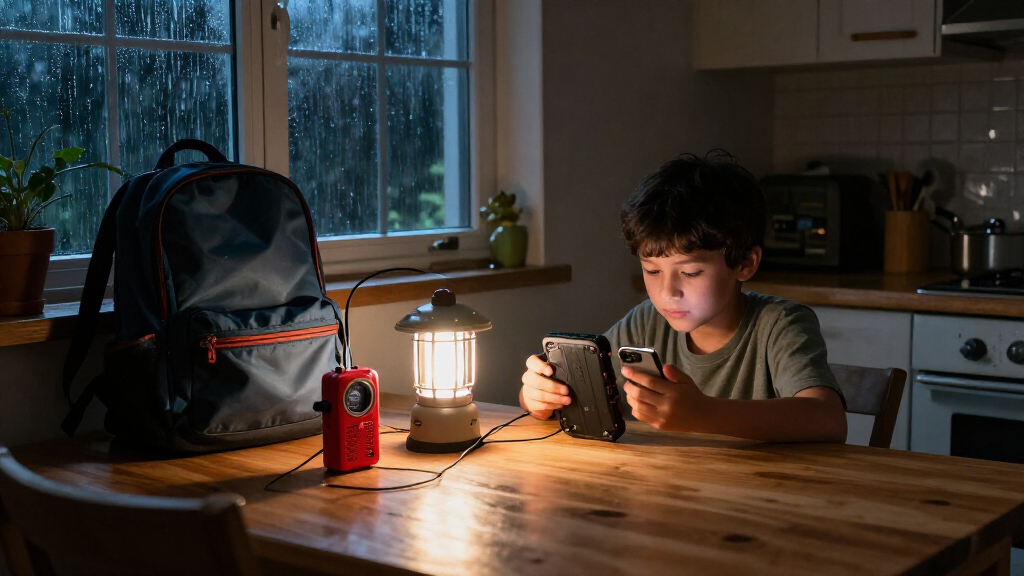
How We Picked
I ranked these options around the job an emergency bank needs to do: keep essential devices powered when wall outlets are unavailable. The main criteria were usable capacity, output and charging flexibility, number and type of ports, portability, and how clearly a product’s design suits a real backup scenario. I separated USB power banks from portable power stations because their capacity, outlet options, and carrying needs serve different situations.
That is why the Anker Prime 26,250mAh 300W leads as a versatile balance rather than simply rewarding the largest advertised capacity. Power stations rank well for longer outages and broader device support, but their size makes them a less convenient everyday carry. Solar models earn a place for outdoor resilience and integrated features, though I give more weight to dependable wired charging than to small built-in solar panels. Built-in cables, wireless charging, and flashlights count as useful conveniences, not substitutes for adequate capacity or output.
Factors to Consider When Choosing Emergency Power Banks
Choosing an emergency power source starts with the devices you need to keep running and how long you may be away from an outlet. These broader checks help avoid buying a large-capacity bank that cannot power a key device, or a feature-packed model that is awkward to recharge.
Match Capacity to the Outage You Need to Cover
Estimate what you will charge, rather than choosing by the biggest milliamp-hour figure on a listing. A phone-only plan calls for a different reserve than keeping a tablet, camera, or laptop available through a long outage. Power banks also lose some energy to voltage conversion and charging losses, so rated capacity does not translate directly into device battery capacity. If you need several days of backup or want to run more than USB devices, compare watt-hours and consider a portable power station. For shorter interruptions, a smaller bank may be easier to keep charged and ready. Leave extra capacity for unexpected needs, but avoid carrying a heavy reserve that you are unlikely to use.
Check Output, Not Just Capacity
A high-capacity bank can still be a poor match if its output is too low for the device you need to charge. Check the wattage required by your phone, tablet, or laptop and confirm that the bank supports it through the specific port you plan to use. Multi-device charging can also divide available output, so a bank advertised for fast charging may slow down when several ports are occupied. USB-C power delivery is useful for newer devices, but cable capability matters too. Do not assume that every built-in cable supports the product’s maximum output. When backup speed matters, prioritize a clearly specified wired output over extra charging features.
Decide Whether You Need a Power Bank or a Power Station
USB power banks are easier to carry and suit phones, tablets, and compatible laptops. Portable power stations add capacity and often provide AC outlets, which can support devices that cannot charge over USB, but they take more space and are less convenient to carry day to day. Think through where the unit will sit during an outage and whether you need to move it between rooms or take it outdoors. A power station is not automatically better just because it stores more energy; its size only pays off when your devices and outage plan call for it. Check device wattage against the station’s output limits before relying on an AC outlet. For a small emergency kit, a USB bank may be simpler and easier to keep ready.
Treat Solar Charging as a Backup, Not a Guarantee
Small panels built into power banks can add charge when a device is left in consistent sunlight, but they generally collect energy slowly. Clouds, shade, panel angle, and short daylight hours all reduce what they can contribute. A large listed capacity can take a long time to restore through a compact panel, so do not plan on solar as your only way to recharge during a prolonged outage. For reliable preparation, charge the bank from a wall outlet before severe weather and keep a compatible cable available. If you need meaningful solar replenishment, compare a larger separate panel and confirm that the power source accepts its output. Integrated solar is most useful as a small assist when portability matters more than recharge speed.
Choose Convenience Features You Will Actually Use
Built-in cables reduce forgotten accessories, while wireless charging can help when you do not have the right cable nearby. Both features add tradeoffs: integrated cables may not suit every device or be easy to replace, and wireless charging usually wastes more energy than a wired connection. Flashlights can help with basic visibility, but they are not a replacement for a dedicated emergency light when you need sustained room lighting. Check whether the number of ports matches how many devices your household may need to charge at once. Also consider whether a rugged or bulky design will fit your bag and storage plan. Favor conveniences that address a real gap in your emergency kit instead of treating every added feature as extra value.
Plan for Storage, Recharging, and Readiness
An emergency bank only helps if it has charge when an outage begins. Store it somewhere accessible and follow the maker’s guidance for checking and replenishing its charge, rather than leaving it unused indefinitely. Confirm that you have a working wall charger and the cables needed to refill the bank as well as your devices. Larger units can take longer to recharge, which affects how quickly you can prepare again after using them. If you are building a household backup plan, identify which devices take priority and keep charging cables with the power source. A clear routine for checking charge can matter more than buying a model with one more feature.
Frequently Asked Questions
Can a solar power bank keep my phone charged through a multi-day outage?
It may add some charge when placed in steady sunlight, but a small integrated panel is usually too slow to serve as the only recharge method for a multi-day outage. Actual collection changes with weather, shade, placement, and daylight hours. Start with a fully charged bank and treat solar as a supplement that may extend its usefulness. If you expect prolonged outages, compare a larger separate panel and a power source designed to accept its output. Keep a wired charging plan available as well.
Should I choose a high-capacity USB bank or a portable power station?
Choose a USB bank if your priority is portable charging for phones, tablets, or compatible laptops. A power station is the stronger match when you need more stored energy or AC outlets for devices that cannot run from USB. The tradeoff is size and convenience: stations are better suited to a home backup spot or vehicle than a small everyday bag. Before choosing one, check the power draw of each device and the station’s output limits. If your emergency plan is phone-only, a station may add bulk without solving a need you have.
Is a power bank’s stated capacity enough to estimate how many charges I will get?
No. Capacity figures use the power bank’s internal cells as their reference, while a phone or tablet receives energy through conversion and charging losses. Results also change with the device’s battery size, its condition, and whether you use it while charging. Use the stated capacity to compare models in broad terms, not as a promise of an exact number of full charges. For backup planning, allow a reserve rather than relying on a precise charge count. Output limits matter too if you are charging multiple devices at once.
Are built-in cables a safe choice for an emergency kit?
Built-in cables can make a kit easier to use and reduce the chance of leaving a cable at home. Check that the connector fits every device you expect to charge and that the cable supports the required charging speed. An integrated cable may be difficult to replace if it is damaged or becomes incompatible with a future device. Keeping a separate cable as backup is a sensible precaution for an outage kit. If you already carry several devices with different connectors, a bank with suitable ports may offer more flexibility.
What should I prioritize if I only need to keep a phone available for emergencies?
Prioritize a manageable size, enough capacity for your expected time away from an outlet, and a dependable way to recharge the bank before an emergency. A flashlight, wireless charging, or built-in cable can be helpful, but each is secondary to having a compatible wired charging option. If you may need to call or use navigation, remember that heavy phone use drains its battery faster than standby. Keep the bank charged and store the cable with it so both are ready together. A large power station is usually unnecessary unless you also plan to support other devices.
Conclusion
For the widest mix of emergency charging needs, I recommend the Anker Prime 26,250mAh 300W as the best overall pick: it balances substantial USB capacity with high output. The best value in practical flexibility is the VRURC 20,000mAh for buyers who want straightforward phone backup with built-in cables, while the best premium choice for a broader home backup setup is the Jackery Explorer 300 or Anker SOLIX C300, depending on which form and features suit your setup. For beginners who mainly need a simple phone reserve, the BLAVOR 10,000mAh is the more compact starting point; accept its lower capacity in exchange for easier carrying. For specific needs, choose the EF ECOFLOW Rapid Pro or Anker Prime when higher-output USB charging matters, and a solar-equipped model when outdoor convenience matters more than quick solar replenishment. Match the choice to the devices you must keep running, then keep it charged and ready.