
TL;DR

Get emergency and outdoor gear delivered free with Prime
- Fast, free delivery on millions of items
- Prime Video, Amazon Music and more included
- Member-only deals all year
An Outdoor Life report published Oct. 15, 2026, describes ground hunting as a viable alternative to tree stands and lays out practical principles for bowhunters pursuing mature whitetails. The account draws on the writer’s hunt and examples from experienced ground hunters; it does not establish that ground hunting is generally more effective than hunting from a stand.
Outdoor Life published a report Oct. 15 outlining five principles for bowhunters pursuing mature whitetail bucks from the ground: use natural cover, choose a position with visibility and sound awareness, control movement and noise, account for wind, and place yourself near active deer travel. The guidance presents ground hunting as an alternative when a suitable tree stand location is unavailable or a hunter prefers not to climb; it does not claim the approach is more effective in general.
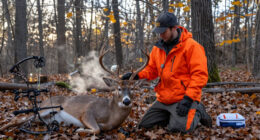
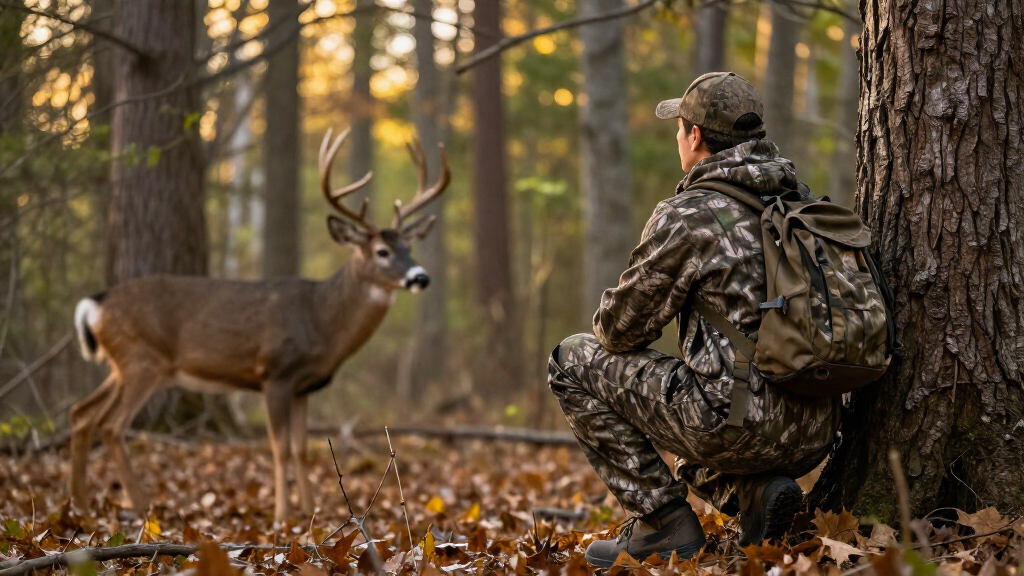
The report’s central example is the writer’s account of taking a non-typical buck while positioned on a fallen tree and its root wad. He sat roughly 25 yards uphill from a well-used ridgeline trail, with rubs nearby, and placed estrus-scent drippers at two points along the route. He says he was upwind of the trail and could watch and listen across the terrain. When he heard a deer behind him, the root wad screened his movement as he picked up his bow.
The buck, later scored at 154 inches and change, sniffed one dripper and continued along the trail. The writer says he drew while the animal was moving, bleated twice, and made a lung shot. The deer ran about 40 yards before stopping and falling. This is an individual account, not evidence that scent lures or calling will produce the same result for other hunters.
The report’s five practical rules follow from that setup. First, use natural concealment, such as blowdowns, trunks or dense cover. Second, pick a location that allows you to see and hear approaching deer. Third, plan in advance where the bow will rest and clear noisy leaves around it. Fourth, keep the wind in your favor. Fifth, set up near trails or sign that indicate deer activity, while allowing for more than one approach route. The writer cautions that a hunter’s movement can be detected when a buck is looking in that direction.
When a Tree Stand Is Not Practical
Ground setups give bowhunters another option in places with few suitable stand trees, where stands have not been installed, or when climbing is not wanted. They can also allow a hunter to adjust position during the rut, when deer movement may come from several directions. The report says portable blinds are available but may limit mobility in those conditions; it favors natural cover for the kind of flexible setup described.
The account also underscores the trade-off: a ground hunter may have to manage concealment and movement at close range, and a buck can detect motion through peripheral vision. The method depends on specific conditions and preparation, not simply choosing to sit on the ground. The story is useful as field guidance, but its personal success story should not be treated as a guaranteed outcome or a comparison proving ground hunting beats elevated setups.
ground hunting blinds for bowhunting
As an affiliate, we earn on qualifying purchases.
As an affiliate, we earn on qualifying purchases.
Ground Hunting in the Report
Hunting deer from ground level is not presented as a new practice. Outdoor Life notes that Native Americans hunted deer this way and that elevated stands were not a common feature of bowhunting in the era of Fred Bear and other early modern bowhunting figures. The article’s point is limited: ground hunting remains a viable option, though its suitability depends on the setting and the hunter’s approach.
The report also profiles Jim Brush of Galesville, Wisconsin, and George Mann of Opelika, Alabama, as experienced ground hunters. Brush often used a folding chair near a blowdown and rattled antlers during the rut. Mann cleared shooting lanes around well-used trails and sat at their center. These examples show different ways to plan a ground position; they are not independent tests of success rates.
“It’s not necessarily more effective most of the time, but then again, there are days when it’s the best expediency.”
— Outdoor Life report author
As an affiliate, we earn on qualifying purchases.
What the Account Cannot Establish
The article does not provide comparative data on success rates for ground and stand hunting, nor does it establish how often its tactics work across different terrain, weather or deer behavior. The account of the 154-inch buck is the author’s own experience, and the report does not independently verify the hunt details or quantify the effects of the scent drippers, calling or rut timing.
It is also unclear how broadly the five principles apply to hunters using different equipment, local regulations or hunting conditions. The report offers field advice, not a controlled study or a guarantee of results. Readers should check applicable local hunting rules before using scent products or calling methods.
portable hunting tree stand alternative
As an affiliate, we earn on qualifying purchases.
As an affiliate, we earn on qualifying purchases.
Applying the Advice Afield
The report does not announce a follow-up study or a future test of these methods. For hunters considering a ground setup, its practical next steps are to identify active trails and cover, check wind direction, choose a position with clear sightlines, and prepare equipment and footing before deer approach. Hunters should adapt those choices to local conditions and regulations, and avoid assuming that one successful account predicts their own results.
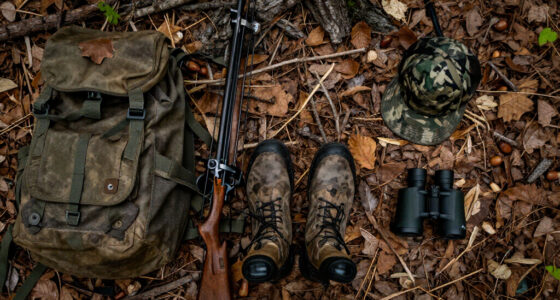
natural cover camouflage for hunting
As an affiliate, we earn on qualifying purchases.
As an affiliate, we earn on qualifying purchases.
Key Questions
What are the five rules for hunting mature bucks from the ground?
Use natural cover, choose a position with useful visibility and sound awareness, limit movement and noise, account for wind, and set up near active trails or sign. These are practical principles drawn from the Outdoor Life report, not a guarantee of success.
Does the report say ground hunting is better than using a stand?
No. The writer says it is not necessarily more effective most of the time, but can be the best option when there is no suitable stand location or a hunter does not want to climb.
How did the writer take the buck described in the article?
He says he hunted from a fallen tree behind its root wad near a ridgeline trail, with scent drippers positioned along the route. After a buck approached, he drew, bleated and made a lung shot; the deer ran about 40 yards before falling.
Why does the report emphasize controlling movement?
It warns that a buck may detect a hunter who moves while the animal is looking in that direction. Concealment, advance preparation and waiting for a better moment to move are presented as ways to reduce that risk.
Source: rss
Halloween Picks
halloween
As an affiliate, we earn on qualifying purchases.