To build faster access into your emergency kit, customize it with your most-used items in easy-to-reach spots and clearly label all containers with visual cues like icons or colors. Use transparent bins for quick content visibility and organize items into logical zones based on urgency. Keep all zones consistent across storage sites and practice retrieval regularly. If you want to learn more about creating efficient emergency kits, keep exploring these helpful strategies.

Get emergency and outdoor gear delivered free with Prime
- Fast, free delivery on millions of items
- Prime Video, Amazon Music and more included
- Member-only deals all year
Key Takeaways
- Organize essential items in clearly labeled, transparent containers for quick identification and easy access.
- Prioritize high-use items by placing them at the top or in front of storage zones.
- Use color-coding and icons to categorize supplies for rapid recognition.
- Design storage with one-handed openable, durable containers for swift retrieval.
- Regularly review and practice accessing contents to improve response speed and muscle memory.

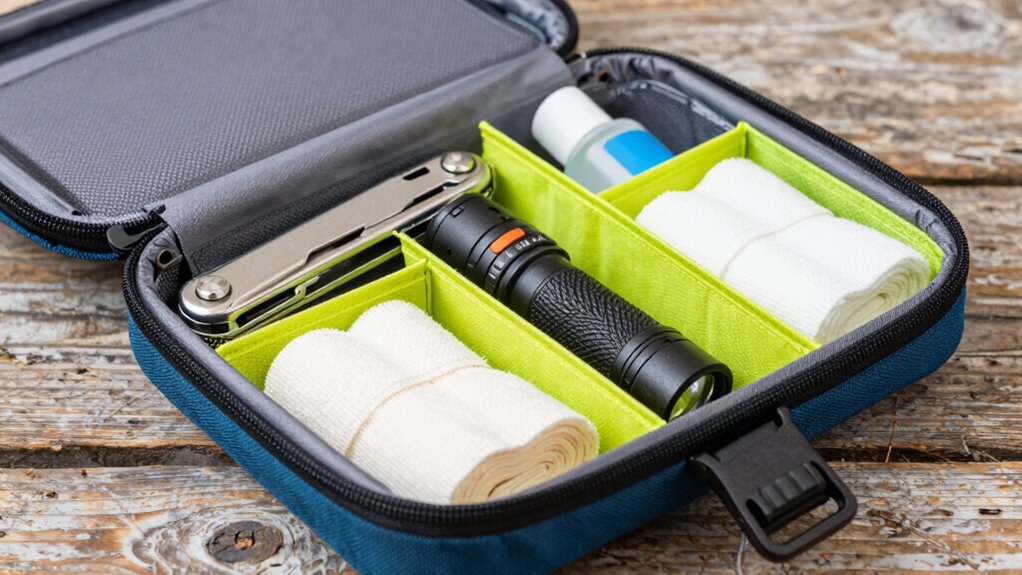
When an emergency strikes, quick access to your supplies can make all the difference. You need to be able to grab what you need swiftly, without fumbling through clutter or searching blindly. To do this, you should focus on personalized organization—tailoring your emergency kit to your specific needs and habits. Think about what items you use most often or might need in a hurry. Keep these essentials in easy-to-reach spots so you don’t waste precious seconds digging through the entire kit. This approach guarantees your kit isn’t just a collection of supplies, but a well-organized system designed for rapid response. Incorporating inclusive casting and diverse standards can ensure your kit considers different needs and accessibility requirements. Implementing quick retrieval methods is vital. Use clearly labeled containers and compartments so you know exactly where everything is. Transparent bins or pouches work well because you can see inside without opening them, speeding up your access. Smaller, dedicated pouches for first aid supplies, medications, or tools keep everything sorted and accessible. Consider color-coding or using icons to identify different categories at a glance, which saves time when you’re under pressure. Additionally, place frequently used items at the top or in front, so you don’t have to shuffle through unopened or less-urgent supplies. Another effective strategy is to create a logical layout for your kit. Divide it into zones based on the type of item or the urgency of use. For example, keep first aid items together, along with hygiene supplies, and have a separate section for tools like flashlights or multi-tools. This logical setup helps you locate things quickly and guarantees nothing gets buried or overlooked. Proper visual contrast and signage are essential to ensure quick identification, especially in stressful situations. This is especially important when considering color accuracy and contrast ratios in your kit’s signage or labels, as clear visuals can significantly improve quick identification. Additionally, incorporating natural elements or environmentally conscious materials can promote sustainability in your kit organization. For emergency kits stored in cars, homes, or workplaces, make sure these zones are consistent across all locations so you develop muscle memory for accessing supplies rapidly. Additionally, investing in quality containers that are durable and easy to open with one hand can further enhance quick access. Avoid complicated closures or fragile materials that might slow you down or break in tough situations. Regularly review and update your kit, removing expired items and reorganizing as needed. Practice retrieving supplies from your kit periodically, so the process becomes second nature. This kind of personalized organization combined with quick retrieval methods turns your emergency kit into a reliable tool that works for you when it matters most. The goal is to streamline access, reduce hesitation, and guarantee you’re prepared to respond immediately, no matter what kind of emergency occurs.
transparent emergency kit storage containers
As an affiliate, we earn on qualifying purchases.
As an affiliate, we earn on qualifying purchases.
Frequently Asked Questions
What Are the Best Materials for Quick-Release Containers?
You should choose quick-release containers made from durable materials like high-impact plastics or aluminum for strength. Lightweight options, such as polypropylene or polycarbonate, make them easy to carry and access during emergencies. Look for containers with secure, easy-to-open latches or quick-release mechanisms that allow you to access your supplies swiftly. Combining durability with lightweight design guarantees your emergency kit remains reliable and portable when time matters most.
How Can I Organize Items for Rapid Access?
To organize items for rapid access, categorize your emergency kit with clear labels and use compartments for essentials like food storage and first aid essentials. Keep frequently used items at the front or top for quick grab-and-go. Use quick-release containers for small, crucial supplies. Regularly check and rearrange your kit, ensuring everything is in its designated spot, so you can find what you need swiftly during an emergency.
What Size Should an Emergency Kit Be?
Don’t bite off more than you can chew; choose an emergency kit size that fits your needs without being a burden. For storage solutions, opt for a compact yet all-encompassing container, prioritizing durability to withstand rough conditions. A small to medium-sized kit is usually ideal for quick access, ensuring you can carry essentials without being weighed down. Keep it organized so you can grab what you need in a flash.
How Often Should I Update My Emergency Kit?
You should update your emergency kit at least once a year to guarantee all items are current and functional. Regular kit maintenance involves checking storage options to keep supplies dry and accessible, replacing expired food, water, and medications, and adding new essentials as needed. Set reminders, and incorporate your kit updates into annual routines, so you’re always prepared with a well-maintained kit that offers faster access when emergencies strike.
Are There Digital Tools to Improve Access to Emergency Supplies?
Yes, digital tools can improve access to emergency supplies. A digital inventory app helps you track what’s in your kit, ensuring you know exactly where everything is and when to restock. Mobile alerts notify you of expired items or shortages, keeping your kit ready. These tools streamline managing your emergency supplies, making it easier to find what you need quickly during an emergency and ensuring your kit stays up-to-date.
quick access first aid kit organizer
As an affiliate, we earn on qualifying purchases.
As an affiliate, we earn on qualifying purchases.
Conclusion
By organizing your emergency kit for quick access, you can considerably reduce response time during a crisis. Remember, studies show that having a well-prepared kit can improve survival rates by up to 50%. Keep essentials within easy reach, label compartments clearly, and practice retrieving items quickly. With a bit of planning, you’ll be ready to act swiftly and confidently when every second counts, giving you peace of mind knowing you’re prepared for the unexpected.
color-coded emergency supplies labels
As an affiliate, we earn on qualifying purchases.
As an affiliate, we earn on qualifying purchases.
one-handed opening emergency storage bins
As an affiliate, we earn on qualifying purchases.
As an affiliate, we earn on qualifying purchases.
Halloween Picks
halloween
As an affiliate, we earn on qualifying purchases.