
TL;DR

Get emergency and outdoor gear delivered free with Prime
- Fast, free delivery on millions of items
- Prime Video, Amazon Music and more included
- Member-only deals all year
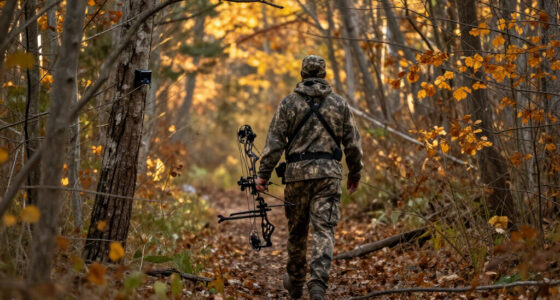
Outdoor Life’s Nov. 3 report presents North Country hunter Brett Joy’s methods for pursuing mature whitetails in large, low-density forests. His approach combines digital mapping, on-the-ground scouting, trail cameras and sustained hunting effort; his reported Nov. 19 rut peak applies to his area, not all deer ranges.
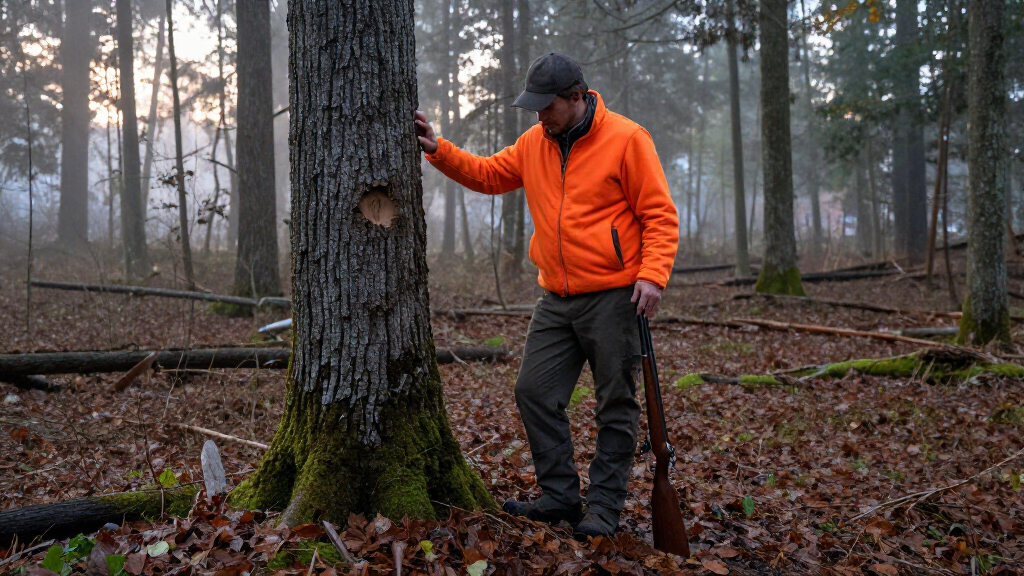
Outdoor Life published advice from North Country hunter Brett Joy on Nov. 3 for pursuing mature whitetails in the expansive forests of New England and the Upper Midwest, where low deer densities and a lack of obvious field edges can make deer difficult to locate. Joy recommends pairing digital mapping and trail cameras with in-person scouting, local rut data and patience, rather than moving rapidly between hunting spots.
Joy, a member of the Just Hunt Club, told Outdoor Life that he begins by using digital maps to find places where habitat types meet. In big woods, those transitions may include hardwoods beside softwoods, swamps next to mature timber, or mature forest bordering recently logged growth. He then checks promising areas on foot, ideally at least a mile from a road.
Joy’s account describes bucks in these forests as using multiple bedding areas that may be widely separated. He said deer can bed on different mountain points, in logged areas or in swamps, and may shift between places from day to day. He also said bucks may return to some areas year after year, even if a hunter does not see one during a particular week.
Because thick forest limits opportunities to observe deer from a distance, Joy relies heavily on trail cameras. He often places them at large community scrapes, which can draw deer in a broad landscape, and pays attention to secluded, higher-elevation locations. He said he typically runs cameras from about Oct. 15 to Dec. 15 to cover the rut period. Those dates describe his practice, not a universal prescription.
Why Big Woods Hunting Takes Time
Joy’s advice addresses a challenge that differs from hunting farmland: in large forest tracts, there may be no crop fields or readily visible concentrations of deer to guide a hunter. The report says some areas have about five deer per square mile, making signs of deer and likely travel routes less obvious. A method that combines maps, scouting and camera observations can help hunters narrow down where to spend time without assuming that a single sighting or quiet stretch means deer have left the area.
The emphasis on staying put also has practical implications. Joy said hunters may need to commit to a full week of hunting and spend full days afield, rather than expecting results from one weekend. He varies stand locations to account for wind direction, but said he avoids constantly switching areas once he has chosen one. That is his personal strategy, not a guarantee of success or a rule for every property.
Popular right now

Sony BRAVIA XR8B 65-Inch 4K OLED Google TV (K-65XR8B)

Philips 2200 Series Fully Automatic Espresso Machine with Classic Milk Frother, 2 Coffee Varieties, Intuitive Touch Display, Ceramic Grinder

De'Longhi Rivelia Fully Automatic Espresso Machine with Milk Frother, White
As an affiliate, we earn on qualifying purchases.
How Joy Reads the North Country
In the report, Joy’s approach rests on the idea that whitetails use habitat edges across their range, though the relevant edges look different in forest country than around agricultural fields. In the big woods, the boundaries between forest types, wetlands and recently cut areas can provide clues worth checking. He recommends moving from map-based identification to in-person scouting, rather than treating a digital map as proof that deer are present.
Joy also describes rut hunting as a matter of locating routes between groups of does. He said doe groups can be sparse in his area, with as few as three does across 500 acres, so bucks may travel farther while searching. He looks for travel corridors, major scrapes or pinch points near doe groups. These are observations attributed to Joy and reflect his hunting area; the report does not establish that the same deer distribution applies across the North Country.
To estimate peak rut activity locally, Joy reviewed several years of his own camera images and photos from a friend, then compared those observations with a biologist’s New Hampshire fawn-conception data. He said both pointed to Nov. 19 as a peak date in his area. He advised hunters elsewhere to examine their own camera records and local historical information instead of applying that date broadly.
““Whitetails, whether they’re in a cornfield in Iowa or on a mountain in New Hampshire, are edge habitat creatures.””
— Brett Joy, as quoted by Outdoor Life
Local Rut Dates May Differ
The report does not establish a single rut peak date for the wider North Country. Nov. 19 is Joy’s estimate for his area, drawn from camera photos and data he compared with a biologist’s New Hampshire conception-date information. Rut timing and deer movement elsewhere may differ; the report provides no comparable data for other locations.
Joy’s tactics are based on his own experience. The article does not quantify how often his methods produce mature bucks, compare them with other strategies or provide a controlled measure of effectiveness. His observations about bedding areas, deer density and camera placement should not be treated as confirmed patterns for every forest or hunting unit.
Build a Local Hunting Plan
For hunters applying Joy’s recommendations, the next step is to map habitat transitions, verify promising locations on foot and collect observations over time. Trail-camera records can help identify repeated deer activity and local timing, but hunters will need to interpret those records for their own area rather than rely on Joy’s Nov. 19 estimate.
Joy’s reported camera period runs through Dec. 15, while his broader advice is to commit to an area and allow time for deer movement to become apparent. The source report does not announce a new study or scheduled follow-up; it presents his methods and experience in an Outdoor Life podcast interview published with the article.
Key Questions
What is the main advice from Brett Joy?
He recommends using digital maps to locate habitat transitions, then scouting those areas in person and using trail cameras to track deer activity. He also stresses patience and sustained effort.
Does Joy say Nov. 19 is the peak rut date everywhere?
No. He identified Nov. 19 as a peak date in his area after reviewing local camera photos and comparing them with New Hampshire conception data. He advises hunters to study information from their own locations.
Where does Joy place his trail cameras?
He said he often uses large community scrapes and focuses on secluded, higher-elevation areas. He typically runs cameras from about Oct. 15 through Dec. 15.
Why does Joy recommend sticking with one hunting area?
He says deer may use multiple bedding areas and can be difficult to encounter in vast forests, so a quiet period does not necessarily mean a buck has left. He changes stand locations for wind but says he generally avoids jumping from spot to spot.
Source: outdoorlife.com