TL;DR

Get emergency and outdoor gear delivered free — and shop member deals
- Fast, free delivery on millions of items
- Access to Prime Big Deal Days deals on October 6–7
- Prime Video, Amazon Music and more included
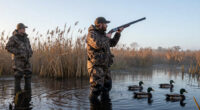
An Outdoor Life report published Oct. 4 describes float hunting—using a canoe to reach isolated deer habitat or drift along a river—as a way to hunt away from crowded access points. The report recounts successful hunts but does not establish that the tactic is best for all hunters; access, safety, and rules vary by location.
Outdoor Life published a report Oct. 4 describing canoe-based deer hunting as a way to reach isolated river corridors and hunt away from other people. The account documents successful hunts by its writer and his wife, but it is a first-person report, not evidence that float hunting is the best or most effective approach for every hunter.
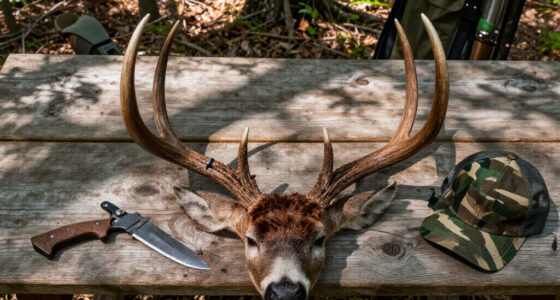
The writer recounts spotting five bucks while drifting on a river, then consulting topographic maps to locate the area. The site was bounded by three rivers, with no roads within about six miles. On a return trip, he paddled up a stream, crossed a beaver dam, camped near an oak ridge and hunted for five days. He reported seeing bucks each day, taking an eight-pointer and encountering no other people or signs of hunters.
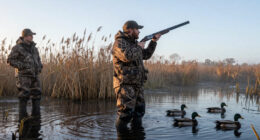
The report also describes a separate trip on Wisconsin’s East Fork of the Black River, where the writer and his wife floated downstream with bows. They placed a vehicle at their planned exit point and arranged transport to the launch. The account says they saw about a dozen deer and took two bucks in one day. Their approach included paddling quietly, staying close to the bank and stopping at bends to scan ahead.
The report says canoe hunting is legal in every state, while also warning that rules vary and hunters should check their local regulations. It does not provide a state-by-state legal review. The described encounters and outcomes are the writer’s personal experiences and do not establish typical success rates.
River Access Can Reduce Crowding
For hunters facing competition at familiar parking areas and trails, a river can offer another route into deer habitat. The account’s central point is practical: water access may reach overlooked ground, including areas separated from roads by difficult terrain. That can change where a hunter looks, rather than simply how the hunter moves through a well-known hunting area.
Float hunting also combines transportation and observation. A canoe can carry camping and hunting gear into remote sections, while a quiet drift may let hunters scan riverbanks for deer. The report describes specific tactics, but conditions such as current, wind, bank cover and visibility differ by waterway. Its examples should be read as illustrations, not a guarantee of close encounters or a recommendation suitable for every setting.
The approach has planning demands that matter to safety and legality. Hunters need to know how they will launch and exit, where they can camp, how they will transport harvested game, and whether local rules permit hunting from or near a watercraft. A successful route on one river does not settle those questions elsewhere.
As an affiliate, we earn on qualifying purchases.
Two Trips Behind the Report
The report draws on the writer’s experience with float hunting over several decades. In one episode, an incidental sighting of bucks prompted him to study a map and return to a remote area with a bow and camping equipment. In another, he and his wife planned a nearly day-long float, leaving a vehicle at the endpoint and starting before daylight so they would be away from town as morning arrived.
On the Wisconsin trip, the pair used a canoe with noise-reducing details, including rubber-covered paddles and carpeting on the floor. They watched the river ahead at bends and used the bank and a fallen tree for concealment. These details explain how the reported hunts unfolded; they are not independently tested guidance, and the story does not compare the method with land-based hunting.
The article’s headline calls the tactic the “best way” to get away from other hunters. The evidence presented is narrower: the writer reports finding an area with no people during one five-day hunt and describes successful river trips. There is no broader survey or comparison supporting a universal ranking.
“I saw bucks every day and finally scored on an eight-pointer.”
— Outdoor Life report, recounting the writer’s return to the remote area
deer hunting gear for water access
As an affiliate, we earn on qualifying purchases.
As an affiliate, we earn on qualifying purchases.
Local Rules and Results Vary
The report does not identify the regulations for every state or river, and its broad assertion that canoe hunting is legal in every state is not accompanied by a detailed legal source. Rules may differ on hunting from a boat, possession or use of bows, access to riverbanks, camping and transporting game. Readers should consult current regulations and relevant land or water managers before acting.
It is also unclear how often float hunters encounter deer or other hunters compared with people using roads and trails. The article supplies no sample size beyond its own trips, no success-rate data and no comparison with other tactics. River conditions, public access, private boundaries and seasonal restrictions can also affect whether a route is practical.
As an affiliate, we earn on qualifying purchases.
Check Routes Before Launch
The report offers no scheduled follow-up or new policy announcement. For hunters considering the tactic, the next step is to review the current season’s regulations for the specific location, confirm launch and takeout access, and plan a safe way to transport equipment and any harvested deer. They should also check river conditions and identify a route that can be completed within available daylight and weather conditions.
Whether float hunting provides less-crowded access will depend on the waterway and local hunting pressure. The article presents it as an option grounded in the writer’s experience; broader evidence about its effectiveness is not provided.
As an affiliate, we earn on qualifying purchases.
Key Questions
What is float hunting for deer?
Float hunting uses a canoe or similar craft to travel a river, reach hunting ground or scan riverbanks for deer. The Outdoor Life report describes both drifting downstream and paddling to remote areas before setting up camp.
Does the report prove this is the best way to avoid other hunters?
No. The headline makes a broad claim, but the report offers first-person examples, including one hunt where the writer said he saw no other people. It gives no comparative data showing the tactic is best generally.
Is canoe-based deer hunting legal everywhere?
The report says it is legal in every state but also says regulations vary. It does not list state-specific rules. Hunters should check current local and state regulations for the river and method they plan to use.
What planning did the hunters describe?
They planned a launch and pickup location, carried gear by canoe, and used maps to identify remote terrain. The report also describes quietly scanning river bends and staying near the bank. Those examples do not replace route, access and safety planning for a particular waterway.
Source: rss
Halloween Picks
halloween
As an affiliate, we earn on qualifying purchases.