TL;DR

Get emergency and outdoor gear delivered free with Prime
- Fast, free delivery on millions of items
- Prime Video, Amazon Music and more included
- Member-only deals all year
Outdoor Life published a practical guide on Oct. 26, 2026, explaining how hunters can skin a deer before butchering it. The report says a sharp knife is the essential tool, while hanging the field-dressed animal can make the work easier and help keep meat clean; the best method depends on the hunter’s setup and plans.
Outdoor Life published a guide on Oct. 26, 2026, explaining how hunters can remove a deer’s hide before butchering it, with advice on knives, hanging the carcass and adapting the process to the available equipment. The report frames skinning as a practical step in processing harvested game and says there is no single required order or technique for the task.
The guide says the one essential item is a sharp skinning knife. A knife sharpener, boning or filet knife, gloves, headlamp, saw or loppers, and a hoist or rope system are listed as optional equipment that may help, depending on the worksite. It warns against using a dull knife, which the report says can make the work slower and more dangerous.
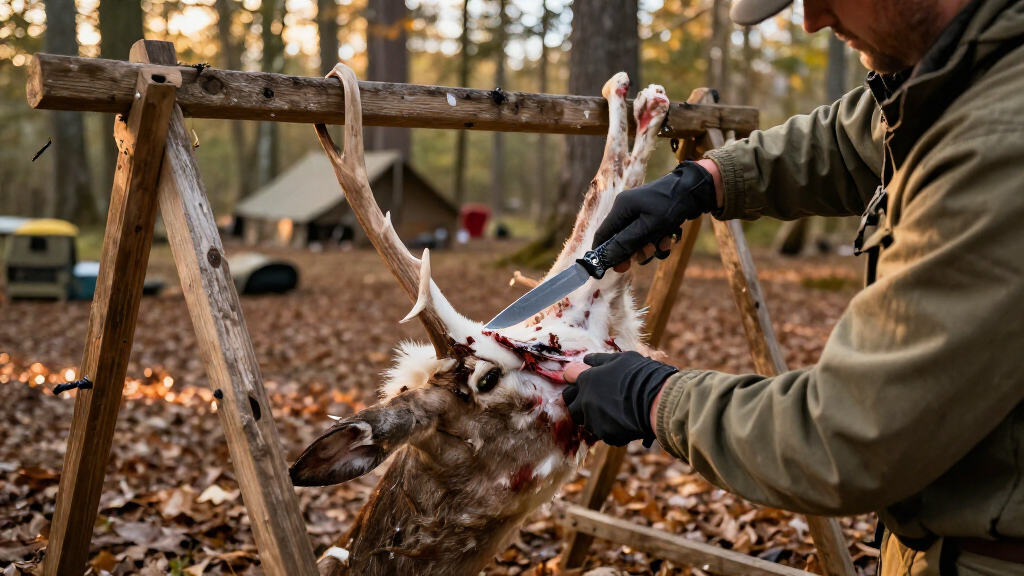
Before skinning, the deer should be field-dressed, meaning its internal organs have been removed. The guide says hunters can work on the ground or a flat surface, particularly when using a field-based gutless approach, but hanging the animal is often easier for hunters processing it near home. Elevating the carcass can also help keep meat away from dirt and hair.
Outdoor Life presents hanging head-up and head-down as workable choices with different trade-offs. Hanging head-up can make it easier to remove the hide over the shoulders and forelegs; head-down leaves the animal positioned for butchering. The report quotes deer outreach specialist Cheyne Matzenbacher, a former processor, as saying he and coworkers would skin deer hanging by the head or neck, then turn them head-down for butchering.
Keeping the Hide Off the Meat
Skinning is a necessary step for hunters who plan to butcher their own deer. The report’s practical point is that preparation and a suitable setup can make the work more manageable: a sharp knife is the baseline, while a hoist or rope can help raise the animal and adjust its position.
Hanging the carcass may also reduce contact between the meat and dirt, bacteria and loose hair, according to the guide. For hunters transporting game, the report says a vehicle-mounted hitch hoist can serve as a mobile processing station. It notes that skinning and quartering may also matter for compliance with rules on transporting carcasses, which vary by jurisdiction and may restrict moving bone-in meat, spinal columns or heads across county or state lines.
The advice is not a substitute for local regulations or safe food-handling practices. The source gives general technique and equipment guidance, but does not provide a full set of temperature, sanitation or jurisdiction-specific instructions.
Popular right now

Ninja Foodi Air Fryer 10 Qt DualZone 6-in-1 Black DZ302

Ninja Foodi DZ201 8-Quart DualZone 6-in-1 Air Fryer

Dyson V8 Cordless Vacuum
As an affiliate, we earn on qualifying purchases.
Field Dressing Comes First
The article is aimed at hunters who intend to process their own harvest. It distinguishes the common hanging approach from field processing in backcountry settings, where hunters may skin and quarter an animal on the ground, place the meat in game bags and carry it out. Outdoor Life says hunters planning that approach should learn the gutless method rather than assume a hanging setup will be available.
Its hanging advice reflects different stages of processing. Matzenbacher says the deer-processing crew he worked with skinned animals head-up or by the neck and then flipped them head-down for butchering. The guide also cautions hunters seeking a shoulder mount not to hang a buck by the neck, as that can damage the cape; hanging by the antlers is presented as an alternative, with a warning about the risk of loosening antlers as deer approach shedding season.
““Think about how a deer jumps over a fence: His legs are folded up against his body. Let gravity help you, and let the natural way a deer is going to fold up help you skin it. Don’t fight it.””
— Cheyne Matzenbacher, as quoted by Outdoor Life
Methods Depend on the Setup
The guide says hunters use different techniques and that there is no one right way or right order to skin a deer. The best option depends on whether the hunter is in the backcountry or near a vehicle, what lifting equipment is available, and whether the hide or cape is being kept for a mount.
The supplied report text ends while discussing what to do in hot weather, so it does not provide the remainder of that advice or all of the promised step-by-step instructions. It also does not specify a single knife design, a universal completion time, or local rules for carcass transport. Those details should not be inferred from the general guidance.
Check Local Rules Before Transport
Hunters planning to process a deer should first confirm that it has been field-dressed, gather a sharp knife and choose a stable work area suited to their location. Those using a hanging setup can select a head-up or head-down position based on whether they are skinning, butchering or protecting a cape for mounting.
Before moving a carcass, hunters should check the current wildlife and carcass-transport rules for the relevant county and state. Outdoor Life’s article offers general preparation guidance; the source does not announce a new regulation or a formal change in hunting policy.
Key Questions
What tool does the guide say is essential?
Outdoor Life identifies a sharp skinning knife as the only required tool. It lists a sharpener and other equipment as optional aids.
Does a deer have to be hung before skinning?
No. The report says skinning can be done on the ground or a flat surface, including in backcountry field-processing situations. It says hanging is often easier when hunters are processing near home.
Should a deer hang head-up or head-down?
Either orientation can work, according to the guide. Head-up may help with the shoulders and forelegs; head-down can leave the carcass ready for butchering.
What should hunters do before skinning?
The guide says to field-dress the deer first by removing its internal organs. Hunters should also prepare a suitable work area and check applicable transport rules before moving the carcass.
Source: outdoorlife.com