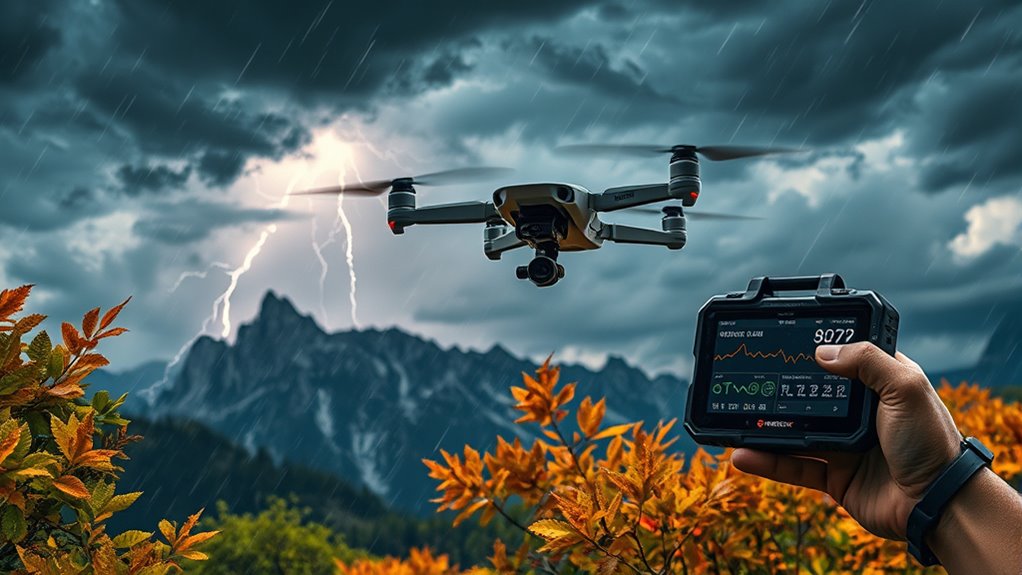
During equinox shifts, unpredictable weather swings like sudden cold snaps or heatwaves can catch you off guard. Advanced technology, such as satellite systems and weather models, helps you monitor these rapid changes in real time, improving your chances to prepare and adapt. Despite these tools, the natural complexity of climate systems means surprises are still common. To better understand how modern tech manages these wild weather shifts, keep exploring the details that follow.
Key Takeaways
- Satellite technology provides real-time monitoring of atmospheric changes during equinox periods.
- Advanced weather models improve predictions of sudden temperature shifts and storm development.
- Climate sensors track localized environmental fluctuations, aiding in early warning systems.
- Machine learning algorithms analyze complex data to forecast unpredictable weather swings.
- Continuous technological innovation enhances preparedness and adaptation strategies for wild weather events.

Have you ever wondered what makes the equinox such a challenging event to observe and understand? As the moment when day and night are roughly equal, the equinox marks a significant seasonal changeover, but predicting and interpreting its effects can be surprisingly complex. This is especially true because the equinox isn’t just a simple point on the calendar; it’s part of a dynamic process influenced by Earth’s tilt and orbit. During these periods, climate adaptation becomes critical, as ecosystems and human activities adjust rapidly to shifting conditions. The delicate balance of light and darkness prompts a series of environmental changes that can be unpredictable, making it difficult for scientists and weather forecasters to anticipate the full scope of weather swings that often accompany the equinox.
One of the key challenges lies in understanding the seasonal changeover that the equinox signals. While it signifies an equal distribution of sunlight, the actual temperature changes don’t happen overnight. Instead, they unfold gradually, influenced by local geography, atmospheric conditions, and ocean currents. This gradual process complicates efforts to predict weather patterns accurately. You might notice sudden cold snaps or unexpected warmth during these periods, which can disrupt agriculture, travel plans, and daily routines. These fluctuations are part of the climate adaptation process that plants, animals, and humans all undergo during seasonal shifts, but they also pose hurdles for technology and infrastructure designed to handle more stable conditions. Additionally, ongoing technological advancements, like satellite systems, continuously improve our ability to monitor these rapid changes in real time.
Understanding the equinox’s gradual temperature changes highlights the complexity of seasonal climate adaptation.
To cope with the wild weather swings that often follow the equinox, modern technology plays an increasingly essential role. Advanced satellite systems, weather models, and climate monitoring tools help you track these rapid changes in real time. These innovations allow you to anticipate sudden storms, temperature drops, or heatwaves, giving you time to prepare or adjust your plans. However, despite technological advancements, the inherent unpredictability of the equinox’s climate effects remains a challenge. The complex interplay of atmospheric dynamics and seasonal changeover means that no single forecast can be perfectly accurate.
In essence, understanding the equinox’s challenges involves recognizing its role as a natural trigger for climate adaptation. It underscores the importance of ongoing observation and technological innovation to stay ahead of the unpredictable weather swings that come with spring and fall. The event’s beauty and significance lie in its power to remind us how deeply interconnected Earth’s systems are, and how essential it is to keep refining our tools and knowledge to better navigate these seasonal transitions.
Frequently Asked Questions
How Do Weather Swings Affect Renewable Energy Reliability?
Weather swings can markedly impact your renewable energy reliability by causing solar variability and wind unpredictability. When sunny days turn cloudy or wind speeds fluctuate, your solar and wind power outputs decrease, making your energy supply less stable. To counteract this, you should invest in energy storage solutions and diversify your renewable sources, ensuring a steady power supply despite the unpredictable weather patterns during spring and fall.
What Wearable Tech Helps Monitor Health During Unpredictable Weather?
Did you know that over 40% of wearable tech users track their health daily? To stay safe during unpredictable weather, fitness tracking devices with biometric sensors are your best bet. They monitor heart rate, body temperature, and oxygen levels, providing real-time insights. This helps you adjust activity levels and stay healthy, no matter how wild the weather gets. Wearables make it easier to prioritize your health when conditions change suddenly.
Can AI Predict Sudden Weather Changes During Equinoxes?
AI can predict sudden weather changes during equinoxes by leveraging advanced climate modeling and meteorological algorithms. These tools analyze vast amounts of data to identify patterns and forecast rapid shifts in weather. By continuously updating predictions with real-time information, AI enhances accuracy, helping you prepare for wild weather swings. So, with ongoing innovations, you can stay ahead of sudden weather changes and make smarter decisions during these unpredictable shift periods.
What Innovations Are Improving Weather Forecasting Accuracy?
You’re benefiting from innovations like satellite advancements and data analytics tools that considerably improve weather forecasting accuracy. Satellites provide real-time, high-resolution images of atmospheric conditions, while advanced data analytics help process massive datasets to identify patterns and predict sudden weather changes. These technologies work together, enabling meteorologists to deliver more precise forecasts, especially during unpredictable seasons like spring and fall, helping you stay prepared for wild weather swings.
How Do Smart Home Systems Adapt to Rapid Temperature Shifts?
Did you know 85% of smart homes now use dynamic climate adaptation? You’ll find that your smart home systems quickly respond to rapid temperature shifts by integrating home automation with real-time data. They automatically adjust thermostats, blinds, and vents to maintain comfort. This seamless home automation integration guarantees your environment stays comfortable despite unpredictable weather, giving you peace of mind and energy savings during sudden temperature changes.
Conclusion
As you navigate the wild weather swings of spring and fall, remember you’re not powerless—technology is your steadfast ally. It’s like a trusty compass guiding you through unpredictable storms, helping you adapt and stay safe. So, embrace these innovations with confidence; they’re your secret weapon against nature’s surprises. After all, just as the seasons change, so can your approach—turning challenges into opportunities with the right tools at your side.