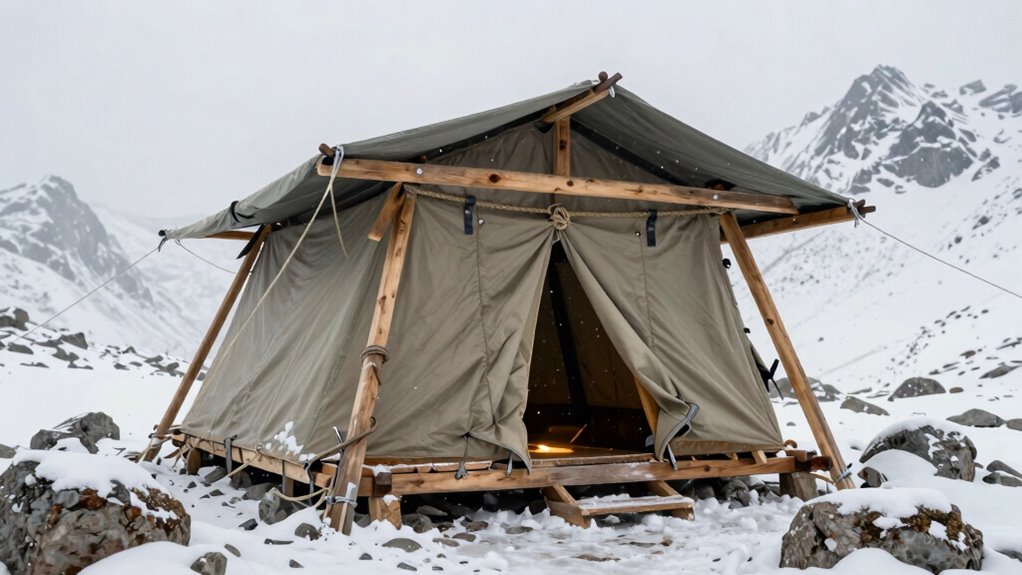

To build a reliable basecamp shelter in harsh conditions, focus on strategic design with solid insulation like foam pads, snow, or natural materials. Elevate your shelter off the ground to reduce heat loss and add insulation to walls and roof to trap warmth. Use natural resources wisely for insulation and signaling, and guarantee proper ventilation to control moisture. Keeping emergency tools close and choosing visible locations boosts your chances of rescue. Explore further to master essential survival strategies.

Get emergency and outdoor gear delivered free with Prime
- Fast, free delivery on millions of items
- Prime Video, Amazon Music and more included
- Member-only deals all year
Key Takeaways
- Use strategic design with insulated walls, roof, and ground barriers to maintain warmth and prevent heat loss.
- Elevate the shelter slightly off the ground with insulating materials beneath to reduce cold transfer.
- Incorporate natural resources like snow, pine branches, or foam pads to enhance insulation and durability.
- Ensure proper ventilation to prevent moisture buildup and maintain a dry, thermally efficient environment.
- Add visible markers and signaling tools near the shelter for easy rescue and increased safety.

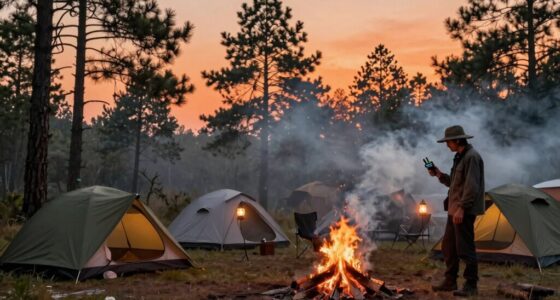
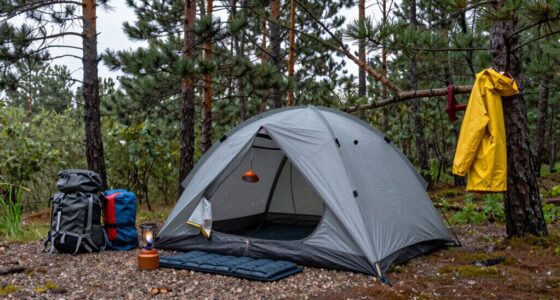
Ever wondered how to create a shelter that keeps you safe and comfortable at your basecamp? Building a reliable shelter in harsh conditions isn’t just about throwing together some branches or a tarp. It’s about strategic planning and understanding key elements like shelter insulation and emergency signaling. When you’re in a tough environment, these factors can make the difference between life and danger. Good shelter insulation helps maintain your body heat, especially when temperatures drop unexpectedly. Use thick layers of insulating materials such as foam pads, pine branches, or even snow to create a barrier between you and the cold ground. Elevating your shelter slightly off the ground can prevent heat loss, and adding layers of insulating material on the walls and roof traps warm air inside. This way, you stay warmer, reducing the risk of hypothermia and fatigue. Remember that insulation isn’t just about warmth; it’s also about creating a barrier that shields you from wind and moisture, which can quickly sap your body heat. Incorporating insulation techniques into your shelter design maximizes warmth and comfort in extreme conditions. Ensuring proper ventilation is also crucial to prevent condensation buildup, which can compromise your insulation and lead to dampness inside the shelter. Using natural resources wisely can also help you enhance your insulation, especially when supplies are limited. Additionally, selecting materials with good thermal properties can significantly improve your shelter’s ability to retain heat.
In harsh environments, your shelter also needs to serve as a beacon for rescue or help. Emergency signaling is essential, especially if you’re in a remote location. Incorporate visible markers like bright-colored flags, reflective tape, or signal mirrors on your shelter so that rescue teams can spot you from a distance. If you have a whistle or a loud device, keep it close for quick access, and use it periodically to alert search parties of your location. Building your shelter near natural landmarks or open areas enhances visibility and makes it easier for others to find you. Additionally, consider creating a signal fire pit, using rocks or cleared ground, where you can light a fire to produce smoke during the day or a bright flame at night. Always keep some emergency signaling tools within arm’s reach, so you can activate them immediately if needed. Remember that understanding biodiversity can also help you utilize natural resources effectively while building and maintaining your shelter, especially when sourcing insulating materials or signaling aids. Being aware of local flora and fauna can provide insights into materials that may be available for insulation or signaling. Recognizing how different species interact with their environment can guide you in selecting the most effective natural resources for survival.
A sturdy shelter that’s well-insulated and equipped with emergency signaling creates a safe haven in tough conditions. Focus on using available materials effectively, keep vital signaling tools accessible, and make sure your shelter provides both warmth and visibility. These steps aren’t just about comfort—they’re about survival. By paying attention to insulation and signaling, you’re giving yourself the best chance to withstand the elements and attract help if necessary. When you plan carefully and build smartly, your basecamp shelter becomes not just a refuge, but a reliable safety net in even the harshest conditions.
insulated camping shelter with foam pads
As an affiliate, we earn on qualifying purchases.
As an affiliate, we earn on qualifying purchases.
Frequently Asked Questions
What Emergency Supplies Should I Always Keep in My Shelter?
You should always keep emergency food and first aid supplies in your shelter. Pack non-perishable food that provides quick energy, like energy bars or dried fruit, and include a first aid kit with bandages, antiseptic, pain relievers, and any personal medications. These essentials guarantee you can sustain yourself and treat injuries until help arrives. Regularly check and replenish supplies to stay prepared for any unexpected situation.
How Do I Prevent Frostbite and Hypothermia in Cold Climates?
To prevent frostbite and hypothermia, keep yourself warm with multiple clothing layers, especially insulating and moisture-wicking materials. Stay dry and avoid sweating, which can chill your body. Drink warm beverages regularly to maintain your core temperature. Additionally, make certain your shelter is well-insulated, and avoid prolonged exposure to the cold. Staying active helps generate body heat, but don’t overexert. These steps keep you safer in cold climates.
What Are the Best Materials for Insulating a Shelter?
You should use closed-cell foam insulation for your shelter, as it offers excellent R-value and durability against harsh elements. For example, a mountaineer in the Arctic used rigid foam panels to insulate his shelter, which kept warmth in and moisture out. These insulation types are lightweight, resistant to moisture, and maintain their insulating properties over time. Selecting durable, high-quality materials guarantees your shelter withstands extreme weather while keeping you warm and protected.
How Can I Protect My Shelter From Wildlife Intrusion?
To protect your shelter from wildlife intrusion, you should implement wildlife deterrents like noise-makers, motion-activated lights, and secure food storage. Use shelter sealing techniques such as sealing cracks, gaps, and vents with durable materials like weatherproof tape or sealant to prevent entry points. Regularly inspect and maintain your shelter, ensuring all openings are tightly sealed. These steps help keep animals out and maintain safety in harsh conditions.
What Are Quick Repair Techniques for Shelter Damage?
Think of your shelter like a ship that needs quick repairs after hitting rough seas. When damage occurs, use temporary patching with tarps or plastic to seal leaks fast. For structural reinforcement, add sturdy wooden braces or fix broken beams to stabilize the frame. These quick techniques help you maintain safety and comfort, giving you time to plan more permanent fixes while weathering harsh conditions effectively.
reflective signaling mirror for emergency
As an affiliate, we earn on qualifying purchases.
As an affiliate, we earn on qualifying purchases.
Conclusion
Remember, building a sturdy shelter is like forging a strong bond—it takes effort, patience, and attention to detail. I once watched a seasoned explorer reinforce his basecamp against fierce winds, and it held firm while others nearby faltered. That moment taught me that investing time now in quality construction can turn a temporary refuge into your safest haven. In harsh conditions, a reliable shelter isn’t just about survival; it’s your foundation for resilience and hope.
As an affiliate, we earn on qualifying purchases.
thermal ground insulation for camping
As an affiliate, we earn on qualifying purchases.
As an affiliate, we earn on qualifying purchases.
Halloween Picks
halloween
As an affiliate, we earn on qualifying purchases.