To stay comfortable in high-humidity camps, wear breathable fabrics like cotton or linen, and avoid synthetic materials that trap moisture. Use insect repellents and wear long sleeves for extra protection. Keep your tent well-ventilated with open vents and shade it from direct sun. Stay hydrated and incorporate moisture-wicking gear to stay dry. Managing humidity and airflow is key, and you’ll discover more tips to beat the dampness as you explore further.

Get emergency and outdoor gear delivered free with Prime
- Fast, free delivery on millions of items
- Prime Video, Amazon Music and more included
- Member-only deals all year
Key Takeaways
- Wear breathable, moisture-wicking clothing to stay dry and promote airflow.
- Set up your tent in shaded, well-ventilated areas for improved airflow and reduced humidity.
- Use moisture absorbers like silica gel or charcoal to control indoor humidity levels.
- Keep vents open and create cross-ventilation inside the tent for better airflow.
- Stay hydrated and seek shade during peak heat to prevent overheating and discomfort.
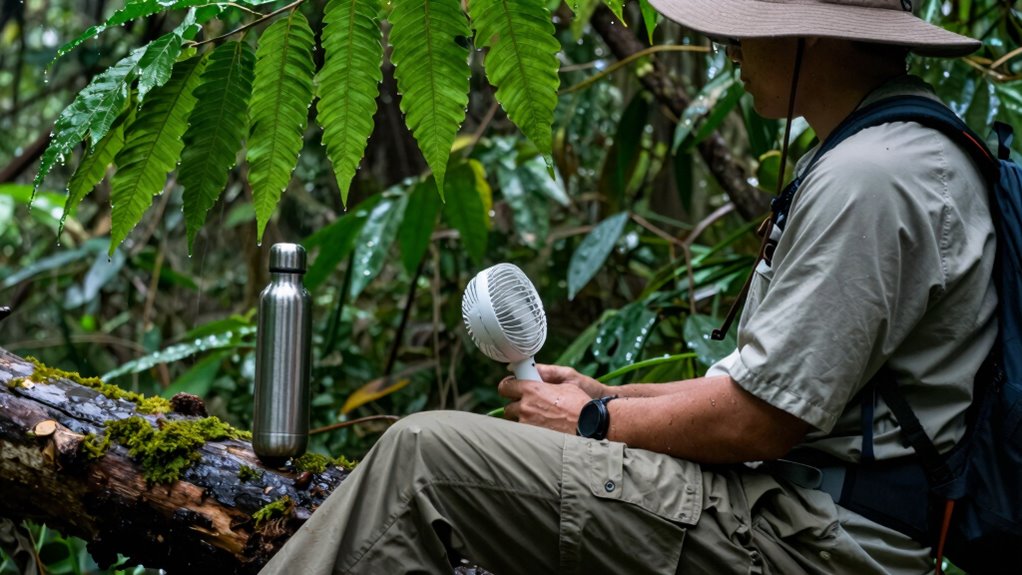
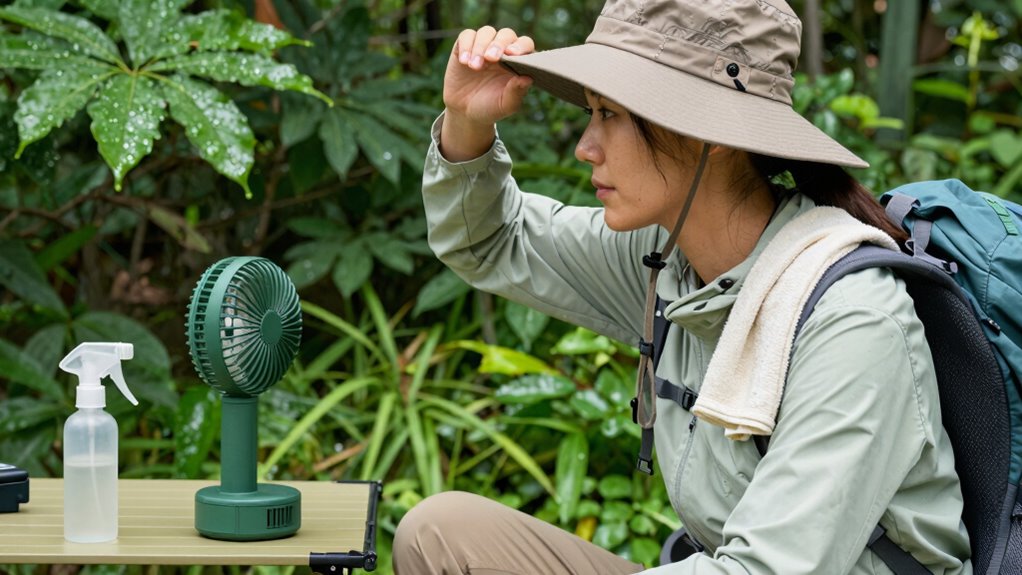
High humidity can turn camping into a sweltering, uncomfortable experience, but with the right strategies, you can stay cooler and more comfortable. One of the most effective ways to beat the heat is by choosing clothing made from breathable fabrics. Natural materials like cotton and linen allow air to circulate around your skin, helping to wick away sweat and prevent overheating. Avoid synthetic fabrics that trap moisture and heat, as they can make you feel even more uncomfortable. When packing, prioritize lightweight, loose-fitting clothes that promote airflow, especially during the hottest parts of the day. Wearing a wide-brimmed hat and sunglasses also helps shield you from direct sunlight, keeping your body temperature down.
Choose breathable fabrics like cotton and linen, wear a wide-brimmed hat, and pack lightweight, loose-fitting clothes for comfort.
Staying cool isn’t just about what you wear; it’s also about how you protect yourself from insects, which thrive in high-humidity environments. Using insect repellent is essential, not only to prevent bites but also to keep pests at bay and avoid discomfort. Choose a proven repellent containing DEET or picaridin, and apply it according to the instructions. Spray it on exposed skin and clothing, especially around your ankles, wrists, and neck—common entry points for insects. Reapply as needed, especially if you’re sweating heavily or after swimming. Wearing long sleeves and pants made from breathable fabrics adds an extra layer of protection, reducing the chances of bites while still allowing your skin to breathe.
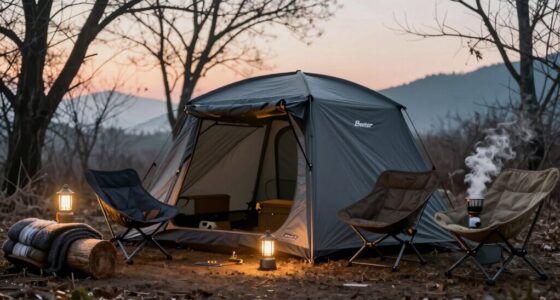
Hydration plays a vital role in maintaining comfort during high-humidity camping. Make sure to drink plenty of water throughout the day, even if you don’t feel thirsty. Staying hydrated helps regulate your body temperature and prevents heat exhaustion. To keep cool during the hottest hours, seek shade whenever possible. Set up your tent in a shaded area or create a makeshift shade with a tarp or a lightweight tent fly. Ventilation is key; leave vents open or unzip parts of your tent to promote airflow and reduce condensation inside. Sleeping in lightweight, breathable sleepwear and using a fan or battery-operated cooling device can also improve your rest at night. Additionally, selecting moisture-wicking fabrics can help keep you dry and comfortable, especially in humid conditions. Incorporating breathable materials into your gear and clothing choices is crucial for maintaining comfort and preventing moisture buildup. Ensuring proper airflow inside your tent can significantly reduce humidity and condensation, making your camping experience much more pleasant. Using moisture-absorbing products such as silica gel packs or charcoal briquettes can further help reduce excess humidity inside your tent and create a drier environment. Incorporating these humidity control methods can make a notable difference in your comfort level. By making smart clothing choices, using insect repellent effectively, staying hydrated, and managing your environment, you’ll find it much easier to stay comfortable and enjoy your camping trip—even when the humidity is high.
breathable moisture-wicking camping clothes
As an affiliate, we earn on qualifying purchases.
As an affiliate, we earn on qualifying purchases.
Frequently Asked Questions
What Are the Best Fabrics for High-Humidity Environments?
For high-humidity environments, you should choose moisture-wicking fabrics like polyester or nylon, which draw sweat away from your skin. Breathable materials such as mesh and lightweight cotton also help air circulate, keeping you cooler and drier. Avoid heavy or non-breathable fabrics like denim or wool, as they trap moisture and heat. Selecting these fabrics will help you stay more comfortable and prevent overheating in humid conditions.
How Can I Prevent Mold and Mildew in My Tent?
An ounce of prevention is worth a pound of cure. To prevent mold and mildew, guarantee your tent has good ventilation strategies, like opening vents or windows when possible. Use moisture barriers, such as a ground tarp, to keep moisture out. Regularly air out your tent and dry it thoroughly before packing up. These steps keep humidity levels low, discouraging mold and mildew growth, and ensure your tent stays fresh.
What Should I Do if I Start Feeling Dehydrated?
If you start feeling dehydrated, you should immediately prioritize hydration strategies. Drink plenty of water and consider electrolyte replenishment to restore lost salts and minerals. Avoid caffeine or alcohol, as they can dehydrate you further. Sip fluids consistently throughout the day, especially in high humidity. Keep a supply of electrolyte drinks or powders handy, and listen to your body’s signals to prevent dehydration from worsening.
Are There Specific Foods That Help With Humidity Discomfort?
To beat humidity discomfort, include superfoods for hydration like watermelon, cucumbers, and oranges in your diet. Cooling snacks such as yogurt, popsicles, or chilled fruit salads help lower your body temperature. These foods provide essential electrolytes and keep you hydrated, making it easier to stay comfortable. Incorporate these options into your meals and snacks to combat humidity effects and stay refreshed throughout your camp experience.
How Often Should I Change or Wash My Clothing?
You should change or wash your clothing daily in high-humidity camps to stay comfortable and prevent moisture buildup. Proper clothing maintenance involves quick-drying, breathable fabrics, which you should wash regularly to remove sweat and bacteria. Use laundry tips like hanging clothes to dry in a well-ventilated area and avoiding heavy detergents. Keeping your clothes fresh and dry helps reduce discomfort, skin irritation, and mold growth in humid conditions.
high humidity tent ventilation fan
As an affiliate, we earn on qualifying purchases.
As an affiliate, we earn on qualifying purchases.
Conclusion
Remember, staying comfortable in high humidity is like steering the labyrinth of Daedalus—requires patience and cleverness. Keep your gear light, stay hydrated, and seek shade like a wise Minotaur avoiding the sun’s glare. With these tips, you’ll conquer the sweaty maze and enjoy your camp like an explorer unburdened by the sweltering heat. Embrace the challenge, and soon, high humidity won’t feel like a beast you can’t tame.
insect repellent with DEET for camping
As an affiliate, we earn on qualifying purchases.
As an affiliate, we earn on qualifying purchases.
As an affiliate, we earn on qualifying purchases.
Fall Picks
fall essentials
As an affiliate, we earn on qualifying purchases.