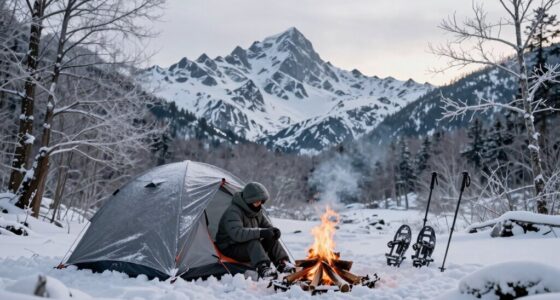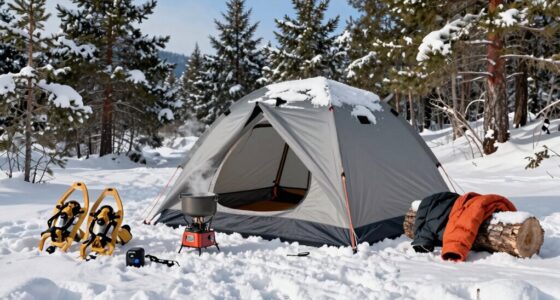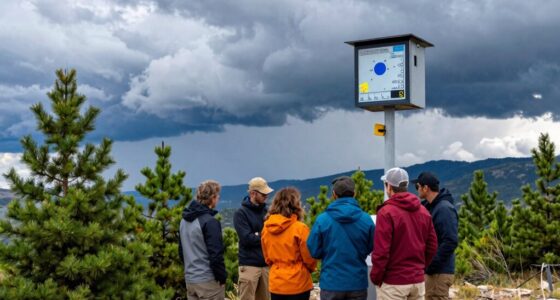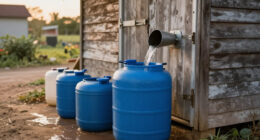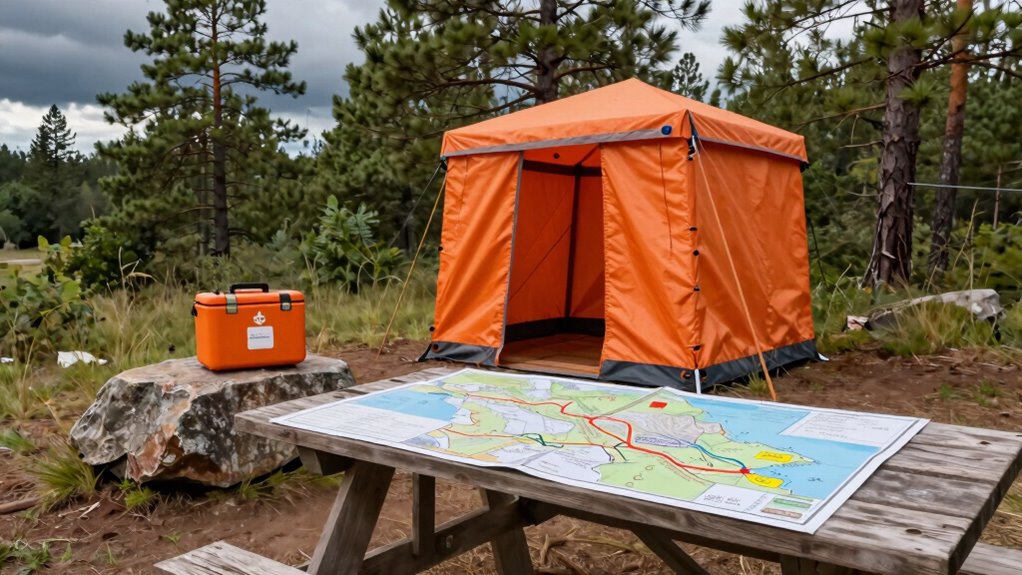
To build a more functional storm plan for your campsite, start by keeping a reliable weather radio or app handy to stay updated on conditions. Identify and reinforce safe shelter options nearby, and plan your route to reach them quickly. Pack an emergency kit with essentials like water, snacks, and first aid supplies, and reinforce your tent for high winds. Remember to stay calm around wildlife and maintain safety zones. Keep improving your plan—there’s more to think about for full protection.

Get emergency and outdoor gear delivered free — and shop member deals
- Fast, free delivery on millions of items
- Access to Prime Big Deal Days deals on October 6–7
- Prime Video, Amazon Music and more included
Key Takeaways
- Identify and pre-approve a sturdy, low-lying shelter away from tall trees and flood zones.
- Establish clear communication protocols and ensure all campers know emergency procedures.
- Keep an easily accessible, well-stocked emergency kit tailored for storm scenarios.
- Use digital tools for real-time weather updates and plan routes to the safest shelter.
- Regularly review and practice the storm safety plan with all campsite participants.
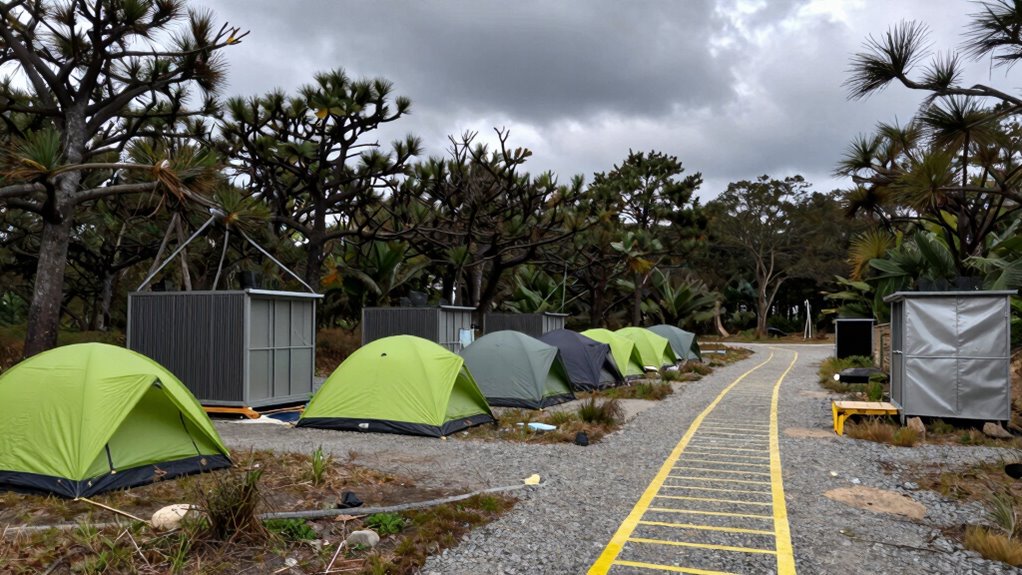
When a storm approaches while you’re camping, having a well-thought-out plan can make all the difference in staying safe and comfortable. Your first priority is to stay informed—keep a weather radio or a reliable weather app handy so you can track any incoming storms. This way, you’ll know if the weather worsens and can prepare accordingly. Sometimes, storms bring unexpected wildlife encounters—like curious animals drawn to the noise or shelter—so it’s essential to understand how to handle these situations calmly. Avoid feeding or approaching wildlife, and keep your distance to prevent any aggressive behavior. Knowing how to manage wildlife encounters helps reduce panic and keeps everyone safe during stressful times.
A crucial part of your storm plan is having your emergency kit essentials ready and accessible. Your kit should include water, non-perishable snacks, a flashlight with extra batteries, a first aid kit, and necessary medicines. Pack a multi-tool, a whistle, and waterproof clothing or blankets to stay dry and warm if needed. Don’t forget to include important documents like IDs, any permits, and a fully charged portable charger for your devices. Keeping these essentials in a designated, easy-to-reach spot ensures you can grab them quickly during an emergency. Regularly check your kit for expired items or missing supplies so you’re always prepared.
Next, identify the safest location at your campsite for shelter during a storm. Ideally, this would be a sturdy, low-lying area away from tall trees, which can fall or drop branches during high winds. If you’re in a tent, reinforce it by staking it securely and avoiding setting it up under trees or in flood-prone zones. If possible, have an emergency shelter or a nearby sturdy structure you can retreat to quickly. Planning your route to this safe spot in advance, especially when visibility is poor, can save valuable time. Additionally, emerging trends in digital tools can help you access real-time weather updates and safety information to enhance your preparedness.
As an affiliate, we earn on qualifying purchases.
Frequently Asked Questions
How Do I Notify Campers About Storm Warnings?
You notify campers about storm warnings by utilizing weather monitoring tools to stay updated on current conditions. Once you receive a warning, follow established communication protocols, such as loudspeakers, text alerts, or emergency notification systems. Clearly inform campers of the threat, safety procedures, and evacuation routes. Keep communication consistent, calm, and authoritative to guarantee everyone understands the situation and takes appropriate action swiftly.
What Emergency Supplies Should Be Prioritized?
You should prioritize emergency supplies like a weather alerts device, first aid kit, and flashlights. Use a complete supply checklist to guarantee you have enough water, non-perishable food, batteries, and emergency blankets. Staying informed with weather alerts helps you respond quickly, while having these supplies ready ensures everyone’s safety during a storm. Always double-check your checklist before heading into the campsite, so you’re fully prepared for any weather emergency.
How Often Should Storm Drills Be Conducted?
You should conduct storm drills at least twice a year, but more frequent practice—quarterly or even monthly—ensures you’re never caught off guard. Regular storm drill frequency keeps safety training sharp, making responses automatic in emergencies. These drills reinforce your team’s confidence, identify weaknesses, and improve overall preparedness, turning your campsite into an impenetrable fortress against storms. Don’t wait for disaster to strike—practice often to stay ready.
Who Should Be Designated as Storm Coordinators?
You should designate a clear storm coordinator responsible for overseeing emergency communication and managing volunteer roles during storms. This person guarantees everyone knows safety procedures, maintains communication with local authorities, and coordinates volunteer efforts effectively. By assigning this role, you streamline responses, reduce confusion, and enhance overall safety at your campsite. Make sure the storm coordinator is trained, accessible, and communicates plans clearly to all campers and staff.
How to Handle Tent and Equipment Safety During Storms?
During storms, you should secure tents and equipment by monitoring weather alerts closely, ensuring everyone is aware of changing conditions. Use safety equipment like sturdy stakes, rainflies, and ropes to reinforce tents and prevent damage. Move valuable or vulnerable gear to sheltered areas, and keep a safety kit nearby. Regularly check weather updates, and be prepared to evacuate if conditions worsen, prioritizing everyone’s safety at all times.
As an affiliate, we earn on qualifying purchases.
Conclusion
Think of your storm plan as the sturdy anchor of your campsite’s ship, steadying it against turbulent waves. When you prepare thoroughly, you create a safe harbor where everyone can weather the storm together. With clear signals and solid plans, you’re like the lighthouse guiding campers through darkness and chaos. Remember, a well-built storm plan isn’t just safety; it’s the beacon that keeps your outdoor family united and secure, no matter how fierce the weather gets.
campground shelter reinforcement kit
As an affiliate, we earn on qualifying purchases.
As an affiliate, we earn on qualifying purchases.
portable weather app for camping
As an affiliate, we earn on qualifying purchases.
As an affiliate, we earn on qualifying purchases.
Fall Picks
fall essentials
As an affiliate, we earn on qualifying purchases.