
To build a better heat management strategy for summer camp, prioritize hydration by placing water stations and encouraging regular drinks. Set up shade areas strategically and schedule activities during cooler parts of the day. Monitor weather conditions daily and be prepared to move activities indoors if needed. Educate staff and campers on signs of heat illness and guarantee frequent breaks. By combining these steps, you’ll create a safer, more comfortable environment—keep exploring for more tips to protect your campers effectively.

Get emergency and outdoor gear delivered free — and shop member deals
- Fast, free delivery on millions of items
- Access to Prime Big Deal Days deals on October 6–7
- Prime Video, Amazon Music and more included
Key Takeaways
- Implement comprehensive hydration protocols with accessible water stations and regular reminders for campers and staff.
- Design and position ample shade structures and natural cooling features in high-traffic areas.
- Schedule outdoor activities during cooler times and enforce frequent rest breaks in shaded zones.
- Continuously monitor weather conditions and adjust plans proactively to prevent heat-related risks.
- Educate campers and staff on recognizing heat illness symptoms and effective heat safety practices.
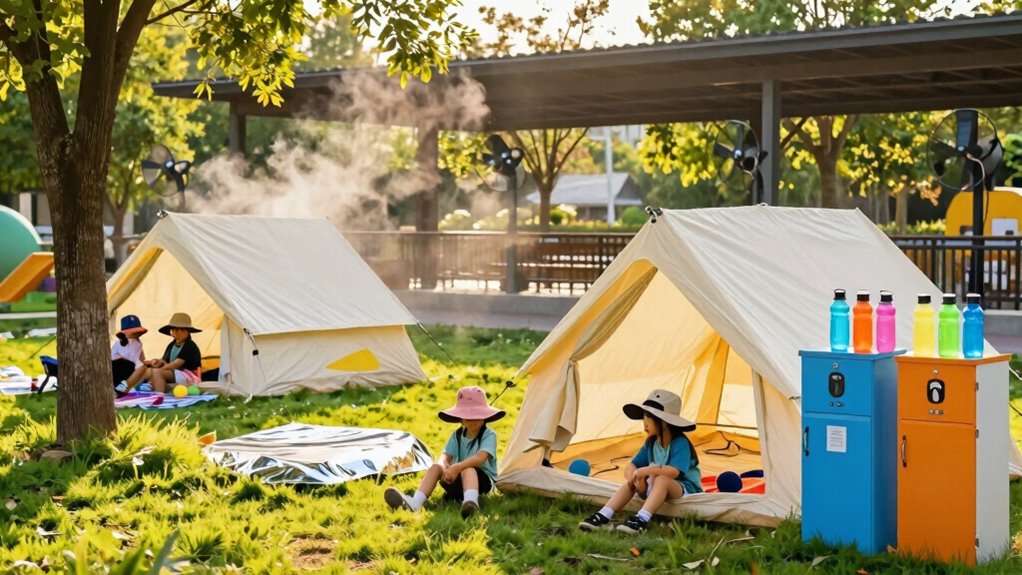
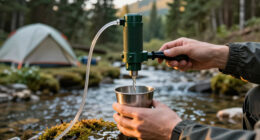
Summer camp can be a fun and memorable experience, but managing heat is essential to keep everyone safe and comfortable. When temperatures rise, your primary focus should be on effective heat management strategies that prevent heat-related illnesses. Start by prioritizing hydration planning; ensure you have plenty of water available and encourage campers and staff to drink regularly, even if they don’t feel thirsty. Dehydration can sneak up quickly, so set up multiple water stations in easily accessible locations and remind everyone to hydrate before, during, and after outdoor activities.
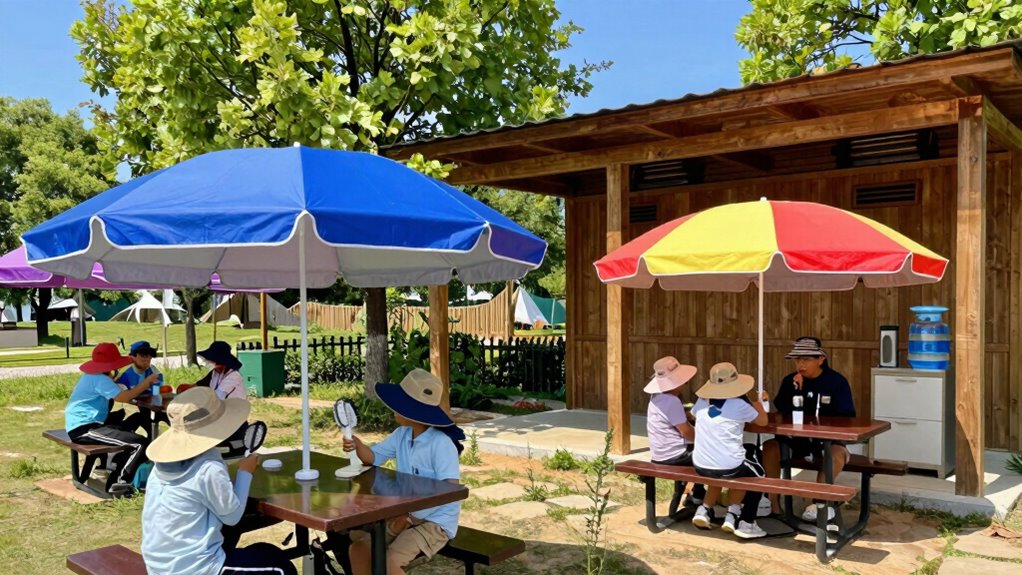
In addition to hydration, investing in shade structures is crucial. These structures provide much-needed relief from direct sunlight, helping to lower skin temperature and reduce the risk of heat exhaustion. You can set up large tents, canopies, or even portable shade sails in key gathering spots, activity areas, and eating zones. Position these shaded areas strategically so that campers and staff can take breaks frequently, especially during the hottest parts of the day. Remember, shade isn’t just about comfort; it’s a vital safety feature that can prevent heat stroke and other heat-related health issues.
Creating a heat management plan isn’t just about providing water and shade—it’s about proactive planning. Schedule outdoor activities during the cooler parts of the day, typically early morning or late afternoon, and limit strenuous activities during peak heat hours. When outdoor activity is unavoidable during hot weather, incorporate frequent breaks in shaded areas. Also, educate campers and staff about recognizing early signs of heat exhaustion, such as dizziness, nausea, and excessive sweating, so they can seek help promptly. Additionally, integrating natural cooling methods, like using breezes and reflective surfaces, can help further reduce heat buildup around the camp. It’s also beneficial to monitor environmental conditions regularly to adapt plans as needed.
Consider implementing a heat monitoring system, like checking the heat index daily and adjusting your plans accordingly. Keep an eye on weather forecasts and be prepared to modify schedules or move activities indoors if temperatures become dangerously high. Ensuring proper airflow around your camp can further help keep the environment cooler; use fans or open windows where possible to promote ventilation. Proper ventilation is especially important in enclosed spaces to prevent heat from accumulating and causing discomfort or health issues.
Ultimately, a thorough heat management strategy combines hydration planning, shade structures, activity scheduling, and education. By taking these steps, you’ll foster a safer environment where campers can enjoy their summer camp experience without risking their health. Staying vigilant and prepared makes all the difference in managing the heat, ensuring everyone leaves with positive memories rather than heat-related health issues.
portable shade canopy for camping
As an affiliate, we earn on qualifying purchases.
As an affiliate, we earn on qualifying purchases.
Frequently Asked Questions
What Are the Best Cooling Accessories for Campers?
You should consider cooling accessories like cooling vests and portable fans to keep campers comfortable. Cooling vests help regulate body temperature by providing a cooling effect directly on the skin, which is especially useful during outdoor activities. Portable fans are great for personal air circulation, offering instant relief from heat. Combining these accessories guarantees campers stay cool, hydrated, and safe throughout hot summer days.
How Can I Keep Food Safe in Hot Weather?
To keep food safe in hot weather, focus on proper food storage and temperature control. Store perishable items in a cooler with ice packs, ensuring they stay below 40°F (4°C). Keep the cooler in a shaded, cool spot and limit how often you open it. Use insulated containers for hot foods, and always check for spoilage before serving. These steps help prevent bacteria growth and keep food fresh.
What Are Signs of Heat Exhaustion in Campers?
You’ll notice signs of heat exhaustion in campers, like heavy sweating, weakness, dizziness, nausea, and headache. Recognizing dehydration signs early is vital—look for dry mouth, dark urine, and feeling overly thirsty. To prevent heat stroke, make certain campers stay hydrated, take frequent breaks in shaded areas, and wear lightweight clothing. Promptly address any symptoms to keep everyone safe and avoid more serious heat-related illnesses.
How Should Clothing Be Chosen for Summer Heat?
You should choose lightweight, breathable clothing that layers easily, allowing campers to adjust as needed. Opt for light-colored fabrics that reflect sunlight and keep heat down. Make sure clothing provides good sun protection, covering arms and legs to shield against harmful UV rays. Encourage campers to wear hats and sunglasses, and remind them to reapply sunscreen regularly. Proper clothing choices help prevent heat-related illnesses and keep everyone comfortable during hot summer days.
Are There Specific Hydration Strategies for Different Age Groups?
You should tailor hydration strategies to keep everyone feeling their best. For kids, establish regular hydration schedules with age-specific fluids like electrolyte drinks or water, ensuring they drink before feeling thirsty. Teens and adults can follow similar routines but may need more fluids during intense activity. Adjust frequency based on activity level and heat, always encouraging everyone to listen to their bodies and drink proactively to prevent dehydration.
water station for outdoor activities
As an affiliate, we earn on qualifying purchases.
As an affiliate, we earn on qualifying purchases.
Conclusion
Remember, “an ounce of prevention is worth a pound of cure.” By planning ahead with proper hydration, shade, and activity scheduling, you can keep everyone safe and comfortable during summer camp. Stay vigilant for signs of heat exhaustion, and encourage everyone to listen to their bodies. When you prioritize heat management, you create a fun, healthy environment where campers can enjoy the sunshine without risking their well-being. Your proactive approach makes all the difference!
personal hydration pack for kids
As an affiliate, we earn on qualifying purchases.
As an affiliate, we earn on qualifying purchases.
As an affiliate, we earn on qualifying purchases.
Halloween Picks
halloween
As an affiliate, we earn on qualifying purchases.