
TL;DR

Get emergency and outdoor gear delivered free with Prime
- Fast, free delivery on millions of items
- Prime Video, Amazon Music and more included
- Member-only deals all year
A survival gear kit must match your risks and environment, prioritize water, shelter, and first aid, and be regularly checked. Customization and skills amplify its effectiveness in emergencies.
Imagine being caught in a sudden storm, stranded in your car, or facing a blackout that lasts days. Your survival hinges on one thing: the gear you’ve prepared ahead of time. A well-thought-out survival kit isn’t just a collection of supplies—it’s your lifeline when everything else falls apart.
In this guide, you’ll learn how to build a kit tailored to your risks, climate, and skills. Expect concrete examples, practical tips, and insights on what truly matters in an emergency. Because when seconds count, your gear needs to work—no excuses.
Tailor your survival kit to your specific risks, climate, and skills for maximum effectiveness.
Prioritize water, shelter, and medical supplies—these are your lifelines in any emergency.
Regularly test and maintain your gear to ensure it works when you need it most.
Use modular packing and color coding to keep your kit organized and accessible.
Combine multiple signaling tools—visual and electronic—to improve rescue chances.
Why a custom survival kit beats a one-size-fits-all pack
Survival gear kits that are slapped together from generic lists often miss the mark. A kit built for your local hazards, climate, and personal needs is more effective—and less bulky.
For example, if you live in a wildfire zone, your kit should include masks and eye protection. In snowy regions, add thermal clothing and ice traction. A hiker stranded in a remote area needs lightweight, multi-use tools that can double as shelter or signaling devices.
Build your kit based on specific risks. A winter vehicle kit differs vastly from a desert hiking pack. Think about your environment, possible scenarios, and your skills. That way, every item earns its place—no fluff, just essentials.
The importance of customization goes beyond just including the right items; it influences the overall weight, ease of access, and effectiveness of your kit. A poorly tailored kit may contain unnecessary items, adding weight and complexity, or lack critical tools when they are most needed. Tailoring ensures your kit is a practical extension of your preparedness, making it more likely you’ll actually use it effectively when it counts.
emergency survival kit with water purification
As an affiliate, we earn on qualifying purchases.
As an affiliate, we earn on qualifying purchases.
Prioritize water, shelter, and first aid—then add the extras
In survival, three needs stand out: water, shelter, and medical care. You can survive weeks without food, but only days without water—sometimes less in hot climates or strenuous situations.
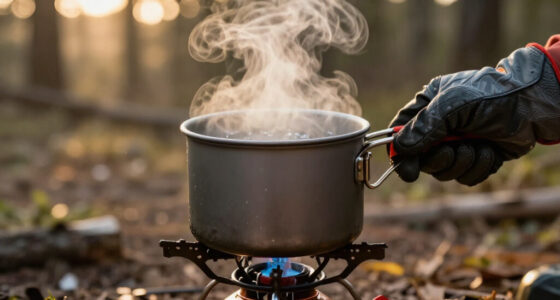
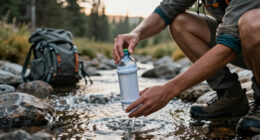
Start with a gallon of water per person daily, plus water treatment options—filters, tablets, or boiling. For shelter, include a weatherproof jacket, tarp, or emergency bivvy. First-aid supplies should cover injuries common to your activities, like cuts, burns, or sprains.
Understanding why these core elements are prioritized helps you make smarter decisions in kit design. Water is essential because dehydration can impair judgment and physical capacity rapidly. Shelter protects you from the elements, preventing hypothermia or heat exhaustion, which can be just as deadly as the initial emergency. First aid supplies enable you to treat injuries immediately, reducing the risk of infection or worsening conditions, especially when professional help is far away.
Here’s a quick ranking:
- Water
- Shelter
- First aid
- Signaling tools, fire, food, navigation, hygiene
Focusing on these core needs ensures you maintain your health and safety, giving you a better chance to survive until rescue or help arrives. Neglecting any of these can jeopardize your entire effort, so understanding their importance guides you in choosing the right gear and supplies.
compact first aid kit for outdoor activities
As an affiliate, we earn on qualifying purchases.
As an affiliate, we earn on qualifying purchases.
The best tools for signaling help and staying connected off-grid
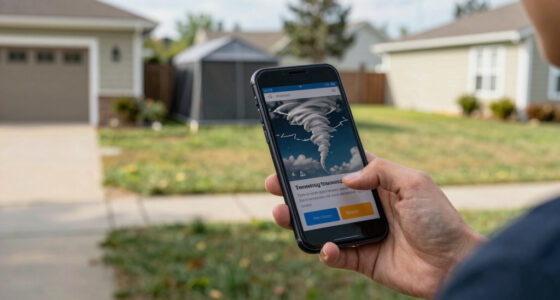
When trouble hits, your ability to call for help can save your life. Relying solely on your phone isn’t enough—batteries die, signals drop, and coverage isn’t guaranteed.
Include a mix of signaling devices: a whistle for immediate noise, a mirror for visual signals, and a small, charged satellite messenger or PLB (Personal Locator Beacon). These devices don’t need cell service—just clear sky and a few seconds of effort.
Using multiple signaling methods increases your chances of rescue because different environments and situations call for different approaches. A whistle can attract attention in crowded or noisy areas, while a mirror is effective in open spaces with sunlight. Satellite devices can send distress signals even when local networks are down. Combining these tools ensures that if one method fails, others are available, significantly improving rescue prospects.
Adding a flashlight or headlamp with extra batteries is also crucial, especially in dark or low-visibility scenarios. Redundancy in communication and signaling ensures you’re not left silent when it matters most.
As an affiliate, we earn on qualifying purchases.
How to pick and test your survival gear to avoid common pitfalls
Choosing the right gear is only half the battle; testing it regularly is what keeps your kit reliable. An item that works perfectly in the store can fail when faced with real conditions.
Follow these steps:
- Lay out every item in your kit and check for damage or wear.
- Test flashlights, radios, and electronic devices—charge batteries and confirm they work.
- Practice setting up shelter, using medical supplies, and operating tools.
- Replace expired food, water, and medications.
- Keep a maintenance schedule—every six months or after use.
Regular testing and practicing with your gear is crucial because it reveals unforeseen issues—such as batteries that no longer hold charge or materials that degrade over time. These problems might seem minor but can be catastrophic in an emergency. For instance, a flashlight with dead batteries or a torn emergency blanket could be the difference between safety and exposure. Incorporating regular checks into your routine ensures your kit remains dependable and ready to perform under stress. Additionally, hands-on practice helps you become familiar with each item’s operation, reducing hesitation or mistakes when every second counts.
Remember: gear is only as good as your ability to use it under stress. Training with your kit transforms gear into lifesaving tools.
weatherproof emergency shelter kit
As an affiliate, we earn on qualifying purchases.
As an affiliate, we earn on qualifying purchases.
Smart ways to pack, organize, and keep your survival kit ready
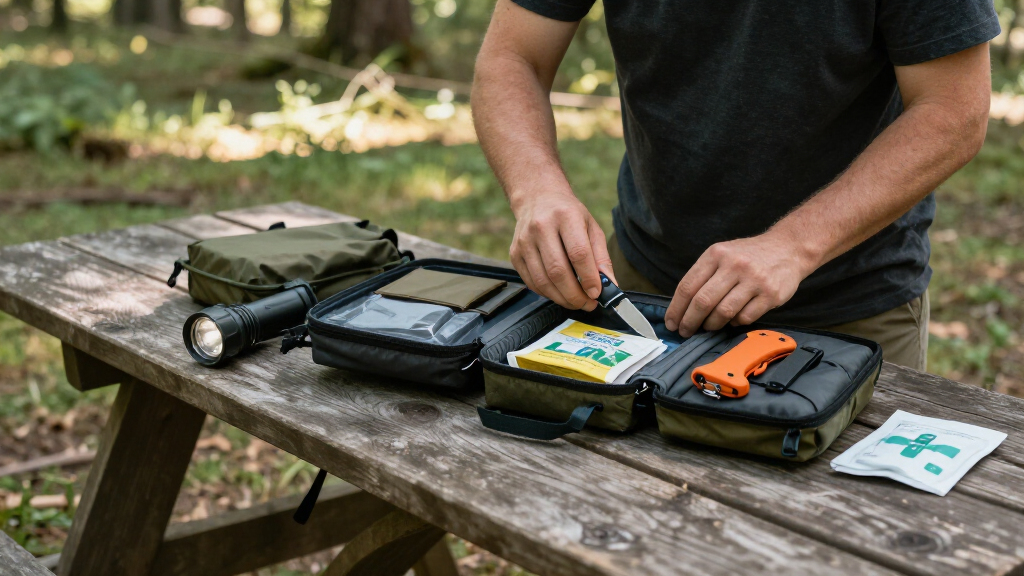
A cluttered kit slows you down when seconds matter. Use modular pouches and color coding to organize items by category: medical, shelter, fire, water, tools, and communication.
For instance, keep first aid supplies in a red pouch, fire-starting tools in a yellow one, and water treatment in a blue bag. Store urgent items—like a flashlight, whistle, and first aid—near the top or in easy-to-access compartments.
Place your kit where you can grab it quickly—by the door, in your car, or in a dedicated emergency closet. Label everything clearly, and review your setup regularly to adjust for size changes or new gear.
Proper organization isn’t just about speed; it also reduces stress and prevents overlooking critical items during an emergency. Regularly practicing your retrieval process helps identify any bottlenecks or missing components, ensuring your kit remains effective and accessible when needed most. Also, consider the environment where your kit is stored—humidity, temperature, and potential damage sources can degrade supplies. Periodic checks and reorganization keep your kit in peak condition, ready to deploy at a moment’s notice.
Frequently Asked Questions
How long should a survival kit last?
Most kits aim to last several days, but it depends on your environment and needs. Remote households or wilderness travelers often prepare for a week or more, based on official guidance and personal circumstances.What are the five most important items?
Typically, water treatment, shelter or weather protection, first aid supplies, a reliable light source, and signaling devices. These cover the essentials—hydration, warmth, health, and rescue.Should I buy a premade kit or build my own?
Premade kits are convenient starting points, but customizing your own ensures you include what’s vital for your risks and skills. Regularly review and adjust your kit to stay prepared.How much water should I store?
A general rule is about one gallon per person per day for drinking and hygiene. Adjust based on climate, activity level, and health needs—more in hot environments or for strenuous activities.Can I drink water after boiling it?
Boiling kills most pathogens but doesn’t remove chemicals, salt, or heavy metals. Use additional treatment methods if contamination from chemicals or salt is a concern.Conclusion
Your survival kit isn’t just a pile of gear—it’s a carefully crafted tool designed to keep you safe, dry, and connected. Building it with purpose, testing it often, and knowing how to use each item gives you a real edge when disaster strikes.
Think of your kit as an extension of your skills—each piece a link in your safety chain. Keep it ready, keep it smart, and stay prepared. Because in emergencies, being ready is everything.
Halloween Picks
halloween
As an affiliate, we earn on qualifying purchases.