
TL;DR

Get emergency and outdoor gear delivered free with Prime
- Fast, free delivery on millions of items
- Prime Video, Amazon Music and more included
- Member-only deals all year
A landslide in Alaska’s Tracy Arm fjord caused a 481-meter tsunami, the second highest ever recorded. No injuries occurred, but the event highlights climate-related risks to vulnerable landscapes.
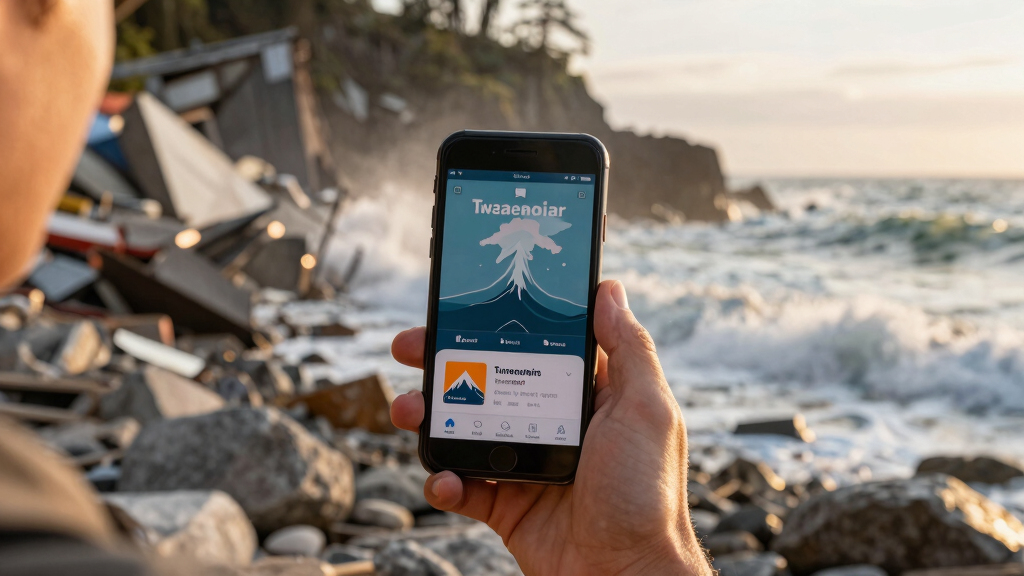
At 5:26 am on August 10, 2025, a massive landslide in Alaska’s Tracy Arm fjord triggered a tsunami that reached 481 meters in height, the second highest ever recorded on Earth. The event, caused by glacial retreat and rock failure, occurred early enough to prevent injuries but highlights significant climate-related risks to the region’s stability and safety.
The landslide involved at least 63.5 million cubic meters of rock detaching from a steep slope near the South Sawyer Glacier, which had been thinning due to climate warming. The collapse displaced a large volume of water, creating a 100-meter initial wave that surged across the narrow fjord at speeds exceeding 70 meters per second before reaching a maximum runup height of 481 meters on the opposite shoreline.
Scientists from the University of Calgary confirmed that the event was triggered by glacial retreat, which had exposed the base of the slope, reducing support and increasing instability. Seismic data recorded signals consistent with microearthquakes starting days before the slide, culminating in a continuous slip just before the collapse. The seismic waves from the event were equivalent to a magnitude 5.4 earthquake, and the water displacement caused a seiche that persisted for 36 hours.
Why It Matters
This event underscores the increasing risk of landslide-generated tsunamis in glacial regions, especially as climate change accelerates glacier retreat. Although no fatalities occurred, the potential for future, larger disasters poses a threat to local communities and the many tourists visiting the area. It also emphasizes the importance of monitoring glacial stability in vulnerable regions.
As an affiliate, we earn on qualifying purchases.
Background
Tracy Arm fjord is a popular tourist destination, with over 20 boats, including cruise ships, operating in the area during the summer months. Historically, landslide tsunamis have been rare but highly destructive, with the 1958 Lituya Bay event reaching 530 meters. The recent event is part of a broader pattern of glacial retreat in Alaska driven by rising temperatures, with the South Sawyer Glacier thinning by over 100 meters between 2013 and 2022.
Seismic and satellite data indicated no visible tension cracks before the event, but internal rock grinding and microearthquakes signaled increasing instability. The event’s timing, early morning, prevented casualties but raised concerns about the region’s future safety and the need for enhanced monitoring.
“It was the second highest tsunami ever recorded on Earth, but until now, almost nobody heard about it because it was a near-miss event.”
— Aram Fathian, University of Calgary researcher
“This event was made more likely by climate-driven glacial retreat, which exposed the slope’s base and destabilized it.”
— Fathian
As an affiliate, we earn on qualifying purchases.
What Remains Unclear
It remains unclear whether similar future events will be larger or more frequent due to ongoing climate change. The precise stability thresholds of the slopes and the potential for subsequent collapses are still under investigation. Additionally, the full extent of the tsunami’s impact on local ecosystems and infrastructure has yet to be assessed.
As an affiliate, we earn on qualifying purchases.
What’s Next
Researchers will continue monitoring glacial and geological stability in the area, using satellite imagery and seismic sensors. Authorities are likely to review safety protocols for tourism operators and consider early warning systems for landslide and tsunami risks. Further studies are expected to evaluate the potential for larger, more destructive events in the future.
tourist safety equipment for coastal areas
As an affiliate, we earn on qualifying purchases.
As an affiliate, we earn on qualifying purchases.
Key Questions
Could this tsunami happen again?
Yes, ongoing glacial retreat and slope instability could lead to additional landslides and tsunamis, especially if climate change continues to accelerate.
Was anyone hurt or killed in the event?
No injuries or fatalities were reported, largely because the event occurred early in the morning when few people were present.
How does climate change influence such events?
Warming temperatures cause glaciers to thin and retreat, removing support from unstable slopes and increasing the likelihood of landslides that can generate tsunamis.
What measures are being taken to prevent future disasters?
Scientists and authorities are enhancing monitoring systems, assessing risks, and developing early warning protocols to mitigate future hazards.
Columbus Day / Indigenous Peoples' Day Picks
long weekend sales
As an affiliate, we earn on qualifying purchases.