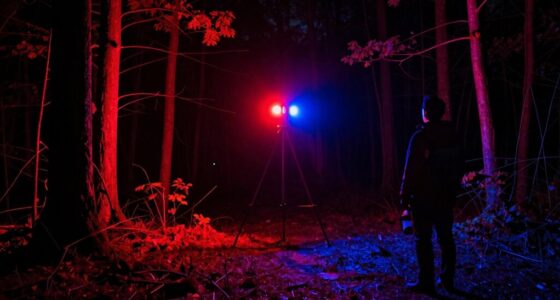

Reflective markings and visibility tools make you more noticeable at night, helping prevent accidents for both pedestrians and drivers. By wearing reflective gear or adding retroreflectors to your vehicle, you bounce light back toward its source, increasing your visibility from afar. This gives you and others more time to react and avoid collisions. Proper maintenance and choosing the right reflective materials guarantee effectiveness. Keep exploring how these simple tools can boost your safety in low-light conditions.

Get emergency and outdoor gear delivered free with Prime
- Fast, free delivery on millions of items
- Prime Video, Amazon Music and more included
- Member-only deals all year
Key Takeaways
- Reflective markings bounce light back to drivers, making pedestrians and vehicles more noticeable in low-light conditions.
- Visibility tools like vests and retroreflectors increase reaction time, reducing nighttime accidents.
- Properly maintained reflective gear ensures consistent effectiveness in enhancing nighttime safety.
- Combining vehicle retroreflectors with pedestrian gear creates a clearer outline, alerting others to presence.
- Reflective materials improve safety without relying on street lighting, providing affordable, easy-to-use safety solutions.
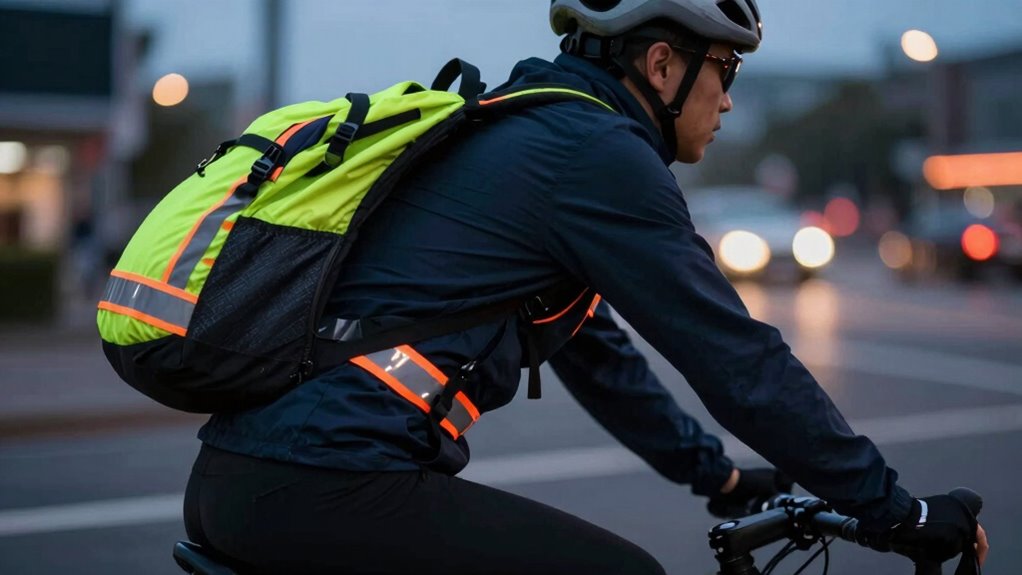
When it comes to night safety, visibility is your best defense against accidents and injuries. Without proper lighting and reflective tools, drivers and pedestrians alike face increased risks. That’s where vehicle retroreflectors and pedestrian high visibility gear come into play. These tools don’t just make you more noticeable; they considerably reduce the chances of collisions and other accidents after dark. Vehicle retroreflectors are designed to bounce light back toward its source, making your vehicle visible from a distance even in low-light conditions. They are usually mounted on bumpers, sides, and rear of vehicles, creating a clear outline that alerts other drivers to your presence. When headlights hit these reflectors, they shine brightly, ensuring your vehicle remains visible even in poorly lit areas or during adverse weather. Installing them correctly and maintaining their condition is crucial to maximize their effectiveness. Likewise, pedestrian high visibility gear is essential for anyone walking near roads at night. Think of reflective vests, armbands, or backpack strips that contain high-quality reflective material. When illuminated by headlights, these garments glow, catching the eye of drivers from afar. This immediate recognition allows drivers more time to slow down or change course, greatly decreasing the likelihood of accidents. Wearing high visibility gear isn’t just for construction workers or cyclists; it’s necessary for anyone venturing out after sunset or in dim environments. Incorporating reflective materials into your gear can significantly enhance your visibility, making you even more noticeable in low-light conditions. Additionally, understanding retroreflective properties can help you choose the most effective gear for your safety needs. Using Crochet techniques to craft custom accessories can also be a creative way to add reflective elements to your wardrobe. Combining vehicle retroreflectors with pedestrian high visibility gear creates a safer environment for everyone. When drivers can see clearly where people are, and pedestrians can signal their presence effectively, the risk of accidents drops dramatically. It’s a simple yet powerful way to enhance night safety without relying solely on street lighting or other infrastructure. Plus, these tools are easy to use and affordable, making them accessible for everyday safety. Remember, visibility isn’t just about being seen; it’s about giving everyone enough time to react, whether you’re behind the wheel or walking along a dark street. The more visible you are, the better your chances of avoiding harm. Regularly check your reflective gear and vehicle retroreflectors to guarantee they’re clean and intact, so they work properly when needed. Understanding retroreflective materials and how they work can help you select the best gear for your environment. In low-light conditions, retroreflective surfaces can reflect light from multiple angles, further improving visibility. Ultimately, integrating reflective marking and visibility tools into your routine isn’t just smart; it’s necessary for safer nights. By doing so, you actively contribute to reducing nighttime accidents and protect yourself and others from preventable injuries.
reflective safety vest for pedestrians
As an affiliate, we earn on qualifying purchases.
As an affiliate, we earn on qualifying purchases.
Frequently Asked Questions
How Long Do Reflective Markings Typically Last Before Needing Replacement?
Reflective markings usually last about 5 to 7 years before needing replacement, but this depends on their durability lifespan and exposure to elements. Over time, material degradation from weather, UV rays, and physical wear can reduce their reflectivity. You should regularly inspect markings for fading or damage, especially in high-traffic or harsh conditions, and replace them promptly to maintain maximum visibility and safety during night time.
Are Reflective Tools Effective in All Weather Conditions?
Think of reflective tools as reliable lighthouse beacons—guiding you through foggy nights. Their weather durability varies; some materials shine brightly even in rain, fog, or snow, while others fade like distant stars in heavy storms. Material effectiveness depends on quality, ensuring visibility remains consistent. While they considerably enhance safety, be mindful that extreme weather can sometimes diminish their glow, so choose high-grade reflective gear for all-weather assurance.
What Are the Safety Standards for Reflective Markings?
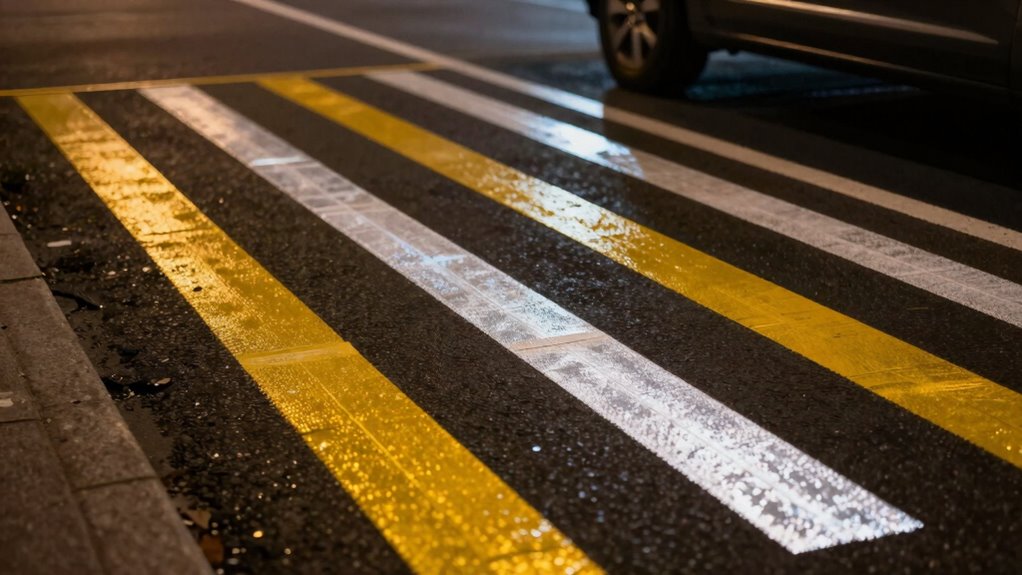
The safety standards for reflective markings specify that the reflective color must be highly visible in low-light conditions, often using white, yellow, or red, depending on the application. Proper marking placement is essential; you should position reflective strips along edges, curves, and high-risk areas. These standards guarantee maximum visibility, helping drivers and pedestrians see hazards clearly at night, thereby reducing accidents and improving overall safety.
Can Reflective Markings Be Applied to All Vehicle Types?
You can apply reflective markings to almost any vehicle type, making vehicle customization easier and safer. These markings help you stay compliant with regulatory standards, ensuring your vehicle remains visible in low-light conditions. Whether it’s a small motorcycle or a large truck, reflective markings enhance safety by increasing visibility, especially at night. So, regardless of your vehicle type, incorporating reflective markings is a smart choice for better night safety and regulatory adherence.
How Do Reflective Tools Compare to LED Lighting for Visibility?
Reflective tools offer high visibility with a variety of color options, making them effective in different environments. They’re generally more affordable and easier to install than LED lighting, which provides brighter, dynamic illumination but comes with higher costs and energy use. If you want a cost-effective, versatile solution, reflective markings work well. However, for maximum brightness and modern appeal, LED lighting might be worth the investment.
vehicle retroreflectors for cars
As an affiliate, we earn on qualifying purchases.
As an affiliate, we earn on qualifying purchases.
Conclusion
By using reflective markings and visibility tools, you substantially boost your safety during nighttime. These tools make you more noticeable to drivers, reducing accidents and saving lives. In fact, studies show that reflective gear can increase visibility by up to 85%, giving you a clearer visual cue to stay safe. So, always wear reflective clothing and install proper markings—your safety depends on it, especially when darkness falls.
As an affiliate, we earn on qualifying purchases.
As an affiliate, we earn on qualifying purchases.
Halloween Picks
halloween
As an affiliate, we earn on qualifying purchases.