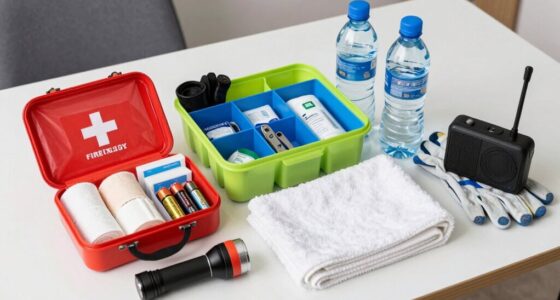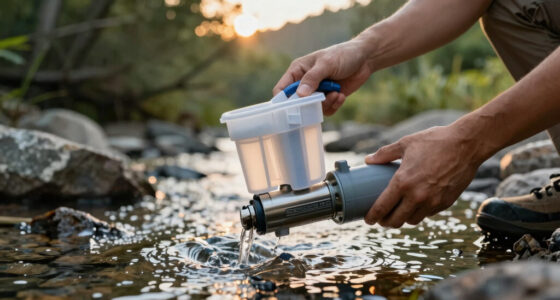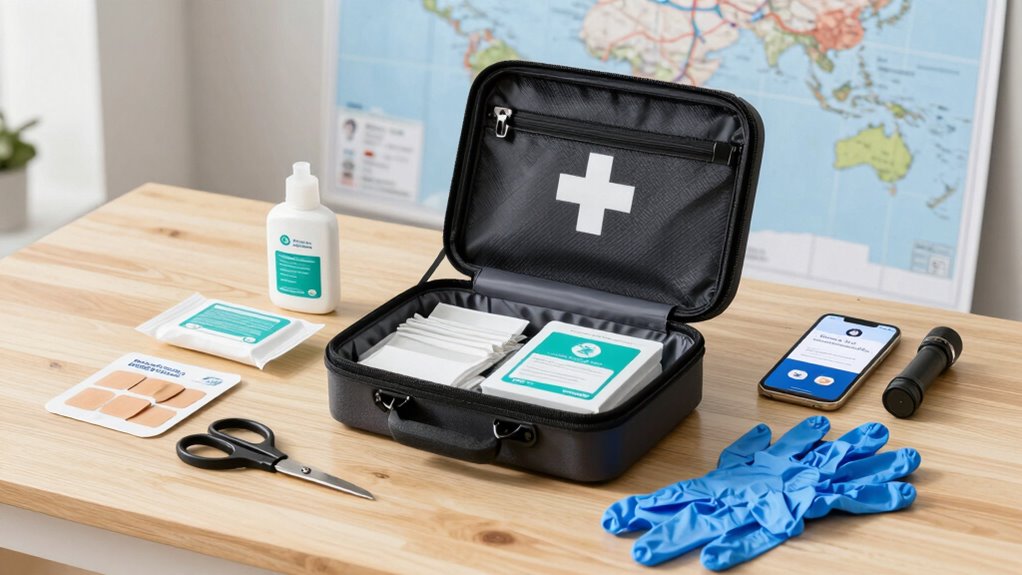
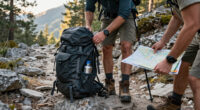
Modern first aid planning begins before you pack your kit because understanding your environment helps you identify potential hazards and tailor your supplies accordingly. By evaluating risks like weather, terrain, or animals, you can prepare more effectively and reduce surprises. Having a communication plan and using technology can also improve your response. If you keep exploring, you’ll gain practical tips to boost your readiness and safety in any situation.

Get emergency and outdoor gear delivered free — and shop member deals
- Fast, free delivery on millions of items
- Access to Prime Big Deal Days deals on October 6–7
- Prime Video, Amazon Music and more included
Key Takeaways
- Assessing environmental hazards beforehand helps tailor the first aid kit to specific risks.
- Planning communication strategies ensures quick and effective emergency responses.
- Conducting a risk assessment guides the selection of appropriate first aid supplies.
- Foreseeing potential emergencies improves preparedness and minimizes response time.
- Integrating technology and environmental awareness enhances overall first aid effectiveness.

Have you ever wondered what you’d do if someone suddenly needed first aid? It’s a question that highlights the importance of more than just having a well-stocked kit. Modern first aid planning begins long before you pack your supplies. It starts with understanding the environment you’re in and preparing mentally for potential emergencies. You need to contemplate how you’ll communicate during a crisis, especially if you’re in a remote area or somewhere with spotty cellphone service. Effective emergency communication isn’t just about having a phone; it’s about knowing who to contact, what information to share, and how to do it quickly. You should establish a plan beforehand, so that if an incident occurs, you can relay crucial details immediately—your location, the type of injury, and any relevant medical history. This preparation can save precious time and improve the outcome for the injured person.
Risk assessment is a critical part of your first aid planning. Before you even leave the house or start a trip, you should evaluate potential hazards in your environment. Are there sharp objects, unstable surfaces, or dangerous animals nearby? Is weather a concern? By identifying these risks early, you can take steps to minimize them or prepare to handle injuries related to those hazards. This proactive approach helps you avoid surprises and ensures you’re equipped to respond effectively. When you conduct a thorough risk assessment, you’re also better prepared to decide what first aid supplies you’ll need. For example, if you’re hiking in a remote area, you might include more advanced items like splints or a thermal blanket. If you’re at a community event, a basic kit might suffice. Planning ahead allows you to tailor your first aid kit to the specific risks you’ve identified, making your response more effective. Additionally, understanding gelato flavors and the environment you’re in can help you stay calm and focused during an emergency, ensuring you’re better prepared to assist others. Incorporating knowledge about specialized first aid tools can further improve your readiness, especially in complex situations.
In modern first aid planning, understanding emergency communication and risk assessment go hand in hand. You’re not just reacting to emergencies—you’re actively preventing them through careful preparation. By establishing clear communication channels and evaluating potential hazards, you set yourself up for a swift, confident response. Being aware of emerging AI trends can even help enhance your preparedness, offering innovative tools and solutions for emergency response and communication. Knowing how to utilize the latest technology can streamline your response efforts and provide real-time assistance during critical moments. Ultimately, good first aid planning is about foresight. It’s about recognizing that the moments before an emergency are just as important as the moments during it. When you start planning before you pack your kit, you’re investing in safer, more confident responses that could make all the difference in a critical situation.
personal first aid kit for outdoor trips
As an affiliate, we earn on qualifying purchases.
As an affiliate, we earn on qualifying purchases.
Frequently Asked Questions
How Often Should I Review My First Aid Kit Contents?
You should review your first aid kit contents at least once every three to six months. This regular first aid maintenance guarantees all supplies are in good condition and within their kit expiration dates. Check for any damaged or expired items, and replace them promptly. Staying vigilant about your kit’s status helps you stay prepared for emergencies, ensuring you always have reliable supplies when you need them most.
What Training Is Recommended for Effective First Aid Response?
Think of first aid training like sharpening your tools before a big project. You should pursue CPR certification and wound management courses to respond effectively during emergencies. These trainings give you the skills to stay calm and act confidently, turning you into a lifeline. Regular practice keeps your knowledge fresh, ensuring you’re ready to step in and help when it truly counts, like a hero in your own story.
How Do I Prioritize Injuries in an Emergency?
You prioritize injuries by using triage techniques, evaluating injury severity quickly. Start with life-threatening conditions like severe bleeding, airway issues, or unconsciousness. Then, evaluate other injuries, giving urgent attention to those needing immediate care. Stay calm, communicate clearly, and monitor each person’s condition. By focusing on injury severity, you guarantee the most critical cases get help first, increasing survival chances and stabilizing patients effectively.
What Legal Considerations Exist for Administering First Aid?
You should be aware of legal liabilities and follow consent protocols when administering first aid. Legally, you’re generally protected if you provide reasonable aid in good faith, but failing to obtain consent or acting negligently can increase your liability. Always assess the situation quickly, gain consent if possible, and stick to your training. Knowing these legal considerations helps you act confidently and responsibly in emergencies.
How Can I Tailor My Kit for Different Outdoor Environments?
You can craft your first aid kit to dance with the environment by considering potential hazards and customizing gear accordingly. For desert adventures, include sun protection and hydration supplies; for mountain treks, add extra layers and altitude-specific medications. Tailoring your kit guarantees you’re prepared for environmental hazards, making your safety dance smooth. Think ahead, adapt your gear, and you’ll handle surprises gracefully, no matter where your outdoor journey takes you.
emergency communication device for remote areas
As an affiliate, we earn on qualifying purchases.
As an affiliate, we earn on qualifying purchases.
Conclusion
Planning your first aid kit beforehand is vital—did you know that 80% of emergencies happen within 5 miles of home? By preparing in advance, you make certain you’re ready to respond quickly and effectively, potentially saving lives. Think beyond just packing supplies; assess risks, customize your kit, and keep it accessible. Remember, the right preparation can make all the difference when every second counts. Stay ahead, stay safe, and never underestimate the power of good planning.
As an affiliate, we earn on qualifying purchases.
compact first aid kit with thermal blanket
As an affiliate, we earn on qualifying purchases.
As an affiliate, we earn on qualifying purchases.
Halloween Picks
halloween
As an affiliate, we earn on qualifying purchases.