Getting good sleep while camping is essential because it directly affects your safety and performance. When you rest well, your alertness and decision-making improve, helping you handle emergencies and outdoor challenges better. Poor sleep makes you more prone to accidents and reduces your ability to stay focused. By ensuring your sleep environment is comfortable and secure, you’ll stay safer and more energized. Keep exploring to learn how proper setup and habits can boost your outdoor experience even further.

Get emergency and outdoor gear delivered free — and shop member deals
- Fast, free delivery on millions of items
- Access to Prime Big Deal Days deals on October 6–7
- Prime Video, Amazon Music and more included
Key Takeaways
- Poor sleep impairs alertness, decision-making, and reaction times critical for outdoor safety.
- Inadequate rest increases the risk of accidents during outdoor activities and emergencies.
- Restful sleep maintains focus and awareness, reducing hazards like falls or wildlife encounters.
- Proper tent setup and environment management enhance sleep quality, directly supporting safety.
- Good sleep performance boosts physical endurance and mental clarity essential for outdoor safety.
Camping offers an invigorating escape from daily routines, but sleeping well amidst nature can be a challenge. When you’re out in the wild, your sleep quality directly impacts your safety and performance. If you don’t rest properly, you’ll find it harder to stay alert, make good decisions, and handle emergencies. That’s why paying attention to sleep conditions isn’t just about comfort—it’s a vital safety concern.
Good sleep in nature ensures safety, alertness, and better decision-making during your outdoor adventures.
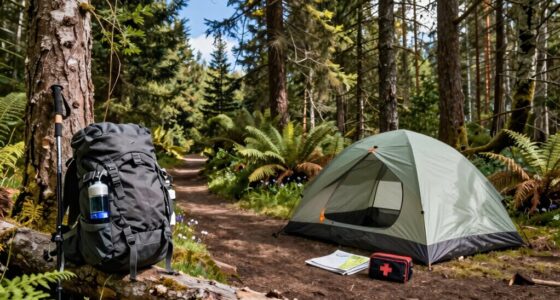
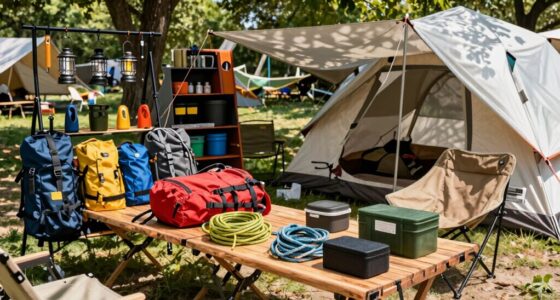
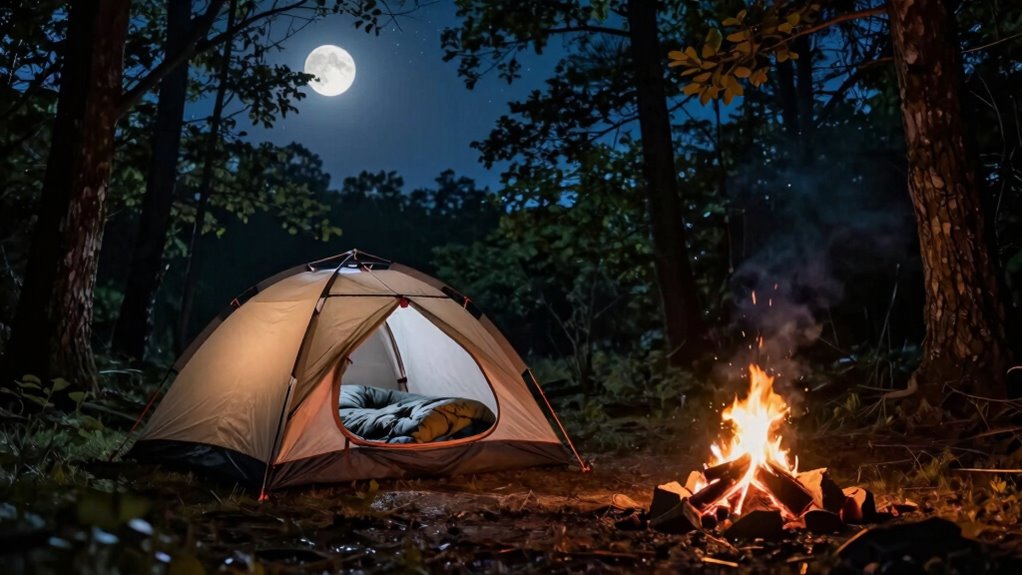
One of the first steps to better sleep starts with your tent setup tips. Make sure your tent is pitched on flat, stable ground, away from potential hazards like falling branches or water runoff. Secure your tent properly, using stakes and guy lines, so it doesn’t shift or collapse overnight. An unstable setup can lead to disturbed sleep or even safety issues if the tent collapses unexpectedly. Keep the tent’s interior dry and well-ventilated by opening vents or windows slightly, especially if you’re using a rainfly. Proper ventilation prevents condensation buildup, which can make your sleeping environment damp and uncomfortable, affecting your rest and increasing the risk of cold or hypothermia. Additionally, understanding camping safety fundamentals can help you better prepare for unforeseen issues during your stay. Using appropriate cleaning tools and maintenance tips can also help keep your gear in good condition, ensuring a safer camping experience. Regularly inspecting your gear and keeping it clean can prevent malfunctions, prolong its lifespan, and improve overall safety.
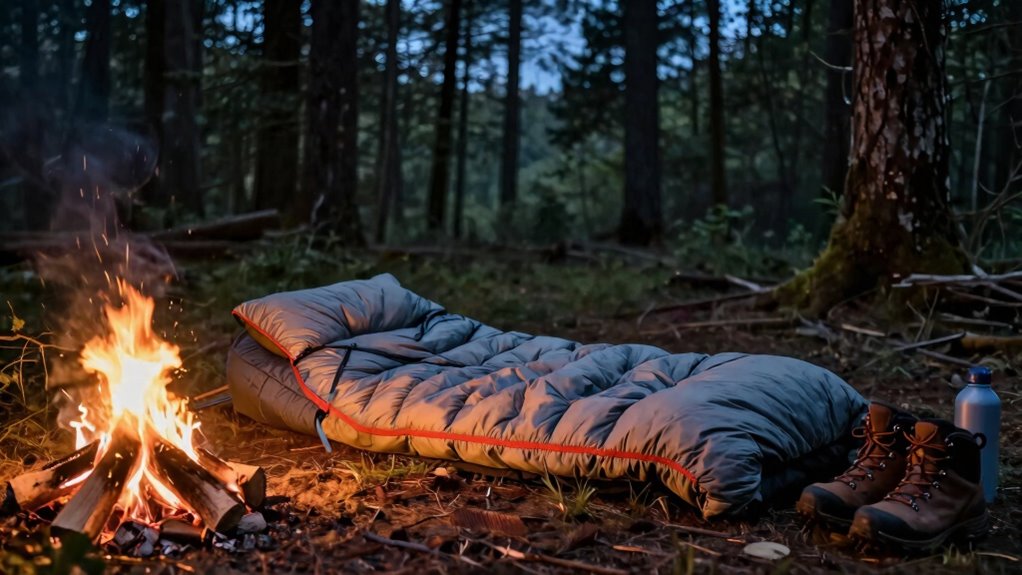
Campfire safety is another essential aspect of a safe camping experience and, by extension, good sleep. If you plan to build a fire, do so only in designated fire rings or clear, open spaces free of overhanging branches. Keep the fire small and manageable, and never leave it unattended. Extinguish the fire completely before sleeping or leaving the site, ensuring no embers remain that could ignite the surroundings. A well-controlled campfire not only keeps you warm and allows for cooking but also minimizes the risk of wildfires that could threaten your safety and your campsite. Being aware of fire safety regulations can further help prevent dangerous incidents during your trip.
Your sleep quality also depends on managing noise, light, and temperature. Use earplugs if noise from wildlife or fellow campers disrupts your rest. Bring a sleep mask or use the natural canopy to block out excessive light. Keeping your sleeping area warm enough, especially in cooler weather, helps you fall asleep faster and stay asleep longer. Layer your sleeping bag appropriately, and consider a sleeping pad to insulate from the cold ground. Ensuring your sleep environment is optimal can significantly improve your rest and overall safety during your camping trip. Properly managing these environmental factors can make all the difference in achieving restorative sleep outdoors.
As an affiliate, we earn on qualifying purchases.
Frequently Asked Questions
How Can I Improve Sleep Quality in Extreme Weather Conditions?
To improve sleep quality in extreme weather, focus on creating a proper sleep environment and temperature regulation. Use insulated sleeping bags and mats to stay warm or cool, depending on conditions. Ventilate your tent to prevent moisture buildup or overheating. Adjust clothing layers and use portable fans or heaters as needed. These steps help maintain a stable sleep environment, ensuring you rest well and stay safe during challenging weather.
What Are Common Sleep Disruptions Experienced During Camping Trips?
You might find yourself waking up multiple times during camping trips—statistics show nearly 60% of campers experience sleep disruptions. Common issues include noise from wildlife or fellow campers, uncomfortable sleeping bags, and disruptions from campfire routines. To improve sleep, make sure your sleeping bag offers good comfort, minimize noise disturbances, and establish calming campfire routines. These steps can help you rest better, boosting safety and performance during your outdoor adventures.
How Does Sleep Quality Impact Safety During Outdoor Activities?
Poor sleep quality directly impacts your safety during outdoor activities by impairing your alertness and decision-making. A disrupted sleep environment can lead to insufficient rest recovery, making you more prone to accidents or injuries. When you don’t get enough quality sleep, your reaction times slow down, and your focus diminishes, jeopardizing both your safety and the overall success of your outdoor adventures. Prioritizing good sleep is essential for staying alert and safe.
Are There Specific Foods That Enhance Sleep While Camping?
You can enhance your sleep while camping by choosing camping-friendly snacks like almonds or bananas, which naturally promote relaxation. Incorporate natural sleep aids such as chamomile tea or honey-based snacks to soothe your nerves. These foods work in harmony with your body, helping you drift off peacefully despite the outdoor environment. Remember, what you eat directly influences your rest, ensuring better safety and performance on your adventures.
What Gear Can Help Ensure Better Sleep in Remote Locations?
To guarantee better sleep in remote locations, you should invest in a quality camping mattress that provides proper support and insulation, helping you stay comfortable and warm. Additionally, using a sleep mask can block out light, aiding your sleep cycle. These gear items work together to improve your rest, keeping you alert and safe during outdoor adventures. Prioritizing comfort with the right gear boosts both safety and performance.
portable camping fan with ventilation
As an affiliate, we earn on qualifying purchases.
As an affiliate, we earn on qualifying purchases.
Conclusion
Poor sleep quality at camp isn’t just about feeling tired — it directly impacts your safety and performance. Did you know that sleep deprivation can impair your judgment as much as alcohol? So, next time you’re setting up your campsite, prioritize good sleep. It’ll boost your alertness, keep you safe, and help you enjoy every adventure to the fullest. Remember, a well-rested camper is a safer, more capable explorer.
As an affiliate, we earn on qualifying purchases.
outdoor noise-canceling earplugs
As an affiliate, we earn on qualifying purchases.
As an affiliate, we earn on qualifying purchases.
Fall Picks
fall essentials
As an affiliate, we earn on qualifying purchases.