
In an emergency, to jump-start your car, guarantee both vehicles are off, connect the jumper cables properly—red to positive, black to negative—and attach the other black clamp to a metal surface on the dead car. Start the working vehicle first, then the dead one. For charging devices, use a portable generator outdoors with grounded extension cords, avoiding indoor use. Following safety tips ensures protection from sparks, fumes, and electrical hazards. If you keep exploring, you’ll find more essential steps to stay safe and prepared.
Key Takeaways
- Always wear protective gloves and eye gear when handling car batteries to prevent injury from sparks or fumes.
- Connect jumper cables correctly: red to positive terminals, black to negative terminals, and attach the last black clamp to an unpainted metal surface.
- Start the working vehicle first, wait a few minutes, then attempt to start the dead vehicle, disconnecting cables safely afterward.
- Use a portable generator outdoors with proper grounding and avoid indoor use to safely charge essential devices during outages.
- Verify generator condition and avoid overloading outlets to ensure safe, reliable charging of devices during emergencies.
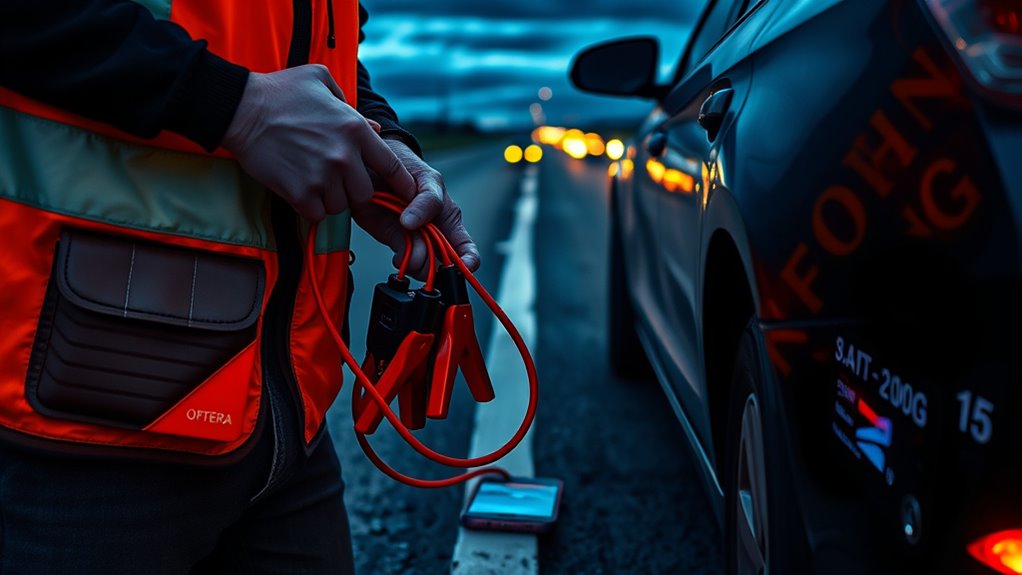
Have you ever experienced a power outage and realized just how crucial emergency power can be? When the lights go out unexpectedly, knowing how to jump-start your car or charge essential devices becomes a critical skill. Emergency power sources like portable generators can be lifesavers, but it’s equally important to prioritize battery safety when handling car batteries or portable power units. Mishandling batteries can lead to dangerous sparks, fires, or toxic fumes, so always wear protective gloves and eye protection before working with them. Confirm your portable generators are placed outdoors in well-ventilated areas to prevent carbon monoxide buildup, which can be deadly. It’s also wise to read the manufacturer’s instructions thoroughly before use, especially regarding safety precautions. Additionally, understanding proper safe installation and operation of backup power solutions is essential for ensuring reliability and safety during emergencies. Jump-starting a car involves connecting a healthy battery to a dead one using jumper cables. Before doing so, turn off both vehicles and ensure they are in park with the parking brakes engaged. Next, connect the red clamp to the positive terminal of the dead battery, then to the positive terminal of the good battery. Attach the black clamp to the negative terminal of the good battery, and connect the other black clamp to an unpainted metal surface on the engine block of the dead vehicle—never connect directly to the negative terminal of the dead battery to avoid sparks. Once everything is connected securely, start the working vehicle and let it run for a few minutes before attempting to start the dead one. If successful, disconnect the cables in reverse order, being cautious to avoid sparks or contact with moving parts. Charging your devices during a power outage is just as important as jump-starting your car. Portable generators are excellent tools for this, especially models with multiple outlets. When using portable generators, always keep safety in mind; never run a generator indoors or in enclosed spaces, and keep it away from open windows and vents. Use grounded extension cords suitable for outdoor use, and avoid overloading the generator to prevent overheating or electrical hazards. Before connecting your devices, verify that the generator is functioning properly and that the outlets aren’t damaged. It’s best to charge devices directly from the generator rather than plugging them into wall outlets, especially if the power grid is unstable. This prevents surges that could damage your electronics. In any crisis, your preparedness and understanding of emergency power essentials—like practicing battery safety, correctly using portable generators, and knowing how to safely jump-start a car—can make all the difference. Being cautious and informed ensures you stay safe while maintaining critical functions when the power is out.
Frequently Asked Questions
Can I Jump-Start a Car With a Dead Battery Outside Winter?
Yes, you can jump-start a car with a dead battery outside in winter, but be cautious. Cold weather worsens battery deterioration, making it harder to start your vehicle. make certain the engine and all electronics are off, connect the jumper cables properly, and let the dead battery charge for a few minutes before attempting to start. Keep in mind that winter conditions can strain your battery further, so drive to a mechanic afterward.
What Safety Precautions Should I Take When Using Portable Chargers?
Imagine handling a fragile glass sculpture—you must be gentle and precise. When using portable chargers, prioritize battery safety by avoiding overcharging and inspecting for damage. Confirm charger compatibility with your device, like fitting puzzle pieces together perfectly. Keep away from water and extreme temperatures, and always follow manufacturer instructions. Wearing gloves and eye protection adds an extra layer of safety, helping you avoid sparks or shorts during charging.
How Long Can a Portable Power Bank Realistically Charge Devices?
A portable power bank can realistically charge your devices for several hours, depending on its battery capacity and the device’s power consumption. For example, a 10,000mAh power bank can charge a smartphone 2-3 times, taking around 2-3 hours of charging time. Keep in mind, larger capacity banks, like 20,000mAh or more, can extend this, but charging times may also increase accordingly.
Are There Any Devices That Can Jump-Start a Car Without Cables?
Yes, there are wireless jump starters, also called portable boosters, that can jump-start your car without cables. These devices use built-in high-capacity batteries and wireless technology to connect directly to your car’s battery terminals. You simply place the wireless jump start on the battery, activate it, and it provides the necessary power to start your engine. They’re compact, convenient, and perfect for emergencies when cables aren’t available.
What Should I Do if My Car Won’t Start After Jump-Starting?
Well, if your car still won’t start after a jump, don’t just assume it’s the battery. You should test the battery to confirm if it’s dead or damaged. If the battery’s fine, consider alternative solutions like checking the starter, fuses, or fuel system. Sometimes, the issue isn’t the battery at all, so don’t overlook other potential problems. A thorough diagnosis guarantees you don’t waste time chasing false leads.
Conclusion
When you’re caught in a crisis, think of your car’s battery as a dormant volcano ready to erupt with power. With a few simple steps, you can spark that energy back to life, turning potential disaster into a manageable situation. Keep your jumper cables handy, stay calm, and remember that you hold the key to reigniting your journey. Like a sudden burst of sunlight, your quick action can illuminate your path to safety.