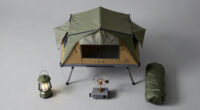
To prepare a multi-day power strategy at camp, choose a sunny spot facing south and keep your solar panels clean and well-positioned to maximize sunlight. Use a sufficient number of lightweight lithium-ion batteries or portable power stations to store energy for cloudy days or nighttime. Keep track of your device needs, monitor power usage, and plan for extra batteries if needed. Proper setup guarantees safety and efficiency, helping you stay powered up throughout your trip—and there’s more to discover to keep your energy supply reliable.

Get emergency and outdoor gear delivered free — and shop member deals
- Fast, free delivery on millions of items
- Access to Prime Big Deal Days deals on October 6–7
- Prime Video, Amazon Music and more included
Key Takeaways
- Assess your energy needs and select appropriate battery capacity and portable power stations accordingly.
- Optimize solar panel placement facing south with minimal shading for maximum sunlight exposure.
- Elevate and angle solar panels seasonally to enhance energy capture throughout your trip.
- Regularly monitor and maintain the solar system to ensure efficiency and safety.
- Plan device usage to conserve power and prioritize essential electronics during multi-day stays.

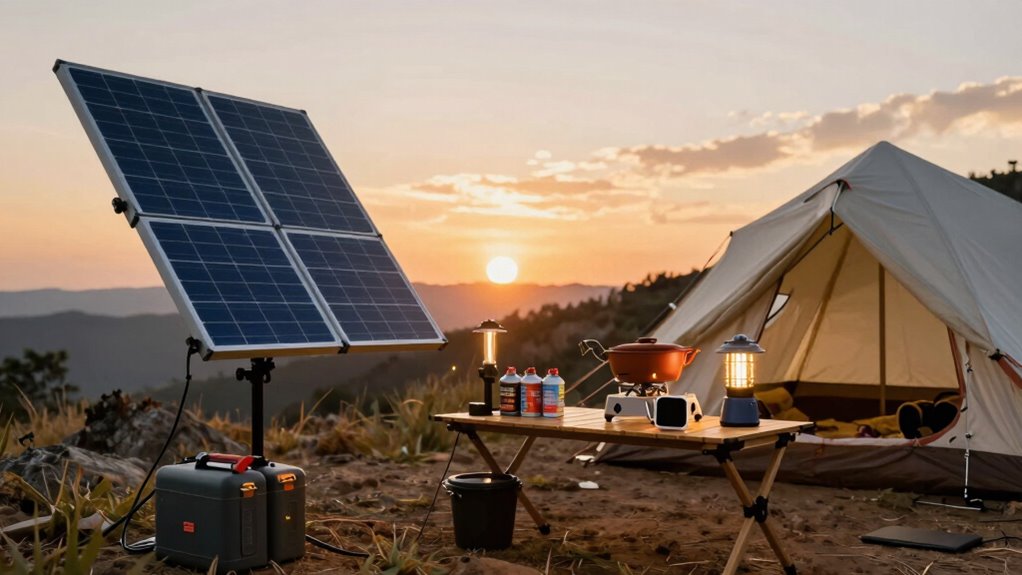
When planning for a multi-day campout, having a reliable power strategy is essential to keep your devices charged and guarantee safety. To do this effectively, you need to think about solar panel placement and battery storage options. Proper solar panel placement ensures you maximize sunlight exposure, which is crucial for generating enough power throughout your trip. Find a spot that gets direct sunlight for most of the day—ideally, an unobstructed area facing south if you’re in the northern hemisphere. Avoid shady spots, tree cover, or shadows from tents and equipment, as these reduce efficiency. Elevate your solar panels if possible to catch more sunlight, and angle them according to the season to optimize energy collection. Keeping the panels clean and free of debris also helps maintain their efficiency during your camping days. Monitoring your power quality and usage can help you better manage your energy needs and avoid unexpected depletion. Incorporating proper installation techniques can further enhance the safety and longevity of your system. Additionally, understanding solar safety and installation best practices helps prevent potential hazards and maximizes your system’s lifespan. Incorporating solar charge controllers can optimize energy transfer and protect your batteries from overcharging.
Alongside solar panel placement, you should consider your battery storage options carefully. Having sufficient and reliable battery capacity allows you to store the energy generated during the day for use at night or during cloudy weather. Lithium-ion batteries are popular because they’re lightweight, durable, and hold a charge for longer periods. If you’re planning a longer trip, investing in larger capacity batteries or multiple units makes sense, so you’re not caught short. Portable power stations with multiple outlets can also serve as a central hub for charging devices like phones, GPS units, or small appliances. When choosing batteries, think about your energy needs—how many devices you’ll charge and how often. It’s wise to have some backup options, such as extra batteries or portable chargers, in case your main storage gets depleted faster than expected. Properly configuring your energy system can further improve efficiency and safety during your trip.
portable solar panel for camping
As an affiliate, we earn on qualifying purchases.
As an affiliate, we earn on qualifying purchases.
Frequently Asked Questions
What Are the Best Portable Power Sources for Multi-Day Camping?
You should consider portable power banks with high battery capacity for multi-day camping. Look for models with sufficient milliamp-hours (mAh) to meet your device needs. Battery capacity planning helps you determine how many power banks you’ll need to keep everything charged. Prioritize lightweight, durable options with solar charging capabilities if possible. This way, you stay connected and powered without adding bulk, ensuring a smooth multi-day camping experience.
How Do I Conserve Energy During Extended Camping Trips?
Think of your energy as a precious river flowing through your camp. To conserve it, limit unnecessary use by managing campfire lighting efficiently and using lanterns sparingly. Prioritize water filtration to avoid wasting power on excess pumping. You can also strategize by turning off devices when not in use and embracing natural light. Small, mindful actions keep your river flowing strong, ensuring your energy lasts through your entire adventure.
What Safety Precautions Should I Take With Portable Batteries?
You should always prioritize battery safety when using a portable charger. Keep batteries away from direct sunlight, extreme heat, or moisture, and never puncture or disassemble them. Use your portable charger correctly, avoiding overcharging or draining it completely. Store batteries in a cool, dry place and keep them out of reach of children. Regularly check for damage or swelling, and replace batteries if you notice any issues to guarantee safety during your camping trip.
How Do Weather Conditions Affect My Power Supply Options?
Weather impact plays a big role in your power reliability during camp. Rain, snow, or extreme cold can damage batteries, reduce solar panel efficiency, or drain power faster. Wind can also cause issues if you’re using portable generators. To stay prepared, protect your gear from the elements, keep batteries dry, and have backup power sources. Monitoring weather forecasts helps you adapt your power strategy, ensuring you stay connected and safe.
Can I Recharge Batteries Using Solar Panels Efficiently?
You can recharge batteries efficiently with solar panels if you optimize your setup. Coincidentally, the best sunlight often appears when you least expect it, making proper solar panel placement essential. Regular battery maintenance guarantees they’re ready to accept a charge. Position your panels where they catch direct sunlight, free from shadows, especially during peak hours. This way, your power supply stays steady, even when the weather changes unexpectedly.
lithium-ion portable power station
As an affiliate, we earn on qualifying purchases.
As an affiliate, we earn on qualifying purchases.
Conclusion
Think of your power strategy as tending a campfire. With careful planning, you gather enough wood, keep the flames steady, and know when to add more fuel. Just like a fire that keeps your campsite warm and bright, your energy setup will sustain you through days of adventure. When you’re prepared, you create a steady glow that guides your way, turning your camping trip into a memorable journey rather than a struggle in the dark.
solar charge controller for batteries
As an affiliate, we earn on qualifying purchases.
As an affiliate, we earn on qualifying purchases.
As an affiliate, we earn on qualifying purchases.
Fall Picks
fall essentials
As an affiliate, we earn on qualifying purchases.