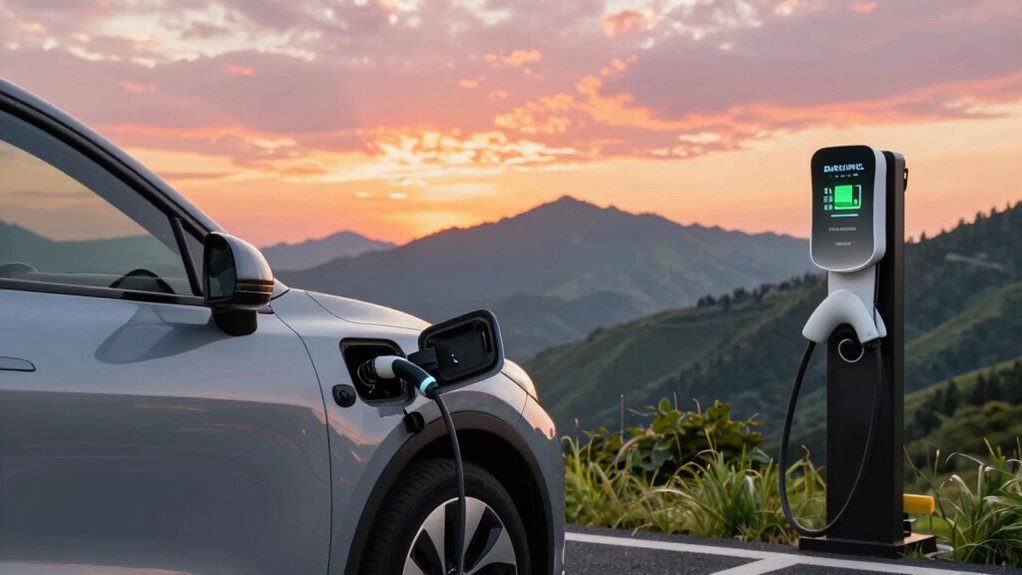

Before a long trip, you need to understand your vehicle’s charging limits, including maximum charging rate and capacity. Knowing how fast and how much your battery can safely charge helps you plan stops efficiently, avoiding battery damage and wasted time. Be aware of charging protocols to optimize the process and extend battery life. Staying informed about these limits guarantees you won’t be caught off guard. If you keep going, you’ll find helpful tips to make your trip smoother.

Get emergency and outdoor gear delivered free with Prime
- Fast, free delivery on millions of items
- Prime Video, Amazon Music and more included
- Member-only deals all year
Key Takeaways
- Know your vehicle’s maximum charging rate to avoid exceeding safe charging limits.
- Understand the charging protocols to optimize speed and prevent battery damage.
- Identify fast-charging stations along your route for quicker recharges.
- Be aware of the battery’s capacity and management system to set realistic range expectations.
- Ensure proper battery calibration for accurate range estimation and efficient trip planning.

Are you planning a long road trip with an electric vehicle? If so, understanding your car’s charging limits is vital to guarantee smooth travels. Before hitting the road, you should check your EV’s battery calibration. Battery calibration involves resetting your battery’s state of charge indicator, making sure it accurately reflects the actual remaining range. When your battery isn’t properly calibrated, you might see an overly optimistic or conservative range estimate, which can lead to unexpected stops or early recharging. To calibrate it, you typically need to fully charge your vehicle to 100%, then drain it down to near zero before charging it back to full. This process helps your vehicle’s software better understand the battery’s true capacity, giving you a more dependable range estimate for your trip.
Another key aspect is the availability of charging stations along your route. Before setting out, plan your stops carefully, checking for charging station availability in advance. Make sure you have access to a reliable map or app that shows real-time station status, including whether chargers are operational and available. This reduces the risk of getting stranded because of unavailable chargers or busy stations. Some areas might have fewer charging options, so it’s wise to identify alternative locations beforehand. Keep in mind that not all charging stations are equal; some may offer faster charging speeds, which can substantially reduce your stopover time. Knowing where the fast chargers are located can help you optimize your schedule, especially if you’re tight on time. Additionally, understanding your vehicle’s charging limits helps ensure efficient use of available power and prevents potential damage to the battery during charging. Being aware of charging protocols can further optimize your charging sessions and prolong your battery’s lifespan. Furthermore, understanding the battery capacity can assist in better planning and avoiding unexpected range reductions. Finally, being informed about battery management systems can help you maintain optimal battery health over time.
electric vehicle charging station locator
As an affiliate, we earn on qualifying purchases.
As an affiliate, we earn on qualifying purchases.
Frequently Asked Questions
How Do Charging Limits Vary Between Different Electric Vehicle Brands?
Charging limits vary between electric vehicle brands because each has different charging capacities and battery thresholds. Some brands, like Tesla, offer higher maximum charging capacities, allowing faster charging times, while others might have lower thresholds to protect battery life. You should check your vehicle’s specific battery thresholds and charging capacity to plan your long trip effectively. Understanding these differences helps you optimize charging stops and reduces range anxiety.
Are There Any Safety Concerns With Charging Beyond Recommended Limits?
Charging beyond recommended limits can cause safety concerns like battery overheating, which may lead to damage or fire risks. It’s important to stick to manufacturer guidelines to guarantee safe charging, especially when using charging infrastructure. Overcharging can stress your battery, reducing its lifespan and risking overheating. Always monitor your charging process and avoid pushing your EV past its recommended limits to keep your trip safe and your vehicle in good condition.
How Do Charging Limits Affect Battery Lifespan Over Time?
Charging limits play an essential role in controlling battery degradation over time. If you consistently stay within recommended limits, your charging habits help preserve your battery’s health, extending its lifespan. Overcharging or frequent deep discharges accelerate battery degradation, reducing overall capacity. By sticking to ideal charging ranges, you prevent unnecessary wear and tear, ensuring your device remains reliable longer. Proper charging habits safeguard your battery’s longevity and performance over the years.
Can Charging Limits Be Adjusted Manually or Through Software Updates?
Yes, you can often adjust charging limits manually through your vehicle’s settings or via software updates, which may improve battery calibration and charging efficiency. Some electric vehicles allow you to set a maximum charge level to extend battery life, while updates can optimize charging algorithms. Check your car’s manual or app to see if these options are available, helping you manage your battery’s health more effectively.
What Are the Best Practices for Managing Charging Limits During Unexpected Delays?
Think of managing charging limits during unexpected delays like steering through the labyrinth of the Minotaur. Prioritize accessible charging stations, especially emergency options, to keep your journey on track. Keep your vehicle’s charging limits flexible by adjusting settings if possible, and plan for emergency charging strategies. This way, you stay prepared, avoiding run-ins with unforeseen obstacles, and guarantee your trip remains smooth despite delays.
As an affiliate, we earn on qualifying purchases.
Conclusion
Now that you know the ins and outs of charging limits, you’re better prepared for your long trip. Remember, a little extra planning goes a long way — don’t leave things to chance or you might find yourself in hot water. Keep an eye on your battery levels, plan your stops, and stay flexible. With these tips, you’ll avoid surprises and keep your journey smooth sailing. After all, a stitch in time saves nine!
battery calibration tool for electric cars
As an affiliate, we earn on qualifying purchases.
As an affiliate, we earn on qualifying purchases.
As an affiliate, we earn on qualifying purchases.
Fall Picks
fall essentials
As an affiliate, we earn on qualifying purchases.