Flexible solar panels are great if you prefer spontaneous adventures, backpacking, or camping on uneven surfaces because they’re lightweight, portable, and easy to set up on tents or backpacks. Rigid panels suit longer-term, semi-permanent setups like RVs or stationary campsites, offering higher efficiency and durability. Your camping style determines which type fits best, whether you’re on-the-go or settled in for a while—continue to explore how each option matches your outdoor lifestyle.

Get emergency and outdoor gear delivered free — and shop member deals
- Fast, free delivery on millions of items
- Access to Prime Big Deal Days deals on October 6–7
- Prime Video, Amazon Music and more included
Key Takeaways
- Flexible panels are ideal for mobile campers and backpackers due to their lightweight, portable, and adaptable design.
- Rigid panels suit long-term or semi-permanent setups, offering higher efficiency and durability for stationary camping.
- Flexible panels work well on curved surfaces like RV roofs or boat decks, accommodating spontaneous camping needs.
- Rigid panels are better for consistent, reliable power in fixed camp locations with stable mounting.
- Choice depends on camping style: portability for mobile adventures versus durability for stationary, extended stays.

When you’re camping, staying connected and powering your devices can be a challenge, especially in remote locations. That’s where solar panels come into play, offering a dependable way to harness renewable energy and keep your gadgets charged. Whether you prefer a flexible setup or a more rigid structure, understanding how each type fits your camp style can make all the difference.
Flexible solar panels are lightweight, thin, and easy to carry, making them ideal for campers who prioritize portability. You can roll or fold them up, fitting them into small spaces or attaching them directly to tents, backpacks, or irregular surfaces. This portability makes flexible panels perfect for backpackers or minimalist campers who want to maximize portable power without adding weight to their gear. Since they’re designed to bend around curved surfaces, flexible panels work well on RV roofs, boat decks, or uneven terrains. They’re quick to set up and remove, so you can position them for ideal sunlight exposure without hassle. However, keep in mind that flexible panels generally have slightly lower efficiency than rigid ones, which might mean longer charging times for your devices. Still, their ease of use and adaptability make them a popular choice for those who need renewable energy on the go. Additionally, understanding the importance of biodiversity helps ensure sustainable practices when setting up and maintaining your solar setups in natural environments. Using environmentally friendly materials and proper disposal methods can help minimize your ecological footprint. Incorporating eco-friendly materials in your solar setup can further reduce environmental impact and promote sustainable camping practices.
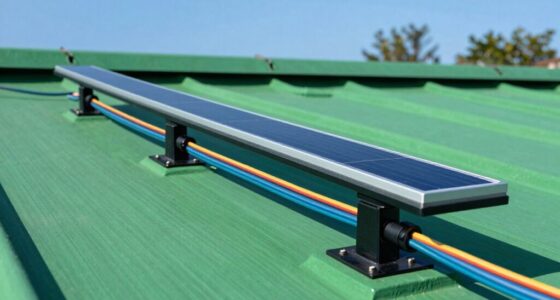
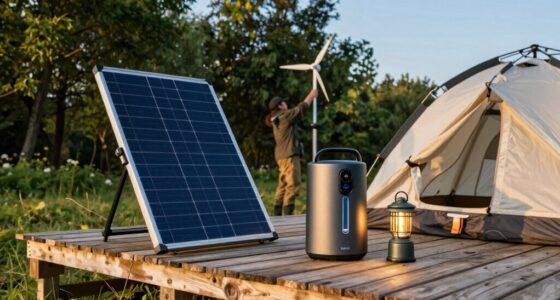
Rigid solar panels, on the other hand, offer higher efficiency and durability, making them ideal for longer trips or stationary setups. These panels are sturdier and typically come with a frame, allowing them to be mounted securely on rooftops, campgrounds, or dedicated stations. Once installed, they provide a consistent, reliable source of power that can handle heavy usage, which is especially beneficial if you rely on multiple devices or need to run small appliances. Rigid panels tend to have a longer lifespan, resisting weather conditions better over time, and often achieve better energy conversion rates. They’re less portable but more suitable if your camping style involves setting up a semi-permanent base where you can leave the panels in one place and focus on other activities. If you’re looking to complement your portable power needs with a sustainable, long-term energy solution, rigid solar panels are a dependable investment. Choosing the right type of solar panel can also depend on your environmental impact, as different setups may have varying effects on the surrounding natural habitat. Proper maintenance and positioning can also extend the lifespan of rigid panels and improve their efficiency.
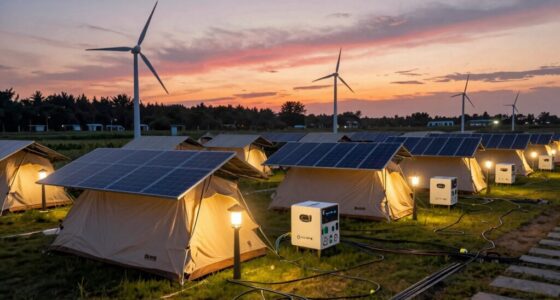
Ultimately, the choice between flexible and rigid solar panels boils down to your camping style and energy needs. Flexible panels offer unmatched portability and quick setup, perfect for backpackers or those who chase spontaneous adventures. Rigid panels provide higher efficiency and durability for campers who prefer a more stationary, long-term renewable energy source. Both options harness the power of the sun to keep your devices running, ensuring you stay connected and powered up regardless of where your adventures take you.
flexible portable solar panels for camping
As an affiliate, we earn on qualifying purchases.
As an affiliate, we earn on qualifying purchases.
Frequently Asked Questions
Are Flexible Solar Panels More Durable Than Rigid Ones?
Flexible solar panels are generally less durable than rigid ones, especially under harsh conditions, due to their thinner, more fragile materials. While they might have a higher aesthetic appeal and be easier to install, their cost comparison often favors rigid panels for long-term durability. You’ll want to weigh the trade-offs between durability, appearance, and budget when choosing the right type for your camping setup.
Can Flexible Panels Handle Extreme Weather Conditions?
Flexible panels can handle some extreme weather conditions, but their weather resilience varies depending on material flexibility. If made with high-quality, durable materials, they resist damage from wind, rain, and snow better. However, extreme conditions like heavy hail or intense storms may still pose a risk. You should consider the specific weather resilience of each panel and guarantee proper installation to maximize their durability in tough weather.
Do Rigid Panels Require Special Mounting Equipment?
No, rigid panels don’t require special mounting equipment, but they do demand specific mounting techniques and installation requirements. You might think they’re simple, yet their sturdy frames mean you’ll need brackets, rails, or racks to secure them properly. Ironically, while they seem straightforward, ensuring they stay aligned and stable in various weather conditions calls for careful planning and proper hardware, making the installation process more involved than it appears.
How Long Do Flexible Solar Panels Typically Last?
Flexible solar panels typically last around 5 to 10 years, depending on usage and environmental conditions. While they may have slightly lower solar panel efficiency compared to rigid panels, they still offer great renewable energy benefits for campers on the go. You’ll appreciate their lightweight, portable design that easily fits various camping setups, making the most of solar power without sacrificing durability or performance in diverse outdoor environments.
Are There Any Maintenance Differences Between Flexible and Rigid Panels?
Did you know rigid panels last about 25-30 years, while flexible ones tend to last 10-15? When it comes to maintenance, flexible panels generally require less cleaning because they’re less prone to dirt buildup. However, they might need more frequent inspections due to their delicate nature. Installation complexity also varies—rigid panels often need a sturdy mount, whereas flexible panels are easier to install but may need careful handling to avoid damage.
As an affiliate, we earn on qualifying purchases.
Conclusion
Ultimately, choosing between flexible and rigid solar panels depends on your camp’s unique rhythm and setting. Flexible panels gently adapt to uneven terrains, offering subtle convenience, while rigid panels provide a steadfast source of power with a touch more stability. By considering your camping style and environment, you can seamlessly integrate solar energy into your adventures, ensuring your journey remains harmonious with nature. With thoughtful selection, your camp can enjoy a quiet, sustainable glow that quietly sustains your spirit.
foldable solar panel for backpacking
As an affiliate, we earn on qualifying purchases.
As an affiliate, we earn on qualifying purchases.
As an affiliate, we earn on qualifying purchases.
Fall Picks
fall essentials
As an affiliate, we earn on qualifying purchases.