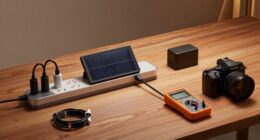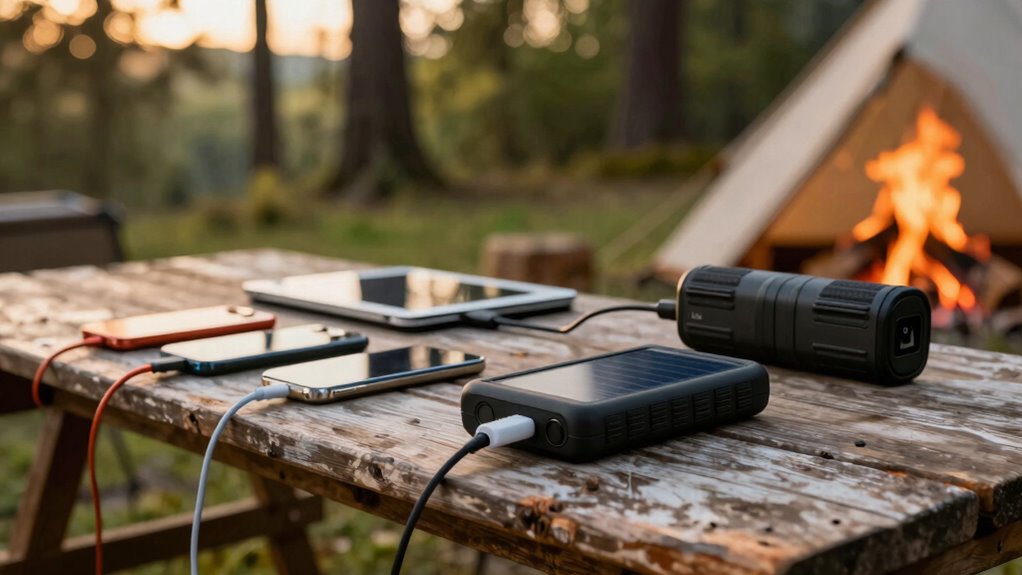

To build a smarter device charging rotation at camp, prioritize essential devices like navigation and emergency tools first. Use a schedule to allocate specific times for each device, avoiding simultaneous charges that could overload your power bank. Keep an eye on each device’s charge level and adjust your plan as needed. Position your solar panel efficiently and check your setup regularly. To discover more tips on optimizing your energy management, keep exploring this helpful guide.
Key Takeaways
- Prioritize essential devices like navigation or emergency tools in the charging schedule.
- Create a timed rotation system to evenly distribute charging periods among devices.
- Monitor device battery levels regularly to adjust charging times proactively.
- Limit simultaneous device connections to prevent power overload and ensure efficient use.
- Use a centralized power bank with multiple ports to manage device charging more effectively.
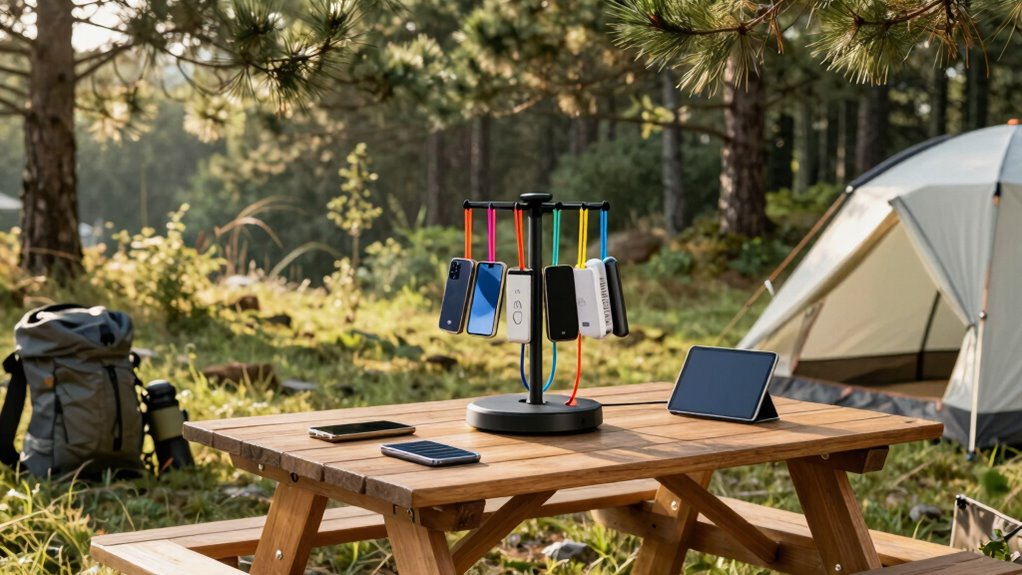
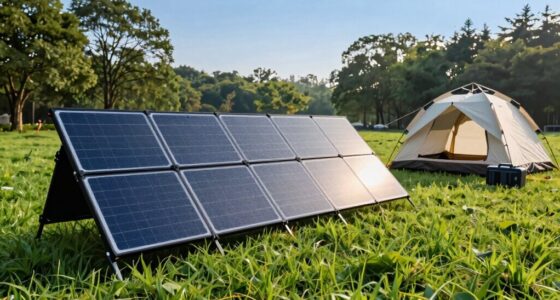
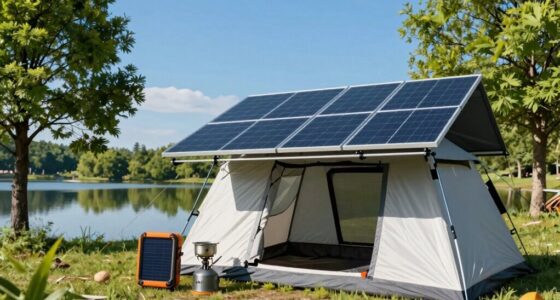
When you’re camping in a remote location, managing device charging can quickly become a challenge, especially if multiple people need their gadgets powered up. To keep everyone connected, you need a smart system that maximizes your power sources. One effective solution is to use a solar panel combined with a reliable power bank. A portable solar panel can harness the sun’s energy during the day, providing a sustainable, renewable source of power that reduces your dependence on limited battery reserves. Pairing this with a high-capacity power bank ensures you have stored energy for cloudy days or nighttime use, creating a more flexible and efficient charging setup.
Start by setting up your solar panel in a spot that receives direct sunlight for most of the day. Positioning it correctly is vital: avoid shaded areas and angle it toward the sun as the seasons change. Connect your solar panel to the power bank using a compatible cable, making sure the power bank has enough input capacity to handle the solar panel’s output. Once connected, the solar panel will begin charging the power bank, which acts as a central hub for your devices. When multiple campers need to charge their gadgets, establish a rotation system based on priority or device importance. For example, phones used for navigation or emergency communication should take precedence.
Set up your solar panel in direct sunlight, connect it to a capable power bank, and create a device charging rotation system.
Make sure your power bank has enough ports to handle several devices simultaneously. Using a power bank with multiple USB outputs allows you to distribute power efficiently, minimizing downtime for each device. To prevent overloading, monitor each device’s charging status and avoid plugging in more gadgets than your power bank can support at once. You can implement a simple schedule, giving each person a designated time to charge their device, or prioritize devices based on urgency. This approach guarantees fair distribution of limited power without wasting energy. Additionally, power management is crucial to ensure efficient energy use and prolong your device uptime. Incorporating solar energy into your camping setup can significantly extend your power supply, especially in remote locations. Regularly checking your equipment’s health and making small adjustments can dramatically improve your overall device management.
Another key aspect is to be aware of potential panel snow management issues in winter conditions, which can hinder sunlight absorption and reduce energy collection. By combining a solar panel with a power bank and adopting a thoughtful charging rotation, you’ll keep everyone’s devices powered longer, making your camping trip safer, more connected, and less stressful.

SOLUPUP Solar Panels 30W Portable Foldable Solar Charger with 5V USB-A and USB-C Fast Charging Compatible with iPhone, iPad, Samsung, Power Banks, IPX5 Waterproof Perfect for Camping, Hiking, Outdoor
- High-Efficiency Solar Panel: 23%+ energy conversion rate for faster charging
- Dual USB Output Ports: Charges two devices simultaneously with USB-A and USB-C
- IPX5 Waterproof & Dustproof: Resistant to rain, dust, and harsh weather
As an affiliate, we earn on qualifying purchases.
As an affiliate, we earn on qualifying purchases.
Frequently Asked Questions
What Types of Chargers Are Best for Camping Trips?
For camping trips, you should choose portable power banks with high capacity and multiple USB ports. Look for chargers with battery management features to optimize charge cycles and prevent overcharging. Solar-powered chargers are great for sustainability and extended trips. Compact, lightweight, and durable models are best, ensuring you can keep your devices charged without adding bulk to your gear. Prioritize reliability and efficiency to stay connected and powered during your adventure.
How Do I Prevent Device Damage During Charging Rotations?
To prevent device damage during charging rotations, focus on battery preservation and temperature regulation. Avoid overcharging by unplugging devices once fully charged, and use chargers with built-in safety features. Keep devices in a cool, well-ventilated area to prevent overheating, which can harm the battery. Regularly rotate charging tasks to prevent excessive heat build-up, and monitor your devices for signs of overheating or swelling to guarantee safe, effective charging.
Can Solar Chargers Be Integrated Into the Rotation System?
Yes, you can integrate solar chargers into your rotation system by using a solar panel to continuously charge a power bank. This setup allows you to generate renewable energy during the day, then switch devices to the power bank for charging at night or when needed. It keeps your devices topped off sustainably, reduces reliance on external power sources, and guarantees your devices are ready without risking damage from overcharging.
How Do I Manage Charging for Multiple Devices Simultaneously?
You should implement device prioritization to determine which devices need charging most urgently and manage power accordingly. Use a power management system that distributes energy efficiently, such as a multi-port charger with adjustable output. By monitoring each device’s battery level, you guarantee essential devices charge first, preventing overloading. This approach helps you manage charging for multiple devices simultaneously, ensuring everyone stays connected without draining your power source prematurely.
What Safety Precautions Should I Consider When Charging Outdoors?
When charging outdoors, prioritize safety by using weatherproof, surge-protected outlets to prevent damage and guarantee battery preservation. Keep your devices away from water and moisture to avoid short circuits. Use power-efficient chargers to conserve energy and extend battery life. Always supervise charging stations, and avoid overloading circuits. By taking these precautions, you protect both your devices and yourself, making sure safe, efficient outdoor charging.
high capacity power bank with multiple USB ports
As an affiliate, we earn on qualifying purchases.
As an affiliate, we earn on qualifying purchases.
Conclusion
By setting up a smarter charging rotation, you turn a chaotic scramble into a peaceful rhythm, much like the steady pulse of a campfire. While your devices recharge in an orderly dance, you can savor the quiet moments of the outdoors—unplugged and present. This simple system transforms the scramble for power into a symphony of patience and preparedness, letting you enjoy nature without the constant buzz of low batteries. It’s camping, recharged.
solar charger with adjustable angle
As an affiliate, we earn on qualifying purchases.
As an affiliate, we earn on qualifying purchases.
As an affiliate, we earn on qualifying purchases.