The survival gear backpack market splits into two very different products: empty tactical packs you load yourself, and pre-assembled kits that bundle first aid, shelter, and tools into one bag. After comparing 11 options, the 258-piece Survival Kit with Water Filter, Tent, Lantern, and 25L Backpack earns the best overall spot for pairing genuinely useful gear with a usable bag, while the LHI Military Tactical 45L Backpack stands out if you already own gear and just need a rugged, modular carrier. The main tradeoff is convenience versus quality: bundled kits get you prepared fast but often include filler items, whereas tactical packs like the Reebow Gear 3-Day Assault Pack give you durability and capacity at the cost of building your own loadout. Read on for the full breakdown, including which kits are worth the money and which leave you paying for pouches you’ll never open.

Get emergency and outdoor gear delivered free with Prime
- Fast, free delivery on millions of items
- Prime Video, Amazon Music and more included
- Member-only deals all year
Key Takeaways
- Pre-assembled kits dominated this lineup (8 of 11 picks), but their piece counts are misleading: a 262-piece kit may include dozens of bandages and cable ties while skimping on shelter, water, and fire-starting gear.
- Only one kit in this comparison included a water filter (the 258-piece kit), which is why it took the best overall spot — hydration beats gadget count in a real emergency.
- The standalone tactical packs (LHI 45L and both Reebow Gear models) offer far better fabric, zippers, and MOLLE real estate than any included bag in the kits, making them the smarter base for experienced preppers.
- Two of the 11 products were near-identical 262-piece kits with different branding, a common pattern in this category — small-capacity survival kits under about $50 showed the most duplication and filler.
- Backpack size ranged from 17L to 45L, and that range maps directly to use case: sub-25L bags work as car trunk or get-home bags, while 35L+ tactical packs are the only realistic option for a 72-hour bug-out load.
| LHI Military Tactical Backpack 45L Assault Pack Bag with Molle System, Black |  | Best Overall Empty Pack | Capacity: 45L | Dimensions: 12 x 20 x 12 inches | Material: 900 oxford nylon | VIEW LATEST PRICE | See Our Full Breakdown |
| Survival Kit, 251pcs Emergency Survival Gear with Tactical Backpack, First Aid Supplies, Camping Essentials |  | Best All-in-One Kit | Total Pieces: 251 | Bag Material: 600D nylon | Bag Features: Detachable crossbody strap, MOLLE webbing, multi-compartment | VIEW LATEST PRICE | See Our Full Breakdown |
| 250-Piece Survival Gear First Aid Kit with Molle System Compatible Bag and Emergency Tent |  | Best Compact Kit | Total Pieces: 250 | Bag Material: Military-grade water-resistant 1000D nylon | Bag Dimensions: 8 x 6.5 x 6 inches | VIEW LATEST PRICE | See Our Full Breakdown |
| Reebow Gear Military Tactical Backpack Large Army 3 Day Assault Pack Molle Bag |  | Best Value Empty Pack | Capacity: 40L | Dimensions: 13 x 20 x 11 inches (33 x 50.5 x 28 cm) | Material: 600×600 density fabric | VIEW LATEST PRICE | See Our Full Breakdown |
| Survival Kit, 262-Piece Emergency Gear with First Aid and Camping Supplies |  | Best for Family Emergency Planning | Total Pieces: 262 | Tool Material: Carbon steel (axe and shovel) | Tool Length: 17 inches | VIEW LATEST PRICE | See Our Full Breakdown |
| Survival Kit, 262-Piece Emergency Gear with First Aid and Camping Supplies |  | Best Grab-and-Go Family Kit | Number of Pieces: 262 | Key Items: First aid kit, axe, hammer, shovel with pick, tent, flashlight, glow sticks, water container, fire starter, wire saw, compass, emergency blanket, rope | Tool Material: Carbon steel (axe and shovel) | VIEW LATEST PRICE | See Our Full Breakdown |
| Professional Survival Gear Set – First Aid Kit and Large Camping Backpack for Outdoor Adventures |  | Best Full-Load Expedition Setup | Backpack Capacity: 45L | Backpack Dimensions: 11.81 x 19.68 x 11.81 inches | Material: 900D Oxford cloth and nylon | VIEW LATEST PRICE | See Our Full Breakdown |
| 260Pcs Emergency Survival Kit with First Aid Supplies, Thermal Emergency Tent, Waterproof MOLLE Backpack, Car and Outdoor Gear |  | Best for Cold-Weather and Roadside Emergencies | Total Pieces: 260 | Key Items: First aid supplies, thermal emergency tent, tactical axe, flashlight, multi-functional tools | Backpack: Waterproof MOLLE-compatible design | VIEW LATEST PRICE | See Our Full Breakdown |
| Reebow Gear Military Tactical Backpack Army 3-Day Assault Pack Molle Bag Rucksack | 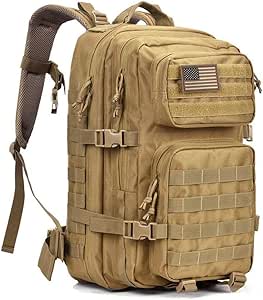 | Best Pack-Only Foundation for Building Your Own Kit | Size: 13 x 20 x 11 inches (33 x 50.5 x 28 cm) | Capacity: 40L | Material: High-density water-resistant fabric | VIEW LATEST PRICE | See Our Full Breakdown |
| Survival Kit, 258 PCS Emergency Gear with Water Filter, Tent, Lantern, First Aid, 25L Backpack |  | Best Value for Water Security on a Budget | Number of Pieces: 258 | Backpack Capacity: 25L | Water Filter: Included | VIEW LATEST PRICE | See Our Full Breakdown |
| 17-in-1 Survival Kit for Outdoor and Emergency Preparedness |  | Best Stocking Stuffer and Pocket-Sized Backup Kit | Number of items: 17 | Case dimensions: 7.3 x 4.3 x 2 inches | Case material: Military-grade waterproof case | VIEW LATEST PRICE | See Our Full Breakdown |
More Details on Our Top Picks
LHI Military Tactical Backpack 45L Assault Pack Bag with Molle System, Black
Buyers shopping for a survival gear backpack face a fork in the road: buy a pre-loaded kit or build your own loadout. For the second path, this LHI 45L assault pack makes the most sense as the foundation. Its 900-denier oxford nylon is a step up in toughness from the Reebow Gear 3 Day Assault Pack, and the extra 5L of capacity gives you room for shelter, water, and food that a 40L bag starts to squeeze. The MOLLE webbing lets you attach pouches exactly where you want them, something no pre-assembled kit like the 251-piece Survival Kit can match in flexibility. The tradeoff: everything inside costs extra, and a fully loaded 45L pack gets heavy fast.
Pros:- Heavier-duty 900D nylon than most tactical packs at this size
- 45L capacity plus MOLLE webbing for modular expansion
- Ventilated, padded back panel keeps long carries tolerable
- Multiple compartments keep a built-out loadout organized
Cons:- Fully loaded weight becomes a real burden on long treks
- Bulkier silhouette looks out of place for urban commuting
- No survival contents included — it’s a shell, not a kit
Best for: Experienced preppers and outdoorsmen who already own gear and want a rugged, customizable platform to organize it
Not ideal for: Beginners who want gear included on day one — this is an empty shell until you fill it, and costs stack up quickly
- Capacity:45L
- Dimensions:12 x 20 x 12 inches
- Material:900 oxford nylon
- Water Resistance:Water-resistant
- Attachment System:MOLLE webbing
- Back System:Ventilated padded back and straps
- Color:Black
Our verdict“The strongest choice if you’re assembling your own survival loadout rather than buying one pre-packed.”
Survival Kit, 251pcs Emergency Survival Gear with Tactical Backpack, First Aid Supplies, Camping Essentials
For buyers who want to go from zero to fully equipped in one purchase, this 251-piece kit covers an unusually wide spread: first aid, fire, navigation, shelter, and cutting tools all arrive organized inside a 600D nylon tactical pack. Compared with the 250-Piece Survival Gear First Aid Kit, this option trades a smaller MOLLE pouch for a full backpack format with a detachable crossbody strap, which makes it easier to grab and go during an evacuation. The axe/hammer and shovel/pick combo is genuinely useful for shelter-building and fire prep. The tradeoff is weight and depth — 251 pieces sounds like a lot until you realize some items are consumables, and the 600D bag fabric is noticeably lighter-duty than the LHI 45L pack.
Pros:- Complete one-purchase setup covering first aid, fire, tools, and navigation
- Backpack format with crossbody strap suits rapid evacuation
- Tools like the axe/hammer and shovel/pick handle real camp work
- Organized compartments mean you can actually find items under stress
Cons:- Fully loaded weight is taxing for smaller or older users
- Some specialty tools require practice before an emergency
- 600D nylon is thinner than dedicated tactical packs in this roundup
Best for: Households building a grab-and-go emergency bag for the car trunk or closet who don’t want to research individual tools
Not ideal for: Ultralight hikers and minimalists — the full kit is heavy and includes redundancy you’ll never carry on a trail
- Total Pieces:251
- Bag Material:600D nylon
- Bag Features:Detachable crossbody strap, MOLLE webbing, multi-compartment
- Tools Included:Axe/hammer, shovel/pick, fire starter, SOS flashlight
- Survival Extras:Thermal blanket, compass, paracord bracelet, wire saw
- First Aid:Included
Our verdict“The most complete single-buy emergency solution here, ideal for anyone starting from nothing.”
250-Piece Survival Gear First Aid Kit with Molle System Compatible Bag and Emergency Tent
Size is the differentiator here. While the 251-piece Survival Kit comes as a full backpack, this kit compresses 250 pieces into an 8 x 6.5 x 6 inch pouch of 1000D water-resistant nylon — the toughest fabric in this entire roundup. That small footprint means it MOLLE-attaches to a larger pack like the Reebow Gear 3 Day Assault Pack, effectively becoming a survival module on a bigger system rather than a standalone bag. The included emergency tent and blanket cover the shelter gap that cheaper mini-kits skip. The tradeoff is ergonomic: there are no real shoulder straps, so carrying it alone over distance means hand-carrying or rigging it yourself, and digging through dense compartments takes practice.
Pros:- 1000D nylon is the most durable fabric in this lineup
- Ultra-compact 8 x 6.5 x 6 inch footprint stows almost anywhere
- MOLLE-compatible for attaching to larger packs or belts
- Includes emergency tent and blanket for genuine shelter capability
Cons:- No backpack straps — not a true standalone carry option
- Dense packing makes specific items hard to find quickly
- Some pieces are redundant for casual campers
Best for: Hikers and hunters who want to bolt a complete survival kit onto an existing tactical pack instead of carrying a second bag
Not ideal for: Anyone who needs a standalone backpack — this is a pouch system, and hauling it long distances without a host pack is awkward
- Total Pieces:250
- Bag Material:Military-grade water-resistant 1000D nylon
- Bag Dimensions:8 x 6.5 x 6 inches
- Attachment:MOLLE-compatible
- Shelter Items:Emergency tent and blanket
- Tools Included:Axe, folding shovel, knife, paracord, fire starter, lantern
- Extras:Whistle, compass, raincoat
Our verdict“The smart pick if you already own a tactical backpack and want a rugged, attachable survival module rather than another bag.”
Reebow Gear Military Tactical Backpack Large Army 3 Day Assault Pack Molle Bag
When the budget for a build-your-own bug-out bag is tight, this Reebow Gear 3 Day Assault Pack is the value play. It undercuts the LHI 45L pack on price while delivering 40L of capacity, MOLLE webbing, and a hydration-compatible sleeve — the core features that matter for a 72-hour loadout. Compared with the pre-packed kits like the 262-Piece Survival Kit, you give up included gear but gain the ability to choose quality items yourself instead of accepting a mixed bag of tools. The compromises are honest ones: 600×600 density fabric won’t shrug off abuse like the LHI’s 900D nylon, the hydration bladder costs extra, and the zippers run stiff until broken in.
Pros:- Strong price-to-capacity ratio for a 40L tactical pack
- Hydration-bladder compatible for long-distance carries
- Ventilated padded back and straps rival pricier packs
- MOLLE webbing supports modular growth over time
Cons:- 600×600 fabric is a durability step down from 900D options
- Hydration bladder sold separately
- Zippers feel stiff out of the box
Best for: Budget-conscious buyers assembling a custom 72-hour kit who prioritize capacity and MOLLE expandability over premium fabric
Not ideal for: Buyers who want everything in the box — this is a shell only, and adding quality gear will cost more than a pre-packed kit
- Capacity:40L
- Dimensions:13 x 20 x 11 inches (33 x 50.5 x 28 cm)
- Material:600×600 density fabric
- Water Resistance:Yes
- Hydration Compatibility:Yes (bladder not included)
- Attachment System:MOLLE webbing
- Suspension:Ventilated padded back and shoulder straps
Our verdict“The best bang-for-buck foundation for a custom survival kit if premium materials aren’t a dealbreaker.”
Survival Kit, 262-Piece Emergency Gear with First Aid and Camping Supplies
This kit is framed around a specific scenario: surviving the first 72 hours of a disaster as a household. With 262 pieces spanning first aid, emergency shelter, lighting, and water storage, it’s the most household-oriented option here — the water storage and lighting items matter more for a family sheltering in place or evacuating by car than for a solo hiker. The 17-inch carbon steel axe and shovel are full-size rather than pocket tools, which beats the smaller implements in the 251-piece kit for real work like clearing debris. The tradeoff is carry style: a crossbody bag is comfortable for short walks to a car or shelter, but it can’t match the load-bearing comfort of the LHI 45L backpack on a long trek.
Pros:- Largest piece count in this roundup at 262 items
- Full-size 17-inch carbon steel axe and shovel handle heavy tasks
- Covers household priorities: water storage, lighting, shelter, first aid
- MOLLE straps and D-rings allow expansion and attachment
Cons:- Crossbody bag is uncomfortable for extended carrying
- Full-size tools add bulk minimalist users won’t accept
- Items require familiarity to deploy effectively under stress
Best for: Families building a home or car emergency kit focused on the first 72 hours of a disaster scenario
Not ideal for: Backcountry hikers — the crossbody carry and full-size tools are built for vehicle-based emergencies, not trail miles
- Total Pieces:262
- Tool Material:Carbon steel (axe and shovel)
- Tool Length:17 inches
- Bag Style:Crossbody with multiple compartments
- Attachment:MOLLE straps and D-rings
- Coverage Areas:First aid, shelter, lighting, water storage, fire starting
- Scenario Focus:First 72 hours of an emergency
Our verdict“The best fit for households prioritizing 72-hour disaster readiness over backcountry portability.”
Survival Kit, 262-Piece Emergency Gear with First Aid and Camping Supplies
This option stands out as the most family-oriented kit in the lineup, mainly because of its packaging choice. Where the Professional Survival Gear Set (45L) demands you wear a full backpack, this kit rides in a crossbody bag with molle straps, which makes it easier to stash in a car trunk or hand to a teenager during an evacuation. The 262-piece inventory covers shelter, fire, first aid, and food prep, and the carbon steel axe and shovel feel more substantial than typical kit throwaways. The tradeoff is real, though: a shoulder bag distributes weight far worse than a backpack, and loaded up it gets uncomfortable fast. Instructions are thin, so this pick makes the most sense for buyers who will practice with the tools before they need them.
Pros:- 262 pieces covering shelter, fire, first aid, and food preparation in one purchase
- Crossbody bag is easier to store and grab quickly than a full backpack
- Carbon steel axe and shovel are sturdier than typical kit tools
- Developed with input from survival experts
Cons:- Crossbody carry is uncomfortable when the kit is fully loaded for long walks
- Sparse instructions for several of the tools
- Pricey for casual campers who only need a few items
Best for: Families who want a complete emergency kit they can keep in the car and grab instantly during evacuations
Not ideal for: Anyone planning to hike with their kit — the crossbody bag becomes painful over long distances compared to backpack-based rivals
- Number of Pieces:262
- Key Items:First aid kit, axe, hammer, shovel with pick, tent, flashlight, glow sticks, water container, fire starter, wire saw, compass, emergency blanket, rope
- Tool Material:Carbon steel (axe and shovel)
- Packaging:Crossbody bag with multiple compartments and MOLLE straps
- Tool Length:17 inches (axe and shovel)
- Intended Use:Home, vehicle, and outdoor emergencies
Our verdict“Buy this if you want a car-ready family emergency kit you can carry hands-free in a pinch, not a hiking companion.”
Professional Survival Gear Set – First Aid Kit and Large Camping Backpack for Outdoor Adventures
If the 262-Piece Crossbody Kit is built for short evacuations, this set is built for going the distance. The 45L pack made from 900D Oxford cloth is the largest and most rugged carry platform here, with enough compartmentalized space to keep medical supplies separated from camping tools — a genuine advantage when you need gauze in a hurry. The included medical supplies are a step above the generic first aid contents in most kits in this roundup. The catch is weight: at 11.46 lbs before you add food and water, this is the heaviest option on the list, and smaller-framed users will feel it on day two. Some multifunction tools also assume prior familiarity. Compared with the 258-Piece 25L kit, you trade portability for capacity and organization.
Pros:- 45L 900D Oxford backpack is the most durable and spacious carry platform in the roundup
- Multiple compartments keep medical gear organized and accessible
- Higher-quality medical supplies than typical bundled kits
- Waterproof construction protects contents in sustained bad weather
Cons:- At 11.46 lbs empty of food and water, it’s the heaviest option here
- Several tools assume prior experience to use safely and effectively
- Essentially one color option
Best for: Experienced campers and hunters who want one comprehensive backpack-based kit for multi-day trips far from help
Not ideal for: Day hikers or smaller users — the 11.46 lb base weight makes it exhausting for short outings
- Backpack Capacity:45L
- Backpack Dimensions:11.81 x 19.68 x 11.81 inches
- Material:900D Oxford cloth and nylon
- Weight:11.46 lbs
- Package Size:15.35 x 11.81 x 7.08 inches
- Weather Resistance:Waterproof backpack shell
- Organization:Multiple internal compartments
Our verdict“This is the pick for buyers who plan to actually live out of their kit for days, not just store it in a closet.”
260Pcs Emergency Survival Kit with First Aid Supplies, Thermal Emergency Tent, Waterproof MOLLE Backpack, Car and Outdoor Gear
What separates this kit from the nearly identical 262-piece crossbody kit is its thermal emergency tent, which locks in body heat — a potentially life-saving difference if you’re stranded in winter rather than stuck in a summer power outage. The waterproof MOLLE backpack also beats a shoulder bag for hands-free movement, and the MOLLE webbing lets you bolt on extra pouches or attach it to a larger rig, which the crossbody option can’t match. The tactical axe and flashlight round out a well-rounded 260-piece loadout aimed at roadside breakdowns and natural disasters. On the downside, individual component quality isn’t documented in detail, so expect budget-grade gear in places rather than the proven tools in the Professional 45L set. Minimalists will find the sheer item count more clutter than comfort.
Pros:- Thermal emergency tent retains heat for cold-weather stranding scenarios
- Waterproof MOLLE backpack allows hands-free carry and expandability
- Tactical axe and bright flashlight handle a wide range of tasks
- 260 pieces cover disaster, roadside, and camping situations
Cons:- Individual component quality is not specified and varies within the kit
- The sheer number of items can be overwhelming to inventory and learn
- Bulky compared to leaner kits like the 17-in-1 option in this roundup
Best for: Drivers and homeowners in cold-climate regions who want a heat-retaining shelter option for winter breakdowns and storms
Not ideal for: Minimalists and ultralight hikers — 260 pieces in a MOLLE pack is heavy, bulky, and partly redundant
- Total Pieces:260
- Key Items:First aid supplies, thermal emergency tent, tactical axe, flashlight, multi-functional tools
- Backpack:Waterproof MOLLE-compatible design
- Materials:Oxford fabric, stainless steel
- Shelter Feature:Heat-locking thermal emergency tent
- Intended Use:Outdoor emergencies, roadside breakdowns, natural disasters
Our verdict“Choose this over the similar 262-piece kit if cold-weather stranding is a realistic threat where you live or drive.”
Reebow Gear Military Tactical Backpack Army 3-Day Assault Pack Molle Bag Rucksack
Every other entry in this roundup is a pre-packed kit — this one is just the pack, and that’s exactly its value. For buyers who already own quality tools, the Reebow 3-Day Assault Pack avoids the filler items that pad out sets like the 258-piece 25L kit, where basic tools may not satisfy experienced users. At 40L it splits the difference between that compact 25L option and the Professional 45L set, hitting a sweet spot for a 72-hour loadout. The MOLLE webbing, hydration compatibility, and ventilated padding are features the bundled kits rarely prioritize. Two honest tradeoffs: the hydration bladder is not included, and the water-resistant — not waterproof — fabric means contents need liners or dry bags in sustained rain. It’s also a real pack first, so it feels substantial even before loading.
Pros:- MOLLE webbing allows unlimited customization with external pouches
- Ventilated mesh back and shoulder padding suits long carries
- 40L capacity is well-sized for a 72-hour loadout without being oversized
- Hydration-compatible design with heavy-duty zippers built for hard use
Cons:- Hydration bladder sold separately, adding hidden cost
- Water-resistant rather than waterproof — contents need dry bags in heavy rain
- Feels heavy even before you load it, unlike lighter civilian daypacks
Best for: Experienced preppers and outdoorsmen who already own quality gear and want a durable, customizable 72-hour pack to organize it in
Not ideal for: First-time buyers who want everything included in one purchase — this ships empty with no bladder or supplies
- Size:13 x 20 x 11 inches (33 x 50.5 x 28 cm)
- Capacity:40L
- Material:High-density water-resistant fabric
- MOLLE System:Full external webbing for pouches and attachments
- Hydration Compatibility:Yes (bladder not included)
- Comfort Features:Ventilated mesh padding on back and straps
- Zippers:Heavy-duty construction
Our verdict“Skip the bundled kits and buy this if your survival tools are worth more than the throwaway gear packed in them.”
Survival Kit, 258 PCS Emergency Gear with Water Filter, Tent, Lantern, First Aid, 25L Backpack
This is the only kit in this batch that includes a water filter, and that single item changes the math for buyers who worry about disasters that contaminate municipal supplies. The 25L tactical backpack makes it the lightest, most manageable kit-carry here — noticeably friendlier than the 11.46 lb Professional 45L set — while still packing 258 pieces, a tent, an LED lantern, and full first aid supplies into organized compartments. Compared with the 260-piece thermal tent kit, you give up cold-weather heat retention but gain the ability to drink from questionable sources, which matters more in most disaster scenarios. The honest weakness is that some included tools are entry-level in quality, so seasoned survivalists will want to swap a few items out. For the price-to-capability ratio, though, this pick makes the most sense for budget-minded beginners.
Pros:- Water filter included — unique in this lineup and critical for contaminated-supply scenarios
- Compact 25L backpack is the easiest kit-based carry here for smaller users
- LED lantern provides hands-free camp lighting beyond a basic flashlight
- Organized compartments allow quick access to first aid and tools
Cons:- Some tools are entry-level and may disappoint experienced users
- 25L capacity fills quickly once you add food, water, and clothing
- Fully loaded, it’s still heavier than a bare pack like the Reebow 40L
Best for: Budget-conscious preppers and beginner hikers who prioritize clean drinking water in their emergency planning
Not ideal for: Advanced survivalists — several tools are basic quality and would need replacing for serious backcountry use
- Number of Pieces:258
- Backpack Capacity:25L
- Water Filter:Included
- Shelter:Emergency tent included
- Lighting:LED lantern included
- Medical:Full first aid supply set
- Backpack Build:Durable, waterproof tactical design with organized compartments
Our verdict“The smartest low-cost entry point in the roundup if safe drinking water is your top emergency concern.”
17-in-1 Survival Kit for Outdoor and Emergency Preparedness
After ten backpack-sized kits in this roundup, this 17-in-1 kit earns its place by going the opposite direction: instead of a 40L pack loaded with 250+ pieces, everything here fits into a waterproof case the size of a paperback book. That makes it less a competitor to the 251pcs Emergency Survival Gear kit with Tactical Backpack and more a supplement to it — the thing you toss in a glove box, a coat pocket, or the lid compartment of a larger bag. The tool selection covers the fundamentals: fire starter, compass, wire saw, emergency blanket, and a tactical pen. What you give up is depth. There’s no first aid component to speak of, no tent, no water filter, and the flashlight ships without batteries, so it’s dead weight until you supply your own. Compared with the 258 PCS kit with Water Filter and Tent, this covers roughly the same core survival skills at a fraction of the size — but none of the comfort or medical scenarios.
Pros:- Genuinely pocket-sized — fits in a glove box, drawer, or the lid of a larger pack where full survival backpacks can’t go
- Waterproof military-grade case protects contents from rain and submersion
- Covers the core survival basics: fire, navigation, cutting, and signaling in one package
- Attractive gift-box packaging makes it a low-risk present for outdoorsy friends and family
- Low price point makes it easy to buy multiples for different vehicles and locations
Cons:- Flashlight arrives without batteries, so it’s non-functional out of the box until you add them
- No first aid supplies, shelter, or water filtration — the essentials larger kits in this roundup include
- Some tools, like the wire saw and fire starter, take practice to use effectively under stress
Best for: Day hikers, commuters, and gift-givers who want a genuinely portable emergency backup that fits in a glove box or jacket pocket rather than a full pack
Not ideal for: Anyone building a real bug-out or family emergency plan — it lacks first aid supplies, shelter, and water treatment that larger kits like the 260Pcs set include
- Number of items:17
- Case dimensions:7.3 x 4.3 x 2 inches
- Case material:Military-grade waterproof case
- Tool quality:High-endurance survival tools
- Included tools:Tactical pen, compass, flashlight, fire starter, wire saw, emergency blanket, multi-function tool card
- First aid contents:None
- Carrying style:Pocket-sized hard case (no backpack)
- Batteries included:No
Our verdict“Buy this as a compact backup or gift, not as your primary survival solution — it complements a larger backpack kit rather than replacing one.”
How We Picked
I evaluated each product through one lens: can this backpack and its contents actually sustain a person through a 72-hour emergency? That meant judging kit contents on functional gear density rather than raw piece counts — a water filter, emergency tent, and reliable fire starter count for more than fifty adhesive bandages. For the bags themselves, I compared capacity, MOLLE compatibility, fabric weight, zipper quality, and whether the included pack could survive being thrown in a car trunk and dragged through the woods. For standalone tactical packs, I weighed expandability and load-carrying comfort against price.
The ranking also reflects a practical tradeoff every buyer faces: convenience versus quality. Kits that bundled genuinely useful tools with a serviceable bag ranked higher than kits padding their numbers with filler. Empty tactical packs ranked based on build quality per dollar, since the buyer supplies the contents. Finally, I flagged near-duplicate products so readers don’t pay twice for the same kit under different labels — a recurring pattern in this category that became obvious once all 11 listings were compared side by side.
Factors to Consider When Choosing Survival Gear Backpacks
Before choosing between these 11 options, it helps to understand what actually separates a useful emergency pack from a box of gadgets with straps. These are the factors that drove the biggest quality gaps in this comparison.Piece Count Is a Marketing Number, Not a Quality Signal
The single biggest mistake buyers make in this category is shopping by piece count. A 262-piece kit can contain 80 bandages, a dozen cable ties, and a folding shovel that bends on first use — while a 250-piece competitor includes a water filter and thermal tent that could genuinely save your life. When comparing kits, mentally sort contents into four buckets: water, shelter, fire, and first aid. If a kit is heavy in one bucket and empty in another, its piece count is doing the work its engineering should. The kits that ranked highest in this roundup were the ones whose contents skewed toward the life-safety buckets rather than convenience items. A good rule of thumb: anything in the kit you could buy in a gas station checkout aisle is filler.
Bag Quality Usually Lags Behind the Gear Inside
In nearly every pre-assembled kit in this comparison, the backpack was the weakest component. Manufacturers include lightweight bags to keep shipping costs and price points low, which means thin fabric, small zippers, and minimal structure. That’s acceptable for a kit that lives in a car trunk and moves twice a year, but it fails fast under regular use or a real evacuation on foot. If you plan to carry your kit any distance, a better strategy is buying a modest kit and transferring its contents into a proper tactical pack like the LHI or Reebow Gear models reviewed here. That two-step approach costs a bit more upfront but outperforms any single bundled product in this lineup for durability.
Match Capacity to Your Realistic Scenario
Capacity should be dictated by your emergency plan, not by bigger-is-better instinct. A get-home bag kept at the office or in a car needs only 17–25 liters: water, first aid, flashlight, and walking shoes. A 72-hour bug-out bag for one person realistically needs 35–45 liters once you add water (which is heavy), food, shelter, and clothing layers. Buyers who buy a 45L pack for trunk storage end up filling empty space with gear they’ll never use, while buyers who try to squeeze a family’s supplies into a 25L kit end up strapping items to the outside where they get lost or soaked. Decide whether you’re building for one person or a household before choosing a size, because that decision changes everything downstream.
The First Aid Component Is Usually the Weakest Link
Across this roundup, the first aid components in bundled kits were consistently the most inflated and least useful part of the package. They typically include大量 small adhesive bandages, a few gauze pads, and maybe a cheap tourniquet that no medical professional would trust. None of the kits reviewed here included a genuine trauma kit with a quality tourniquet, hemostatic gauze, or a pressure bandage — the items that actually stop life-threatening bleeding. My recommendation regardless of which product you choose: treat the included first aid supplies as a starting point and budget an extra $30–50 for a proper trauma module. That upgrade addresses the most survivable emergency scenario these kits are supposed to cover.
Watch for Duplicates and Rebrands
This comparison surfaced two nearly identical 262-piece kits sold under different listings, and this pattern repeats constantly in the emergency kit market. Manufacturers white-label the same gear from the same factories and list it under multiple brand names, sometimes at different prices. Before buying, compare the contents photo rather than the product title — identical tool layouts, identical pouch colors, and identical tent designs usually mean identical products. Reading kit reviews with this filter also helps: a listing with thousands of reviews may share those reviews with three sibling listings. Buying the cheapest of a duplicate set is fine; accidentally buying two of them is not.
When to Pay More, and When It’s Wasted Money
Paying more makes sense in two places: the bag and the life-safety gear. A $45 tactical pack will outlast three $20 kit bags, and a $25 water filter outperforms a pocketful of purification tablets that expired unnoticed. Paying more for a higher piece count, on the other hand, is almost always wasted — the jump from 250 to 262 pieces typically adds bandages and whistles, not capability. Beginners should resist the urge to buy the biggest kit on the list; a modest kit plus a solid bag plus a real trauma module beats a giant kit on every measure that matters. The one exception is gifting or buying for a second vehicle, where a complete one-purchase kit’s convenience genuinely justifies its compromises.
Frequently Asked Questions
Should I buy a pre-assembled survival kit or build my own loadout in a tactical backpack?
It depends on how much time and knowledge you’re bringing to the project. A pre-assembled kit gets you from zero to reasonably prepared in one purchase, which is why kits like the 258-piece option with a water filter make sense for beginners and car storage. Building your own loadout in a pack like the Reebow Gear 3-Day Assault Pack costs more and takes real research, but every item is one you’ve chosen, inspected, and know how to use. The honest middle path is buying a solid kit, culling its filler, and upgrading its weakest components — usually the first aid module and the bag itself. What you shouldn’t do is buy a big kit and assume the work is done; untested gear in an unopened bag is a comfort object, not a plan.
How much water capacity does a survival backpack actually need?
Plan on one liter per person per day as the bare minimum for drinking, which means a 72-hour solo bag should carry or enable three liters. That’s why the 258-piece kit’s inclusion of an actual water filter mattered so much in this ranking — carrying three liters of water adds roughly six and a half pounds, so filter capability lets you refill from streams instead of hauling everything. Kits that only include a few purification tablets offer far less capacity than they appear to, since tablets expire and treat limited volumes. If your plan involves an urban environment where water sources are questionable, prioritize a filter or purification method over almost any other piece of gear. For a get-home bag in a car, two bottled liters plus a filter covers most realistic scenarios.
Are the backpacks included in survival kits actually durable enough for emergencies?
Generally, no — and this was one of the clearest findings across the comparison. The bags bundled with kits are lightweight, thin-fabric packs designed to hit a price point, not to survive being dragged, overpacked, or rained on for days. They’re adequate for storing gear in a closet or trunk, which is honestly how most people use them. The standalone tactical options in this roundup, like the LHI 45L and Reebow Gear packs, use noticeably heavier fabric, larger zippers, and real MOLLE webbing, and they cost $30–50 on their own — more than many entire kits. If your emergency plan involves carrying the bag on foot for any distance, the included bags are the first thing that will fail.
What size survival backpack do I need for a family versus one person?
One adult needs roughly 35–45 liters for a genuine 72-hour loadout with water, food, shelter, and layers, which is why the larger tactical packs in this roundup occupy that range. For a family, resist the urge to buy one giant bag; instead, give each adult their own pack and add a small kit for shared items, because a single 60L bag becomes unmanageable for one person to carry if the other is injured. For kids, even a small pack with their own snacks, light, and comfort item spreads the load and gives them a role. If your plan is sheltering in place at home or a car-based evacuation, capacity matters far less and a 17–25L kit covers essentials. Match the size to your mobility plan, not to how impressive the bag looks fully loaded.
Why did two kits in this list have the same 262-piece count — are they the same product?
They are effectively rebrands of the same kit, and I included both deliberately to expose how common this is in the survival gear market. Manufacturers source identical components from the same suppliers and sell them under multiple listings, often at slightly different prices with near-identical photography. Comparing the contents layout photo is the fastest way to spot this: matching tool arrangements, pouch colors, and tent designs mean you’re looking at the same product. The practical takeaway is to buy whichever version is cheaper at the moment of purchase and to check reviews across all sibling listings, since feedback is often shared or duplicated. It also means a ‘262-piece’ standard has emerged among budget kits, so don’t treat that number as a differentiator between brands.
Conclusion
The right pick here depends less on budget and more on how prepared you already are. For the best overall choice, the 258-piece kit with water filter, tent, and lantern offers the most functional emergency capability in a single purchase, with hydration — the category’s most overlooked need — already solved. The best value goes to the LHI Military Tactical 45L Backpack, which delivers genuine tactical-pack durability at a kit-sized price if you’re willing to load it yourself. For beginners, the 251-piece kit with tactical backpack is the gentlest entry point: broad coverage, one purchase, and room to upgrade later. The premium-leaning choice is the Reebow Gear 3-Day Assault Pack, whose build quality justifies its price for anyone building a serious 72-hour loadout. For specific needs, the 260-piece kit with thermal tent and waterproof MOLLE bag suits car-based preparedness, while the compact 17-in-1 kit works as a glovebox or desk-drawer backup. Whatever you choose, audit the first aid contents and water capability before you need them — those two gaps showed up in nearly every product in this lineup.
Halloween Picks
halloween
As an affiliate, we earn on qualifying purchases.