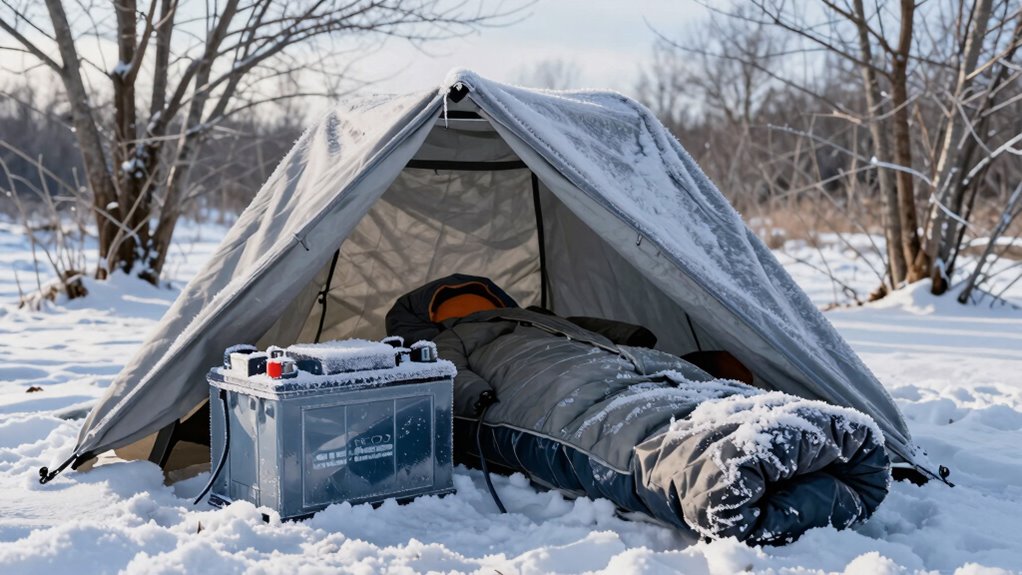

Cold weather slows down chemical reactions inside batteries, so they hold less charge and power devices less efficiently. To keep batteries working, insulate them and keep them warm, like in pockets or insulated containers. Cold also impacts your sleep and shelter planning—sealing leaks, improving insulation, and maintaining steady indoor temperatures help. Properly managing these factors guarantees your gear performs better during winter. If you want to learn how to optimize your battery and shelter strategies, keep exploring these tips.

Get emergency and outdoor gear delivered free with Prime
- Fast, free delivery on millions of items
- Prime Video, Amazon Music and more included
- Member-only deals all year
Key Takeaways
- Cold temperatures slow chemical reactions inside batteries, reducing their capacity and efficiency.
- Insulating batteries and storage areas helps maintain warmth, preserving battery performance in cold weather.
- Proper shelter insulation stabilizes indoor temperatures, supporting device functionality and preventing power failures.
- Warmer batteries operate more effectively, improving device performance and prolonging battery lifespan.
- Minimizing cold exposure and insulating critical systems enhance energy efficiency and backup power reliability.
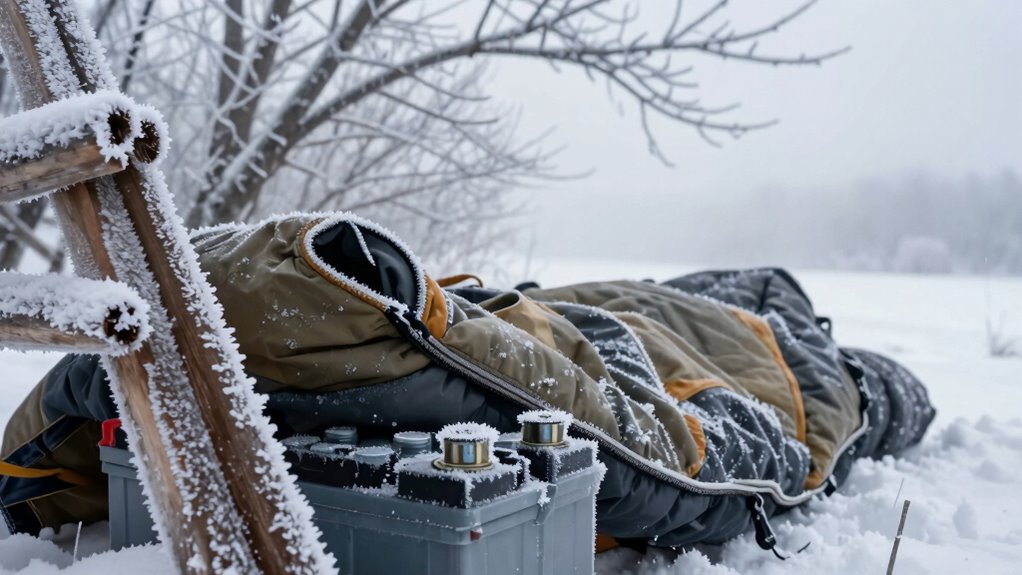
Cold weather considerably impacts how batteries perform, affecting everything from your smartphone to backup power sources. When temperatures drop, chemical reactions inside batteries slow down, reducing their ability to hold a charge and deliver power efficiently. This decline in performance can be frustrating, especially when you rely on batteries during outdoor activities or emergencies. To counteract this, understanding how cold affects energy efficiency is essential. Your devices may seem to drain faster or refuse to turn on altogether because the cold hampers their power management systems. The key to maintaining better battery life in chilly weather lies in minimizing exposure and improving insulation.
Thermal insulation becomes necessary when you’re trying to keep batteries warm and functional. Insulating batteries helps retain their internal heat, ensuring they operate closer to their optimal temperature. Simple measures like wrapping batteries in insulating materials or keeping them in inner pockets can make a significant difference. This isn’t just about comfort; it’s about preserving the energy efficiency of your devices. When batteries stay warmer, chemical reactions occur more rapidly, and energy transfer becomes more efficient. As a result, your gadgets will perform better, last longer, and require less frequent recharging. If you’re using backup power sources, such as portable chargers or generator batteries, proper insulation can extend their usability during prolonged cold spells. Additionally, understanding battery chemistry can help you choose the right type of batteries for winter conditions and optimize their performance in low temperatures. Proper charger settings also play a critical role in preventing battery damage and ensuring longevity in cold weather. Implementing storage best practices can further enhance battery performance during winter by reducing unnecessary exposure to cold environments.
In terms of shelter planning, prioritizing insulation for your living space can dramatically improve your overall comfort and safety. Cold air seeps through gaps and weak points, making your heating systems work harder and draining your energy resources faster. By sealing leaks and enhancing thermal insulation, you keep the warmth inside, reducing the strain on your heating system and conserving energy. This not only helps your home stay warmer but also ensures that any batteries or electronic devices stored indoors remain at a stable, more manageable temperature. When your shelter is well-insulated, you create a more stable environment where batteries can perform closer to their ideal conditions, saving energy and reducing the risk of power failures. Moreover, utilizing insulation materials effectively can significantly lower heating costs and improve overall energy efficiency during winter months. Recognizing the importance of power storage standards can further help in selecting and maintaining reliable backup systems that withstand low temperatures.
insulated battery storage container
As an affiliate, we earn on qualifying purchases.
As an affiliate, we earn on qualifying purchases.
Frequently Asked Questions
How Can I Prevent My Car Battery From Dying in Winter?
To prevent your car battery from dying in winter, prioritize regular battery maintenance and winter charging. Check your battery’s health and clean terminals to guarantee good connections. Keep your battery charged, especially during cold snaps, by using a trickle charger if needed. Consider using a battery insulation blanket for extra protection. These steps help maintain peak performance, ensuring your car starts reliably even in freezing weather.
What Are the Best Sleeping Bag Materials for Cold Weather?
Like a trusty knight’s armor, the best sleeping bag materials for cold weather include insulating fabrics and thermal liners. Opt for down or synthetic insulation that traps heat effectively. Look for bags with a thermal liner or fleece lining for extra warmth. These materials provide superior insulation, helping you stay warm through freezing nights. Remember, a well-insulated sleeping bag is your best defense against winter’s chill, ensuring restful sleep even in the coldest conditions.
How Does Cold Weather Affect Indoor Heating Efficiency?
Cold weather reduces indoor heating efficiency because it challenges your heating systems and insulation. You’ll notice your indoor insulation struggles to retain heat, causing your heater to work harder and use more energy. To improve efficiency, seal any drafts, upgrade insulation, and maintain your heating systems regularly. These steps help keep your home warmer and reduce energy costs, ensuring you stay comfortable even during the coldest days.
Are There Specific Shelter Designs Ideal for Extreme Cold?
Structure your shelter with sturdy walls and superior insulation techniques to shield against severe cold. Use strategic ventilation strategies to prevent condensation and moisture buildup without losing heat. Consider designs like underground or earth-sheltered homes, which naturally insulate and stabilize temperatures. Incorporate double or triple-pane windows, airtight doors, and layered roofing to maximize warmth while minimizing energy loss, ensuring comfort and safety during extreme cold conditions.
How Does Temperature Impact the Longevity of Batteries in Devices?
Temperature plays a vital role in your device batteries’ longevity. Cooler conditions slow down chemical reactions in battery chemistry, reducing performance and lifespan. Extreme cold can cause internal damage if not managed properly. Thermal management is essential; using insulated cases or heating elements helps maintain ideal temperatures. By keeping batteries within their recommended temperature range, you extend their lifespan and guarantee reliable device operation in cold environments.
As an affiliate, we earn on qualifying purchases.
Conclusion
Just as the cold tests the resilience of ancient ships braving icy seas, it challenges your batteries, sleep, and shelter plans. By understanding these changes, you prepare yourself like a seasoned explorer facing winter’s wrath. Embrace the chill with wisdom and foresight, turning adversity into opportunity. Remember, even in the harshest storms, your resilience and knowledge can guide you safely through—truly, a modern-day demonstration of the enduring spirit of survival.
As an affiliate, we earn on qualifying purchases.
As an affiliate, we earn on qualifying purchases.
Fall Picks
fall essentials
As an affiliate, we earn on qualifying purchases.