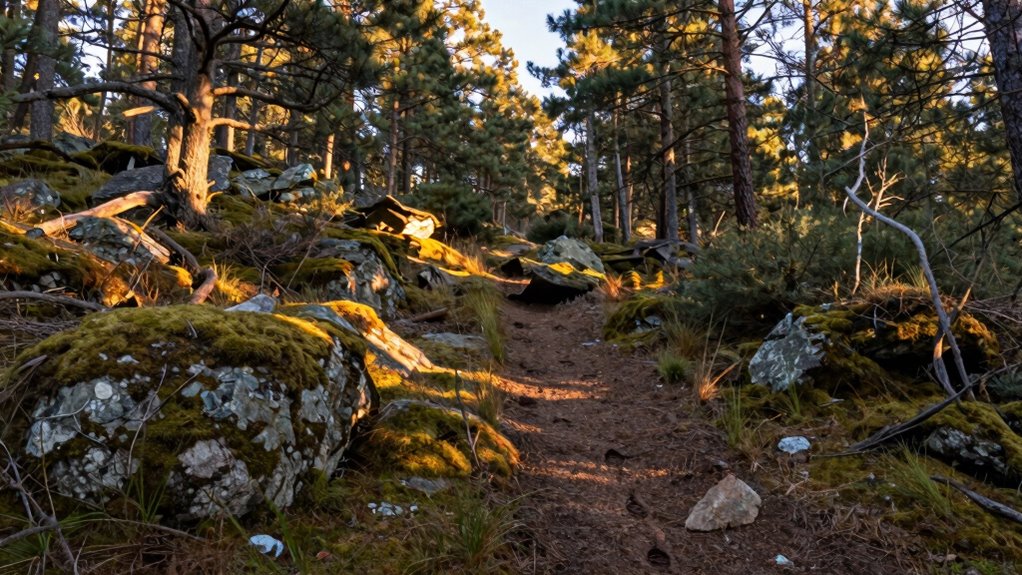

To stay safe and comfortable, you need to understand how terrain and exposure affect your campsite choices. Steep slopes, uneven ground, and low areas can pose risks like falls or flooding, while open ridges face harsh weather and strong winds. Recognizing signs of wildlife activity and knowing how terrain influences animal behavior help prevent encounters. By considering these factors, you can select a safer spot—if you want to know more, there’s plenty of vital details ahead.

Get emergency and outdoor gear delivered free — and shop member deals
- Fast, free delivery on millions of items
- Access to Prime Big Deal Days deals on October 6–7
- Prime Video, Amazon Music and more included
Key Takeaways
- Recognize how terrain features influence water drainage, flood risk, and potential for soft ground or rocky stability.
- Understand that exposed sites increase wind and weather impact, requiring additional shelter considerations.
- Identify signs of wildlife activity to assess potential encounters and choose safer, less attractive camping spots.
- Consider terrain’s effect on temperature and wind patterns to select sites that enhance comfort and safety.
- Evaluate natural barriers and hazards, such as dead trees or unstable slopes, to minimize storm and safety risks.
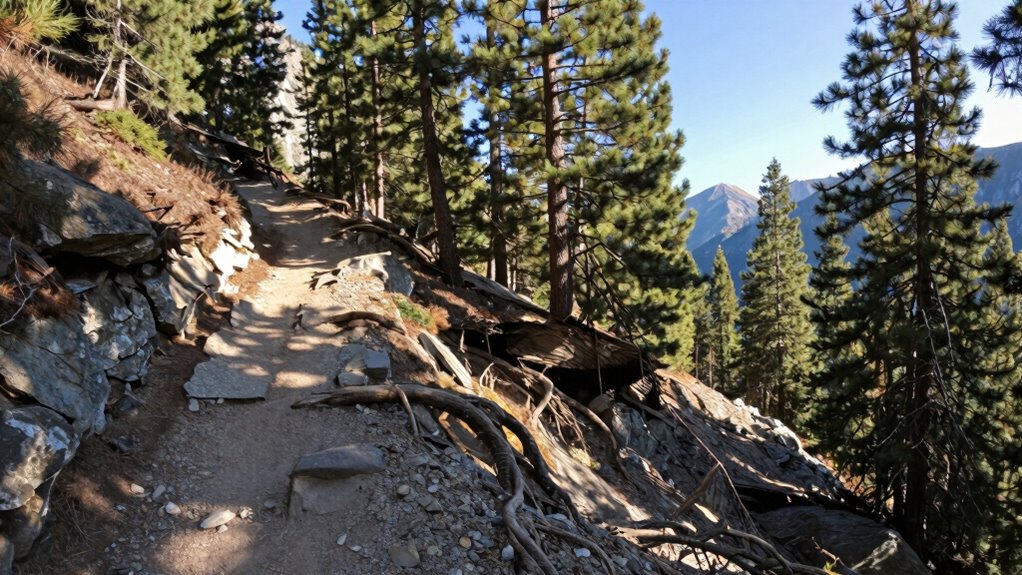
Have you ever wondered how the terrain and exposure around your campsite can impact your safety and comfort? The landscape you choose influences more than just your view; it affects how well you sleep, how safe you are, and how easily you can respond to changing conditions. Understanding the terrain means recognizing potential wildlife hazards and weather patterns that can turn a pleasant trip into a dangerous situation.
Your campsite’s terrain influences safety, comfort, wildlife risks, and weather preparedness. Choose wisely for a better outdoor experience.
When selecting a campsite, pay attention to the natural features around you. Steep slopes or uneven ground might seem scenic, but they can pose risks of falling or make setting up your tent more difficult. Flat, well-drained areas are often best, but even then, you should check for signs of animal activity, such as tracks, burrows, or droppings, which could indicate wildlife hazards nearby. Animals like bears, raccoons, or even smaller critters may be attracted to food or scented items, increasing your risk of encounters. Proper storage of food and trash becomes vital in such environments to avoid attracting unwanted visitors.
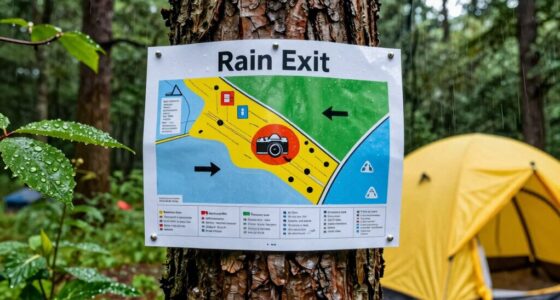
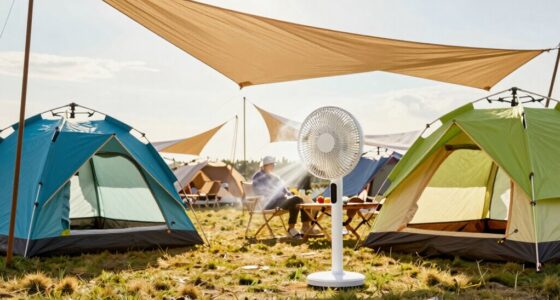
Exposure to the elements is another significant factor linked to terrain. If you’re camping on a ridge or exposed hillside, you’ll face the full force of wind and weather patterns. These areas can get very cold at night or during storms, making it essential to have proper shelter and clothing. Conversely, a sheltered spot behind trees or near natural barriers can provide protection, but you need to be cautious of falling branches or dead trees, which are hazards in windy conditions. The terrain’s features influence how weather impacts your comfort, so understanding local weather patterns helps you anticipate storms, heavy rain, or sudden temperature drops. Recognizing terrain features that influence exposure can help you make smarter camping decisions. Additionally, familiarizing yourself with local wildlife habits can help prevent unexpected encounters and ensure safety. Knowing how animals behave in different terrain types can further inform your precautions.
Weather patterns themselves can be unpredictable and dangerous if you’re not prepared. Heavy rains can cause flash floods in low-lying areas, and rapid changes in temperature or humidity can affect your health and gear. Being aware of the typical weather for the season and region can help you choose a safer site and pack appropriately. For example, if storms are common, avoid camping in valleys or under tall, unstable trees. Also, consider how terrain influences drainage—softer ground in low-lying spots might become muddy or flood quickly, while rocky or well-drained areas stay dry longer. Recognizing natural terrain features that impact water flow can help you select a safer campsite and avoid unexpected flooding or muddy conditions. Understanding the local landscape can also assist you in predicting how water will move during heavy rain, reducing the risk of flood-related hazards. Being aware of the topography helps you better anticipate how water and weather conditions will behave.
In essence, understanding the terrain and exposure around your campsite guarantees you’re prepared for wildlife hazards and weather patterns, making your trip safer and more enjoyable. By paying close attention to these factors, you can choose a spot that minimizes risks, keeps you comfortable, and allows you to enjoy nature without unnecessary danger.
camping tent with weather resistance
As an affiliate, we earn on qualifying purchases.
As an affiliate, we earn on qualifying purchases.
Frequently Asked Questions
How Can I Identify Hazardous Terrain Features Quickly?
You can identify hazardous terrain features quickly by scanning for unstable rock formations and areas with loose or jagged rocks that could cause falls. Keep an eye on vegetation density; sparse vegetation might indicate erosion or loose soil, while dense vegetation can hide hazards. Look for signs of recent erosion, such as exposed roots or cracks in the ground, and avoid steep slopes or unstable ground that could give way.
What Are the Best Ways to Assess Exposure Risks?
To assess exposure risks, you should stay aware of fire hazards by checking local fire bans and avoiding dry, brushy areas during high-risk times. Be vigilant about wildlife encounters by storing food securely and maintaining a safe distance. Regularly evaluate your surroundings for sudden changes, like shifting weather or terrain, and plan your route accordingly. This proactive approach helps you minimize dangers and enjoy your camping experience safely.
How Does Weather Affect Terrain Safety?
Weather acts like a sculptor, shaping terrain safety with its unpredictable touch. Sudden storms, heavy rain, or freeze-thaw cycles can weaken terrain stability, making slopes prone to landslides or erosion. Changing weather patterns can also cause flash floods in low-lying areas. You need to stay alert to weather forecasts, recognize the signs of unstable terrain, and adjust your plans accordingly to avoid risking your safety on compromised ground.
What Equipment Is Essential for Challenging Terrains?
You need essential equipment like sturdy boots, a map, compass, and a GPS device for challenging terrains. Always carry trail markers or navigation tools to stay on course. Regularly maintain your equipment, checking for wear or damage before the hike. Bring a layered clothing system, a first aid kit, and sufficient water. Properly maintained gear and trail markers guarantee safety, helping you navigate tough terrain confidently and avoid potential hazards.
How Can Terrain Impact Emergency Evacuation Plans?
Terrain classification directly influences your emergency evacuation plans, as rugged or steep areas can slow your progress and increase risks. You need to adapt evacuation strategies accordingly, considering access points, terrain difficulty, and potential hazards. Understanding how different terrains impact movement helps you prepare better, ensuring swift responses during emergencies. Always plan routes that account for terrain challenges, so you can evacuate safely and efficiently no matter what environment you’re in.
As an affiliate, we earn on qualifying purchases.
Conclusion
By now, you see how essential it is to grasp terrain and exposure when camping. Knowing the lay of the land helps you choose a safe spot and avoid surprises. Remember, it’s better to be safe than sorry—don’t overlook the small details, as they can make a big difference. When you respect the terrain and exposure, you’re setting yourself up for a smooth, enjoyable adventure. Stay alert, and happy camping!
camping site terrain assessment tools
As an affiliate, we earn on qualifying purchases.
As an affiliate, we earn on qualifying purchases.
portable shelter for exposed sites
As an affiliate, we earn on qualifying purchases.
As an affiliate, we earn on qualifying purchases.
Fall Picks
fall essentials
As an affiliate, we earn on qualifying purchases.