Two-way radios are essential for staying connected where cell service falls short, such as in remote areas, construction sites, or outdoor adventures. They come in handheld, mobile, and base station styles, each suited for different needs. Key features include long battery life, waterproofing, and proper channels to avoid interference. Knowing how to set up, operate, and troubleshoot your radio guarantees clear communication. Keep exploring to discover how to maximize your radio’s potential in various environments.
Key Takeaways
- Two-way radios provide reliable, direct communication without relying on cellular networks, ideal for remote or coverage-limited areas.
- Proper radio selection, including range and environment fit, ensures effective connectivity beyond cell service.
- Using repeaters and signal boosters can extend radio coverage in challenging terrains or large facilities.
- Regular maintenance, correct antenna placement, and channel management optimize radio performance for continuous connection.
- Radio etiquette and choosing the right features (waterproof, long battery life) enhance communication clarity and reliability outdoors.
Types of Two-Way Radios and Their Uses

Have you ever wondered which two-way radio is best suited for your needs? The answer depends on the different radio types available and their usage scenarios. Handheld radios are compact and ideal for outdoor activities, construction sites, or event management. They’re portable, easy to carry, and offer quick communication over short distances. Mobile radios, on the other hand, are typically installed in vehicles or fixed locations, making them perfect for transportation fleets or security teams. Base station radios serve as a central communication point in offices or facilities, providing reliable coverage for larger areas. Each radio type is designed for specific environments and distances, so understanding your operational needs helps determine the best fit. Choosing the right radio type ensures seamless communication suited to your unique usage scenarios. Familiarity with repair fundamentals can also help troubleshoot basic issues with your radios and maintain their performance. Being aware of market options like different brands and models can aid in selecting the most reliable device for your specific requirements. Additionally, understanding power output and its impact on range can optimize your communication setup for different environments. Knowing about antenna types can further improve signal quality and transmission distances across different settings. Moreover, considering privacy features can be important for secure communications in sensitive environments.
Key Features to Consider When Choosing a Two-Way Radio

When selecting a two-way radio, understanding the key features that match your communication needs is essential. Focus on these critical aspects to guarantee you choose the right device:
- Battery Life: Opt for radios with long-lasting batteries, especially if you’ll be using them for extended periods. A higher battery capacity means fewer interruptions. Additionally, consider the type of battery used, as some materials like surgical steel can influence durability and safety.
- Waterproof Features: If you work outdoors or in wet environments, waterproof or water-resistant radios are a must. They protect against rain, splashes, and accidental submersion.
- Range: Consider the maximum communication distance your activities require. A longer range provides better connectivity across larger areas.
- Maintenance and Filtering: Proper filtration and regular maintenance, such as filter replacements, ensure the longevity and reliable performance of your radios and accessories. Maintenance and filtering are crucial for optimal operation. Regular cleaning of your radio’s components can prevent buildup of dirt or bacteria that might interfere with performance.
How Two-Way Radios Work
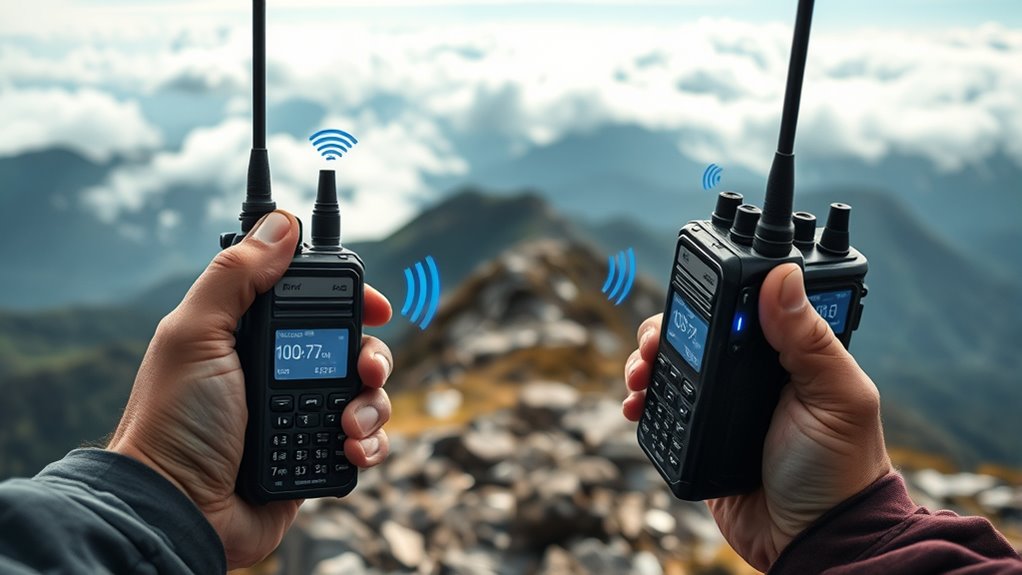
Two-way radios transmit your voice using radio signals that travel through the air. They operate on specific frequencies and channels, which help keep your conversations clear and private. Understanding how these signals and channels work is key to making the most of your radio. Additionally, power tool safety and proper setup can improve your radio’s performance and ensure safe operation. Knowing that radio frequency management is essential for avoiding interference can also enhance your communication experience. Being aware of water-based environments, such as pools or water parks, can help you choose the right equipment for aquatic or humid settings. Recognizing how signal range varies with terrain and obstacles can further optimize your connection, especially when considering environmental factors that impact radio performance.
Radio Signal Transmission
Radio signal transmission in two-way radios involves converting your voice into electromagnetic waves that travel through the air to reach another device. These waves are affected by various factors, including antenna types and signal interference. Your radio’s antenna type, such as whip, rubber ducky, or telescopic, influences how well the signal is transmitted and received. Signal interference from buildings, other electronic devices, or weather conditions can disrupt communication, causing static or dropped messages. To optimize transmission, make certain your antenna is properly positioned and free from obstructions. Recognizing how antenna design and signal propagation are influenced by environmental factors can further enhance communication reliability. Proper antenna placement improves reception and helps mitigate interference, ensuring clearer communication even in challenging conditions. Additionally, understanding signal strength and its fluctuations can help you adjust your device for the best performance.
Frequency and Channels
Frequencies and channels are essential for making certain your two-way radio communicates effectively without interference. Proper frequency coordination helps you select the right bands to avoid conflicts with other radios nearby. Each channel corresponds to a specific frequency, so switching channels allows you to find clear communication lines quickly. Many radios feature channel scanning, which automatically searches for active channels, making it easier to identify open frequencies without manually testing each one. Understanding how to manage these frequencies and channels ensures you stay connected, especially in busy environments or areas with many users. Effective communication management is crucial for maintaining clear and reliable connections in complex settings. By mastering frequency coordination and utilizing channel scanning, you can improve communication clarity and avoid disruptions, making your two-way radio experience more reliable and efficient. Additionally, knowing regulatory compliance requirements can help you stay within legal guidelines and prevent interference issues. Regularly updating your knowledge about frequency allocations can help optimize your radio’s performance and ensure adherence to legal standards. Staying informed about proper licensing requirements further supports responsible and legal radio use. Understanding radio etiquette can also enhance communication effectiveness, especially in professional or organized group settings.
Range and Coverage: What You Need to Know
Understanding the range and coverage of your two-way radios is vital to guarantee reliable communication in your specific environment. Factors like signal interference can weaken your signal, reducing effective range. To maximize coverage, consider these key points:
- Environment: Open areas offer better coverage, while urban settings with buildings can limit signals. Being aware of signal interference helps you choose the right equipment and setup. Additionally, understanding environmental factors can further optimize your radio performance. Recognizing signal interference sources can help in selecting channels and positioning your devices effectively.
- Power: Higher wattage radios typically provide a greater range but may be more expensive.
- Coverage expansion: Use repeaters or signal boosters to extend your communication reach, especially in challenging environments.
- Awareness of radio frequency interference helps you select the best channels and equipment for your needs. Recognizing sound vibrations and their impact can also aid in optimizing your device placement and operation.
Setting Up and Using Your Two-Way Radio Effectively
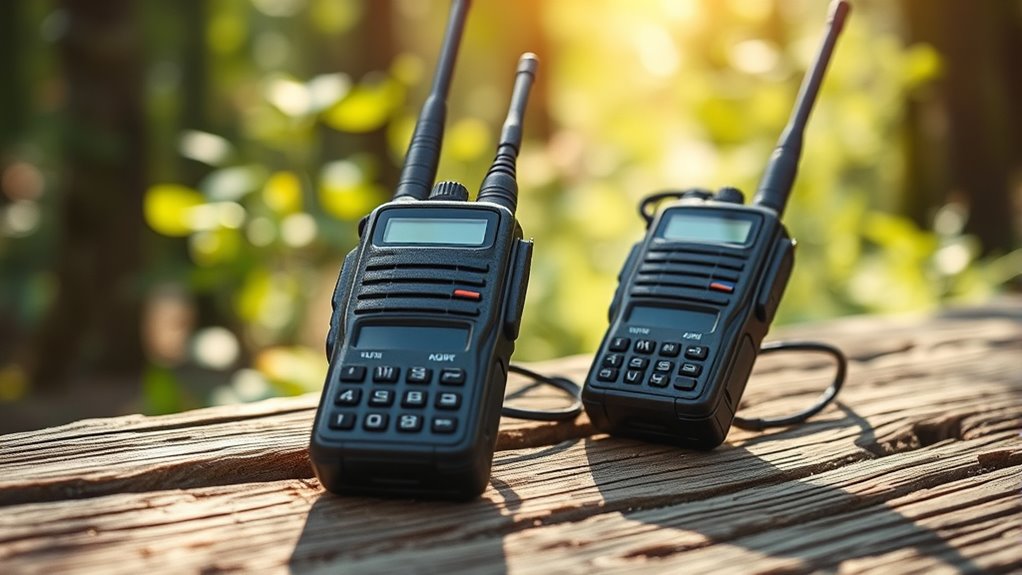
To get the most out of your two-way radio, start by selecting the proper channel to avoid interference. Then, adjust the volume so you can hear clearly without distortion. Finally, focus on maintaining clear communication by speaking directly and listening carefully.
Proper Channel Selection
Have you ever wondered how to guarantee clear communication on your two-way radio? Proper channel selection is key to effective communication. To optimize your experience, focus on these three points:
- Choose the right channel: Use channels designated for your group or activity to avoid interference.
- Manage frequencies wisely: Stay within authorized frequencies and avoid overlapping channels to prevent cross-talk.
- Maintain consistent channel use: Keep everyone on the same channel during your activity for seamless communication.
Adjusting Volume Settings
Adjusting the volume settings on your two-way radio is essential for clear communication. Proper sound settings ensure you hear messages clearly without distortion or background noise. To adjust the volume, locate the volume knob or buttons, usually marked with speaker icons or plus/minus signs. Turn the control clockwise to increase the volume or counterclockwise to decrease it. Keep in mind that setting the volume too high can cause distortion, while setting it too low might make messages hard to hear. Use the following table to help you find the right balance:
| Situation | Recommended sound setting | Tips |
|---|---|---|
| Noisy environment | Higher volume | Avoid distortion |
| Quiet surroundings | Lower volume | Prevent unnecessary noise |
| Normal use | Moderate volume | Test for clarity |
Additionally, regularly check your radio’s settings to ensure optimal audio quality during your conversations.
Maintaining Clear Communication
Wondering how to keep your communication clear and reliable? Maintaining clear communication with your two-way radio involves a few simple practices. First, follow proper radio etiquette—speak clearly, keep messages brief, and identify yourself. Second, always check your equipment before heading into an emergency situation to guarantee reliability. Third, use your radio responsibly during emergency preparedness; avoid unnecessary chatter that can clog channels. Additionally, hold the microphone about an inch from your mouth and speak directly into it to improve audio clarity. Keep your channel free of interference, and switch to designated emergency channels when needed. By following these steps, you’ll ensure your communication remains effective, especially during critical moments when staying connected matters most.
Best Practices for Clear and Reliable Communication

To guarantee your communication remains clear and reliable, it’s essential to follow some best practices when using two-way radios. First, monitor your battery life regularly and keep spare batteries handy to prevent sudden power loss. Proper antenna placement is vital; position the antenna upright and avoid obstructions like metal objects or thick walls, which can weaken signal quality. Speak clearly and directly into the microphone, avoiding background noise that can distort your message. Keep transmissions brief to prevent congestion and ensure your message gets through. Test your radio periodically to confirm all settings work correctly. By maintaining good battery habits and optimizing antenna placement, you’ll improve the clarity and reliability of your communications every time.
Licensing and Regulations for Two-Way Radio Use

Are you aware of the licensing and regulations that govern two-way radio use? Understanding these rules guarantees you stay compliant and avoid fines. Here are key points to consider:
- License requirements: Most users need an FCC license to operate on specific frequencies, especially for commercial or professional use.
- Regulatory compliance: You must follow federal regulations, including proper frequency use and avoiding interference with other communications.
- Exemptions: Some personal or recreational radios, like FRS or GMRS, have simplified licensing rules, but it’s crucial to verify your specific device’s requirements.
Familiarizing yourself with these regulations helps you operate legally and responsibly, avoiding potential penalties and ensuring smooth communication. Always check local laws and licensing rules before using two-way radios.
Tips for Maintaining and Troubleshooting Your Radio

Regular maintenance and prompt troubleshooting are essential to keep your two-way radio functioning reliably. Start by checking your radio battery regularly; a fully charged battery ensures clear communication and prevents unexpected shutdowns. If you notice reduced power or inconsistent performance, it might be time to replace or recharge the battery. Antenna maintenance is equally important—inspect it for damage or corrosion and clean it gently to maintain ideal signal reception. Keep the antenna securely attached and avoid bending it, which can weaken signals. If your radio isn’t transmitting or receiving properly, verify connections, reset the device, or consult the user manual for troubleshooting tips. Proper care extends your radio’s lifespan and ensures you stay connected when it matters most.
Practical Applications of Two-Way Radios in Various Settings
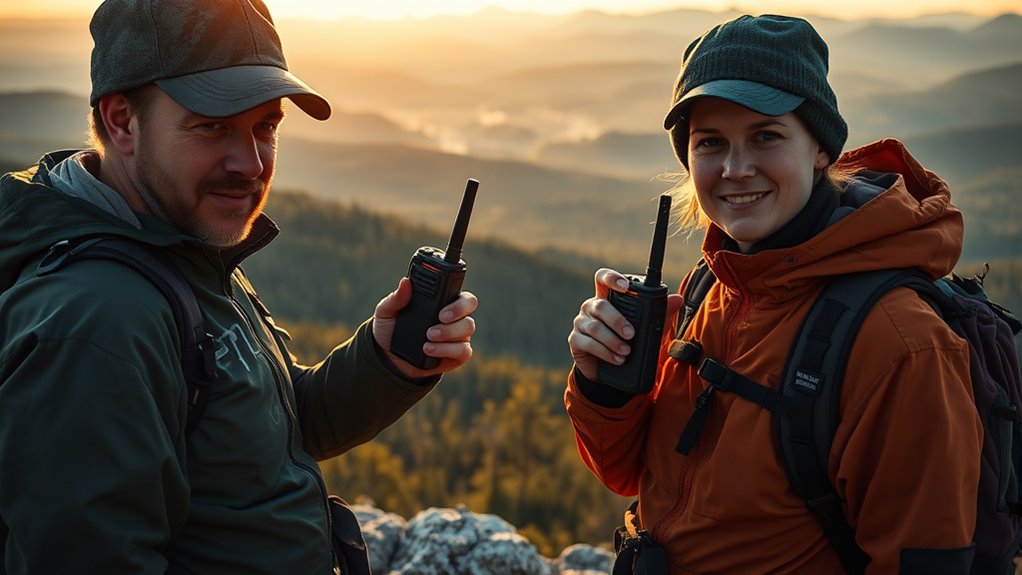
Two-way radios are invaluable tools across a variety of settings, providing instant communication when other methods might fall short. They’re essential for emergency preparedness, allowing you to coordinate quickly during crises or natural disasters. Outdoors, they keep groups connected during activities like hiking, camping, or hunting, especially where cell service is unreliable. In workplaces, such as construction sites or warehouses, radios improve safety and efficiency by enabling real-time updates.
Here are some practical applications:
- Coordinating emergency response efforts to ensure swift action.
- Communicating with team members during outdoor recreation to stay safe.
- Managing logistics and safety protocols in work environments.
These radios keep you connected when it matters most, beyond the limits of cell coverage.
Frequently Asked Questions
How Do I Choose the Right Frequency Band for My Needs?
To choose the right frequency band, consider your communication needs and environment. Opt for VHF if you need longer-range coverage outdoors, and UHF for better penetration through buildings indoors. Make sure your radios are frequency compatible with other units to avoid connection issues. Also, think about interference management; select a band less crowded in your area to minimize disruptions and maintain clear communication.
Can Two-Way Radios Connect to Smartphones or Other Devices?
Sure, two-way radios can connect to smartphones and other devices, but it’s not as simple as plugging them in. Many models feature Bluetooth integration and mobile app compatibility, allowing you to sync your radio with your devices. This means you can control settings or even communicate through your phone, making it seem like your radio is practically an extension of your device. Irony? You’re still using a radio, not your smartphone.
What Security Features Are Available to Protect Radio Communications?
You can enhance your radio security through encryption protocols and user authentication. Encryption guarantees your communications stay private by scrambling messages, while user authentication verifies that only authorized users access the system. Many modern two-way radios offer these features, giving you peace of mind that your conversations remain confidential. Always check your device’s capabilities and enable these security features to protect sensitive information and maintain secure communication channels.
How Do Weather Conditions Affect Radio Performance?
Weather conditions can seriously impact your radio performance. Rain, snow, fog, and thunderstorms disrupt antenna placement, causing signal interference and reducing clarity. Heavy precipitation dampens signals, making communication unreliable. Wind can shift antennas, weakening reception. Stay alert to changing weather—adjust your antenna positioning if needed, and be prepared for interference spikes. By understanding these effects, you can maintain better communication even in unpredictable weather.
Are There Options for Long-Term Rental or Leasing of Radios?
Yes, you can find options for long-term rental or leasing of radios through various providers. These rental agreements often include radios maintenance, ensuring your equipment stays in good condition without extra hassle. Leasing can be cost-effective, especially for ongoing needs, as it provides flexibility and reliable communication. Be sure to review the terms carefully to understand what’s included, like maintenance services, to keep your radios functioning smoothly over time.
Conclusion
Staying connected with two-way radios is like having a trusted bridge built just for you—crossing gaps when cell service falls silent. With the right knowledge, your radio becomes a loyal companion, guiding you through adventures, work, or emergencies. Keep it tuned, maintained, and ready to serve, so your communication lines remain open—turning static into clarity and distance into proximity. Embrace this tool, and let your connections flourish beyond the reach of cell signals.